Gwen Geng Designs Systems from Patterns and Code
By Cansu Waldron
Gwen Geng is a multidisciplinary designer based in Los Angeles whose work spans typography, motion, interaction, spatial installations, and code. With a background in mathematics, she approaches design as a way of translating abstract relationships into visual systems, exploring how ideas can take form across different media. She has collaborated with studios including Pentagram, Massive Assembly, and Amazon, working with clients such as Riot Games and EA Sports. Her work has been recognized by organizations including the Art Directors Club, Type Directors Club, Communication Arts, and Core77.
Before entering design, Gwen studied mathematics — an experience that continues to shape how she thinks and creates. Rather than focusing on calculation, she became fascinated by patterns, structures, and the hidden connections between seemingly unrelated elements. Graphic design became the medium that allowed her to bring those internal visualizations into the world, turning intangible ideas into tangible experiences. This mindset carries through her process today, particularly in branding and system-based design, where research, strategy, and visual form build logically upon one another. Her interest in science and technology also extends into coding, which she uses to create dynamic design systems that push beyond static graphic forms.
We asked Gwen about her art, creative process, and inspirations.
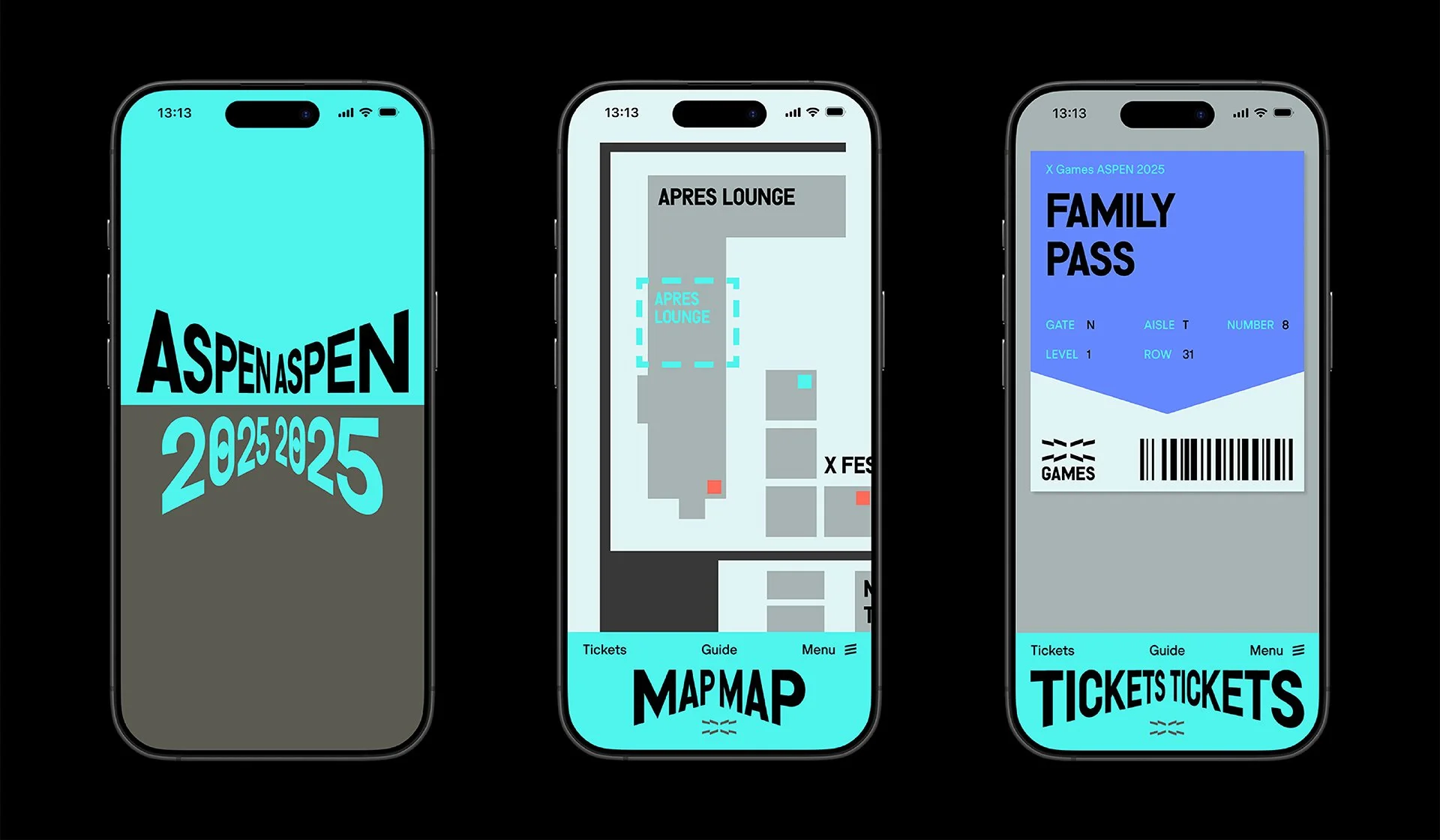
X Games App
Can you tell us about your background as a digital designer? How did you get started in this field?
I’m a multidisciplinary graphic designer currently based between Los Angeles and Seattle. My work spans typography, motion, interaction, and spatial installation, driven by a curiosity for how ideas can take form across different media.Over the past few years, I’ve worked with studios such as Pentagram, Massive Assembly, and Amazon, collaborating with clients including Riot Games and EA Sports. My work has been recognized by organizations such as the Art Directors Club, Type Directors Club, Communication Arts, and Core77.
Before design, I studied mathematics. What stayed with me wasn’t calculation, but a way of thinking, seeing connections, patterns, and structures between things that don’t immediately relate. I found myself constantly building visual interpretations in my mind of what I saw, heard, and felt, sometimes simple, sometimes highly structured.
Design came in when I realized I needed a way to bring those internal images out. Graphic design became the medium that allowed me to externalize that process. It gave me a way to bring together different forms and turn something intangible into something you can actually experience. That moment of realization is what led me into this field.
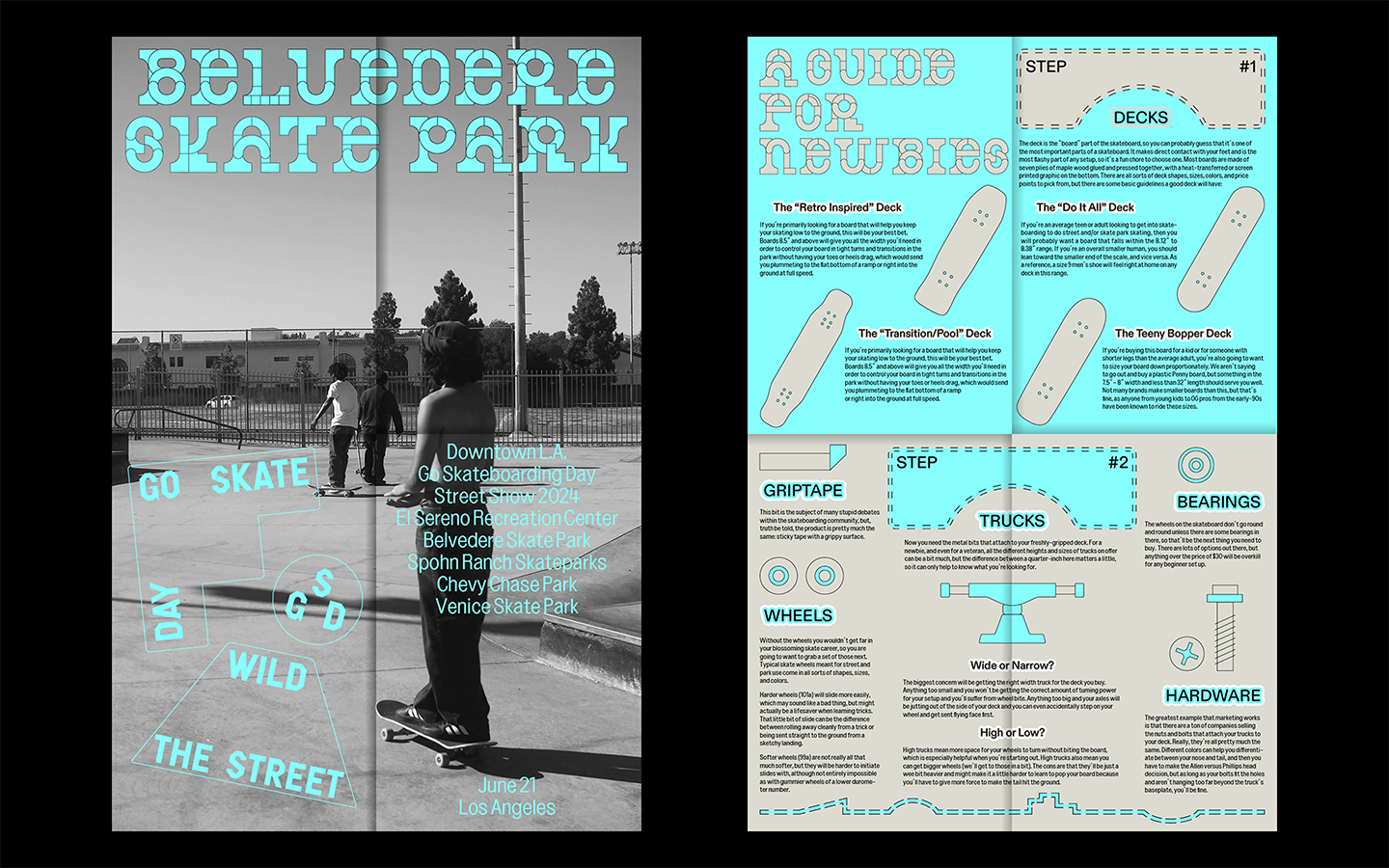
Go Skate Day Brochure
How would you say has your mathematics background impacts you as a designer?
That way of thinking carries directly into my design process, especially in branding. A branding project often begins with research and comparison, then moves into strategy, and eventually into visual form. For me, this is not a jump, but a progression. Each step needs to logically support the next. My background in mathematics helps me build that progression with clarity. It shapes how I develop concepts, not only visually engaging, but grounded in the logic of the brand itself. Because of that, my creative decisions are more intentional. I’m not just exploring visually, but building on something coherent.
At the same time, my interest in science, whether mathematics, physics, or biology, has always been deeply visual. Many of these fields reveal unexpected forms, patterns, and even color relationships. A lot of my visual inspiration comes from those observations. It also led me to technical tooles such as coding, which became another way to extend my design practice. By combining code with design, I’m able to construct systems that are more dynamic and less fixed, and push the boundaries of what a graphic system can be.
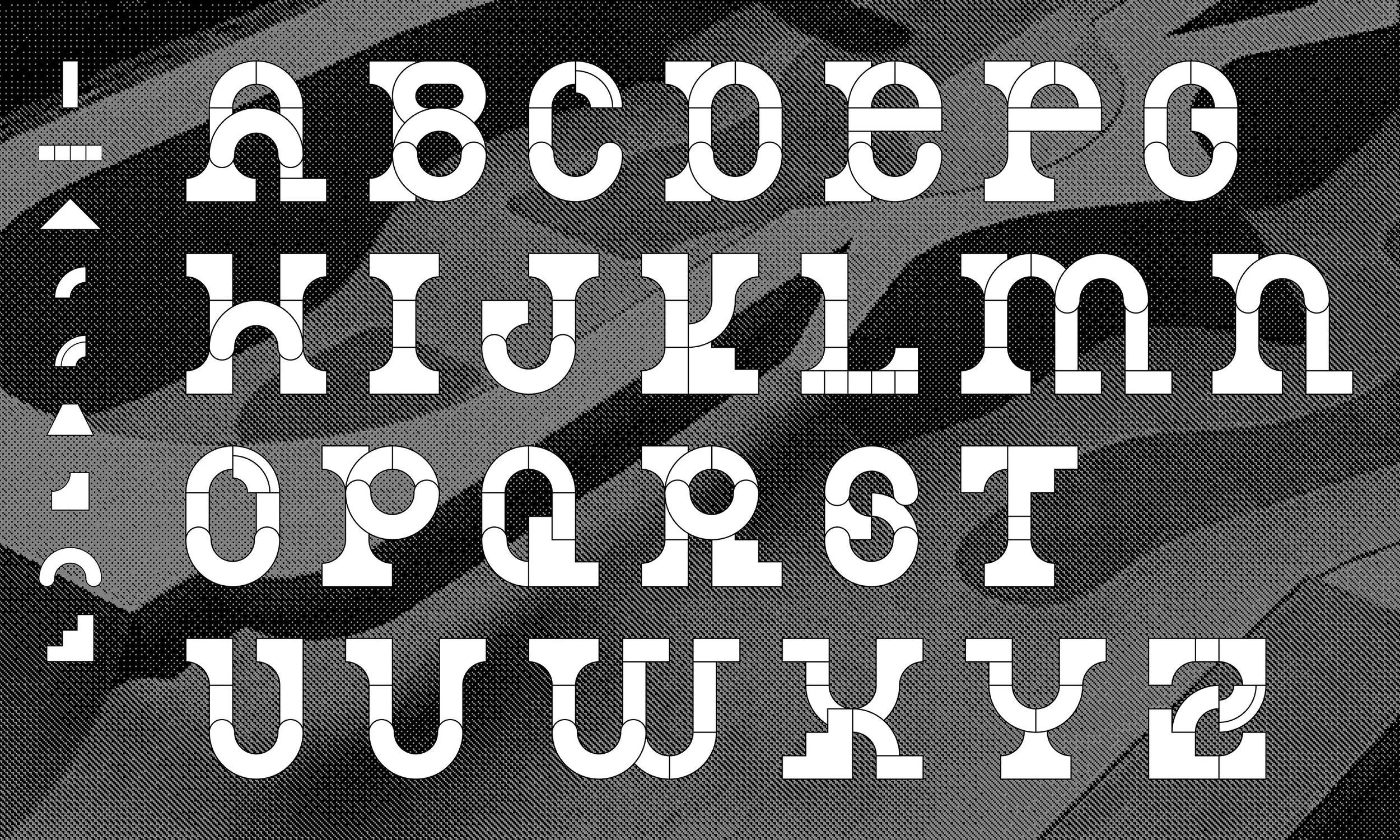
Go Skate Day Modular Type
You talk about linking stones to code, typography to outer space — what’s the strangest connection you’ve discovered recently between two unlikely pairings?
Recently, I’ve been interested in a connection that initially felt unlikely, between typography and eye movement. Typography seems like a visual form, while eye movement is a behavioral pattern. But the more I looked into reading, the more I realized they are tightly linked. Typography doesn’t just present information, it actively guides how we read. The spacing, scale, rhythm, and structure of text all influence where the eye moves, where it pauses, and how it navigates a page.
At the same time, those eye movements are not neutral. They’re shaped by habit, memory, and personal background. So reading becomes a feedback loop, typography shapes eye movement, and eye movement reveals how typography is actually being experienced.
That made me question the idea of reading as something flat and linear. It’s actually spatial and embodied, involving the eye, the body, and the surrounding environment.
From there, I started to visualize these invisible patterns. In Ocular Tracing, I track how the eye moves while reading and feed that data into a web-based system. Those movements are then translated into visual structures, which I use to generate three-dimensional typographic forms. In this process, reading behavior directly influences the design outcome. This also led me to think beyond the screen. If reading already behaves like a spatial experience, could the medium itself become spatial as well? Moving Screens explores this through an interactive environment, where visuals and screens adjust in response to how someone reads. Instead of a fixed layout, the system adapts to the reader, making the experience more flexible and engaging.
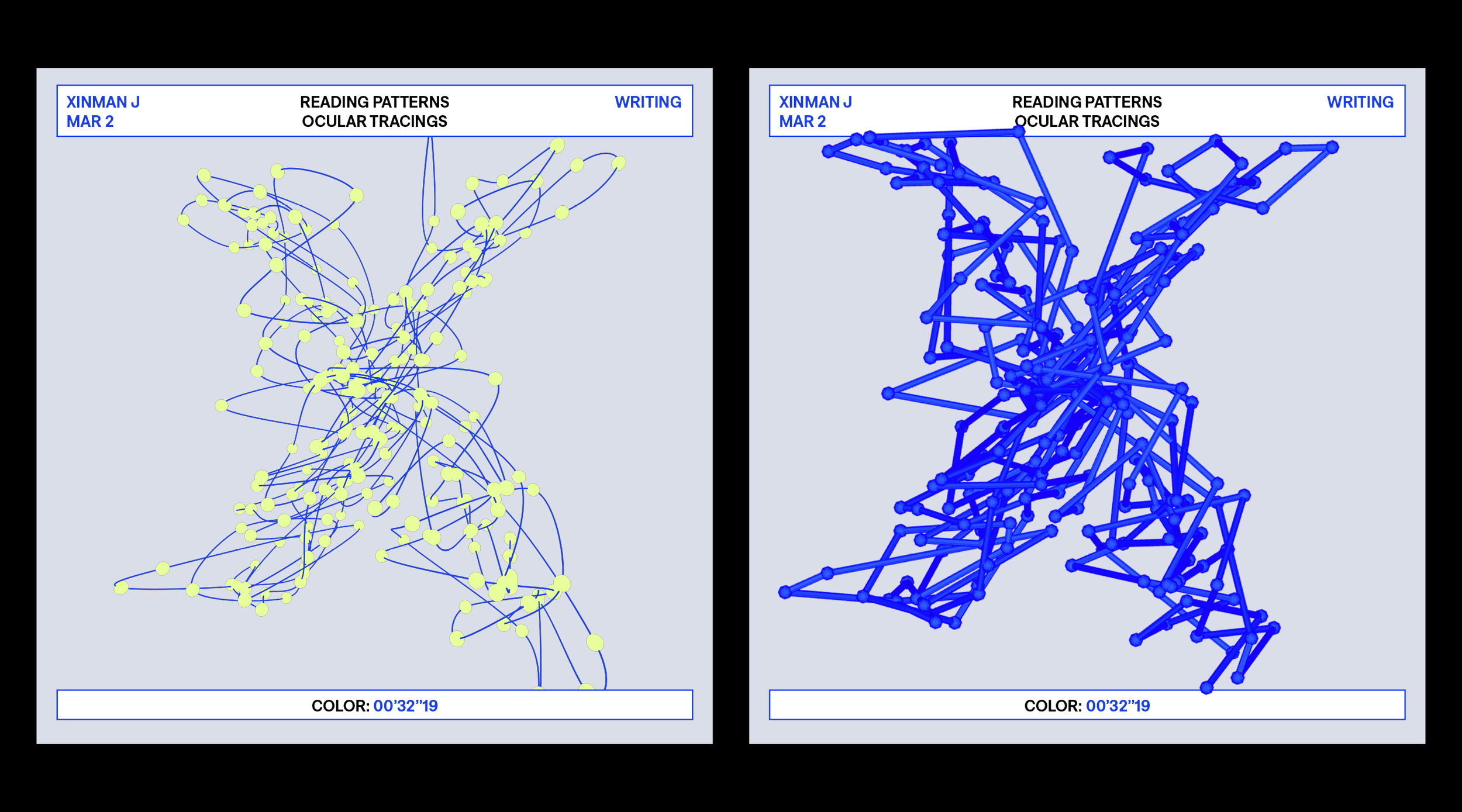
Ocular Tracing
How does your thinking shift when moving from type design to motion to spatial installation?
For me, these aren’t separate disciplines, but different dimensions of the same system. I tend to think of them as a progression—from flat to spatial, from static to dynamic, and from purely visual to more multi-sensory experiences. Because of that, I usually start by thinking about the nature of each medium.
In type design, the focus is on the visual. It’s relatively static, and the interaction is minimal, so I pay more attention to structure, spacing, and how something is read on a surface. In motion design, time and sound come in. Instead of everything being seen at once, I have to consider sequence, pacing, how information is revealed over time, and how visuals and audio work together. In spatial work, interaction becomes much more important. It’s not just about what people see, but how they move through the space and engage with it. The experience becomes more physical and multi-sensory.
For me, the shift is not a complete change in thinking, but an expansion, each medium adds another layer to how the same idea can be experienced.
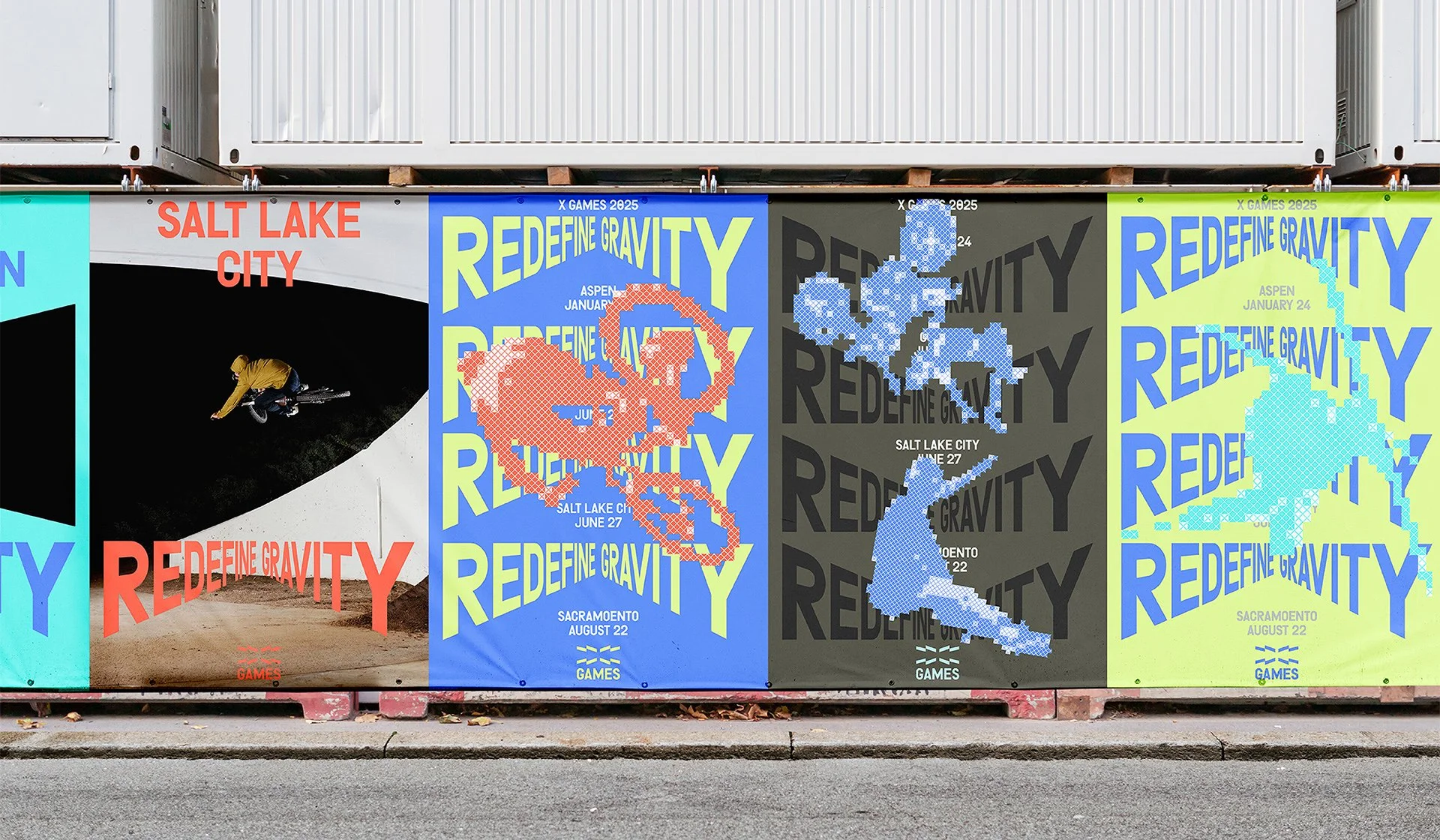
X Games Poster
Are there any artists or creative influences that have had a significant impact on your work? How have they shaped your artistic style or approach?
I’ve been really influenced by Marshall McLuhan, especially his idea that “the medium is the message.” It made me rethink what a medium actually is. Instead of treating design as just visual output, I started paying more attention to the differences between media—how each one shapes the way information is delivered and understood. That shift helped me approach design in a more structured way, especially when dealing with more complex projects.
I’m also really drawn to Metaheaven. I like how their work moves beyond a single medium, and how they use different tools to think through design. It made me realize that graphic design isn’t fixed—it changes along with the media around it. Earlier on, my work was mostly in more traditional, static formats. After being exposed to their thinking, I started to experiment more in my own process. Sometimes I use simple materials like paper or collage to explore visuals, and other times I use code to build them. That shift gave me new ways to approach a project, and made the process feel more open and flexible.
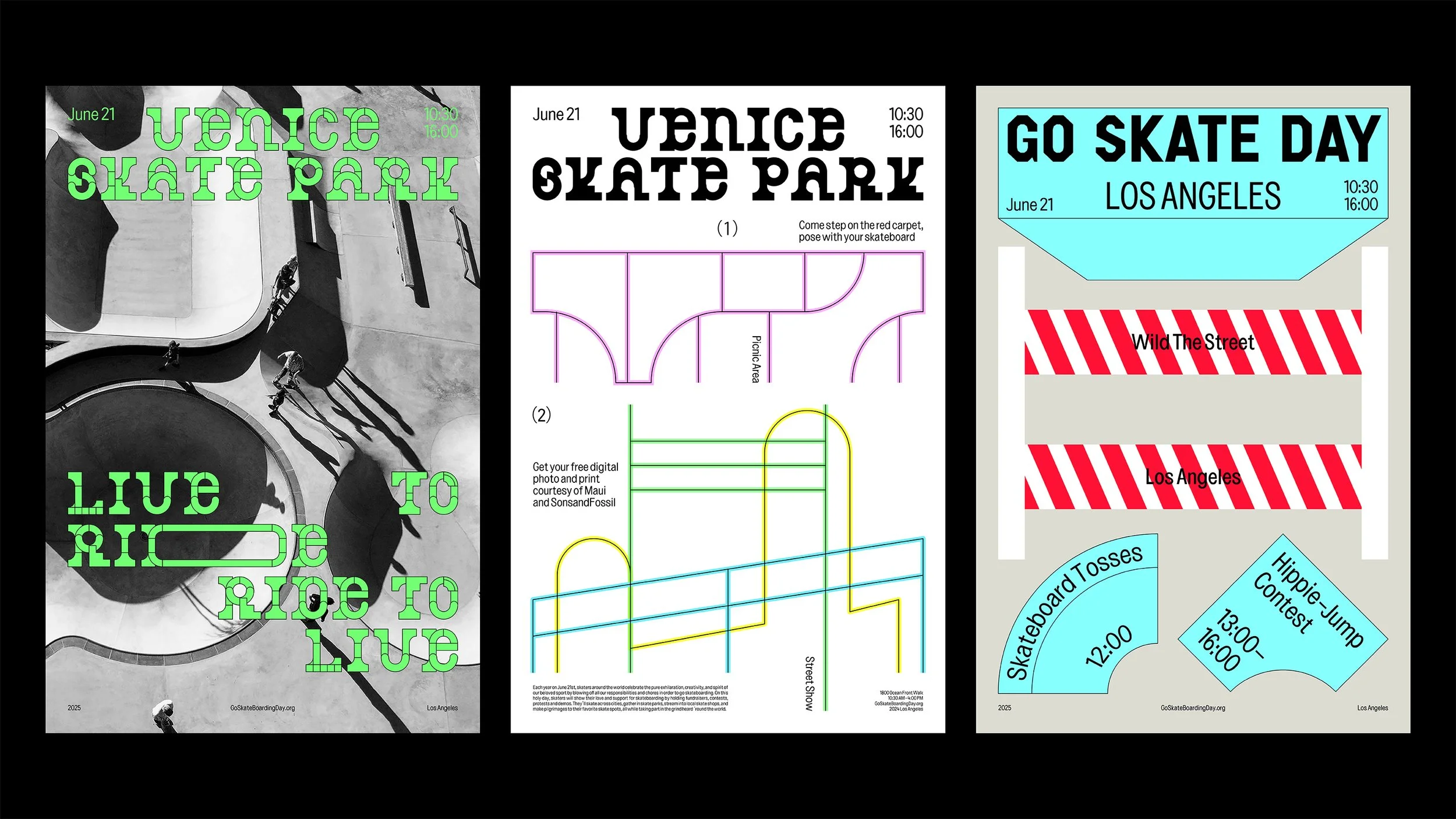
Go Skate Day Poster
What is a dream project you’d like to make one day?
It’s hard for me to point to one specific project, but I often find myself thinking about what comes after the internet. If we look at the shift from books to television to the internet, each step changed not just the format, but how we experience information. I’m interested in what that next step could be.
I’m especially drawn to work that is bold, dynamic, and constantly evolving. It makes me question things we often take for granted, does a logo have to be static? Does typography have to stay fixed? I’m interested in creating something that feels immediate and a little unexpected, something that makes people stop, look again, and try to understand what’s happening. Not overwhelming, but just unfamiliar enough to be exciting.
At the same time, I don’t see this as something purely experimental. I’d want it to still be rooted in human behavior and culture, so even if the form is new, it still feels intuitive to engage with. So rather than a fixed outcome, I’m more interested in building a new kind of medium or system, something open, evolving, and a bit unpredictable.
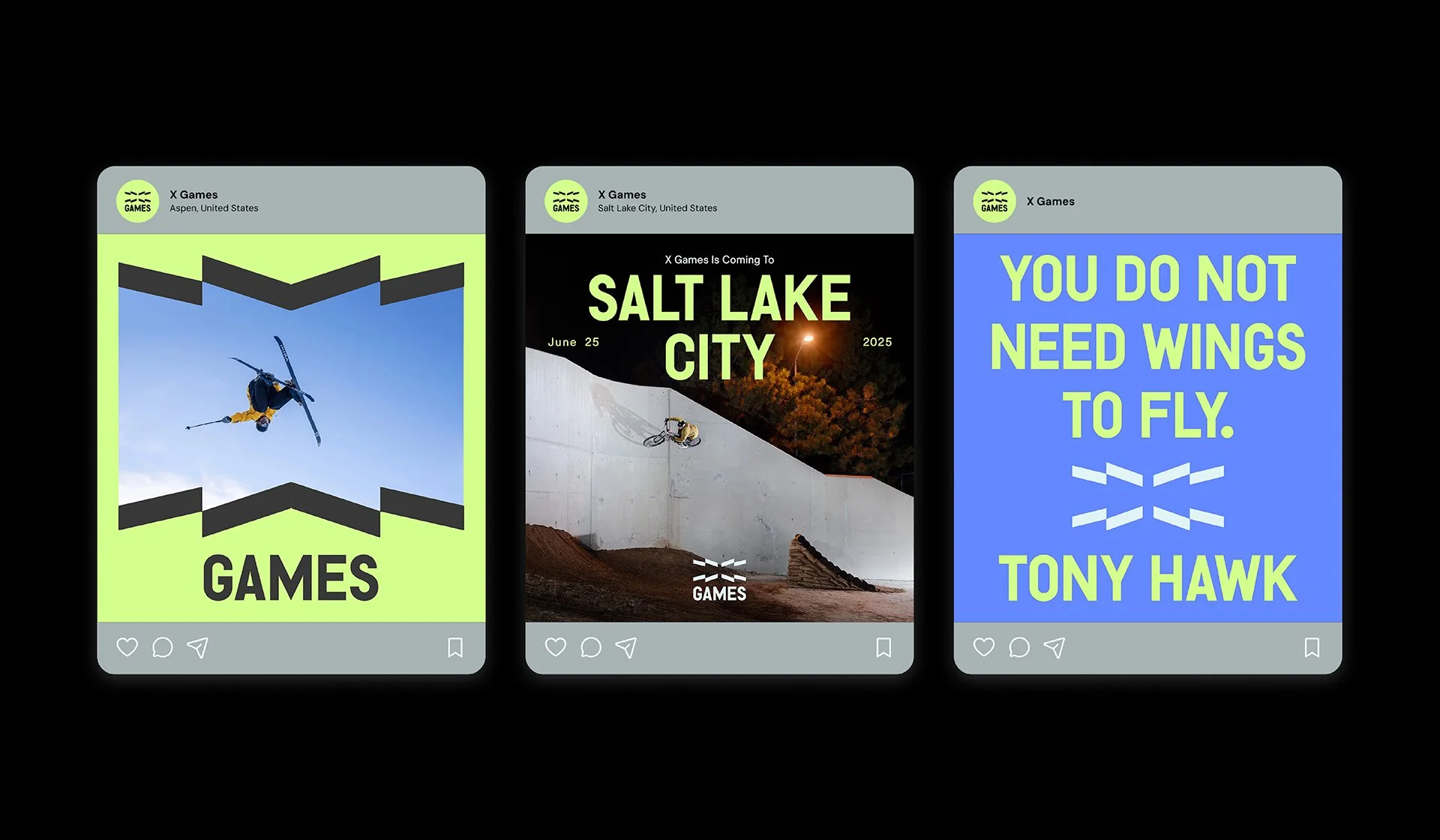
X Games Ins Post
What’s a rule you’ve created for yourself that you’re ready to challenge?
One rule I’ve followed for a long time is that every design decision making needs to make logical sense. A lot of my process comes from a structured way of thinking, moving from research to strategy, then to concept and visual. It helps me build work that is grounded and aligned with its purpose.
But recently, I’ve started to question that. Does everything in design need to be fully explained or justified? I’ve realized that always relying on logic can sometimes limit unexpected outcomes. Some of the more interesting moments come from instinct, something that doesn’t fully make sense at first, but feels right. So lately, I’ve been trying to allow more room for intuition, ambiguity, and even a bit of imperfection in my work, and seeing where that leads.
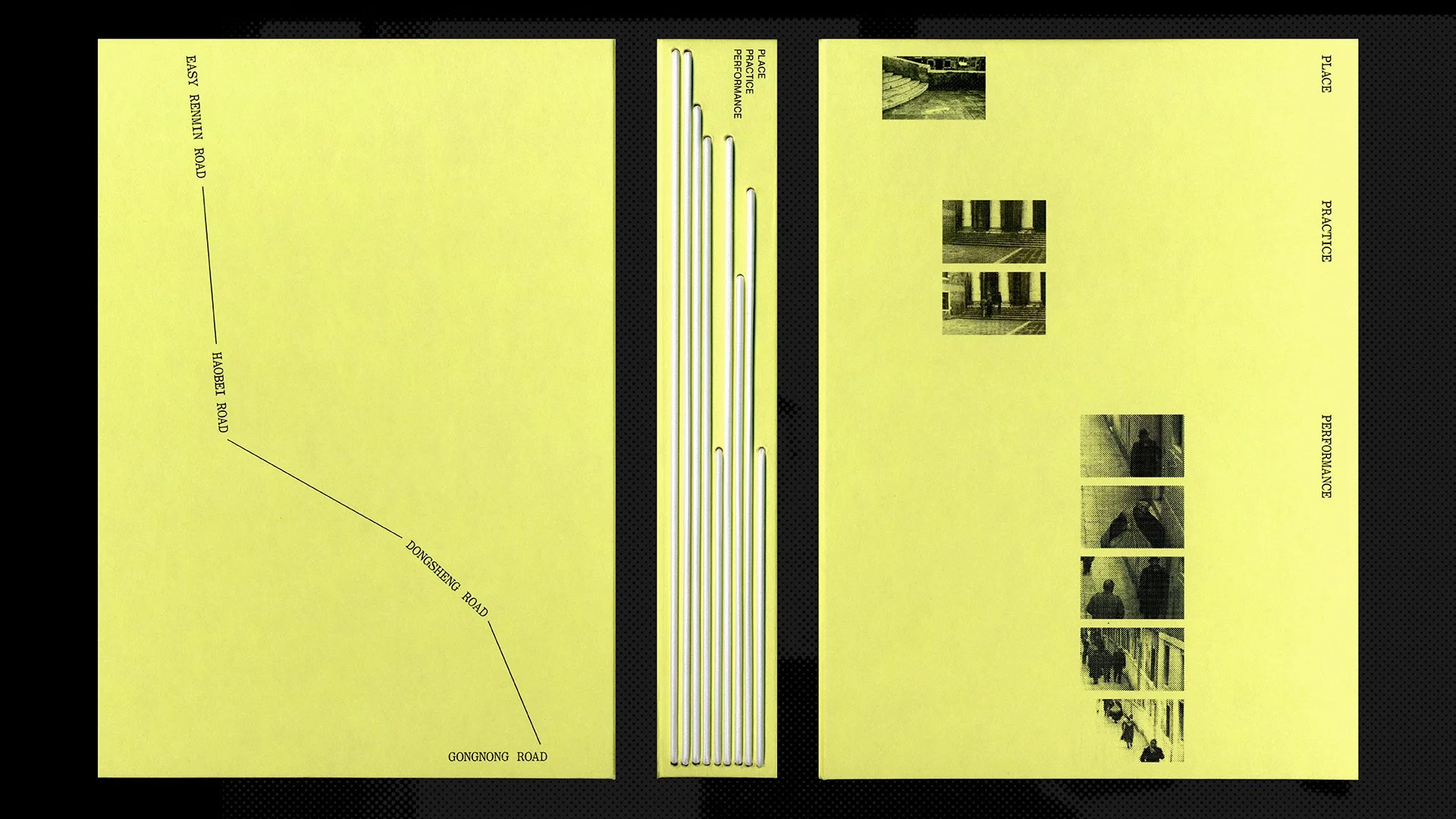
Place, Practice, Performance
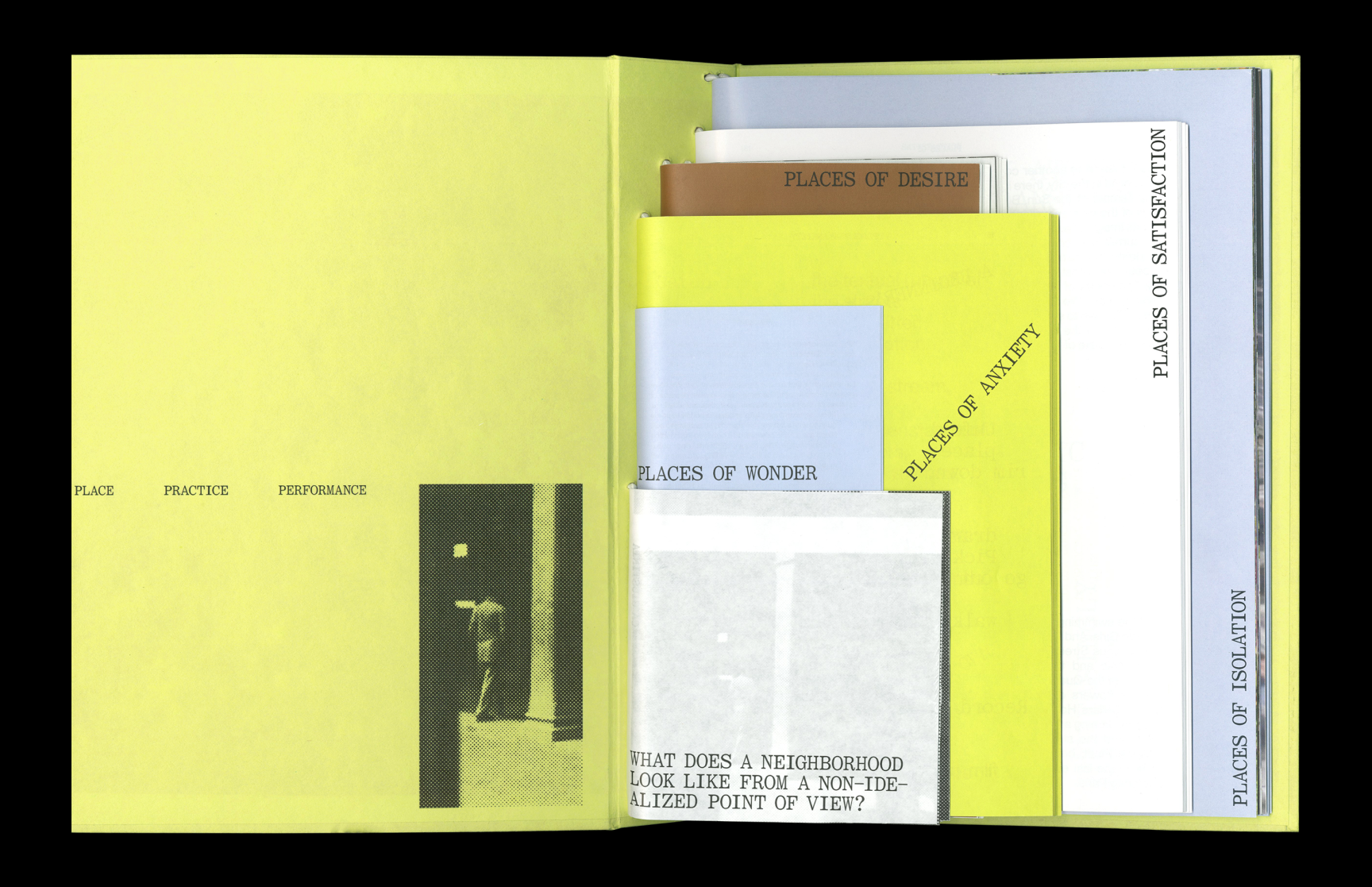
Place, Practice, Performance
Are you our next spotlight artist? Submit the form to apply to be featured!
We share works by digital artists as well as digital arts exhibitions, events, and open calls daily on Instagram — follow us for more and subscribe to our newsletter so you don’t miss new blog posts.
![Project Spotlight: pifmgr.dll’s [M]ETAL✨ @pifmgr.dll is a digital artist working at the intersection of audiovisual design, 3D experimentation, and atmospheric world-building. His project [M]ETAL explores metal both as a physical material and a](https://images.squarespace-cdn.com/content/v1/63b2fdbe4376de5bfdc6771f/1779108338452-QO04Q3MMJ3VMU8PJV1MD/image-asset.jpeg)