By Cansu Waldron
Steven Morse is a Miami-based multidisciplinary artist with a background in photography whose practice spans analog processes, AI-assisted imagery, and generative art. Across these mediums, he explores how images are created, transformed, and experienced, with a particular interest in the relationship between technology and the passage of time.
Steven's interest in image-making began with a fascination with the camera's ability to freeze a moment, something he describes as being close to a time machine. His early experiences in a high school black-and-white darkroom, where images gradually emerged through exposure to light and chemical processing, left a lasting impression on him. At the same time, he was experimenting with early versions of Photoshop, exploring digital tools alongside pinhole cameras and alternative photographic techniques. These parallel interests continue to inform his work today.
We asked Steven about his art, creative process, and inspirations.
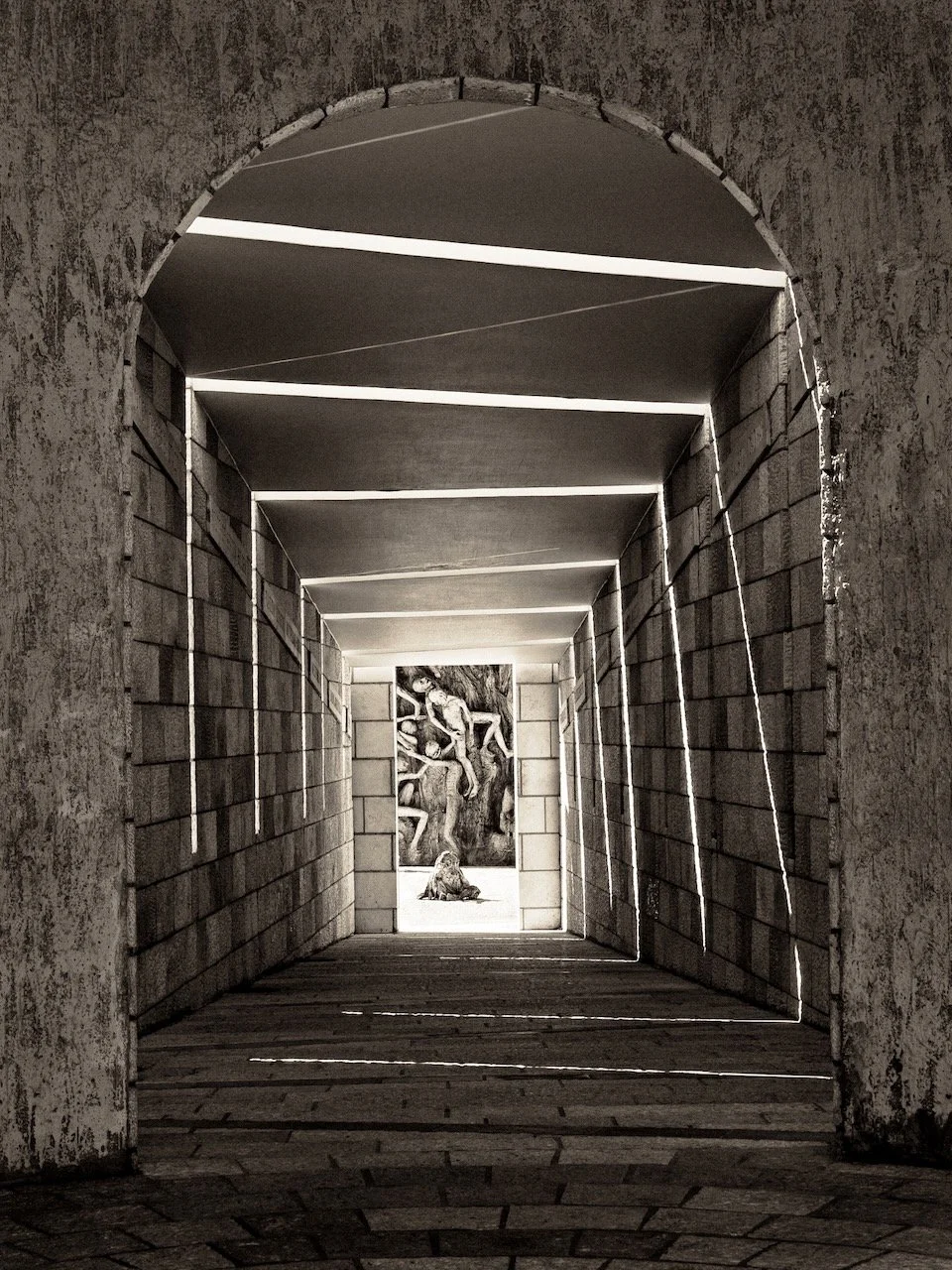
Let There Be Light. Artwork by Steven Morse.
You began with photography and have since moved into AI-assisted imagery and generative art. What was it about photography that first drew you in, and what aspects of that practice have stayed with you as your work has become increasingly digital?
I was fascinated by the camera itself and its ability to freeze a moment in time. In a way, I’ve always thought of it as our closest thing to a time machine.
The process was just as important. In high school, my photography class had access to a newly built black-and-white darkroom. Exposing an image with light and then watching it appear in the chemicals felt magical. That experience had a huge influence on my decision to study photography.
At the same time, I was working with early versions of Photoshop and exploring digital image-making alongside pinhole cameras and alternative photographic processes. Those interests developed together.
That combination has stayed with me. Whether I’m working with photography, AI-assisted imagery or generative systems, I’m interested in both the image and the process that produces it.
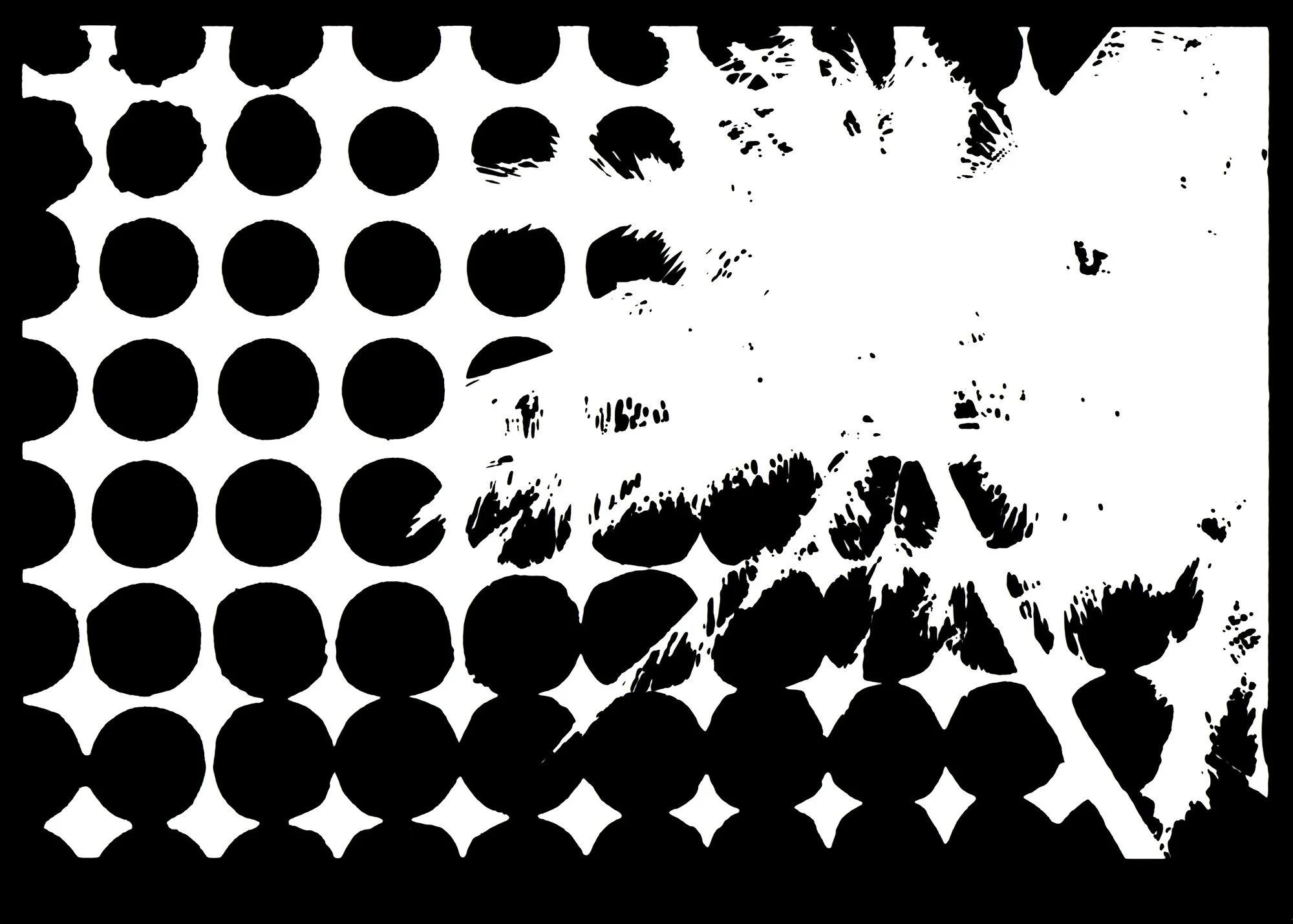
GeoPop 2b. Artwork by Steven Morse.
Photography traditionally involves capturing something that exists in front of the camera, while generative art can produce images that have no direct physical source. How has your understanding of what constitutes a “photograph” or an “image” changed through your work?
I don’t think my understanding of an image has changed as much as my understanding of the different ways one can be made.
Photography begins with recording light, but that doesn’t always require a camera. My GummiGrams, for example, are photograms made by placing objects on light-sensitive material. GeoPop combines pinhole photography, repeated contact printing and scanning. I was already exploring how a photographic image could be constructed and transformed.
That interest carries into my digital work. With Cosmic Cowboy, I combined AI-assisted imagery with compositing and photographic techniques to construct the image. With generative art, I establish rules through code and explore the images they produce.
These processes have different relationships to the physical world, and those differences matter. What connects them for me is the relationship between the artist and the tool: making decisions, understanding the process and discovering how far I can push it.

GummiGram #3. Artwork by Steven Morse.
Cosmogenesis and FloraPop are Bitcoin-native projects, while GeoPop developed through Ethereum. What does working on a particular blockchain actually contribute to the artwork beyond providing a platform for its distribution or ownership?
It depends on the work. GeoPop began as experimental photography before I later minted it on Ethereum. The blockchain didn’t create those images. It gave the work another way to circulate, be collected and have its provenance recorded.
That direct relationship with collectors was part of what first excited me about blockchain. It also brought trade-offs. Artists can end up spending as much time marketing as making work. I still value galleries and continue to work in both environments.
With Bitcoin, I became interested in treating an inscription as a place for a generative artwork, rather than only a record associated with an image. My earlier experience with HTML and websites gave me a starting point for exploring that.
Cosmogenesis is an interactive generative collection inscribed on Bitcoin. FloraPop uses Bitcoin’s block timestamps to determine its seasonal color changes, so the blockchain becomes an input into the artwork’s behavior.
Interactivity itself isn’t unique to blockchain. For me, the interesting question is what a particular system contributes to the work. Sometimes that is its history and the way it is collected. In other cases, it becomes part of how the artwork changes over time.
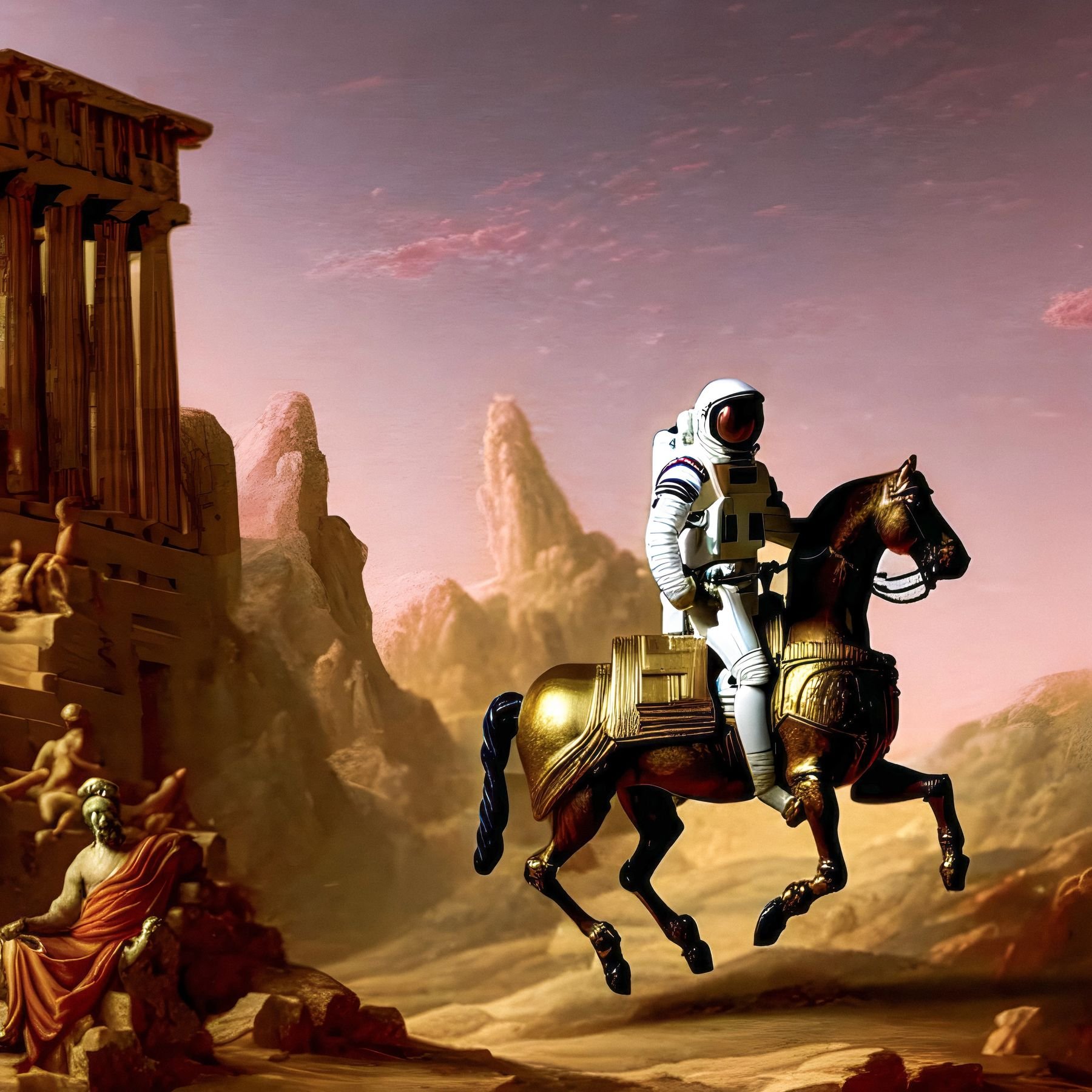
Cosmic Cowboy. Artwork by Steven Morse.
Your work often involves repetition, transformation, and systems that produce variations from an initial image or set of rules. What attracts you to processes where the final result isn't completely determined from the beginning?
What interests me is the moment when a system I’ve designed produces something I couldn’t have fully anticipated.
With Cosmogenesis, I developed the code and visual system, but I didn’t know exactly what every piece would look like when the collection was generated. Seeing those results for the first time was exciting. I had created the conditions for them to exist without controlling every outcome.
FloraPop has a different balance. I drew the flowers and chose the palettes, so some decisions are fixed, while the colors continue to change over time.
The discovery can belong to the viewer, too. Someone interacting with Cosmogenesis can change its pulse and movement, then create an image from a particular moment. They can find something within the work that I haven’t seen myself.
I like the idea that an artwork doesn’t have to end at a single, finished image.
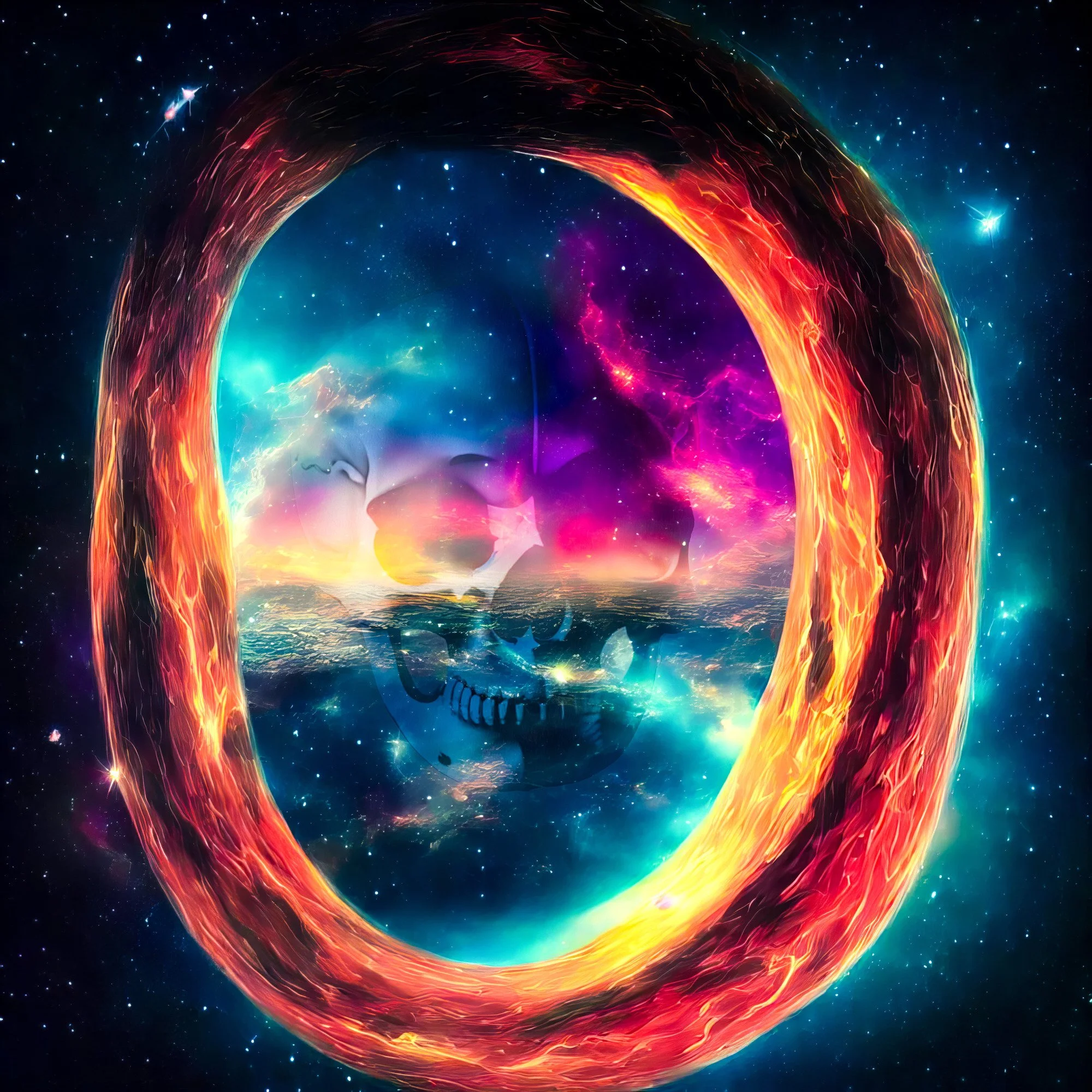
Rebirth. Artwork by Steven Morse.
You have presented your work in both traditional art contexts, such as Art Miami, and within the crypto and generative-art communities. Do you think these different audiences look at the work differently, and does that affect how you present it?
I think the audiences are different, but they’re also beginning to overlap. Initiatives like Zero 10 at Art Basel are one example of digital art becoming part of the traditional art fair experience.
One difference is how people encounter the work. When Rudolf Budja Gallery presented Cosmic Cowboy at Art Miami in 2023, I could stand nearby and observe people’s reactions without them necessarily knowing I was the artist. Some were drawn to the image, then seemed to lose interest when they saw that AI was involved. It made me aware of how much a label can shape someone’s response before they know the process.
Similar things happen in digital art communities. People can make quick judgments based on the technology or platform associated with a work. Online, those reactions happen faster, and you may never meet the person viewing or collecting it.
I appreciate both environments. A conversation in front of an artwork offers something different from an online encounter, while digital platforms can bring the work to people around the world.
That affects how I present it. I try to give people a way into the ideas, the process and the experience, rather than expecting a technology label to explain the artwork.
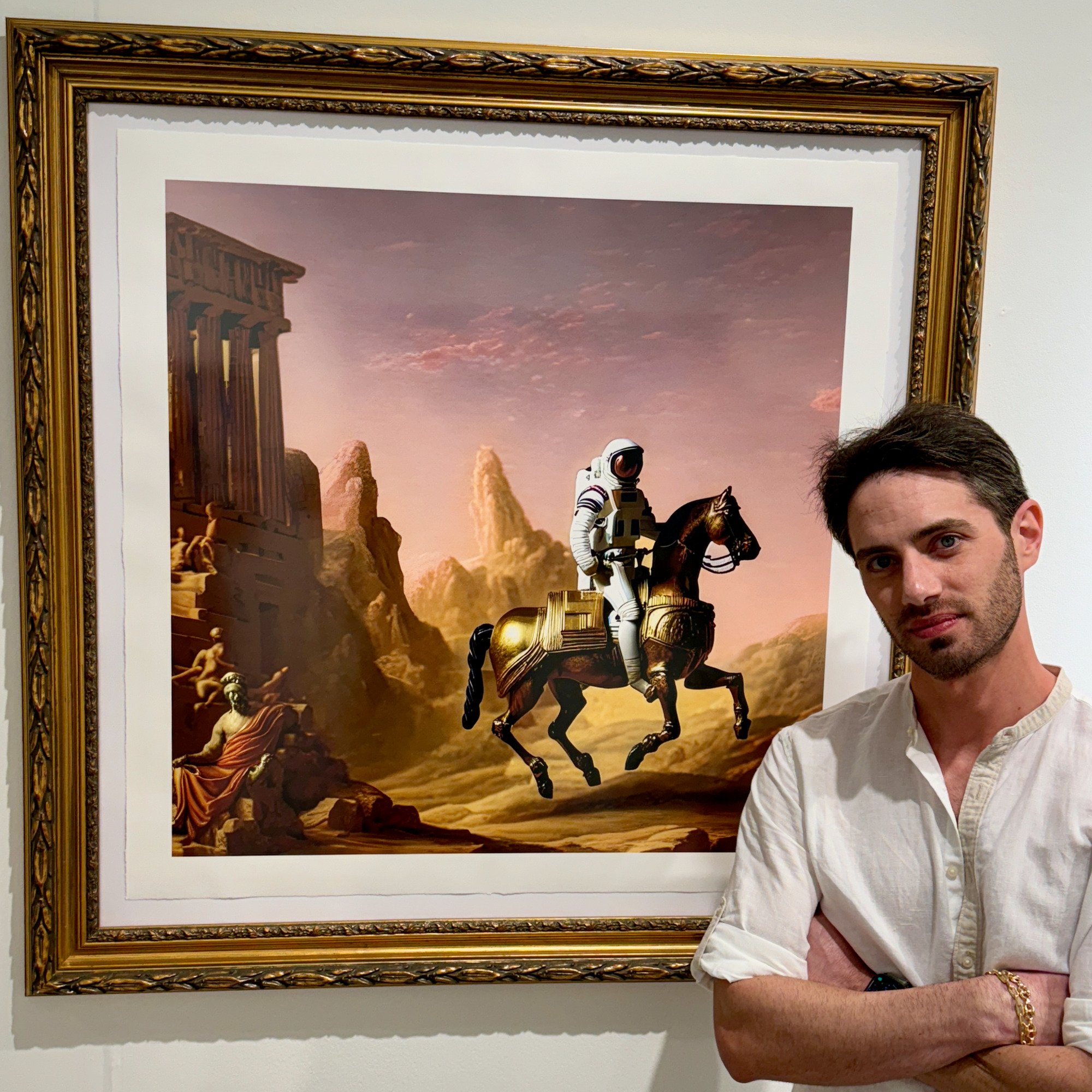
Steven Morse with Cosmic Cowboy at Art Miami, 2023. Artwork by Steven Morse. Photographer unidentified.
You’ve also taught generative art through your workshop at Inscribing Atlantis. What did you discover through teaching others that changed or clarified your own understanding of generative art?
We began with some history, including artists like Vera Molnár, who was exploring rule-based image-making in the 1950s. I think it surprises people to discover that generative art has a history that long predates NFTs and blockchain.
What stayed with me most, though, was seeing participants make something themselves. By the end of the workshop, they had enough of a foundation to create a simple generative artwork. Their excitement was incredibly rewarding.
It also reminded me how much can sit behind an image that looks simple: thought, experimentation and code that the viewer may never see.
Teaching helped clarify how I communicate my own work. I can spend hours discussing the technical process, but not everyone needs or wants that explanation. I need to make room for the person encountering the artwork on their own terms. What do they notice? What does it mean to them? How does it make them feel?
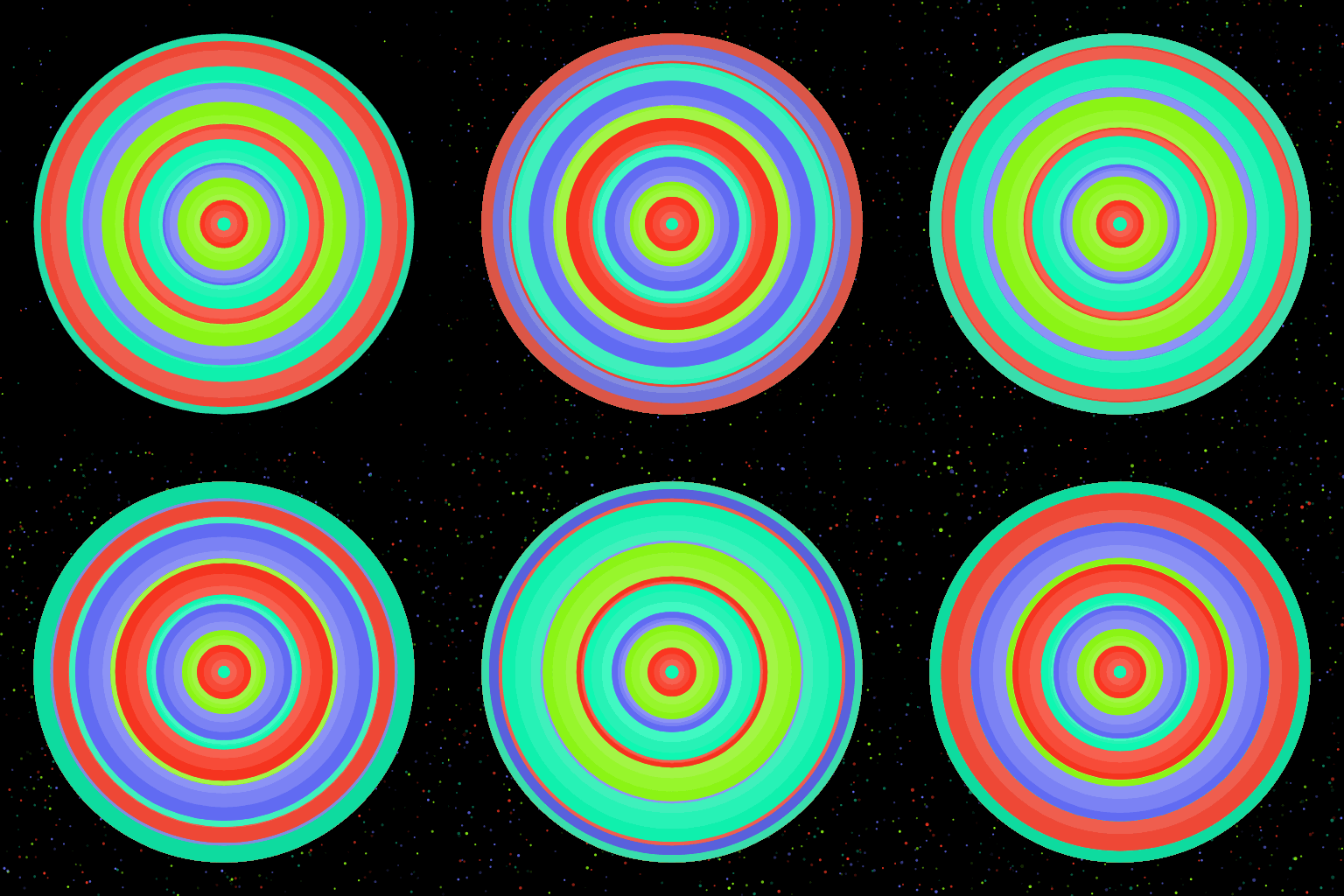
Cosmogenesis (animated GIF). Artwork by Steven Morse.
What is a fun fact about you?
I have a pretty ridiculous sense of humor. I’m sarcastic, I love making people laugh, and I can be a complete goofball.
I’m also an actor, and I create comedy sketches under Not Steven Morse, playing absurd characters in increasingly ridiculous situations. It’s a different creative outlet from my visual art, and I have a lot of fun with it.

FloraPop #39 (seasonal color-state demonstration). Artwork by Steven Morse.
What else fills your time when you’re not creating art?
I’ve become pretty obsessed with fragrance. I love exploring and collecting scents, and I share fragrance and lifestyle content as @iamstevenmorse. There’s so much creativity and storytelling in perfumery, which I really appreciate.
I also enjoy exercising, eating well and staying active. I love spending time with my dog, family and friends, and traveling whenever I can. Experiencing different places and cultures has always influenced how I see the world, and that inevitably finds its way back into my work.
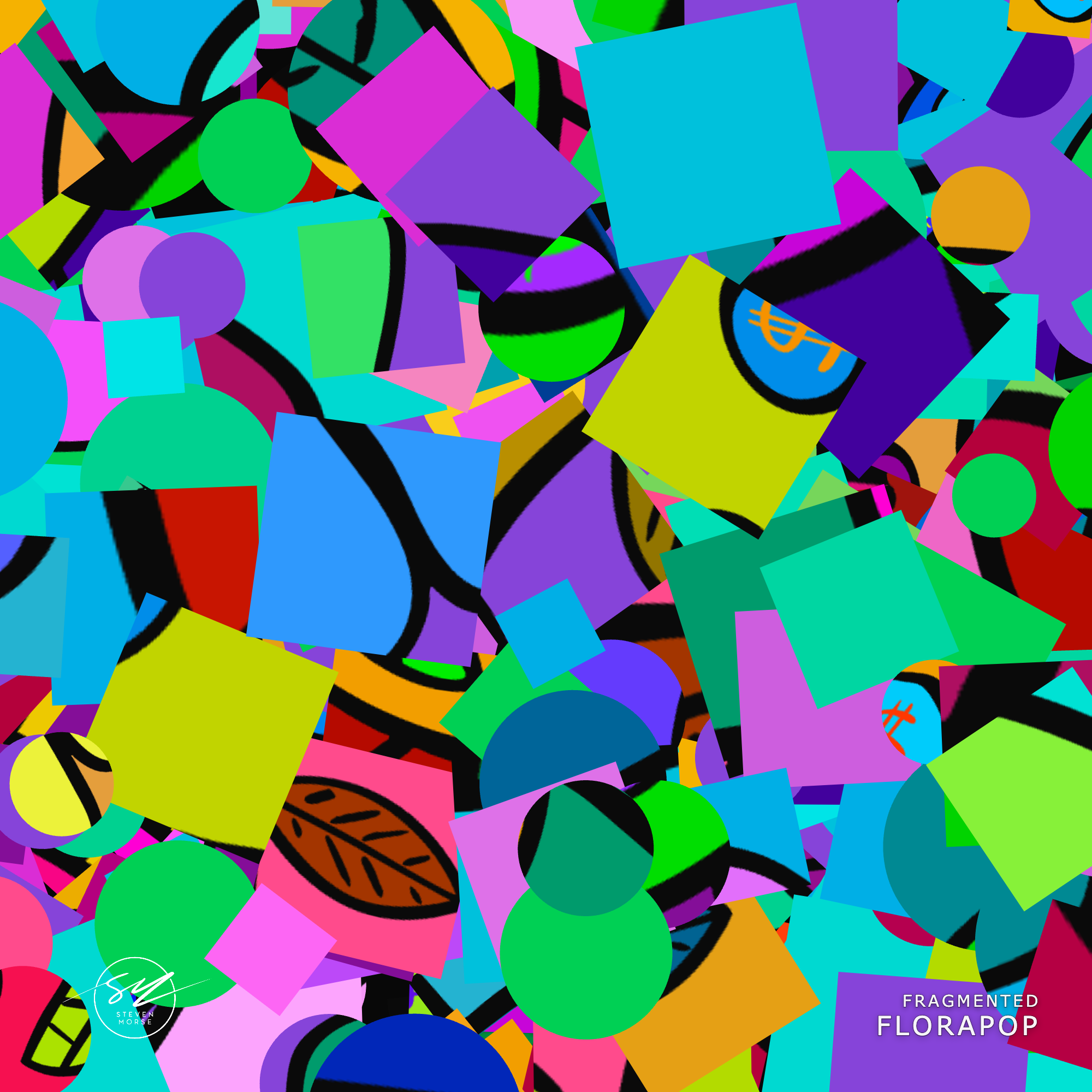
Fragmented FloraPop. Artwork by Steven Morse.
With so much attention often placed on the technology behind AI, blockchain, and generative art, what do you ultimately want someone to experience when they encounter one of your works without knowing anything about the technology that produced it?
I want people to feel curious, whether that means wonder, joy, intrigue or simply wanting to look a little longer. They don’t need to understand the technology to connect with the work.
In Cosmic Cowboy, the astronaut and horse in a classical setting suggest a story without resolving it. Why is he there? What is he exploring? For me, it’s a journey in search of the source of creativity, but I love that someone else might see something entirely different.
Cosmogenesis invites people to explore through interaction. FloraPop changes with the seasons, and FloraPop Studio lets collectors build new compositions from the original artworks. Those are different ways of inviting someone into the work.
More than anything, I hope an image or experience stays with them after they’ve left it. If it continues to live in their imagination, that’s a beautiful thing.
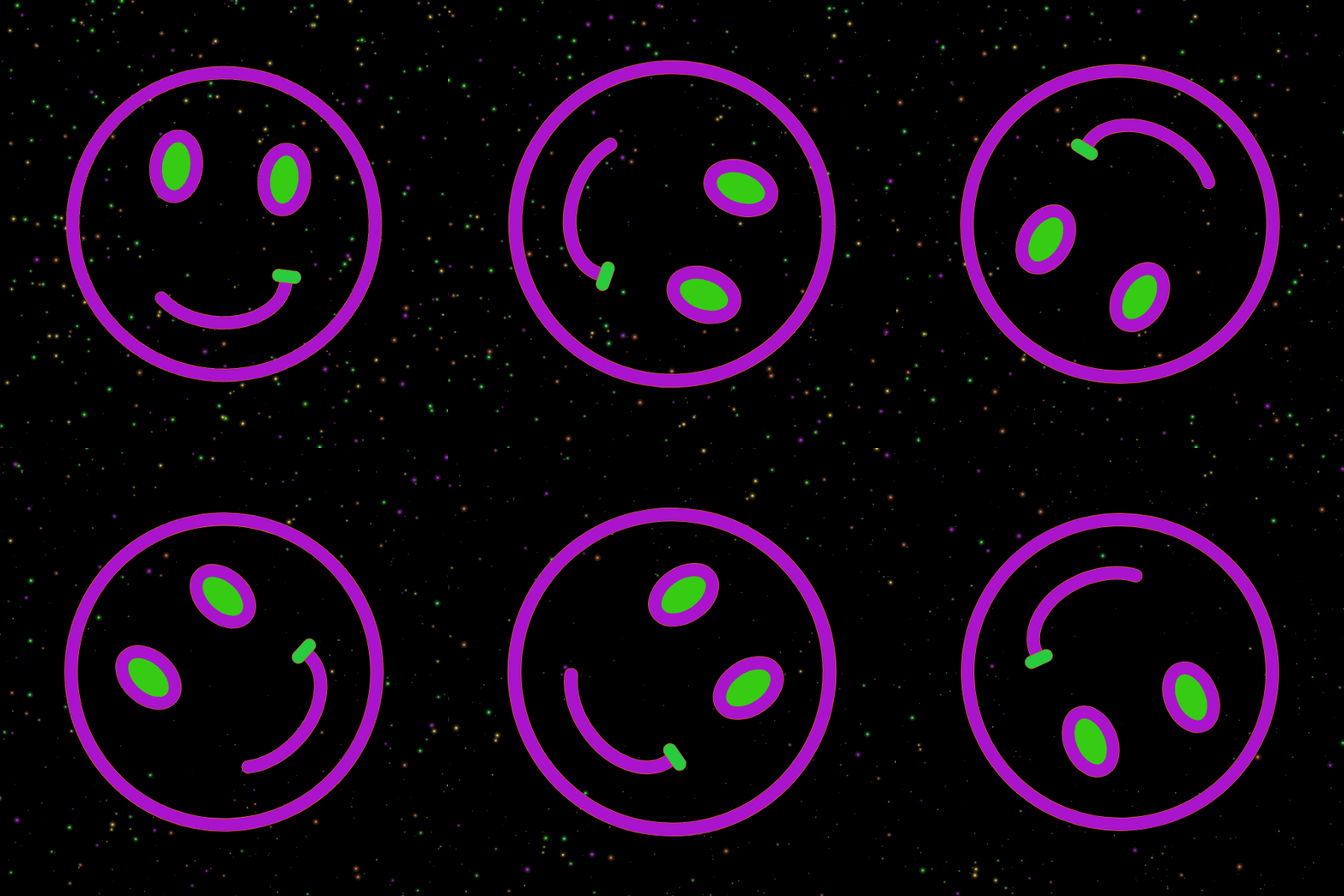
ECSTASY (animated GIF). Artwork by Steven Morse.
Are you our next spotlight artist? Submit the form to apply to be featured!
We share works by digital artists as well as digital arts exhibitions, events, and open calls daily on Instagram — follow us for more and subscribe to our newsletter so you don’t miss new blog posts.