A Conversation with Adam Connelly on The Nude That Helped Shape the Internet
By Cansu Waldron
Adam Connelly is an artist whose work examines the relationship between digital culture and physical media, with a particular interest in how technology shapes our ideas about bodies, privacy, and identity. His series The New Models, created between 2001 and 2004, consists of oil paintings based on pixelated nude images sourced from the early internet. By translating digital imagery into traditional painting, Adam explored the role of internet pornography in driving technology adoption and innovation, while raising questions about censorship, representation, and the circulation of intimate images online. Now reissuing prints from the series, he revisits a body of work that captures a formative moment in internet culture, before the term “post-internet” entered the art-world vocabulary.
Adam developed The New Models while working full-time as a graphic designer at Apple, drawing on his firsthand experience of the technological changes unfolding around him. The series also has a deeper connection to the history of digital imagery, particularly the pixelation experiments conducted by Leon Harmon and Kenneth Knowlton at Bell Labs in 1966, which used block averaging to transform photographs into pixelated compositions. Their early experiments, including a nude image, offer an unexpected historical parallel to Adam’s own work. Seen from the perspective of today’s digital landscape, The New Models feels both rooted in its time and strikingly relevant, revisiting questions about technology, visibility, and the body that remain unresolved.
We asked Adam about his art, creative process, and inspirations.
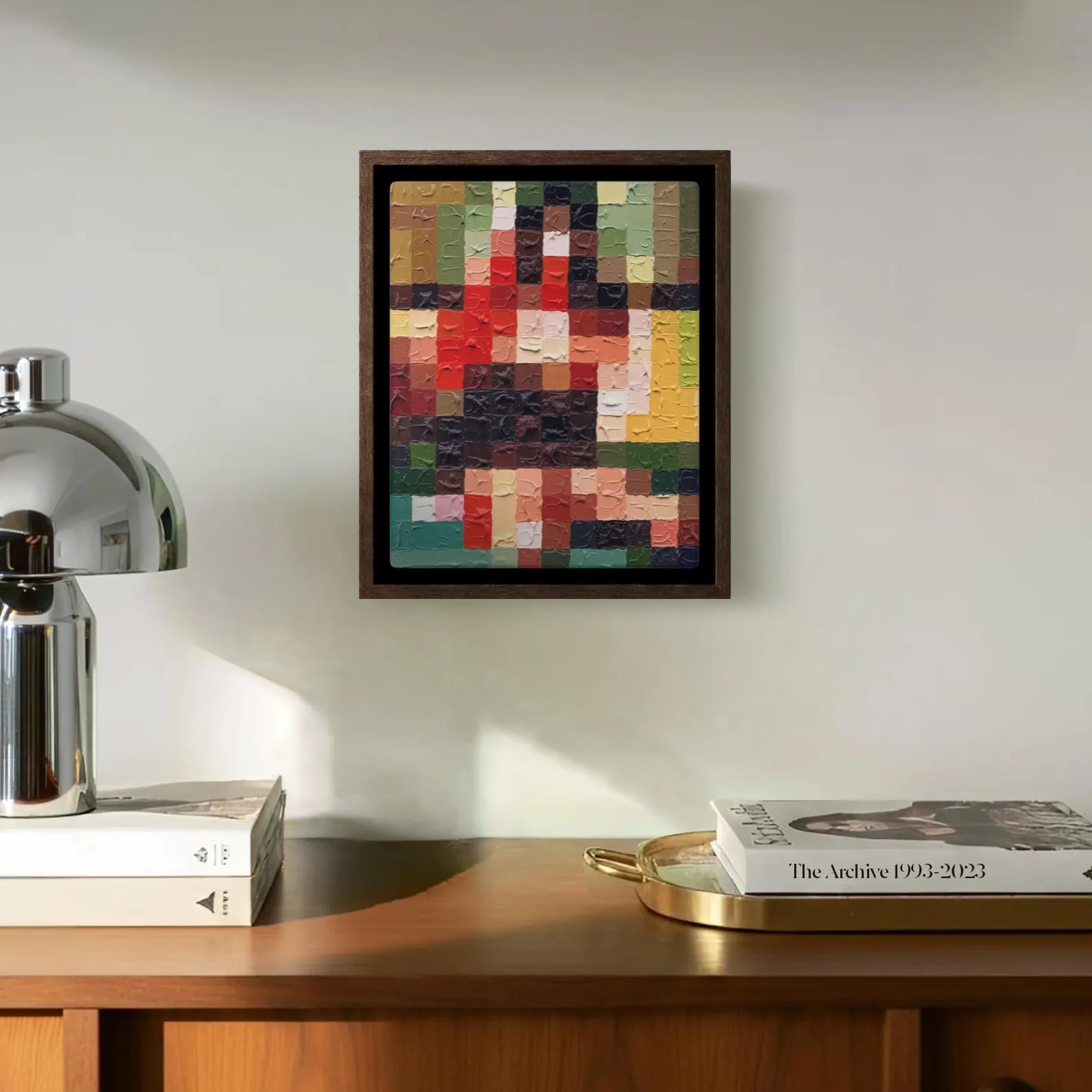
You made The New Models between 2001 and 2004, when the internet was still becoming part of everyday life. What were you noticing about the relationship between technology, bodies, and internet culture at the time that led you to make these paintings?
When I made this series, I was living and working in San Francisco, at the dawn of the internet era. Lots of folks I knew had an intense “online life” as well as an intense offline one. They were working at companies pushing the frontiers of web tech, but also building camps for Burning Man, running Bianca’s Smut Shack, and living poly lives in group houses. Many of them, I knew just by their online alias, long before I knew their full names. Their online lives and offline lives were distinct, but blurred. Usually via the filter of sex, both online and off.
I think this was all a precursor to how a lot of folks are living their lives today - as OnlyFans models or cammers, curators of Reddit forums, or adult AI content generators, who also tend to be normal, everyday people you might encounter in the coffee shop.
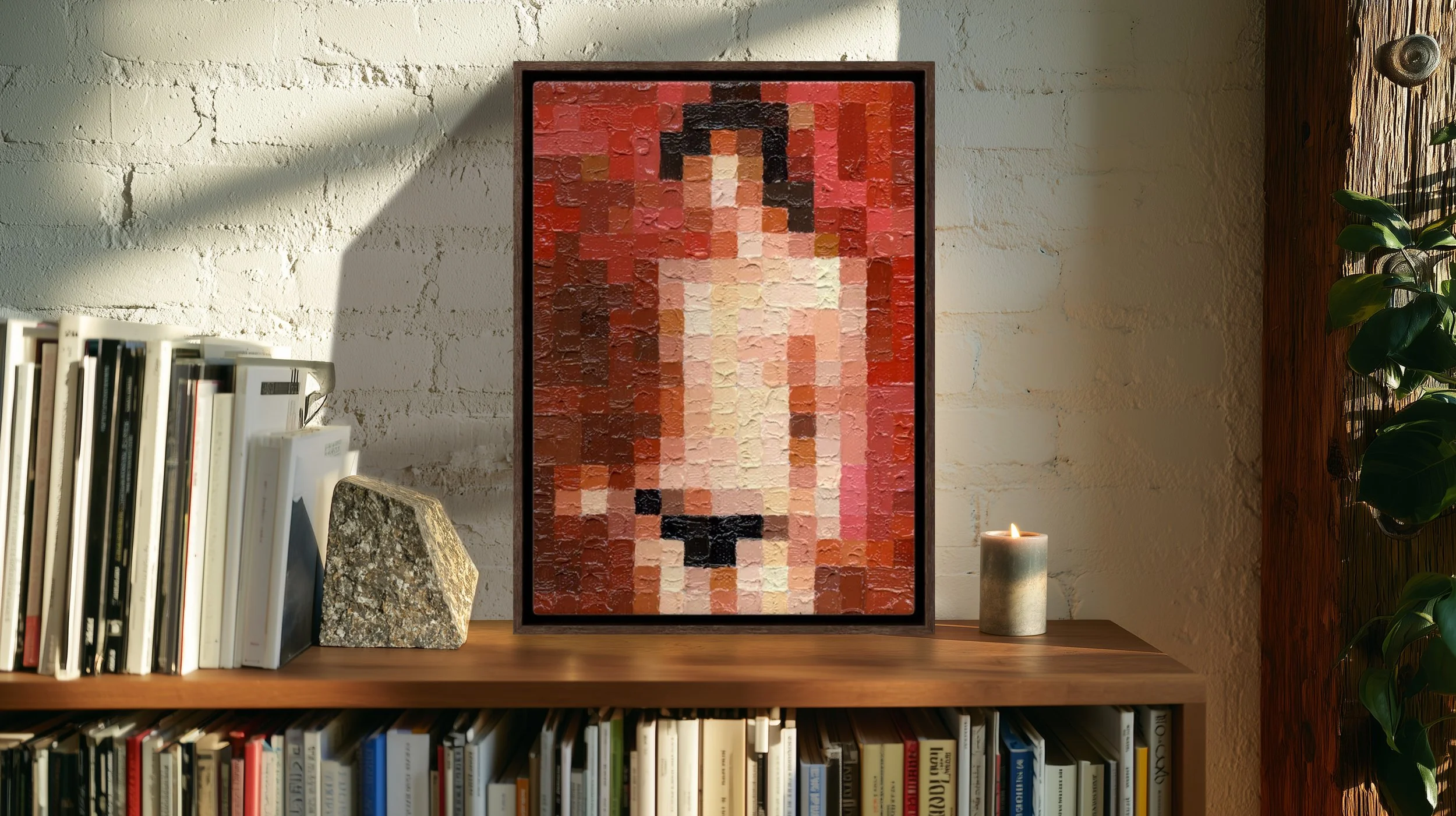
You’ve described internet pornography as a quiet driver of technology adoption and innovation. How did that relationship between sexuality and technological development influence the way you thought about the images you were taking from the early internet?
It was clear to me at the time that the drive for faster processors, faster connections, better screens, etc was all being fueled by the rush of porn that was flooding the early internet. The adult sites understood the model early, and boomed as a result. I heard a stat recently that something like 8 billion hours of content was streamed via Pornhub alone last year, and over 80,000 people a minute visit every day. We didn’t arrive here by accident. Porn has always been a driver of tech adoption when it comes to image reproduction, whether in photography, film, video cameras, Polaroid film…
I saw the images being produced as temporal and throwaway, "low art" to cater to prurient tastes. I also saw artfully composed, classical nudes, poses and gestures reminiscent of masterful paintings and sculptures, and an opportunity to elevate what might be considered as the lowest and most temporary of images to more permanent “high art” status via rendering them in oil paint.
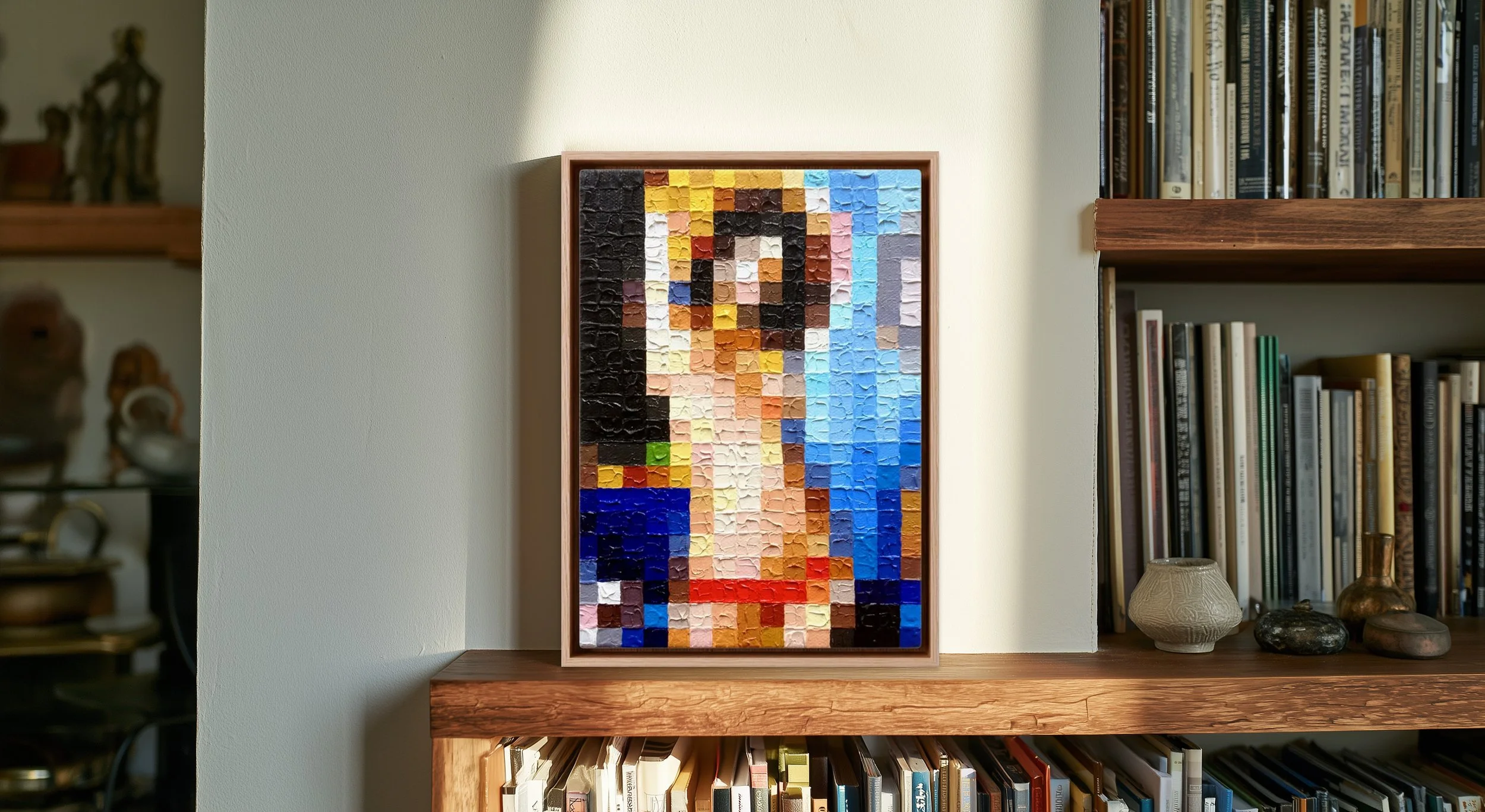
You were working full-time as a graphic designer at Apple while making these paintings. How did being immersed in the technology industry influence your perspective on the internet and the images circulating through it?
I had the benefit of being behind the curtain as Apple was developing its “digital hub” philosophy of products. These were the iPod years, when people were finally getting online en masse to download music, bandwidth speeds were finally enabling realtime video chat with iSight cameras, and laptops had finally outgrown their bulky, awkward stage. Apple software like iMovie, iDVD, and iPhoto were democratizing content creation, and giving new computer and internet users the tools to create whatever kind of content they wanted to. Whether they acknowledge it or not, all these tools were clearly being used by both porn creators and consumers.
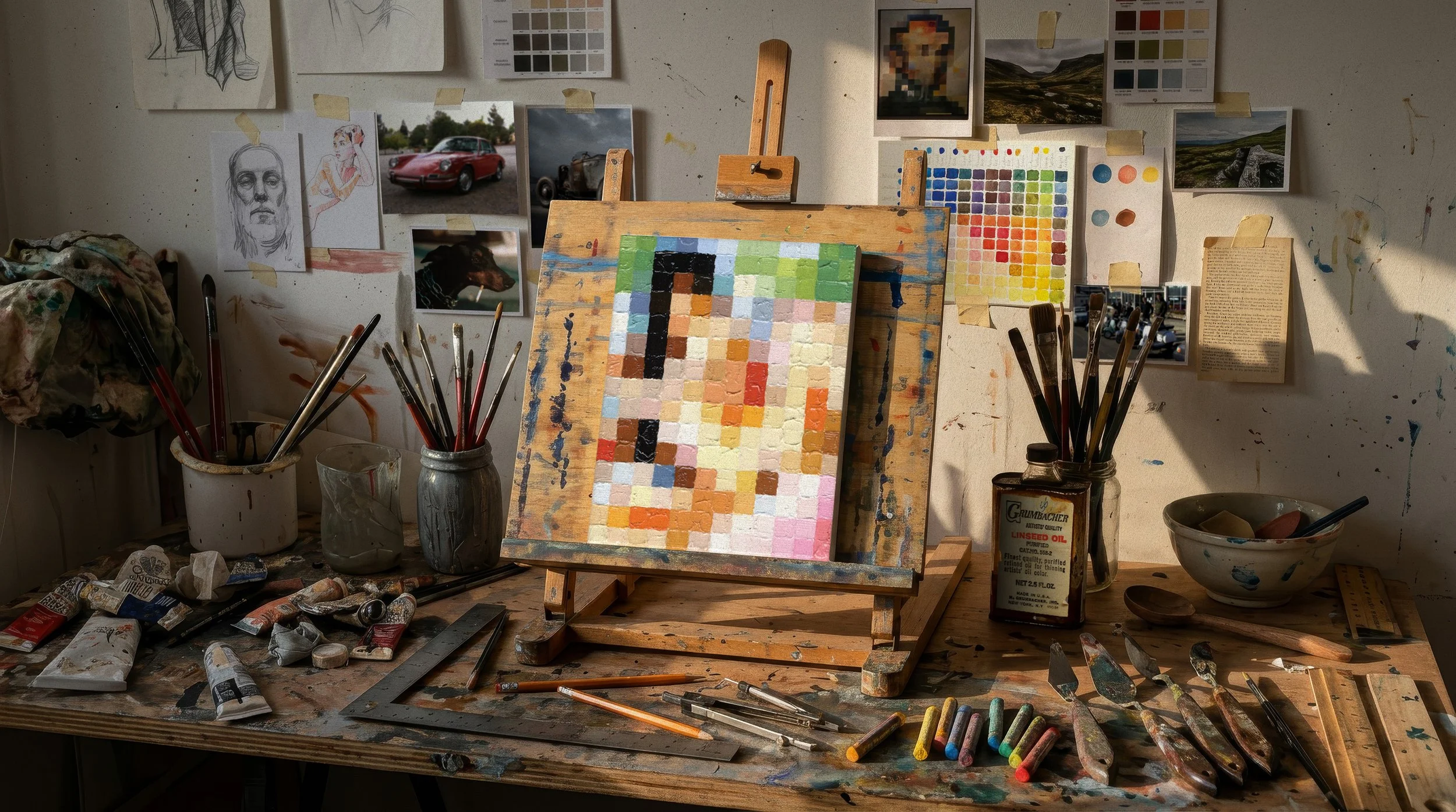
The New Models touches on privacy, identity, censorship, and the circulation of intimate images, issues that have only become more complicated in the decades since you made the work. When you look at the series now, what feels unexpectedly contemporary about it, and what belongs very specifically to the early internet?
Apple still makes a lot of privacy in its advertising and PR, and it’s truly more important than ever. The link between the hardware and the adult content is still strong, and you could even say that this iPhone ad campaign was directly inspired by the types of images amateur nude models create for sites like Reddit, using the phone itself to both take the photo AND shield their faces.
People immediately recognize the reference. These types of images are created by regular people with the express idea of sharing their most intimate selves, while still shielding elements of their basic identity. The phone is both the portal to sharing, and the tool of anonymity when it comes to their identity.

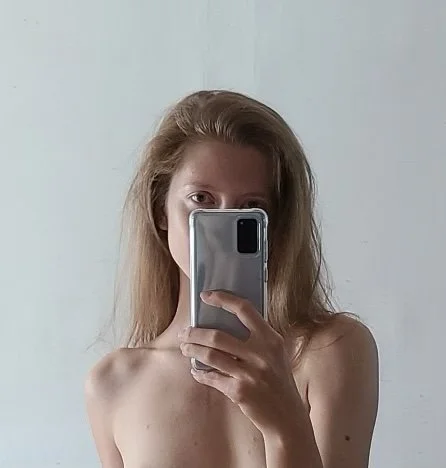
Broadly, I think we’ve seen the difficulties with being public on the internet grow in the age of deepfakes, phishing, identity fraud, celeb iCloud hacks, etc. I think we’re all craving a little more privacy, or ways to mediate our digital and analog personas more - to separate them as they become ever more increasingly entwined. I think there’s a nostalgia for that early time, when it was easier (or at least less dangerous) to blend those personas, and still stay anonymous.
I think what belongs specifically to the early internet era is that most people online now don’t know what a progressive JPG is, or ever squinted at a scrambled Cinemax channel on cable TV.
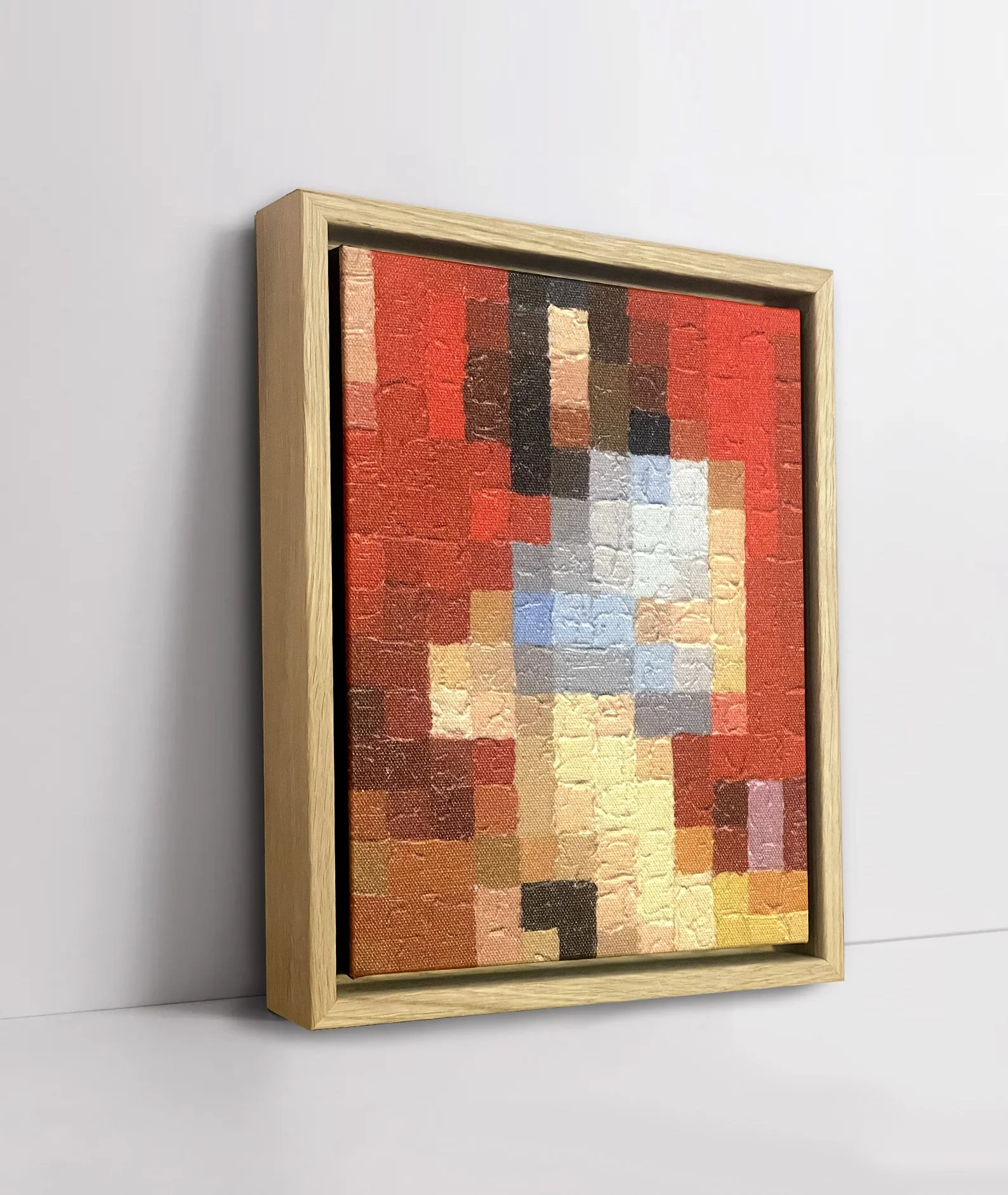
Your pixelation technique connects the paintings to Leon Harmon and Kenneth Knowlton’s 1966 Bell Labs experiments with block averaging. What drew you to that earlier technical history, and how does knowing that the original test image was also a nude change the way you think about your own series?
I knew the Dali image, when I first had the idea. More research led me to where the image he referenced came from originally, then more research led me down the path to their first experiments and E.A.T.
I can’t say for sure, but I think there were a few elements at play in their experiments:
1) Figuring out what basic elements (in their first case, typographic glyphs) could be used to create an image. This in itself was a pre-cursor to ASCII art. There was early online porn even in ASCII, which formed as part the earliest internet, when it was still based in pre image-based browsing tools.
2) Finding out their first image was a nude made me think that they were trying to achieve a similar thing to what I was - taking a very recognizable image, and seeing how much data they could remove and retain legibility. It probably could have been a man holding a briefcase, but what kind of proof would get the attention of their (male) colleagues more?
3) I bet Bell Labs in the late 60s was a pretty male-dominated research sphere, and there was a lot of “boys club” content floating around, but I also think because of their affiliation with Rauschenberg, E.A.T, and the NY art scene there was a nod towards traditions in fine art of depictions of the female “odalisque” nude too.
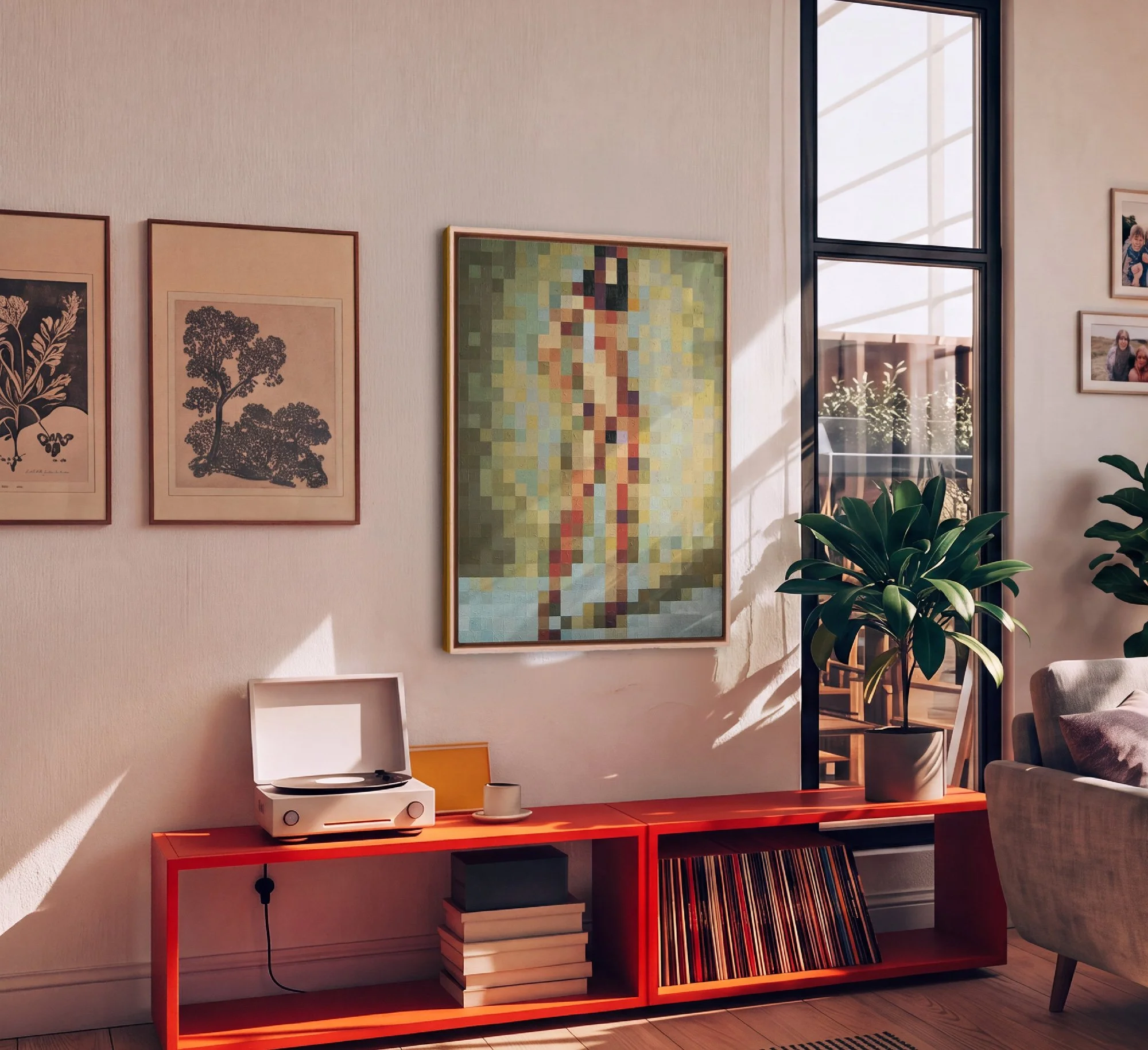
There’s an interesting chain running through the history you describe: a nude becomes one of the earliest experiments in computer-generated imagery, decades later nudes circulate through the early internet, and you then bring those digital bodies back into painting. Do you see a larger connection between these moments?
The above answer sort of gets at that, but yeah. I think the basic premise underlaying it is still that prurient interest in nudes, porn, sexual imagery will ALWAYS drive the development and adoption of new technologies, whether it’s print etchings, photography, or digital forms. There are elements of traditional fine art nude paintings, pop art references, and even Richard Prince or Jenny Saville’s use of appropriated imagery tied into my work too. That tension is what has made this series durable, and still relevant today, I think.
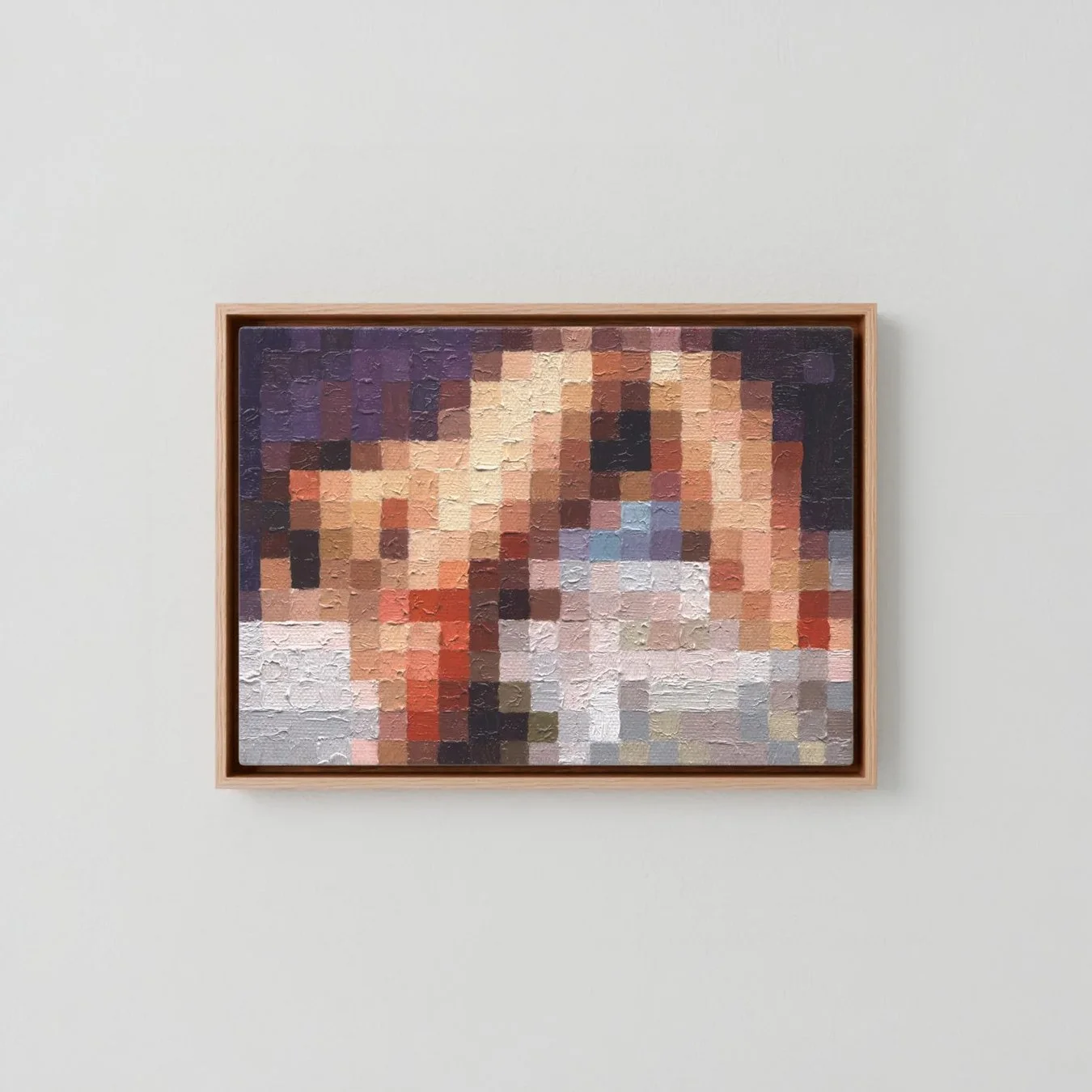
You are now reissuing prints of The New Models roughly 25 years after the paintings were made. Has revisiting the series changed your understanding of what you were doing then, or does the work still feel like it belongs to the same conversation you were having in the early 2000s?
I think revisiting makes me realize how intentional the series was in the first place, but that the conversation we are now having around these same topics is more intense and more relevant to billions of people’s lives these days. The digital/analog self idea is how a real debate, including people like Bryan Johnson wanting to extend their physical bodies lifespan as long as possible and others like Elon Musk who think we eventually could become immortal as fully digital beings.
If anything, I may not have fully understood then how long the work would stay relevant when I made it.
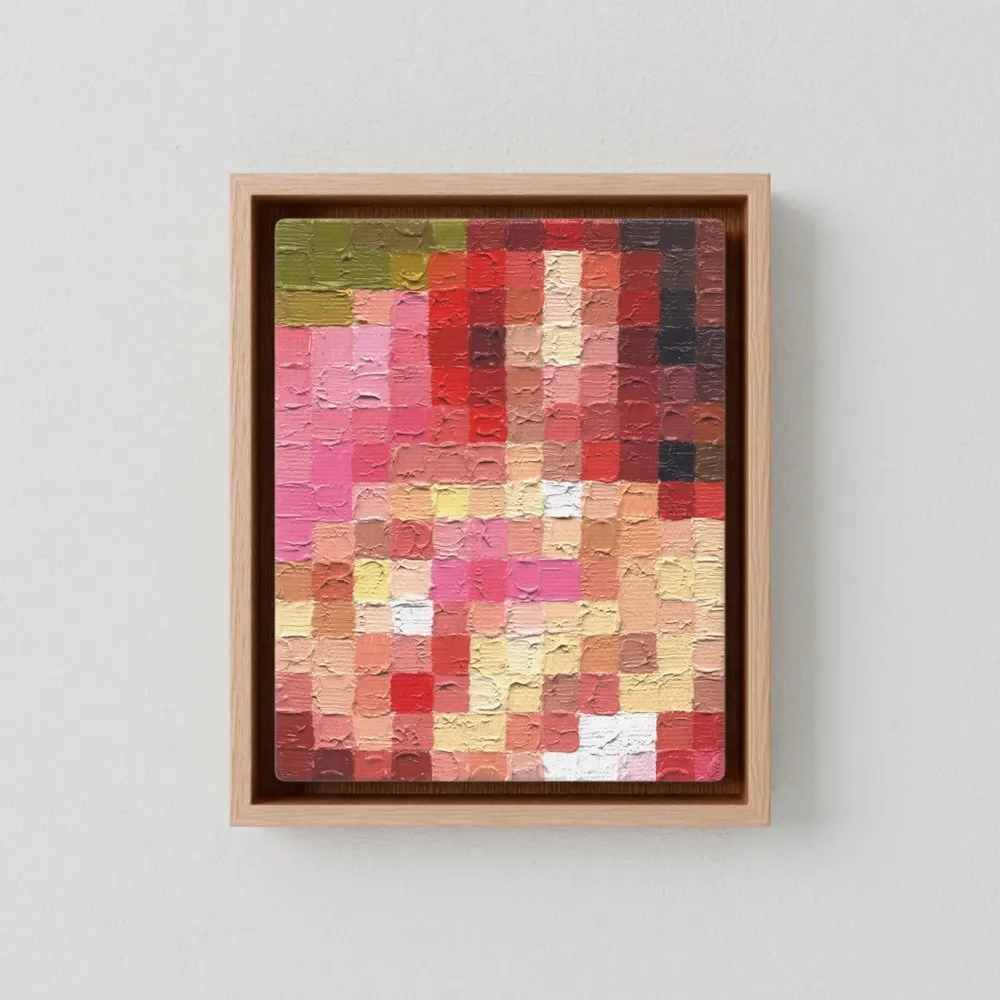
What is a fun fact about you?
I love doing intensely analog things, like wrenching on old cars.
What else fills your time when you’re not creating art?
I’m still working in design and advertising, but other than that, travel, cooking, working on and driving old cars, and other DIY projects.
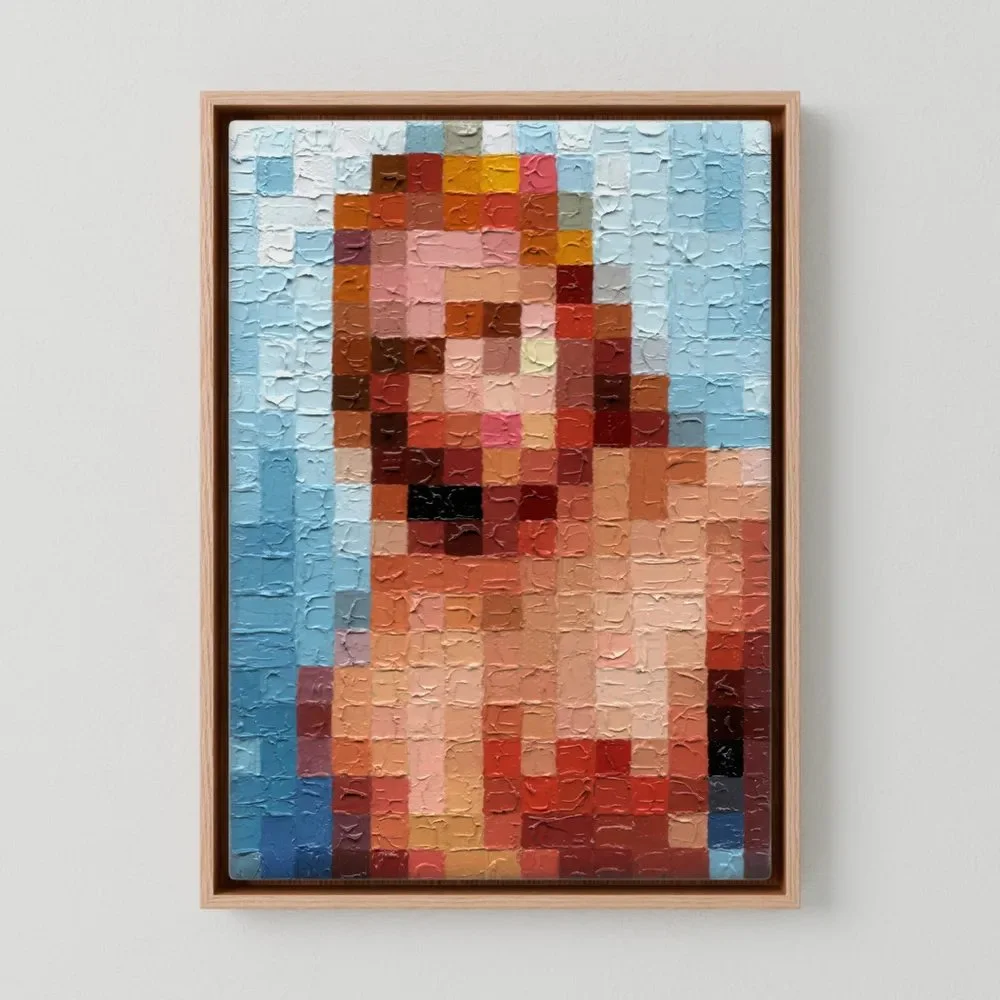
Are you our next spotlight artist? Submit the form to apply to be featured!
We share works by digital artists as well as digital arts exhibitions, events, and open calls daily on Instagram — follow us for more and subscribe to our newsletter so you don’t miss new blog posts.
![Project Spotlight: pifmgr.dll’s [M]ETAL✨ @pifmgr.dll is a digital artist working at the intersection of audiovisual design, 3D experimentation, and atmospheric world-building. His project [M]ETAL explores metal both as a physical material and a](https://images.squarespace-cdn.com/content/v1/63b2fdbe4376de5bfdc6771f/1779108338452-QO04Q3MMJ3VMU8PJV1MD/image-asset.jpeg)