CompMonks on The Space You Know and the One You Feel
By Cansu Waldron
CompMonks is a French-born, Zürich-based new-media architect whose practice brings together visual art, architecture, cognitive science, and digital technology. Working across interactive and generative systems, he explores natural communication, human visual memory, and the relationship between artificial and natural intelligence. His installations combine technological processes with architectural elements to create immersive environments that reinterpret mythological narratives and offer a visual and spatial way of thinking about how the human mind interacts with the world through computers.
CompMonks trained in architecture in France, graduating in 2007, and went on to teach computational design in both France and Switzerland before receiving a fully funded PhD fellowship at ETH Zürich. He now leads advanced research into interactive and generative design, including work with brain-computer interfaces. His practice has been presented at institutions including Centre Pompidou, ZKM, and Ars Electronica, with works also held in the permanent collections of ZKM and the Copernicus Science Museum. Across his research and artistic work, he continues to explore what happens when architecture, technology, and human cognition become part of the same creative system.
We asked CompMonks about his art, creative process, and inspirations.
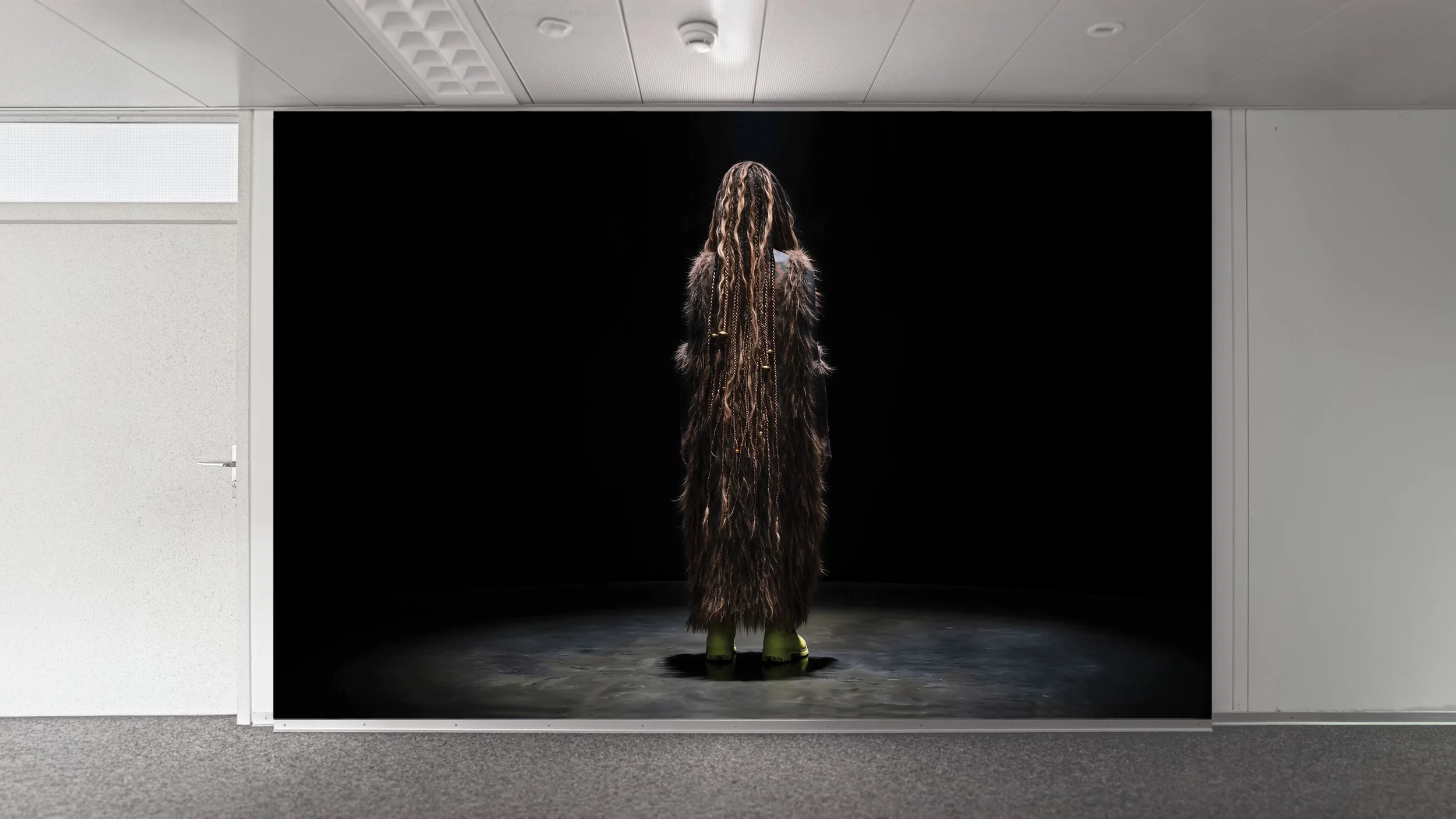
Blue Fire Veil, The Summoning, Single-Channel Audio-Video Installation, 2026. Credits: CompMonks, Silke Grabinger
You describe your practice as existing at the intersection of visual art, architecture, and cognitive science. How did these three fields come together for you, and when did you realize they could become part of the same artistic language?
Architecture was my foundation, and I had the opportunity to meet mentors in both architecture and the arts who showed me ways to learn and explore intellectually and physically, through thought and sensory experience. I graduated in France in 2007 and became involved in computational design while developing my own practice in digital arts. Working with computers opened up ways of making forms, but it also raised questions about how we imagine and value them. How does something we have in mind become something we can see, change, and eventually share?
My work with brain-computer interfaces, which I later developed through scientific research in Switzerland, brought those questions into closer contact with cognitive science. It gave me ways to investigate the relationship between perception and form generation. Through installations, I could also explore what that relationship feels like, and what it might mean to someone encountering it.
I would describe it as a gradual convergence. Architecture has an incredibly rich vocabulary for addressing the timeless question of how individual and collective beings relate to their surroundings. It gave me a way to think about that relationship through physical space, while my research brought me closer to the mental processes through which we make sense of it. My artistic practice is where these concerns can engage freely and take less predictable directions.
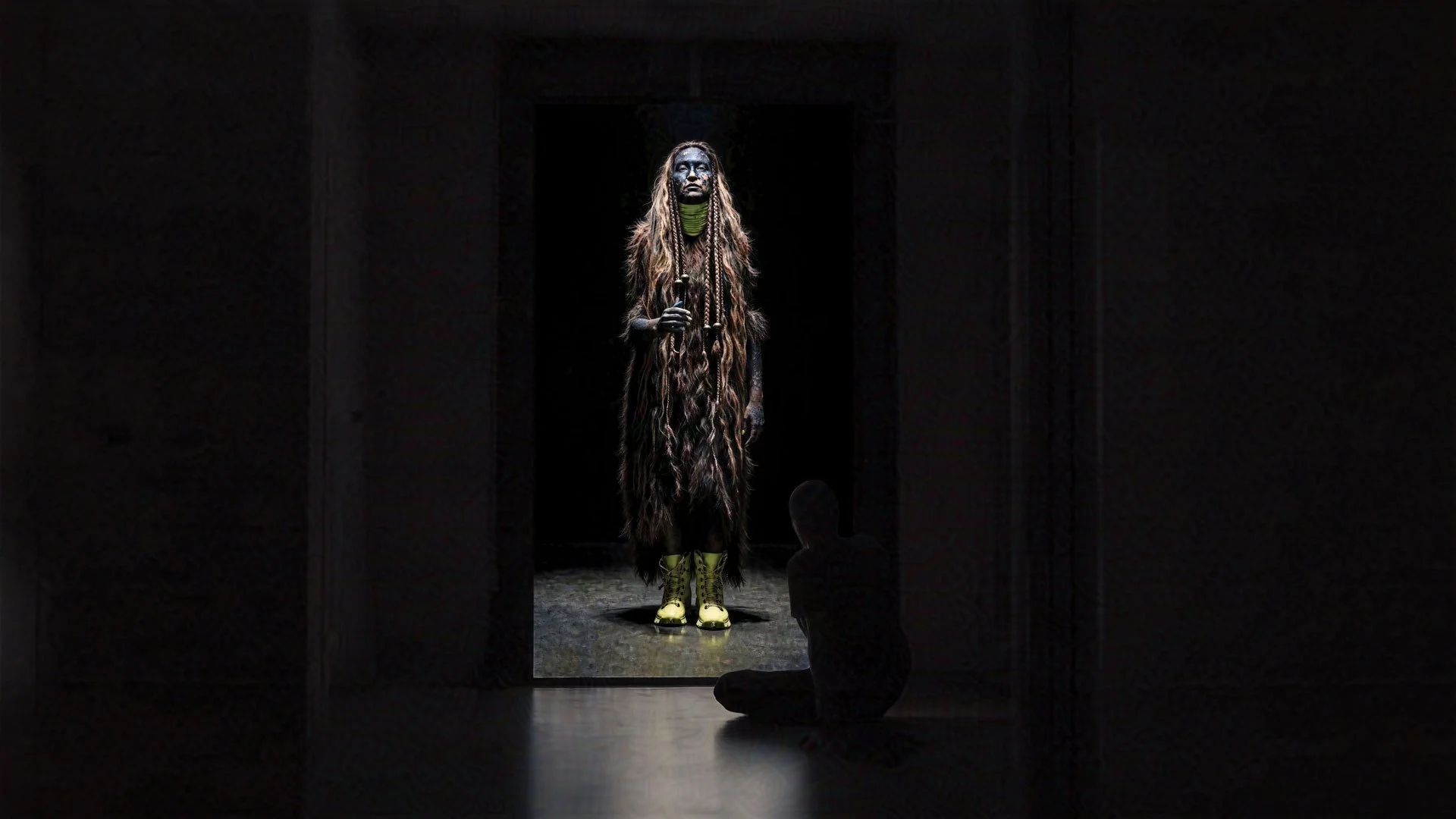
Blue Fire Veil, The Long Walk, Generative Video Installation, Dance Performance, 2026. Credits: CompMonks, Silke Grabinger
You’re particularly interested in “human visual memory” and both artificial and natural intelligence. What fascinates you about the way the human mind remembers, processes, and reconstructs images and how does that influence your work?
I am fascinated by the distance between an experience and the image we retain of it. Think of a place you remember well. You might struggle to describe its exact geometry, yet still feel strongly for its atmosphere. We also rely on memories as a source of truth, even as our minds keep remodelling them. That tension between uncertainty and identity is a starting point for my work: what gives an image significance beyond the details we can reproduce?
Dreamcatcher approaches this through dreams and their recollection at a very intimate level. I work with my own recorded brain activity and accounts of what I remember after waking, bringing these traces into a process of generating moving images. The result is an active reconstruction. I would not describe it as a recording of a dream or a direct view into someone’s mind.
I want the images to retain something of that uncertainty and its power. A dream can carry several meanings at once, and I have little interest in settling on one explanation. Artificial intelligence gives me ways to work with patterns in brain activity and develop images in relation to my recollections. Their significance remains tied to the experience and interpretation of living people.
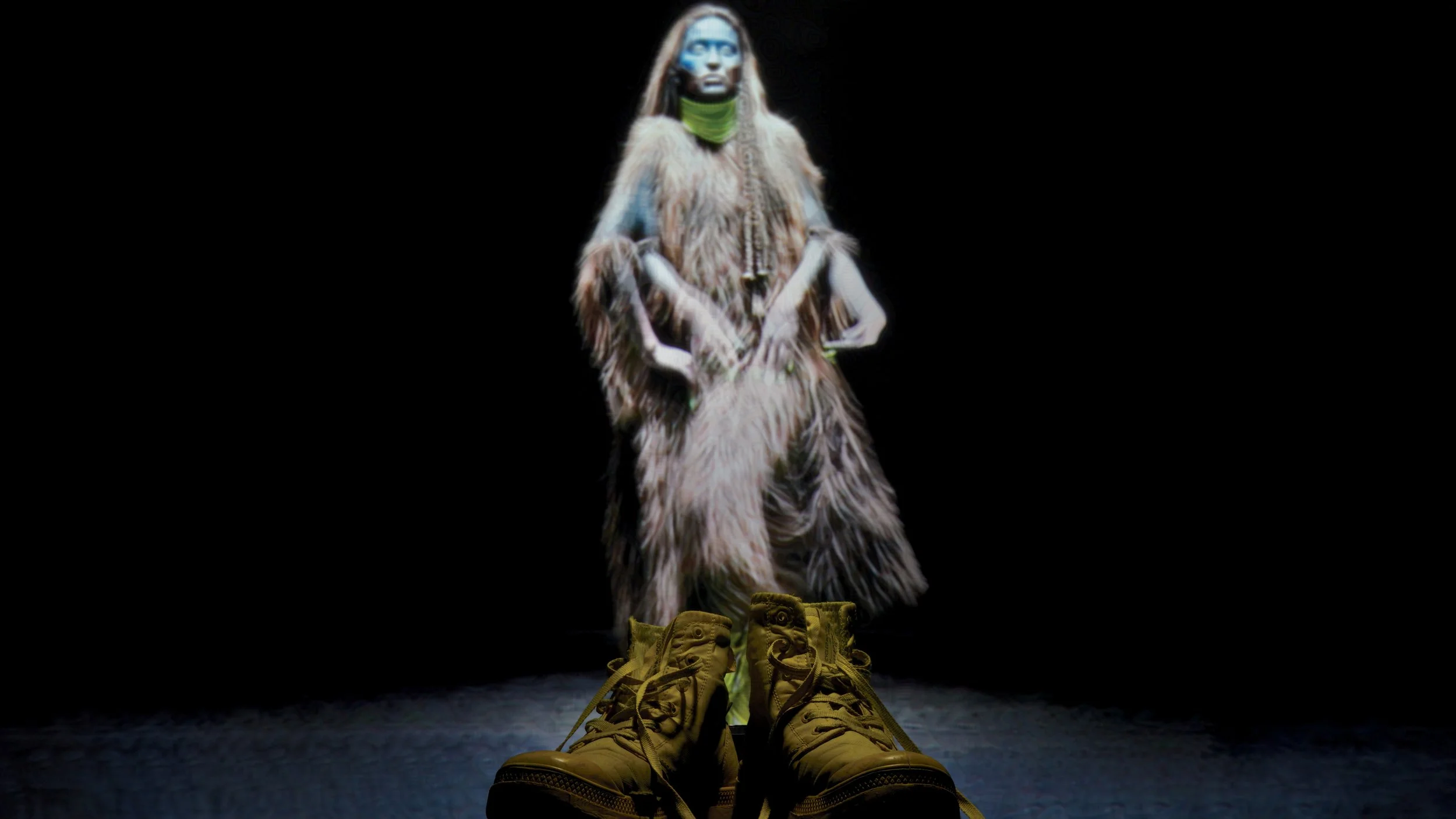
Blue Fire Veil, Between Two Breaths, Dance Performance, Interactive and Generative Multi-Channel Audio-Visual Installation, 2026. Credits: CompMonks, Silke Grabinger
Architecture plays a very different role in your practice than simply providing a physical space for an artwork. What can architecture communicate that a screen or purely digital artwork cannot?
Architecture brings your body into the experience with intent. Someone has set a stage for the encounter. For me, this is more a question of narration through the arrangement of physical elements than a question of scale. Your distance from an image, the direction from which you approach it, and the presence of other people become part of what you perceive. You may have to move to discover something, or remain in one place long enough for a relationship to appear. I can stage those conditions, but I cannot fully prescribe the experience that follows.
In Dreamcatcher, projected images extend across adjoining walls and the floor, creating a room corner. That corner becomes part of the work. It offers a physical structure while the moving images complicate your sense of its depth and boundaries. I am interested in the meeting between the space you know you are standing in and the one you feel you are entering. Your body and mind have to agree on that situation. That negotiation becomes a condition of the experience.
A screen can already create a powerful experience, and I also make works for that format. I would not establish a hierarchy between them. Working architecturally lets me compose the conditions of an encounter: how an image relates to a body, how the encounter unfolds over time, and how it can be shared.
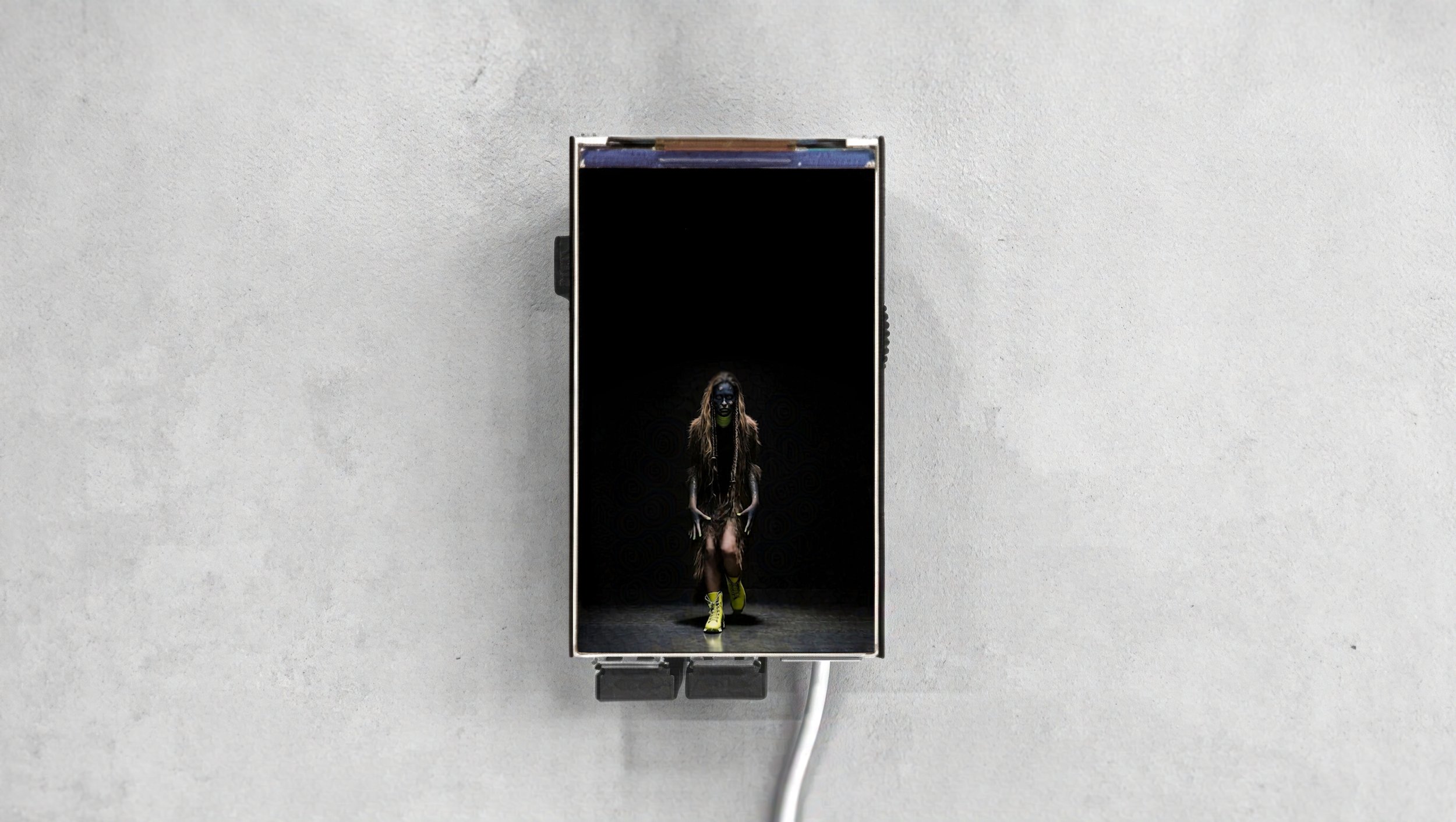
Blue Fire Veil, The Book of Gestures, Single-Channel Audio-Video Installation, 2026. Credits: CompMonks, Silke Grabinger
Mythological figures such as Echo and Orpheus appear in your thinking about communication, memory, and the limits of human understanding. Why do these ancient myths continue to feel relevant when thinking about technologies as contemporary as AI and brain-computer interfaces?
What draws me to these myths is the difficulty of reaching someone or something beyond ourselves, and the ancestral desires deeply rooted in us. They give a human anchor to experiences that can otherwise become quite abstract when we discuss technology.
I think of Echo through the question of a voice that returns, what happens to it in being repeated, and the walls that make its return possible. That offers a way to think about communication through machines: what do we recognise in the response, and what are we bringing to it ourselves? With Orpheus, I am drawn to the desire to retrieve something that is slipping away, and the difficulty of bringing it back into the world. That feels close to the effort of recalling a dream.
These are readings I bring to the work, rather than explanations of how a technology functions. AI and brain-computer interfaces give us new means of approaching experience, looking inwards and outwards at once. Yet the desire to be understood, to remember, or to recover what we have lost remains familiar, even as we continually reassess it. Mythology helps me keep those desires present, including the parts that a technical system cannot resolve.
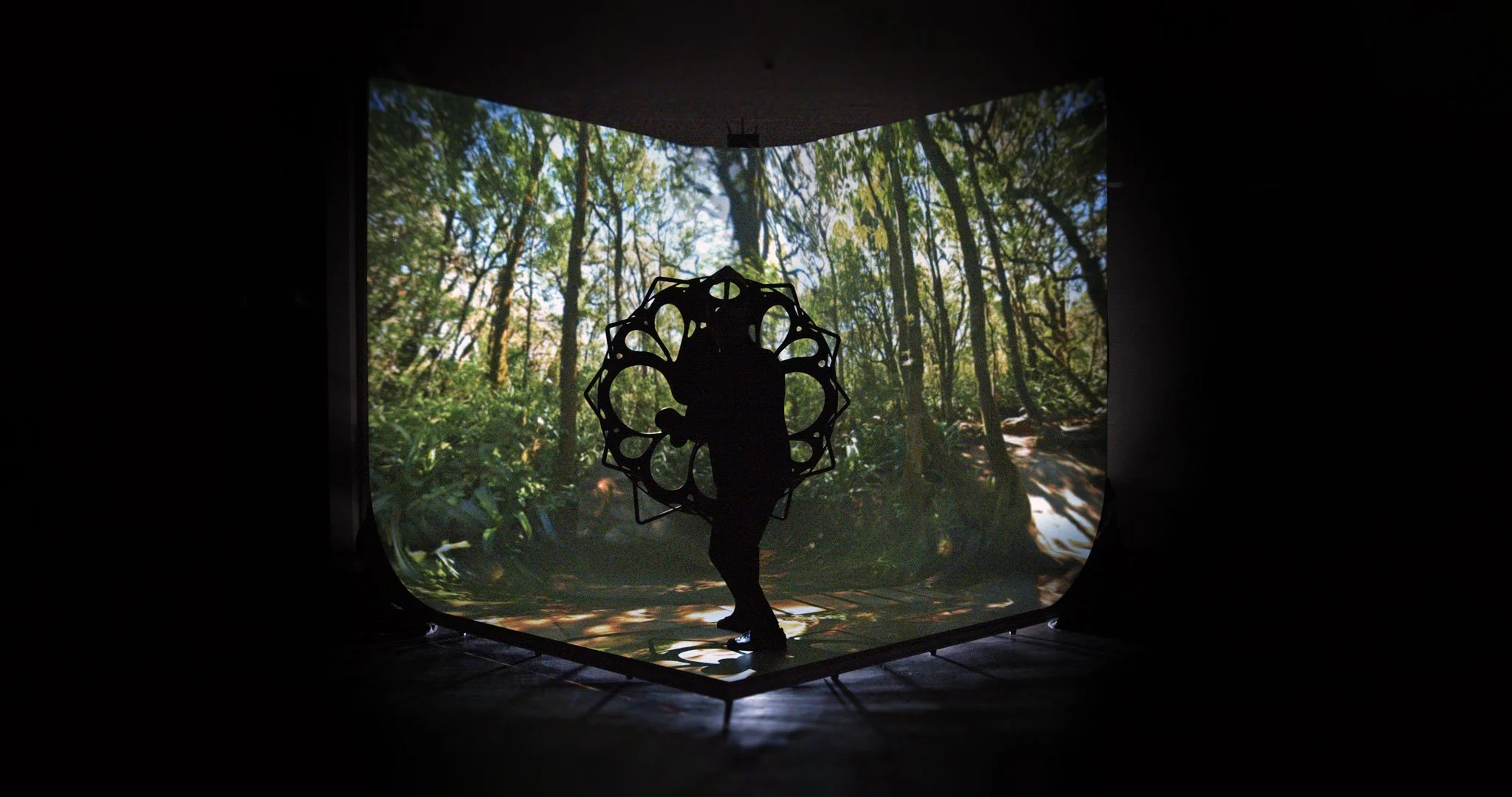
Walking The Gates of The Fleeting, Interactive and Generative Installation, 2023. Credits: CompMonks
What is a fun fact about you?
I spent more than a decade doing graffiti in France and across Europe, and was actively involved in the hip-hop community. That left a lasting mark. After spending so much time in the streets, day and night, facing walls with a backpack full of spray cans, I cannot think of a display as simply a surface for an image. It belongs to a place, with its own history and people passing through it. That experience still informs how I work with physical environments and digital images. I have also maintained close ties with that wide community, which continue to lead to creative collaborations.
What else fills your time when you’re not creating art?
Research and teaching are complementary parts of how I think and work. I approach architecture through both art and science: art allows me to express good problems, while science helps me formulate good questions and investigate them. Moving between the two is particularly fruitful when working with art and technology, where tools and media themselves can change how a problem is understood.
Teaching brings other minds into that process. Explaining an idea, or seeing a student approach it from an unexpected direction, can send me back to the studio with a different perspective.
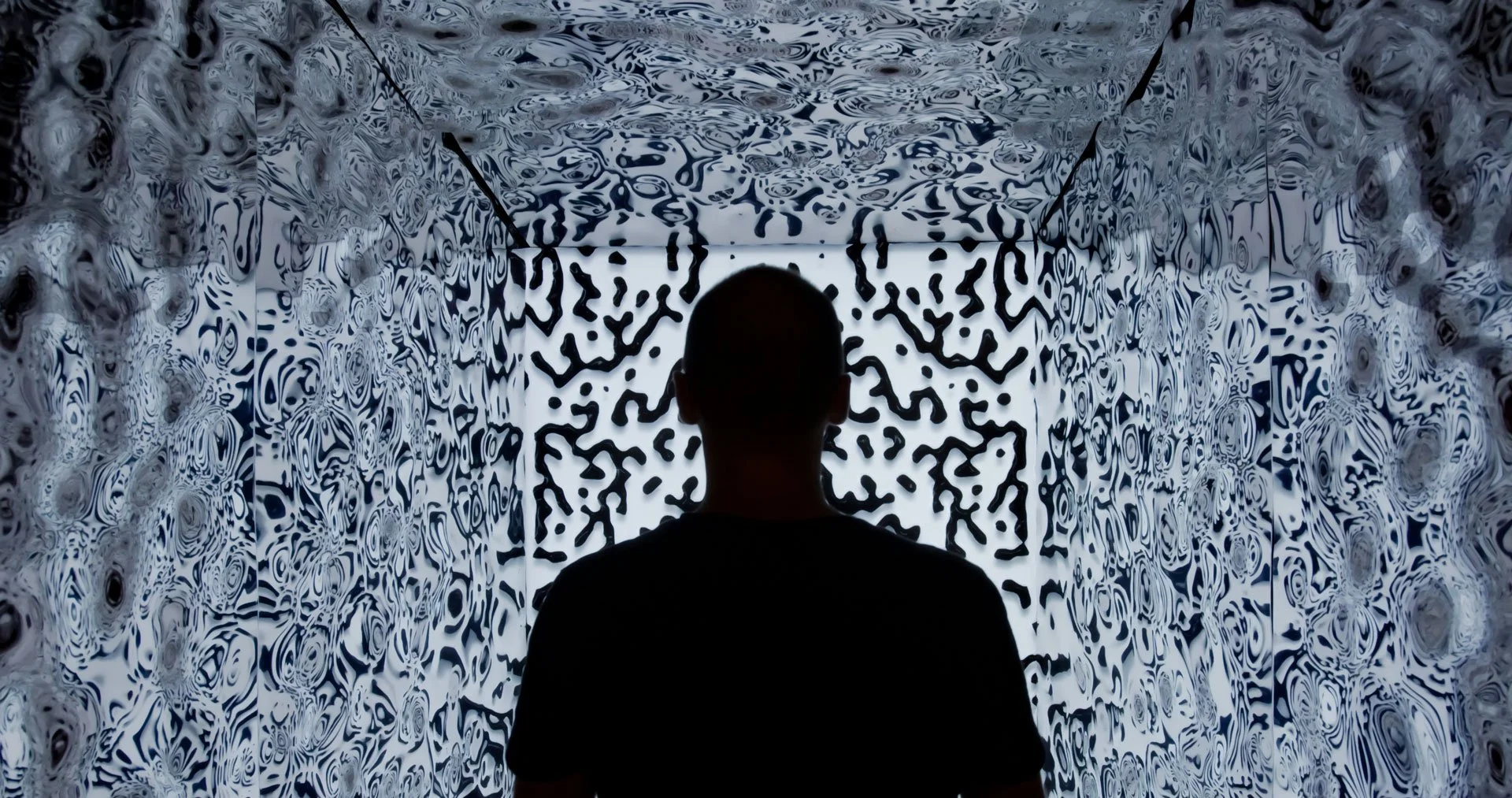
Contemplating In a Cloud, Interactive and Generative Installation, 2023. Credits: CompMonks, Maria Smigielska
What is a dream project you’d like to make one day?
I would like to create a substantial site-specific commission in which the architecture, moving images and interaction are conceived together from the beginning. I imagine a place people could enter, inhabit for a while, and return to, discovering different aspects of the work over time. Dreamcatcher could unfold there through several connected spaces, bringing its dream landscapes and figures into a shared physical environment.
What would make this a meaningful next step for the studio is a sustained collaboration with a commissioning partner, with time for research, full-scale prototyping and work with performers and technical collaborators. I would want to develop something with a life beyond its opening, whether it remains in one place or evolves through subsequent presentations.
The ambition is to give these inner worlds a more lasting public presence while preserving their intimacy. A visitor should be able to find their own way into the work, without needing to understand its technology first.
You describe each body of work as evolving like a book with chapters, “hoping to never reach the beginning of an epilogue.” What are you currently exploring that feels like the next chapter of your practice?
I tend to work through series, episodes and versions. We are familiar with this through television series and media sagas, but also through software development and code versioning. These offer different ways to understand continuity: an episode can extend a narrative, while a version can revisit the conditions through which we experience it. A work can be complete in its own right and still belong to something that continues to unfold.
Dreamcatcher is developing in that way as a series. With new versions such as Blue Fire Veil, I am exploring how dream figures acquire a presence through performance and moving images. Another version: Proof of Dream approaches another part of the series: how to preserve and share the history of the images as they are generated, transformed and circulated.
I am also currently developing Untold, a series that brings narrative painting, conceptual art, interactive installation and virtual production together around the idea of depicting a story that has never been told. Free Me First is its first version. It opens another way for me to work with narration, alongside the recollections that feed Dreamcatcher.
These series allow me to return to an idea without having to repeat the same work. Another episode might introduce a different situation; another version might change the way the work encounters its audience. The earlier works remain part of that history. That is what I mean by hoping not to reach the epilogue: I want the work to keep opening possibilities for what comes next.
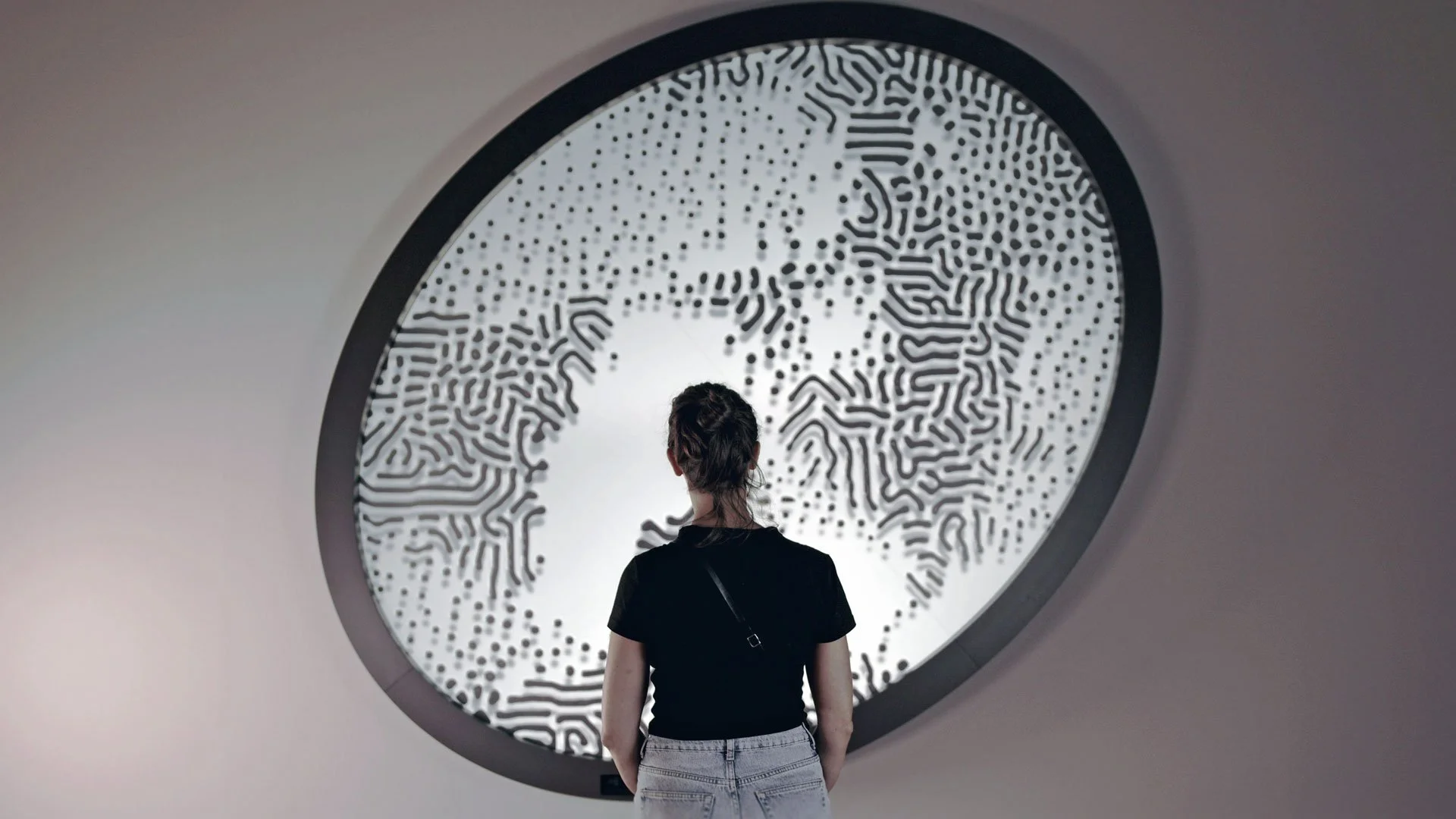
Interacting With a Cloud, Interactive and Generative Installation, 2021. Credits: CompMonks, Maria Smigielska
Are you our next spotlight artist? Submit the form to apply to be featured!
We share works by digital artists as well as digital arts exhibitions, events, and open calls daily on Instagram — follow us for more and subscribe to our newsletter so you don’t miss new blog posts.
![Project Spotlight: pifmgr.dll’s [M]ETAL✨ @pifmgr.dll is a digital artist working at the intersection of audiovisual design, 3D experimentation, and atmospheric world-building. His project [M]ETAL explores metal both as a physical material and a](https://images.squarespace-cdn.com/content/v1/63b2fdbe4376de5bfdc6771f/1779108338452-QO04Q3MMJ3VMU8PJV1MD/image-asset.jpeg)