Animation as a Way of Thinking: An Interview with Anna Huijun Wang
By Cansu Waldron
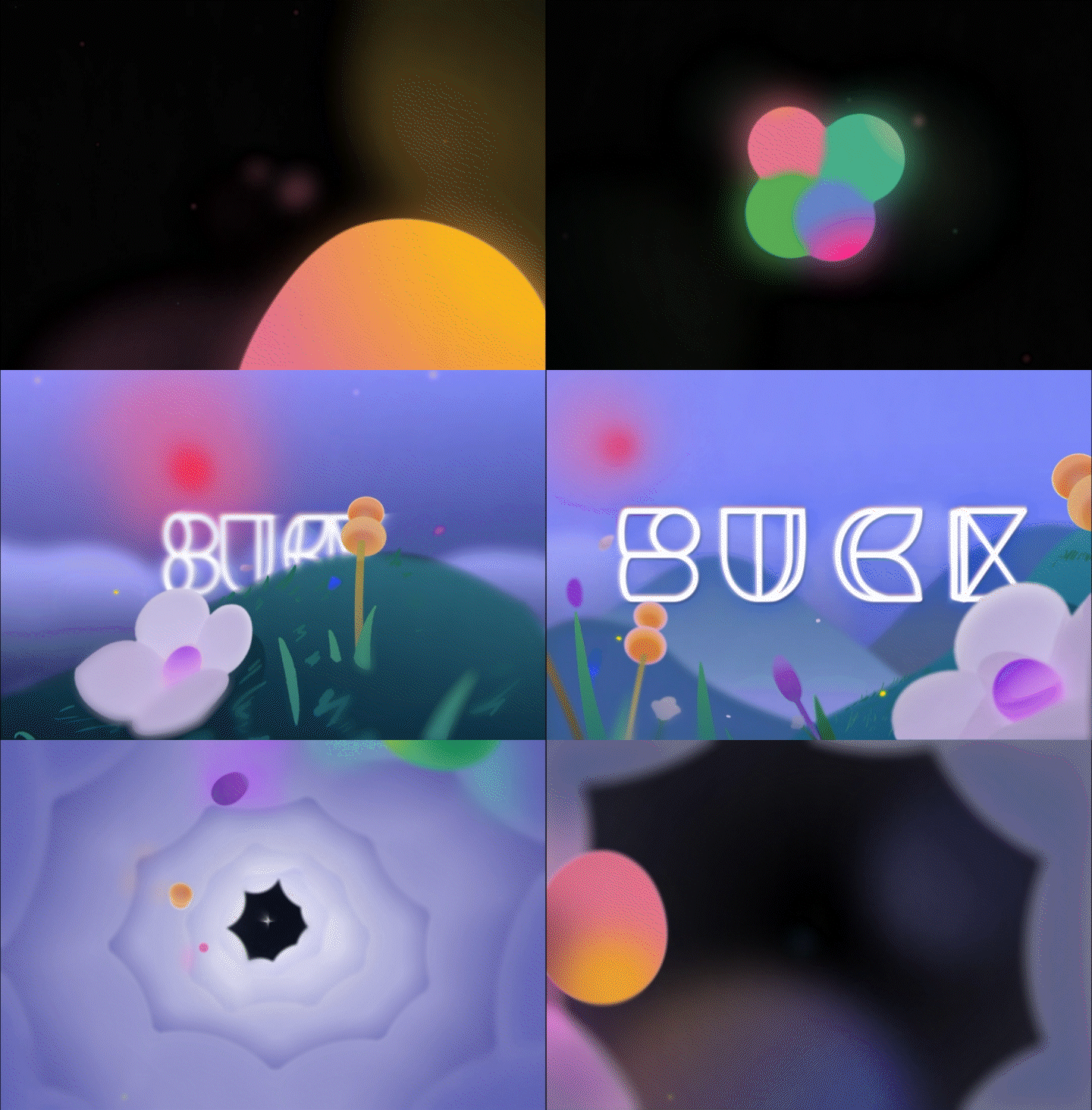
Anna Huijun Wang is a Los Angeles–based animator and multidisciplinary artist whose work moves fluidly between hand-drawn, 2D, and procedural 3D animation. A graduate of New York University Tisch School of the Arts and the University of Southern California, she currently works at BUCK, creating animation for clients including Google and Apple while maintaining an independent practice focused on experimental filmmaking. Across both commercial and personal work, Wang treats animation as more than a visual medium — it becomes a way of exploring identity, perception, and the constant process of transformation.
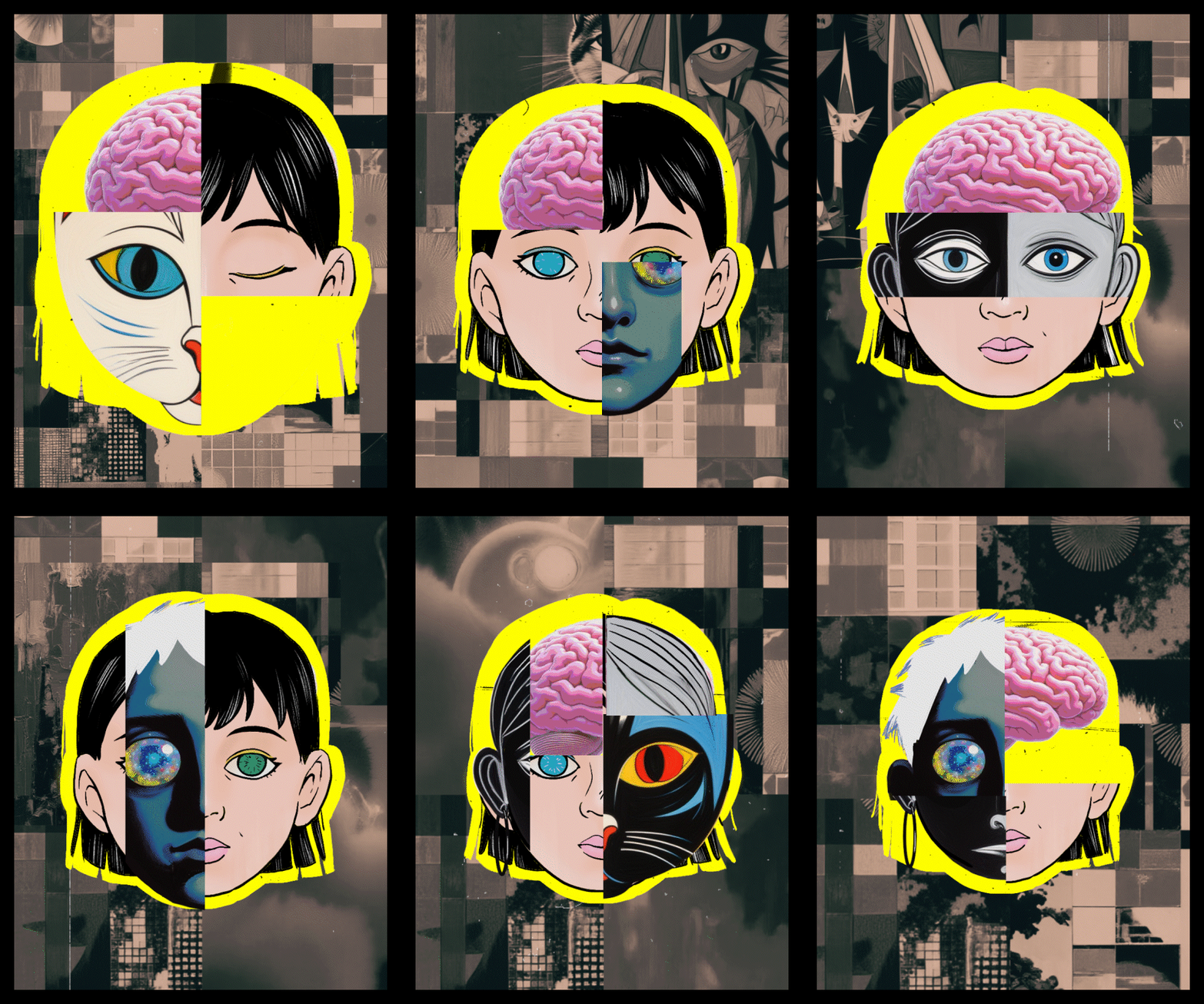
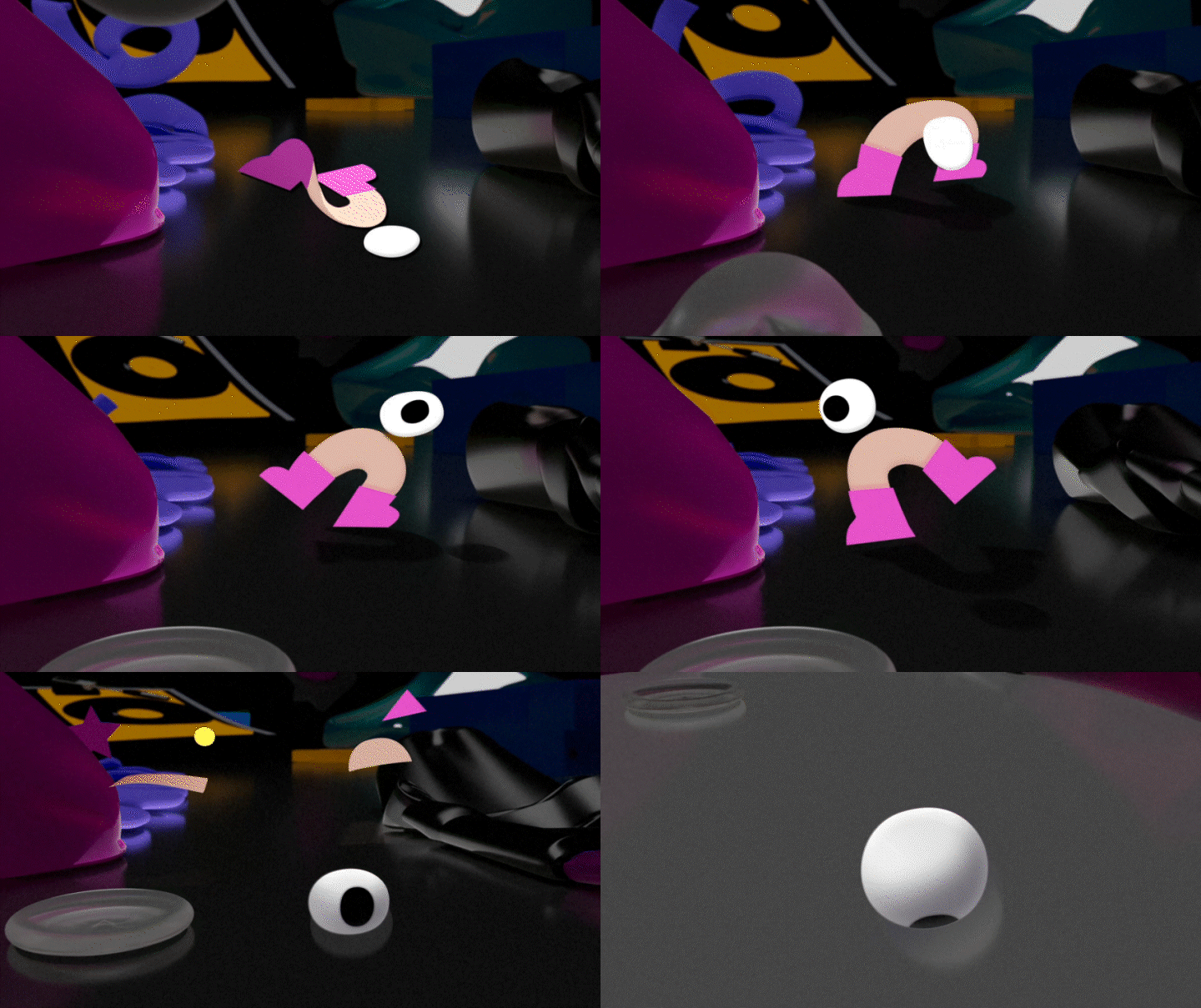
This exploration is at the heart of two of her recent films, OROBORO and Starry Night, which approach the relationship between the self and the world from opposite directions. Rather than using different animation techniques simply for their aesthetic qualities, Anna treats each medium as a distinct state of being, allowing shifts between cel animation, 2D motion graphics, and 3D imagery to become part of the narrative itself. While OROBORO follows an identity shaped by the accelerating forces of the modern world, Starry Night imagines a protagonist whose inner world quietly transforms everything around her. Together, the films reflect Anna’s ongoing interest in identity as something fluid and ever-changing, drawing on philosophy and experimental animation to explore how we are constantly shaped by, and in turn shape, the world we inhabit.
We asked Anna about her art, creative process, and inspirations.
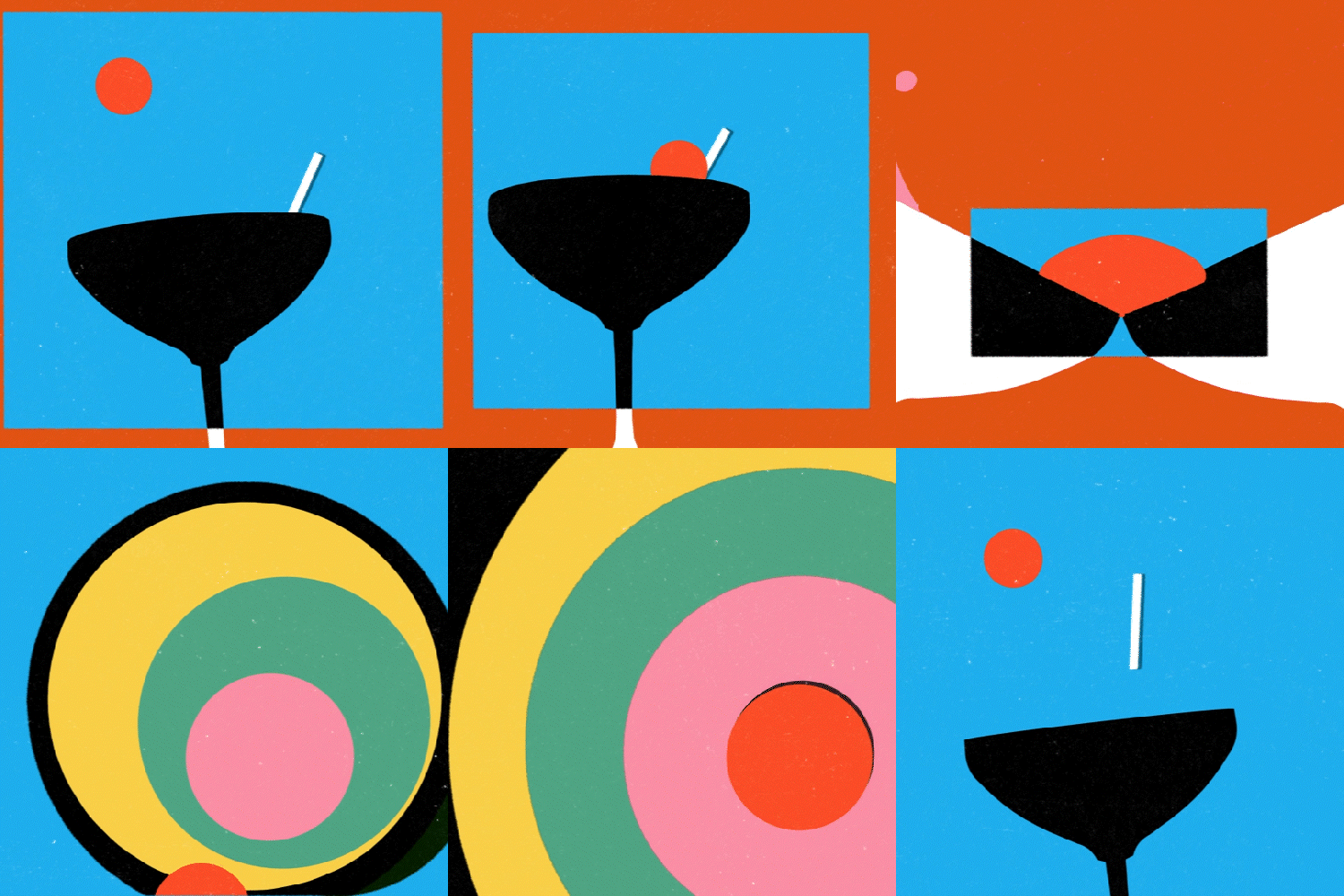
Booze
Both OROBORO and Starry Night seem to revolve around the relationship between the self and the world. What first sparked your fascination with this question?
It began with a confrontation with death. About ten years ago I was diagnosed with a cancerous brain tumor, and even now I live without knowing whether it will return. That uncertainty rearranged me. When you stand that close to death, you start asking what matters. From there I fell into existential and Buddhist questions about image, representation, and the self, and those questions became the soil for everything I've made since.
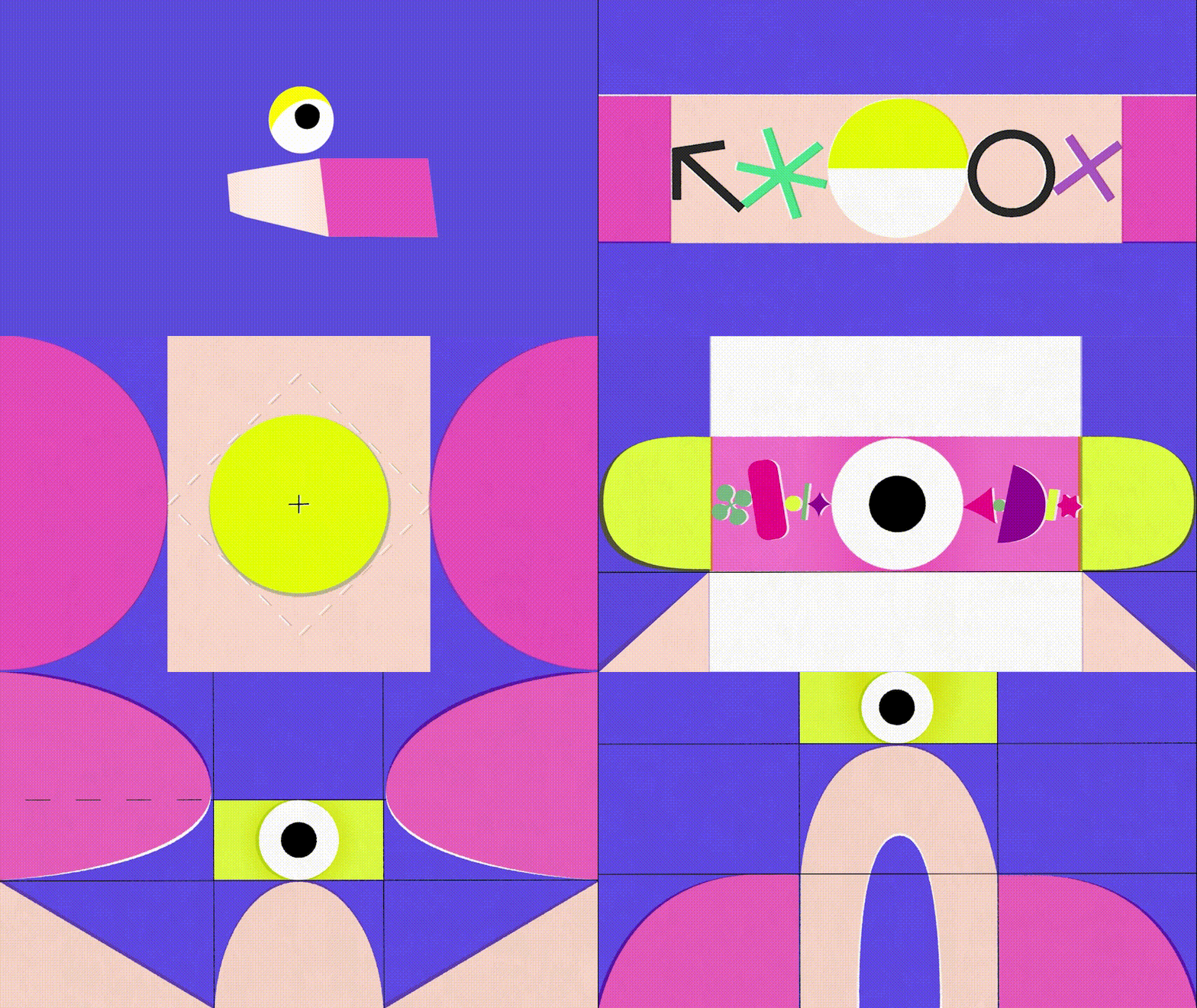
OROBORO
OROBORO follows a character who gains dimensions and experiences before shedding them again. What does this cycle of expansion and collapse represent to you personally?
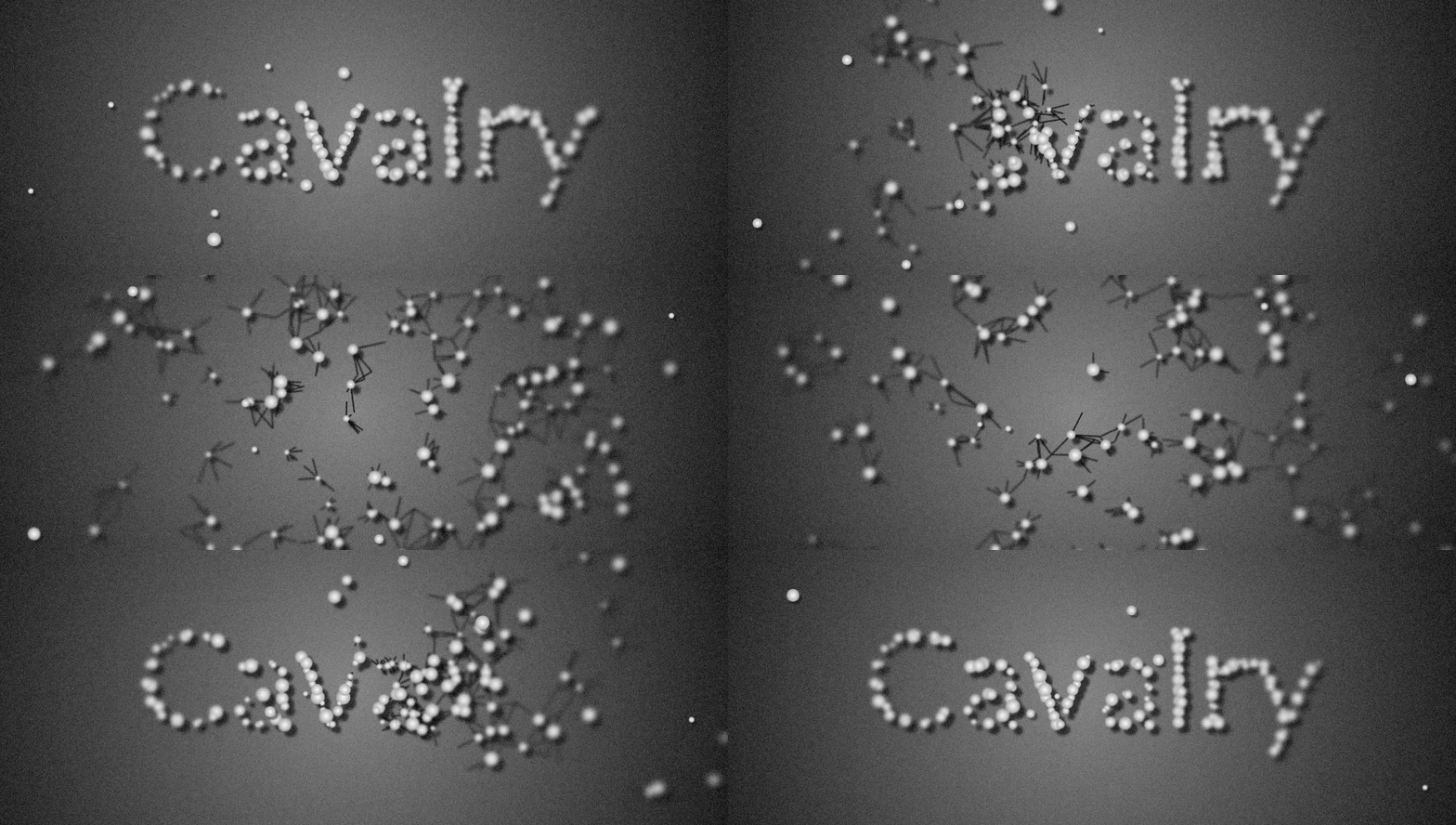
In Chinese we have a saying “we are born like a blank sheet of paper”. Then living happens - we collect experiences, names, titles, the filters on the way. We make the accumulation of these images who we are. But those images aren't the essence of self. The collapse in OROBORO isn't a defeat - it's a revelation. When she lets the images fall away, she returns to that original blank-paper state, and from there you can finally see the essence, which was inside you the whole time, never in the layers you were carrying. Expansion is how we become legible to the world, we learn the system (like language or math) through which we can experience the world; collapse is after experiencing, we understand and now we return.
Cavalry
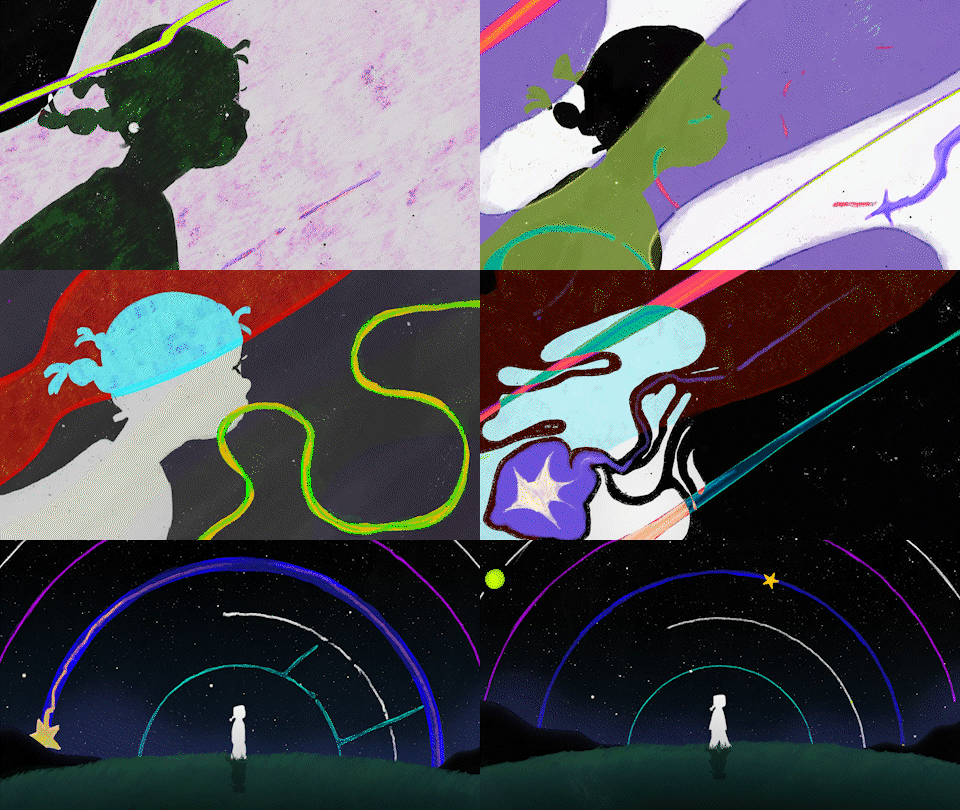
Starry Night presents the opposite perspective, where the self reshapes the world around it. Why was it important for you to explore both sides of this relationship through separate films?
Two reasons. The first is simple joy: I love using animation to give a body to philosophy, or a whole system of thought, and let it move. The translation from abstraction into motion is the most exciting part of the work for me. The second is closer to method. The way you'd examine both sides of an argument before trusting a conclusion, I felt I had to actually live through both directions of the question - does the world shape the self, or does the self shape the world - and then offer both to the viewer. I'm not trying to hand anyone an answer. I'm trying to give them two experiences and let them notice what they feel standing in each.
Starry Night
You describe identity as having "no fixed medium." How has your own understanding of identity evolved through the process of creating these films?
Honestly, making the films didn't change what I believed so much. When I shared OROBORO's ending - the character dissolving back into nothing - many people read it as despair: that under the speed of technology and the flood of information, the self simply breaks down. A sad ending. That surprised me, because I meant the exact opposite. Releasing all those images and representations isn't a breakdown; it's the one moment you get to see the essence underneath - the part of you that needs nothing external to be given worth. Sitting in the gap between what people saw and what I intended is what clarified the idea for me: that identity has no fixed medium.
Grid
Both OROBORO and Starry Night suggest that transformation is inevitable. What are you currently transforming toward as an artist, and what questions are you hoping to explore next?
I currently have no attachment to any single tool, medium, or version of myself. Practically, that means staying tool-agnostic: learning whatever technology lets me realize a vision, whether that's a new animation technique or building a motion system. But it's bigger than craft. I want to keep expanding what I know and what I've lived through - other disciplines, other genres, more of the world. I don't want to arrive at a final form. I'd rather keep being shaped, and see what kind of artist, and what kind of person, that makes me.
Merge
What is a profound childhood memory?
I don't have one single scene, but I keep returning to swimming in the Yangtze River with my dad as a kid. It connects to how I think about identity now. I feel like I become a slightly different person every day, seeing new things and forgetting old ones. The child I was is someone I can mostly only reach unconsciously. But that river is where I can still find her. I long for the feeling that I can simply exist, floating in the river without the weight of any image. This is probably what I'm chasing in the work, too.
Universes
What else fills your time when you're not creating art?
I love learning languages. Because languages are keys that open doors for me to understand cultures, which are environments that shape society and people living in them. I'm also building something, or learning some new technology. I also enjoy watching game play-throughs on Youtube. Away from screens, I play tennis and I dance. Physical rhythm and the way a body moves through space inspire my motion design brain; it helps me understand timing and weight.
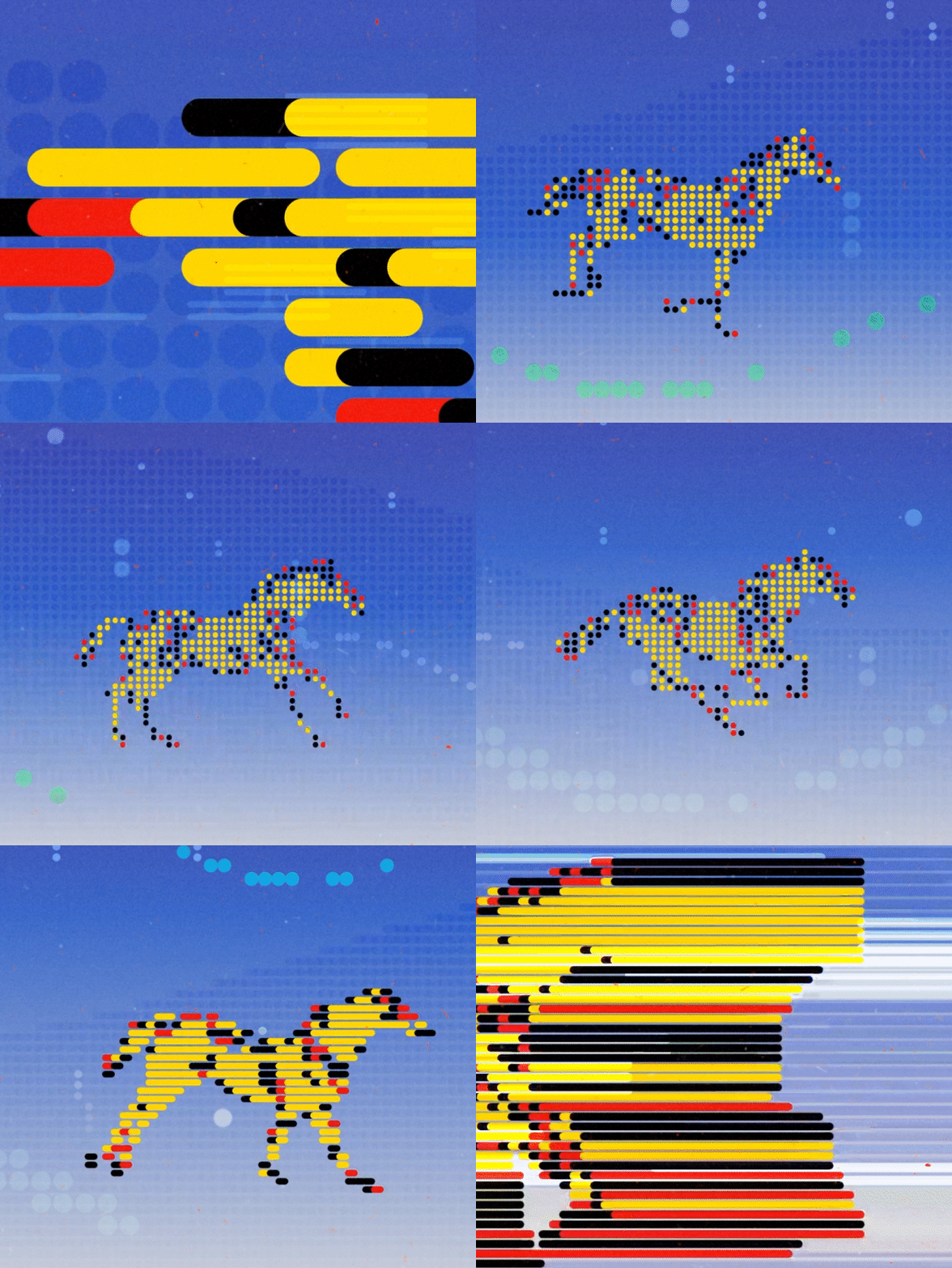
Year of Horse
Have there been any surprising or memorable responses to your work?
Yes, the one I mentioned earlier. When friends first saw OROBORO, several read the ending as bleak: the self collapsing under the pressure of technology and information overload. A few were genuinely worried it was a statement about mental health. It surprised me, because I had built it as something hopeful: it’s a return to essence, not a defeat. That moment taught me something I still think about: once a film leaves you, people complete it with their own interior weather, and the distance between intention and reception becomes its own kind of collaboration.
What is a fun fact about you?
Less a fun fact than an open invitation: right now I'm trying to find my creative community: animators, designers, and the tech folks out there building strange new things. I’m trying to get better at putting myself out there, especially online, which doesn't come naturally to me yet. So if you're reading this and any of it resonates, please don't hesitate to reach out. I love a good conversation, and I'm always up for coffee.
OROBORO
Are you our next spotlight artist? Submit the form to apply to be featured!
We share works by digital artists as well as digital arts exhibitions, events, and open calls daily on Instagram — follow us for more and subscribe to our newsletter so you don’t miss new blog posts.
![Project Spotlight: pifmgr.dll’s [M]ETAL✨ @pifmgr.dll is a digital artist working at the intersection of audiovisual design, 3D experimentation, and atmospheric world-building. His project [M]ETAL explores metal both as a physical material and a](https://images.squarespace-cdn.com/content/v1/63b2fdbe4376de5bfdc6771f/1779108338452-QO04Q3MMJ3VMU8PJV1MD/image-asset.jpeg)