Building Cute Dystopias: Inside Kaji's Atlas K
By Cansu Waldron
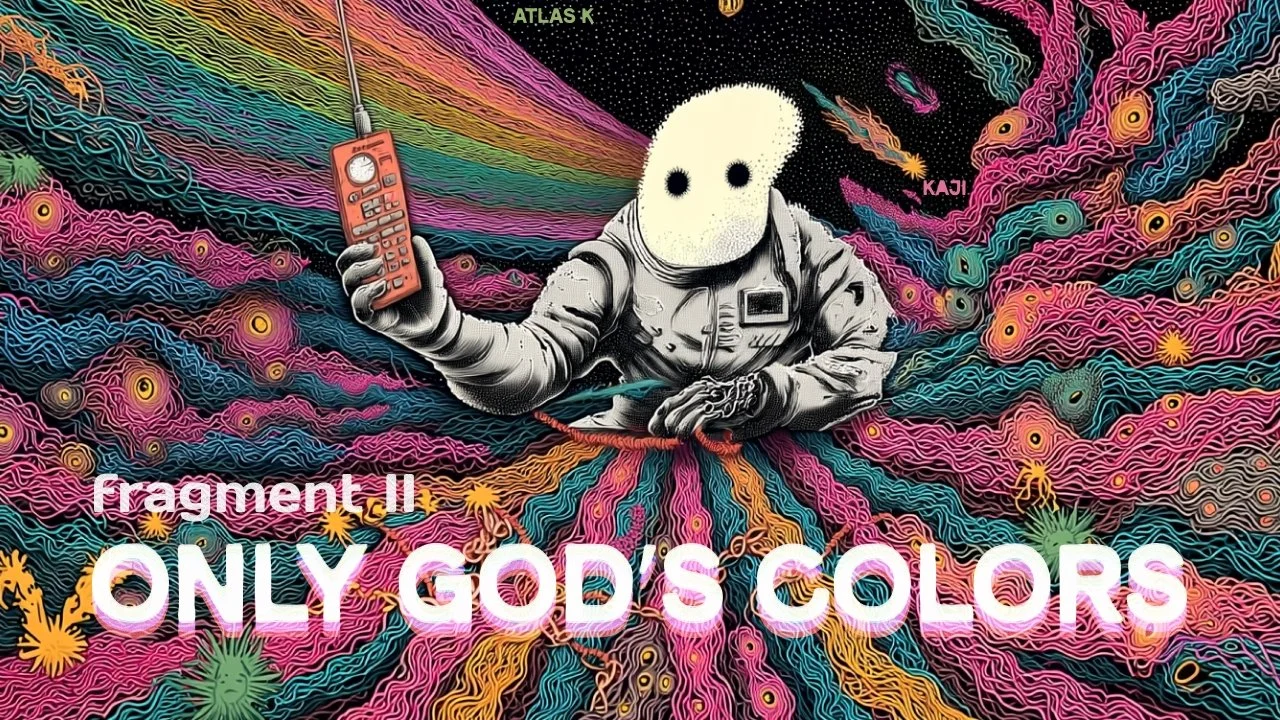
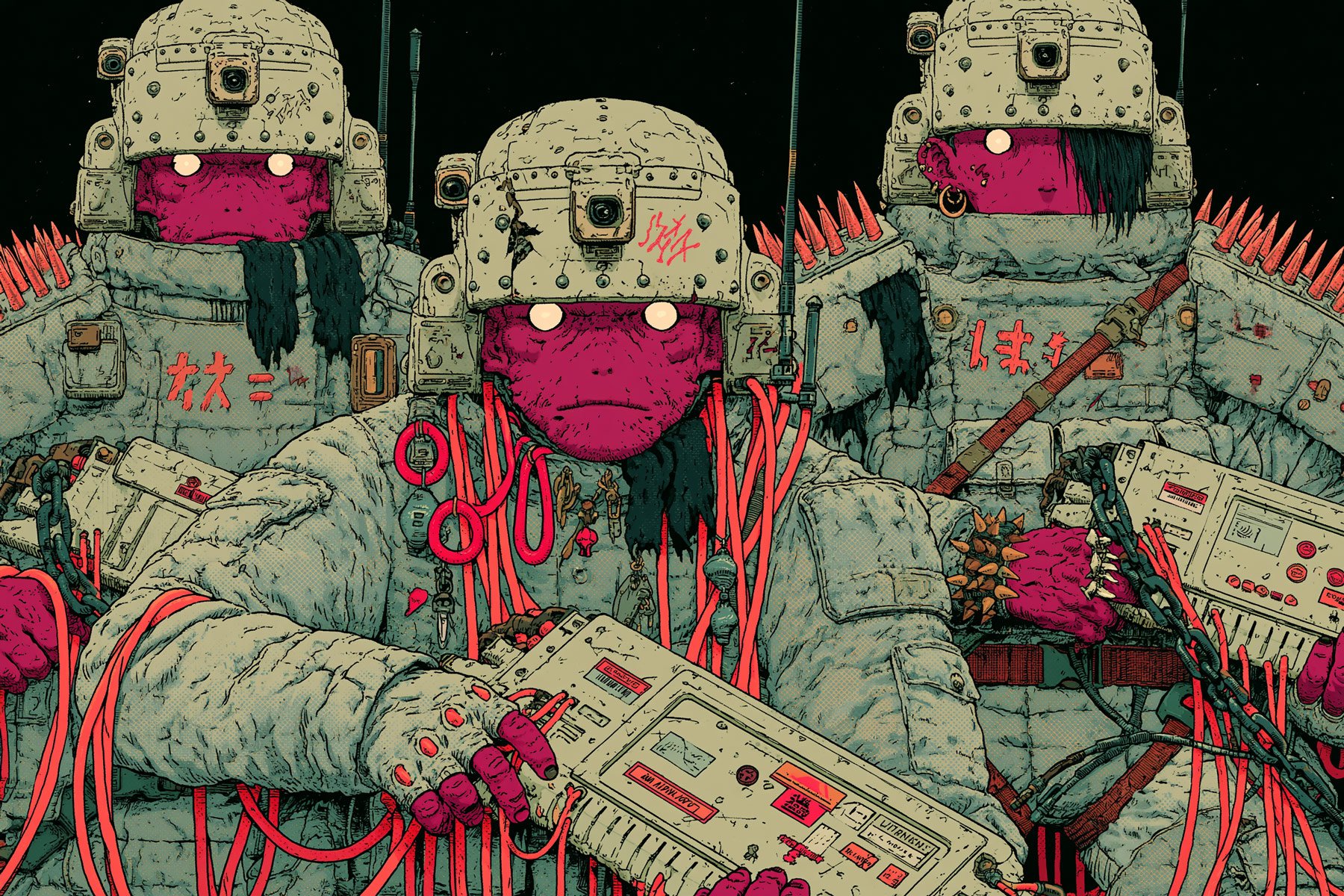
Kaji is an artist and worldbuilder based in Bolzano, Italy, whose work blends illustration, storytelling, and AI-assisted creation into expansive fictional universes. Through his ongoing project Atlas K, he constructs what he describes as “cute dystopias”—strange worlds populated by dream-hunting mercenaries, machine rituals, synthetic folklore, and civilizations shaped by uneasy relationships with technology. Presented through short films and richly textured illustrations, his work combines playful, almost childlike visuals with deeper questions about power, belief systems, progress, and the futures we may be building for ourselves.
Before focusing on his artistic practice, Kaji spent more than a decade working in brand design, including several years in Shanghai. That background in shaping narratives and visual identities continues to inform his approach to worldbuilding. What began as a hand-drawn map inspired by ancient navigation charts gradually expanded into the interconnected universe of Atlas K, where stories emerge through fragments, dreams, and parallel realities rather than traditional linear narratives. Beneath the whimsical characters and charming aesthetics lies a thoughtful exploration of contemporary anxieties, driven by a fascination with the idea that the most unsettling futures may arrive not through fear, but through comfort disguised as progress.
We asked Kaji about his art, creative process, and inspirations.
Can you tell us about your background as a digital artist? How did you get started in this field?
I have a background as a designer with an illustration habit. I spent eleven years in branding work, part of it in Shanghai. Good projects, real clients. The part I enjoyed the most was always the storytelling, especially the creative and the worldbuilding. At some point I opened a parallel practice for it, but with my own surreal worlds.
My workflow starts from the sketchbook. I draft characters and stories there. Before AI I built complex illustrations the same way, an outline first and then improvisation on paper. Then I would finalize the illustration and share it on social media.
After I discovered AI tools I transferred this method from static illustration to animation. I experimented a lot to get the generative models to follow my style guidelines, so I could build stories and characters and animate them. Months of work for ten seconds of footage now take an afternoon, and the stories can finally move. The process is far from smooth, there is a lot of experimentation inside.
You describe your work as creating “cute dystopies, machine prayers, and synthetic folklore.” How did the world of Atlas K first begin to take shape?
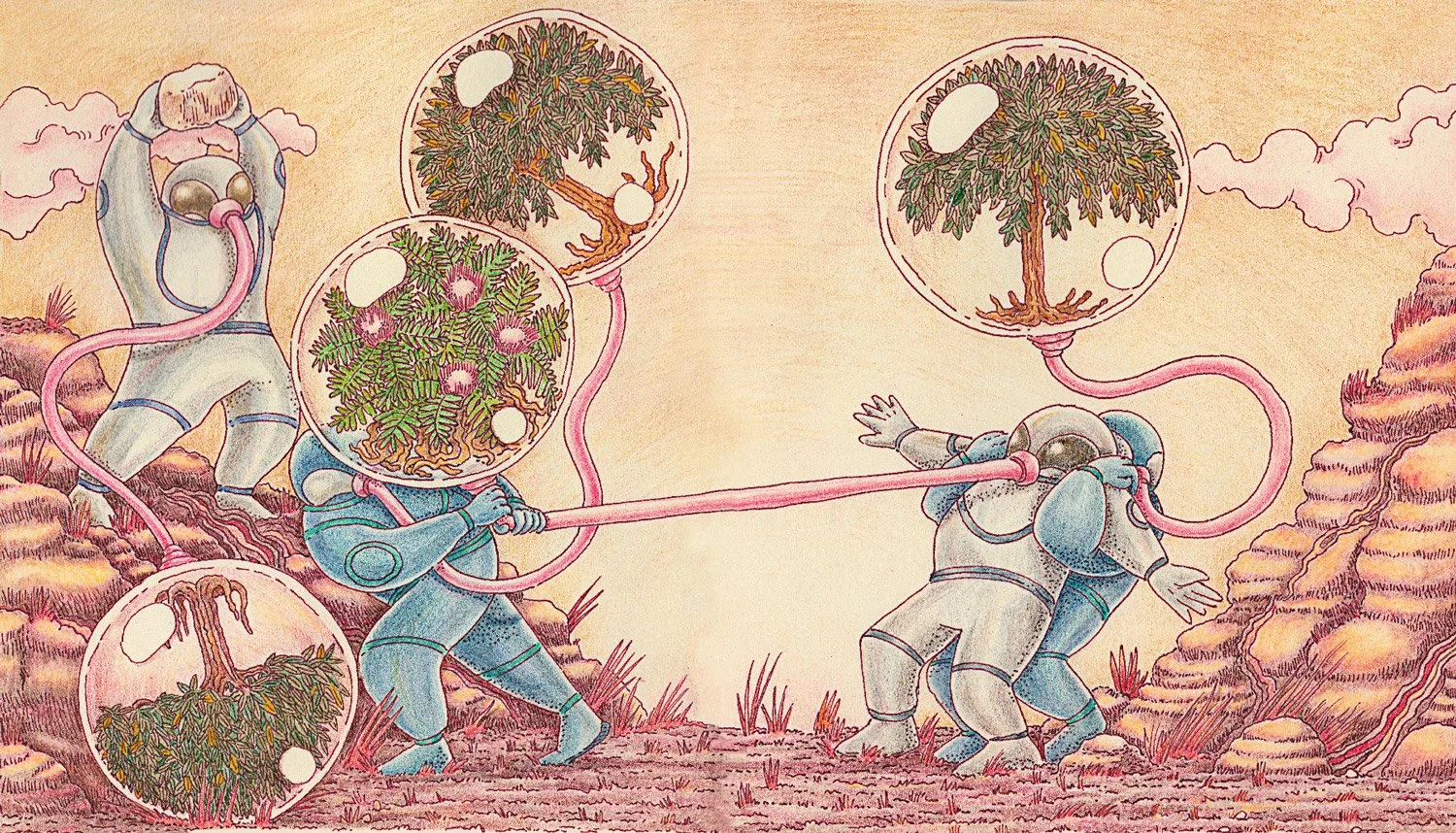
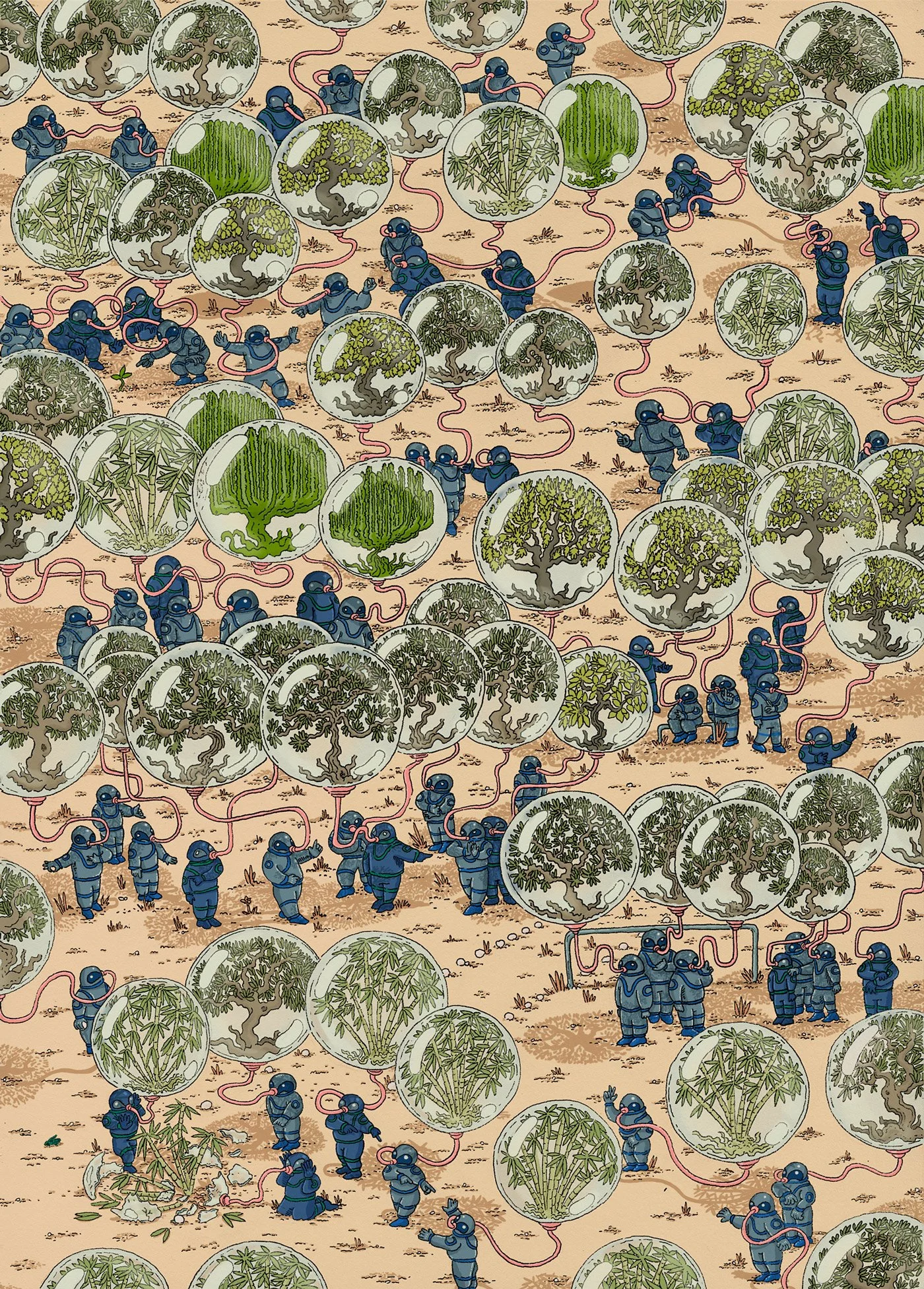
I made a map once, inspired by ancient navigational maps. That map was an attempt to navigate through ideas and to lock down a world. It is full of weird characters and scenes I planned to develop as independent illustrations, stories that somehow belong in the same universe. In that map there are giant machines that dominate humans living inside glass bubbles, a private-ecosystem society that gave up shared nature and started carrying their own portion of forest around with them.
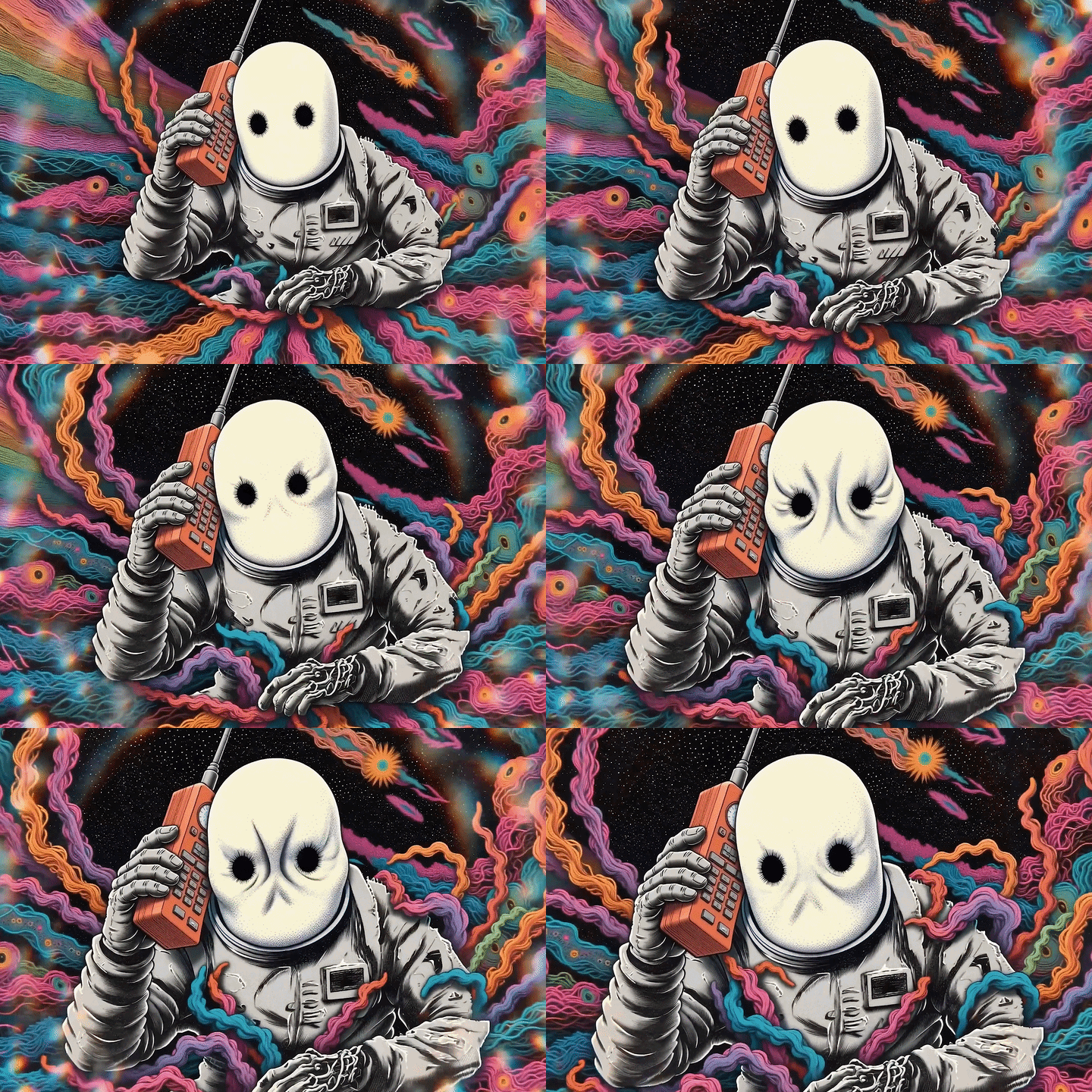
The universe grew from there. Mercenaries hunting dreams out of crab-shaped machines. A frog stargazing and taking notes like it is a dream job. A civilization where colors are a cosmic anomaly forbidden by a religion. Atlas K became non-linear and built around dreams, chasing dreams, parallel lives, and weird civilizations with a dystopian relationship to tech.
Somebody once told me I make cute dystopies, and I kept the description. The way these worlds are presented is not scary or horrific. The characters are cute, almost childish at times, and they live comfortably in conditions that should not be comfortable at all. That contrast started from a hunch I had: the most terrible future will be sold to us through the harmless kind of comfort.
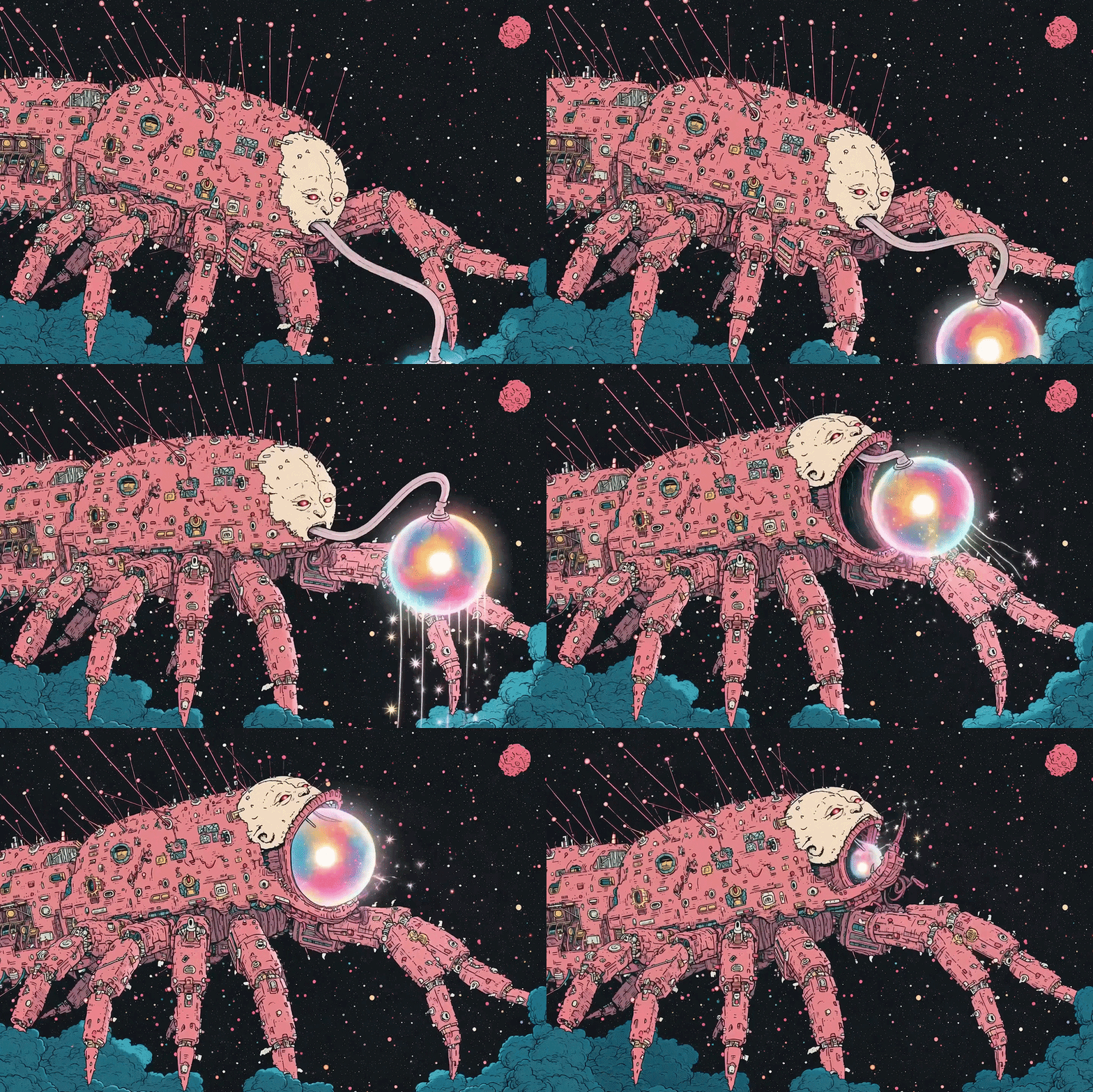
Before focusing on your own artistic practice, you spent over a decade in brand design, including time in Shanghai. How did that experience influence the way you build worlds and narratives today?
Developing brands taught me that it is a long process, much deeper than the deployment of an image. It is consistent work, sharing ideas and gathering feedback and building a conversation over time. The Shanghai years sharpened that. You work across languages, cultures, registers, and you stop trusting your own defaults. You start designing for systems and see how people are connected to them. That is useful when you build a universe that nobody else has ever been to.
The other thing brand work gives you is humility about communication. No message lands the first time, and the part you find obvious is the part nobody else sees. Atlas K is full of details I did not explain. The hope is that some of them get noticed.
You mention that you once helped companies “look trustworthy,” and now do something similar for collapsing civilizations. What interests you about the aesthetics of trust, especially in unstable or fictional worlds?
Trust has a look. Banks use serif typefaces and smiling, welcoming faces. Drink packaging is built to acquire your loyalty. Brand work was teaching me a vocabulary of reassurance, how to make something feel solid and established.
Now I work the inverse register. Atlas K is full of things that should not look trustworthy: collapsing civilizations, broken machines, cults of color, mercenaries doing wrong jobs for the wrong people. But I dress them in the same visual confidence, the worn paper, the small consistent details, the calm composition. The style is closer to a fable than to horror. The dissonance is the point. A fictional world earns trust the same way a real institution does, not by telling you it is real but by behaving as if it is.
The aesthetics of trust in an unstable world is the aesthetics of as if.
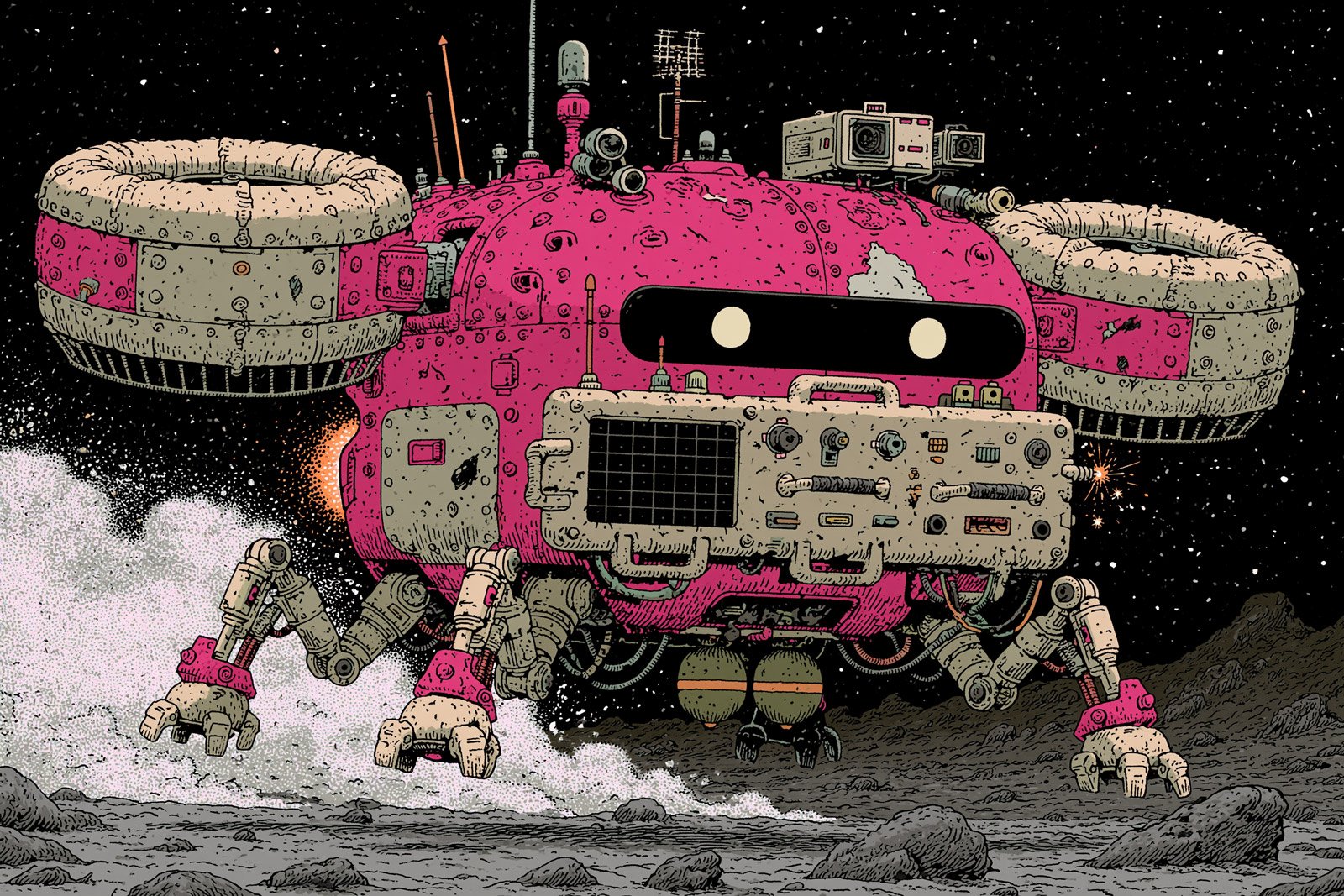
Your stories often feel like fragments from a much larger universe. Do you begin with narrative, visuals, characters, or atmosphere when expanding the world of Atlas K?
Atmosphere first, always. It usually begins with a feeling I cannot name and an image I keep drawing, or that keeps recurring to me. A pruner who needs to fix a paradox timeline in a void space, that is one example. I record the image, then I find the logic for the narrative, and the rest starts to make sense. The visuals and the universe are almost the same thing for me. If I cannot find an atmosphere a story can sit inside, the story is not ready yet.
The shorts I publish are fragments of a larger archive that does not exist yet. I write the catalogue first and the museum later.
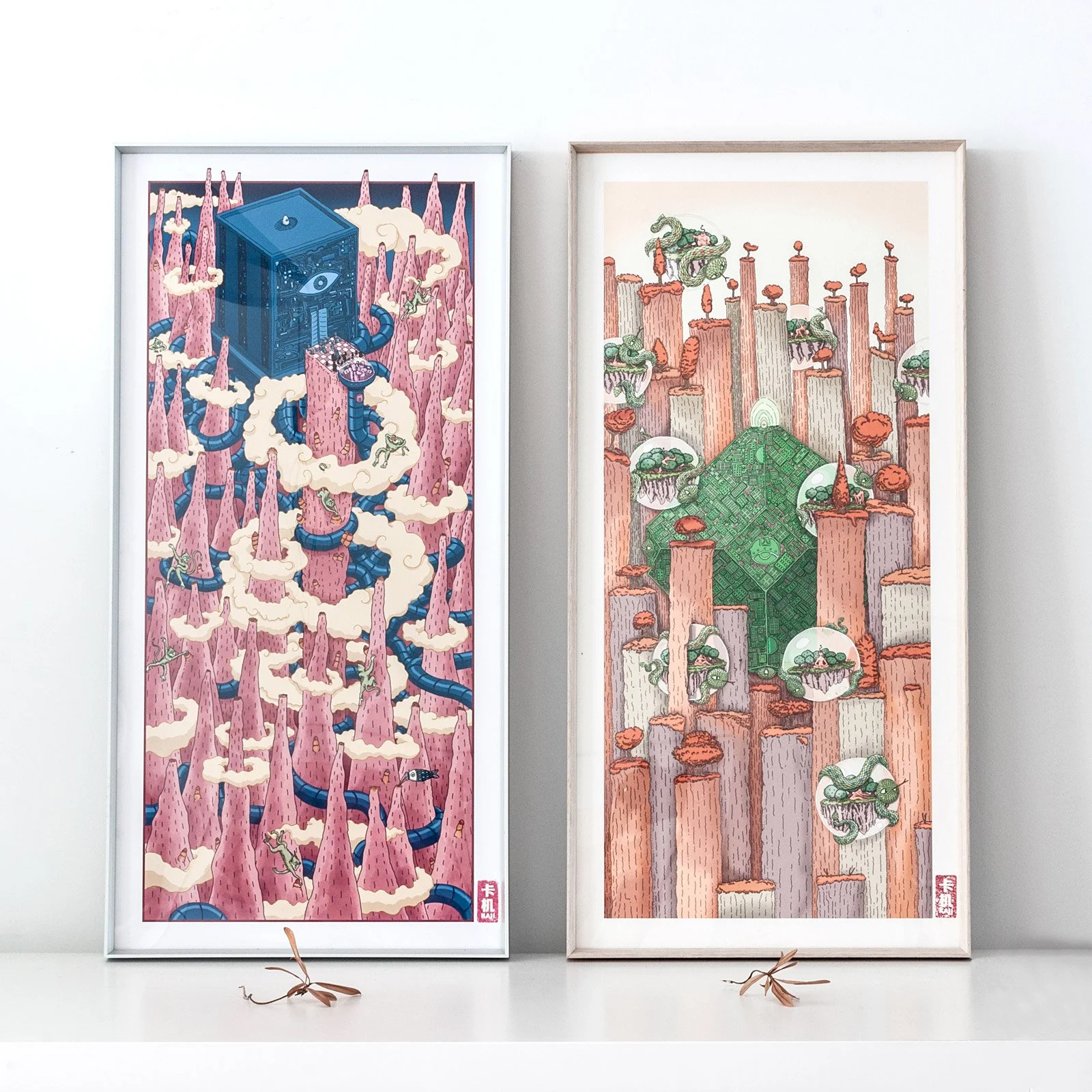
What is a profound childhood memory?
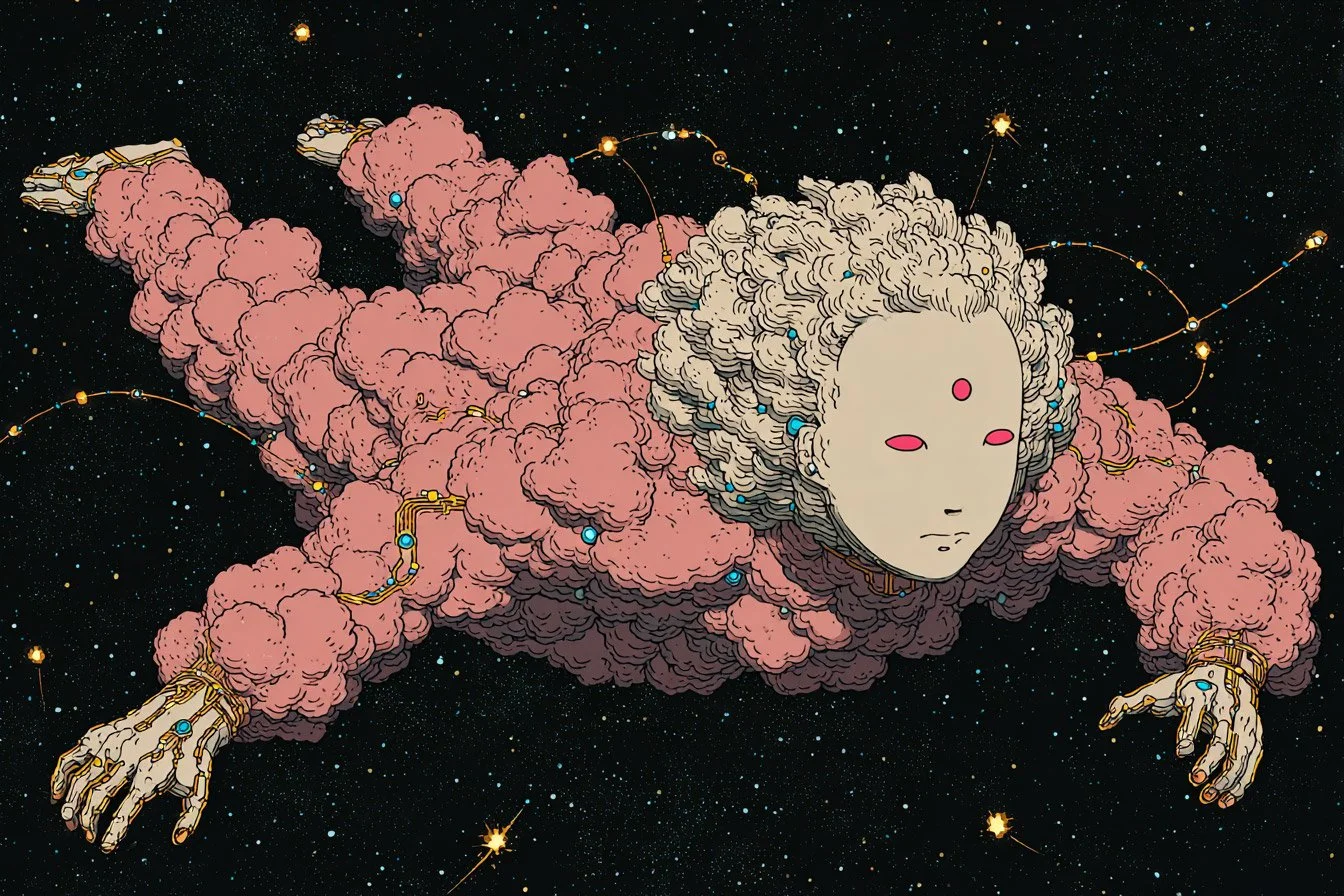
When I was a few years old, I saw a lizard. I wanted to grab it, and the tail came off in my hand. The lizard ran. I remember the grayish-green of the skin still flipping, and the bright pink inside. I stayed there watching it with a kind of beauty, until a small disgust and a small guilt arrived, because I had done something wrong. But I never stopped thinking about it: things have an inside that is hidden, and it is bright, and it is beautiful.
Have there been any surprising or memorable responses to your work?
At an exhibition in Shanghai, a young woman with oversized headphones came up to me to tell me what she had seen in one of the paintings. I had made it about privatization. Figures enclosed in bubbles, each one assigned a private portion of nature to look after, isolated from everyone else. The piece was meant as a critique of that isolation.
She had read it the other way around. She was touched by the kindness of the humanoids trying to protect their plants inside the glass spheres, and to her this was about the fragility of humans. People think they are independent, she said, until they realize the ecosystem is the thing keeping them alive. Then they lose their self-centering and start to cooperate. Their plants prosper.
Same image, such a different interpretation, and both were plausible. Since then I stopped giving too many hints in the work. I prefer when the viewer brings me a reading I did not see. That is what makes me happy.
What is a fun fact about you?
I drink plain hot water all day. It is a habit I brought back from Shanghai. Italians find this disturbing.
What else fills your time when you’re not creating art?
I travel a lot when I can. I see exhibitions, spend time in nature, walk the South Tyrolean trails near Bolzano. In my downtime I watch absurd movies, the stranger the better. If after seeing my work you know one I should watch, please get in touch. I am always looking for new inspiration.
Are you our next spotlight artist? Submit the form to apply to be featured!
We share works by digital artists as well as digital arts exhibitions, events, and open calls daily on Instagram — follow us for more and subscribe to our newsletter so you don’t miss new blog posts.
![Project Spotlight: pifmgr.dll’s [M]ETAL✨ @pifmgr.dll is a digital artist working at the intersection of audiovisual design, 3D experimentation, and atmospheric world-building. His project [M]ETAL explores metal both as a physical material and a](https://images.squarespace-cdn.com/content/v1/63b2fdbe4376de5bfdc6771f/1779108338452-QO04Q3MMJ3VMU8PJV1MD/image-asset.jpeg)