By Cansu Waldron
Kétino Mikadze is a multidisciplinary artist working across 3D, digital sculpture, and mixed media. Her practice explores the tension between structure and chaos, transforming energy into form through textural surfaces, light, and architectural compositions. Often otherworldly and abstract, her work brings together contrasting qualities, from the delicate and the heavy to the organic and the artificial. She is particularly interested in the sensory experience of materials and how their visual qualities can evoke physical responses, even within entirely digital environments.
Kétino’s creative process is guided by a fascination with how light interacts with surfaces, particularly through transparency and refraction. She uses these qualities to explore how perception can be distorted or filtered, creating forms that reveal and simultaneously transform what lies beyond them. Many of her aesthetic decisions emerge intuitively, driven by curiosity about materials, textures, and unexpected combinations rather than predetermined conceptual frameworks. For Kétino, fascination itself can be a starting point for artistic exploration, allowing the work to develop through experimentation and the interplay of opposing forces.
We asked Kétino about her art, creative process, and inspirations.
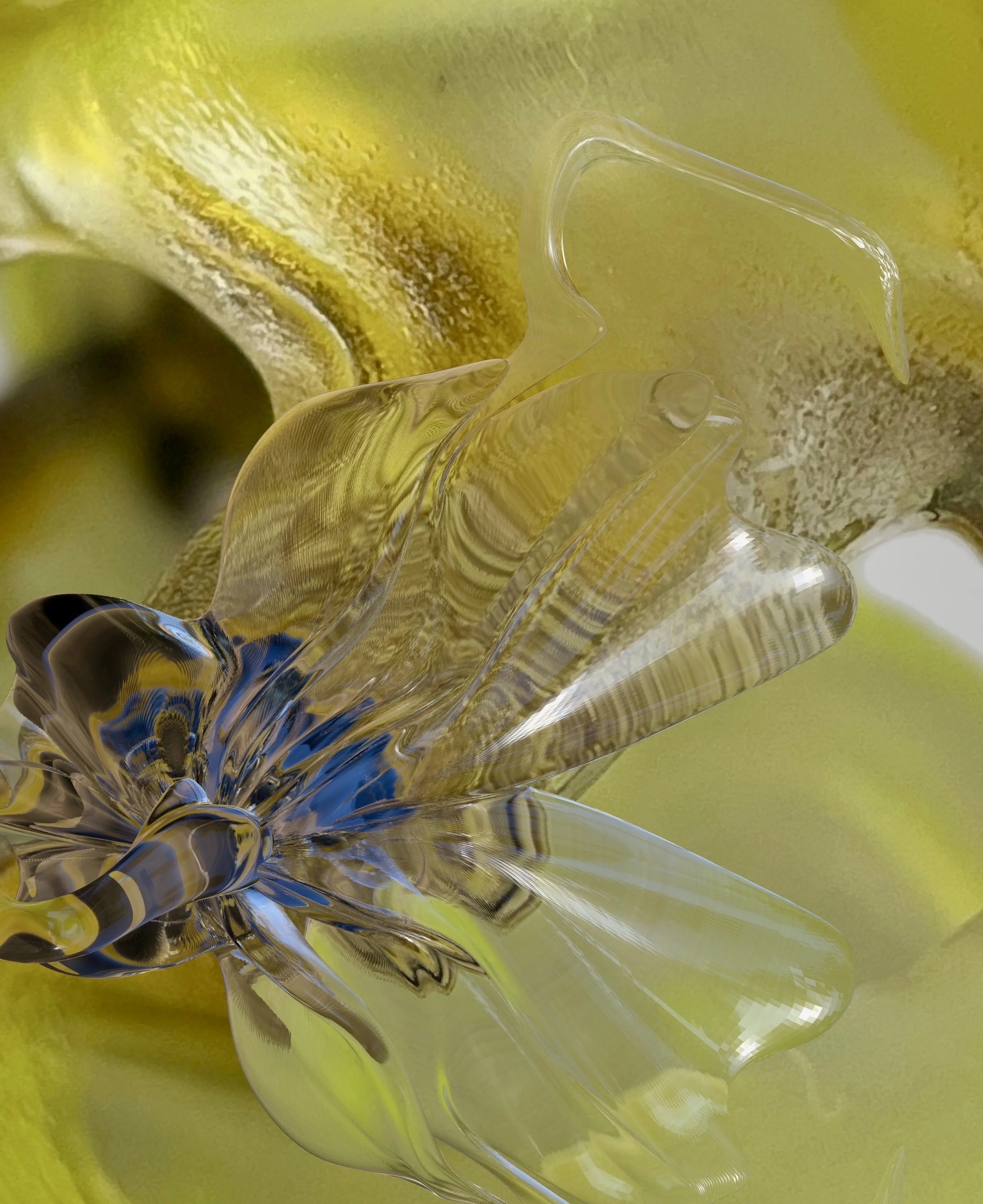
Can you tell us about your background as a digital artist? How did you get started in this field?
My background is actually in photography, which is what I originally studied. Over time, my curiosity extended toward creating and manipulating forms, experimenting with textures, and exploring spaces beyond the purely physical.
That eventually led me to 3D and mixed media. I’ve always enjoyed discovering different ways of making; for me, one exploration naturally leads to another.
I sometimes also incorporate physical elements into my digital pieces. I love having the freedom to move fluidly between these processes.
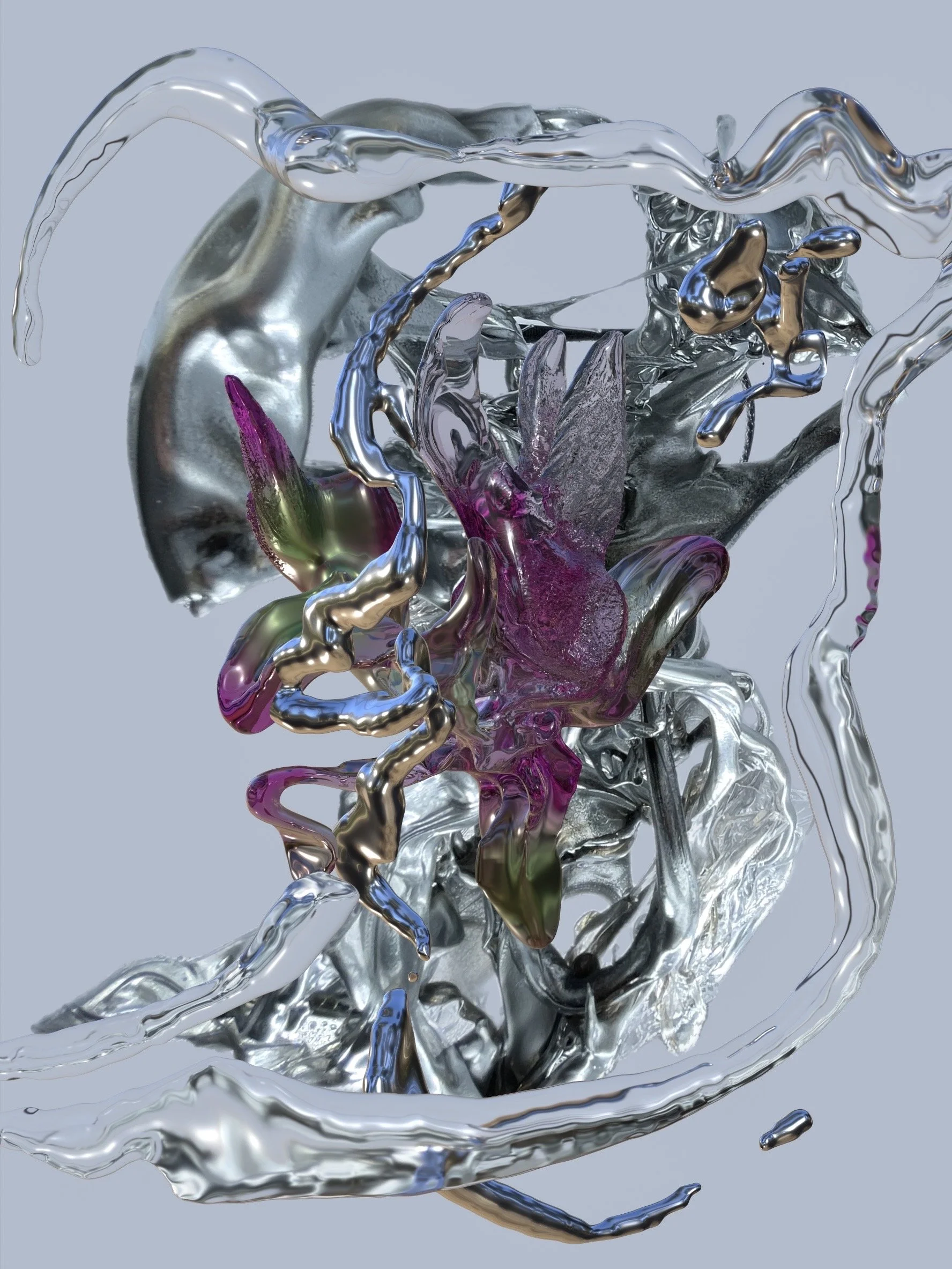
You work across 3D, digital sculpture, and mixed media. How does moving between these mediums influence your ideas, and are there certain concepts that emerge only when you combine them?
Each medium offers a distinct creative experience. Working with physical materials is meditative and tactile; it forces a slower, completely absorbing pace. Digital processes offer a different kind of freedom, allowing me to manipulate forms beyond physical limitations.
What fascinates me also is the overlap, creating a final form where the boundary between the two is entirely blurred.
I enjoy that ambiguity. There is a compelling tension when different processes come together to create a form that feels entirely its own, rather than belonging to one medium or the other.
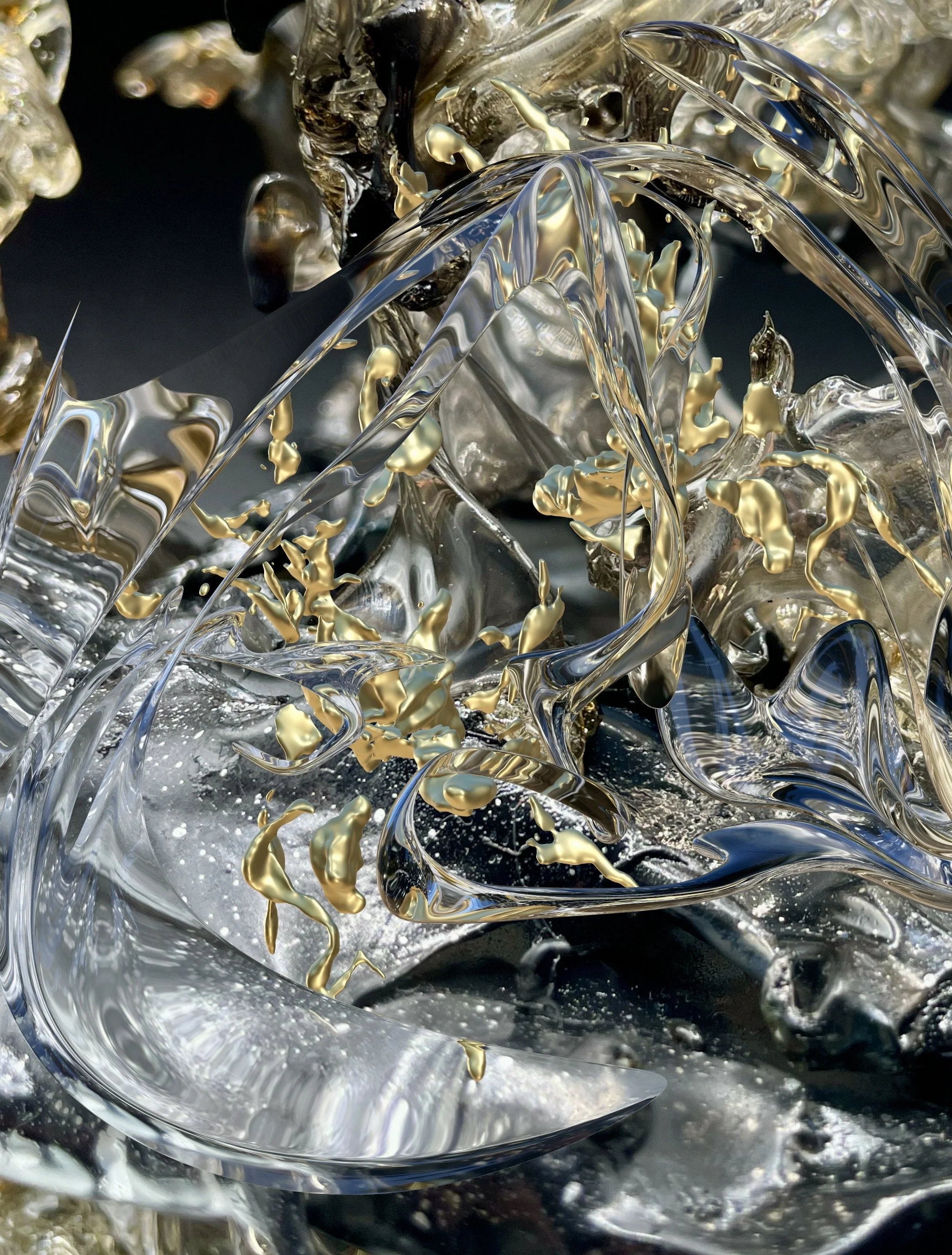
Your digital sculptures often feel otherworldly and abstract, yet they have a strong sense of physical presence. How do you approach creating forms that feel almost tangible despite existing digitally?
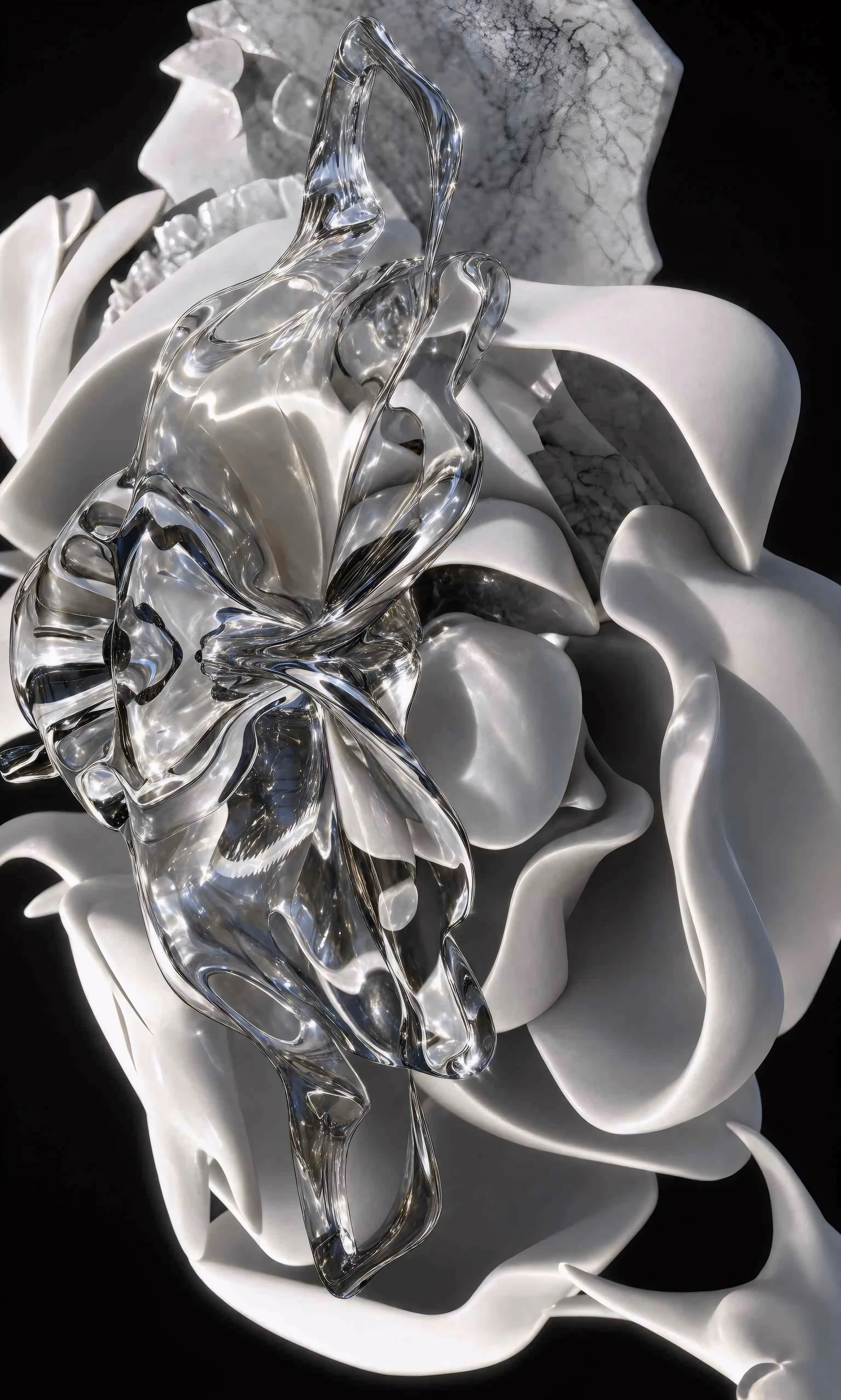
I am deeply drawn to the sensory qualities of materials, particularly how light interacts with surfaces and how certain textures evoke a visceral, physical response.
I am also drawn to transparency and refractions, not just for their visual qualities, but as ways to explore how we distort and filter our perception. There is a specific tension in a form that allows you to see through it while simultaneously bending the reality on the other side.
I find myself fascinated by these contrasts: something that appears delicate yet heavy, or a surface that feels both organic and artificial. These choices are often intuitive. Every aesthetic decision doesn't need a conceptual explanation sometimes, pure fascination is enough to begin exploring.
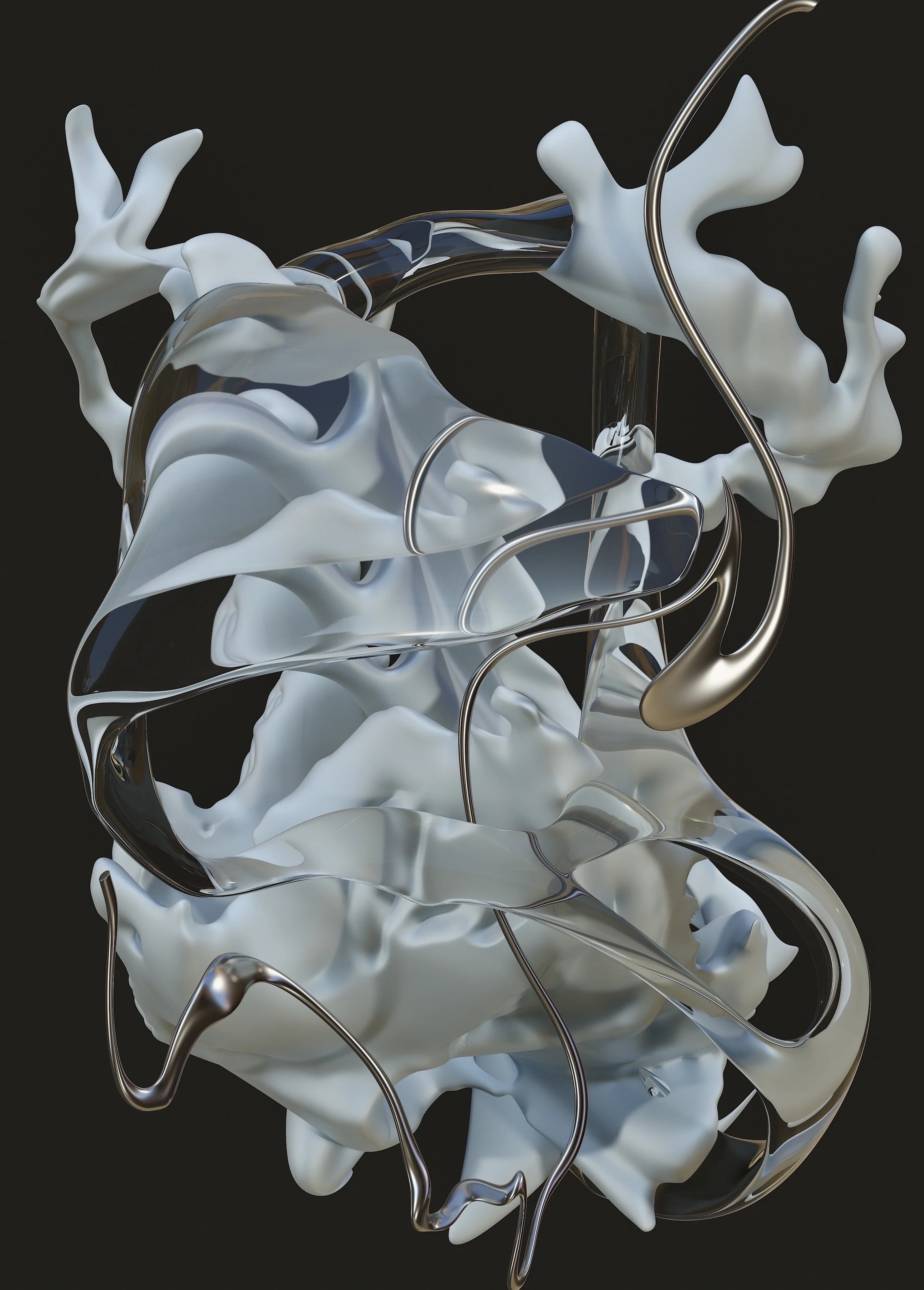
How much of a finished work do you plan from the beginning, and how much develops through experimentation or unexpected results?
It is a combination of both. I usually begin with an initial concept, form, or texture, but I rarely map out the entire outcome.
While I can be particular about certain details, I thrive on unpredictability. An accidental material interaction, a distortion, or a sudden change in perspective often pushes the work into an entirely new, unconsidered direction.
There is immense freedom in not knowing everything in advance. The act of making frequently reveals ideas you weren't consciously thinking about at the start. I think the same is true of life as a whole, sometimes you connect the dots looking backward, in ways you could never have anticipated.
Abstraction can leave a great deal open to interpretation. Do you have a particular experience or feeling you hope viewers take away from your work?
I have always been highly sensitive to atmosphere, whether it’s the presence of a person, a physical space, or a piece of music. Something often resonates with us before we can logically explain why.
Visual art works the same way. A piece doesn't need to communicate a literal story to evoke a powerful response; it can simply be a certain presence or an indefinable tension.
Abstraction leaves room for that direct experience. While I have my own associations with what I create, I don’t want them to dictate the viewer's encounter necessarily. There is real value in that moment before we try to analyze what we are looking at allowing ourselves to feel something without immediately needing to make sense of it.
Looking across your practice, is there a recurring question or idea that connects your different works?
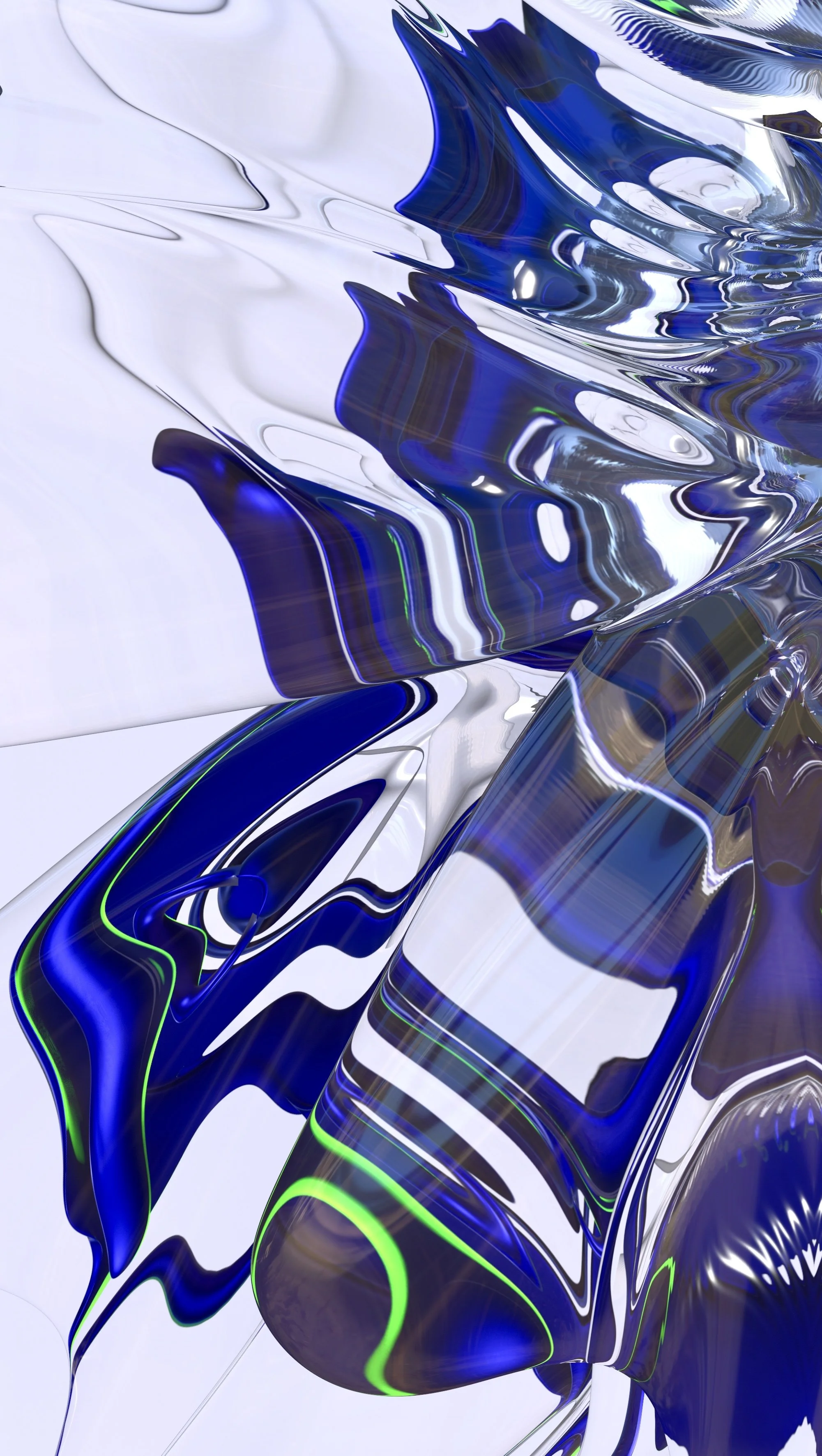
Uncertainty, deconstruction, and transformation are recurring threads in both my art and my outlook.
We tend to construct our understanding of the world through fixed structures and definitions. I am interested in how much of what we consider "certain" actually depends on perspective and context.
For me, it’s about looking beyond established frameworks to discover what remains hidden. This naturally surfaces in my work through forms that exist between states, simultaneously emerging and dissolving, structured yet unstable. Ultimately, I am less interested in finding certainty within uncertainty, and more curious about why we crave that certainty in the first place. I don’t think everything needs to arrive at a definitive answer.
Are you our next spotlight artist? Submit the form to apply to be featured!
We share works by digital artists as well as digital arts exhibitions, events, and open calls daily on Instagram — follow us for more and subscribe to our newsletter so you don’t miss new blog posts.