Morain An on Shared Spaces, Stillness, and Human Connection
By Cansu Waldron
Morain An is a New York–based illustrator whose work draws from the quiet rhythms of everyday life. Through editorial and personal projects, she creates scenes centered on people, shared spaces, and fleeting interactions that often go unnoticed. Using bold color, hand-drawn lines, and intentionally imperfect forms, her illustrations feel intimate and human, capturing the subtle emotional texture of ordinary moments rather than dramatic narratives.
Much of Morain’s work comes from observing the world at a slight distance. She’s interested in the fragments people reveal unintentionally — small gestures, brief exchanges, or the way individuals move through the same space while remaining in their own separate worlds. Rather than documenting reality exactly as it appears, she reshapes these observations through her own perspective, allowing familiar scenes to become something more reflective and imagined. Her illustrations offer viewers another way of looking at everyday life, finding connection and meaning in moments that are easy to miss.
We asked Morain about her art, creative process, and inspirations.
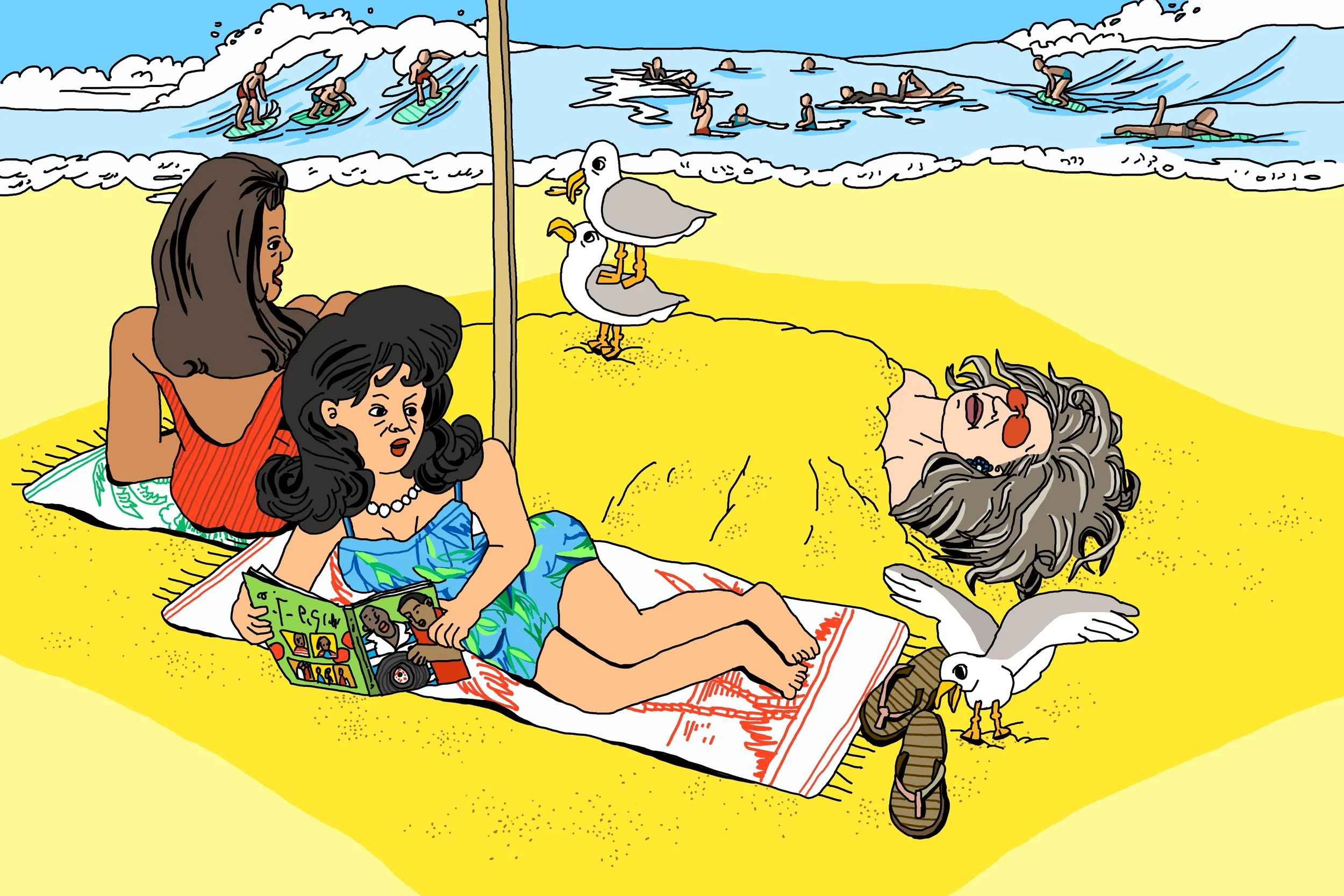
A Friday afternoon at the beach
Your work often captures small, everyday moments that many people might overlook. What draws you to these quiet scenes, and how do you decide which ones are worth turning into an illustration?
I think I’m always looking for a sense of stillness, not just in noisy places, but in almost any situation. It’s more like a habit, I tend to pause and notice small details even when everything feels busy.
For example, I could be in a crowded train station, but I’ll focus on something very specific, like the shape of a staircase or the way someone moves. From there, my mind starts to extend that moment into something slightly imagined, but still believable.
What draws me in is that contrast between the environment and an individual’s own pace. And usually, the moments I turn into illustrations are the ones that stay with me, small fragments that keep unfolding in my head after I’ve left.
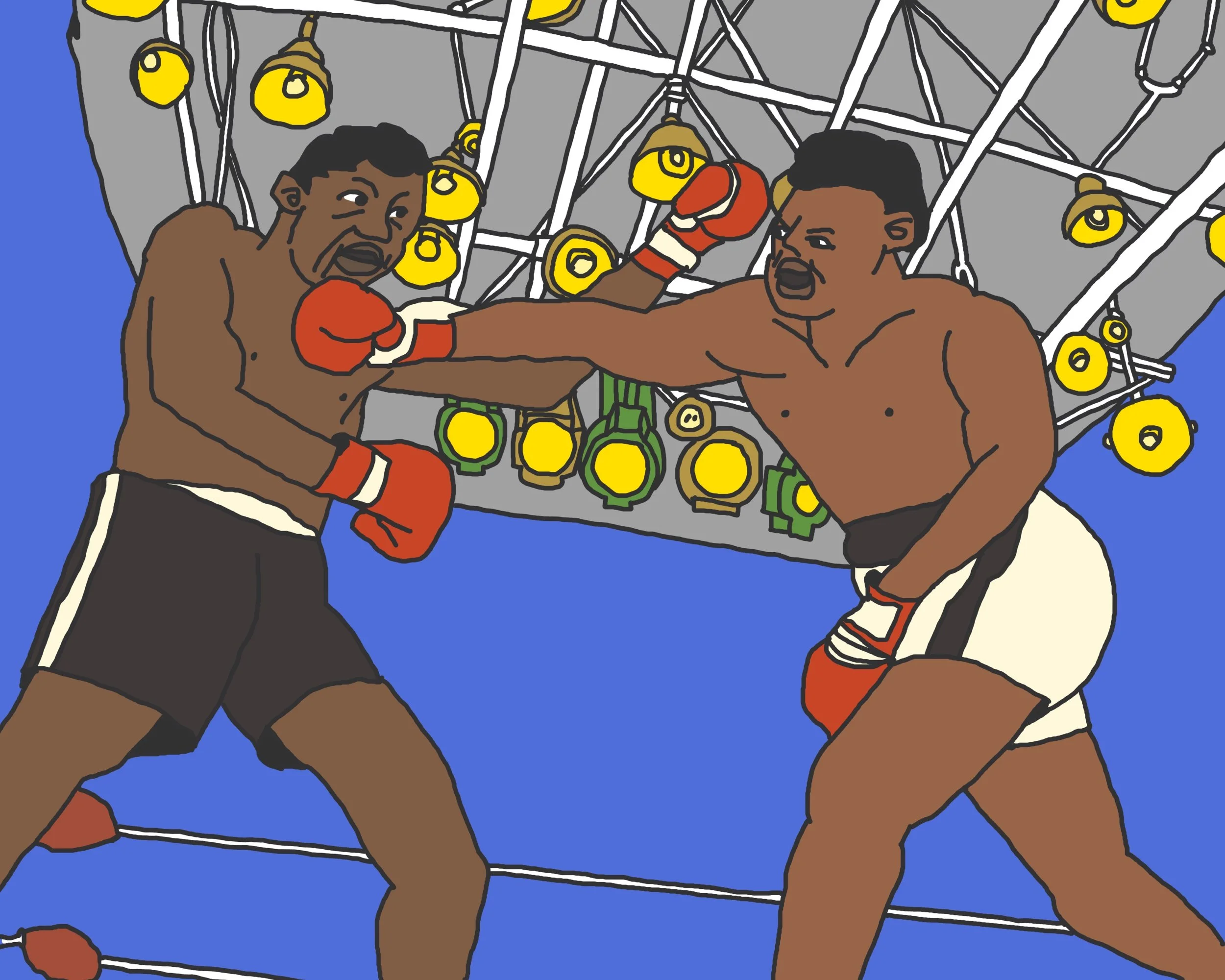
Boxing
You focus a lot on people and shared spaces. What do you enjoy most about observing and illustrating the interactions that happen in those environments?
When I look at people and shared spaces, I think I’m always coming from a bit of a distance, more like an observer. You never really see the full picture of someone else’s life, just small fragments from where you stand, and I’m actually really drawn to that.
I enjoy noticing those very brief, almost invisible moments, small gestures, quiet interactions, or just how people move through the same space in completely different ways. Even when people are together, they’re still kind of in their own world. I’m not trying to document things exactly as they are. I’m more interested in taking those fragments and reworking them through my own perspective, letting them become something a bit more complete, even if it’s imagined.
In a way, it’s just how I see the world, and I’m sharing that with others, offering a slightly different way of looking at something familiar.
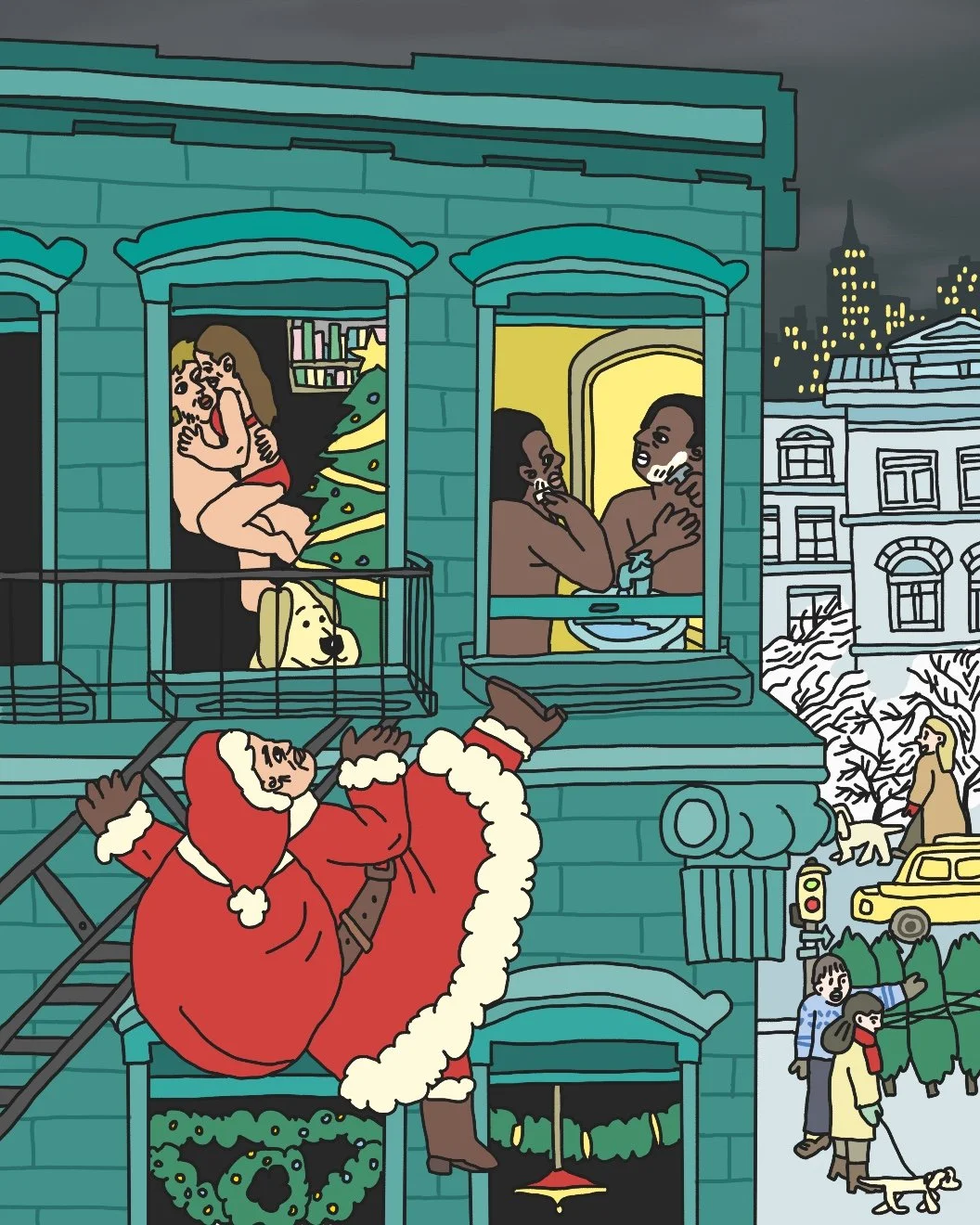
Merry Christmas from your santa
Many of your images feel slightly imperfect in a very intentional way. What role does imperfection play in how you approach drawing and storytelling?
I don’t really think of “imperfection” as a style, it feels more like something that formed over time.
When I was growing up in China, art class was very structured. We had to draw portraits and plaster casts, and everything was graded, sometimes pretty strictly. There was always this idea of a “correct” way to draw, and I remember trying really hard to make my lines feel loose or effortless. But looking back, that looseness was actually quite forced, and kind of stiff.
Over time, as I kept practicing, that started to change. I realized that natural lines aren’t something you can fake or design, they come from repetition, and they slowly become part of your body. Now when I draw, it feels more like a physical response. The lines are just there, they’re traces of how I move, and that makes them feel more honest to me.
So in my work, this “imperfection” is really about keeping that honesty. It leaves space for a kind of human presence, and lets the drawing breathe a bit. I’m less interested in making something feel perfect or fully resolved, and more in whether it feels natural, and emotionally real.
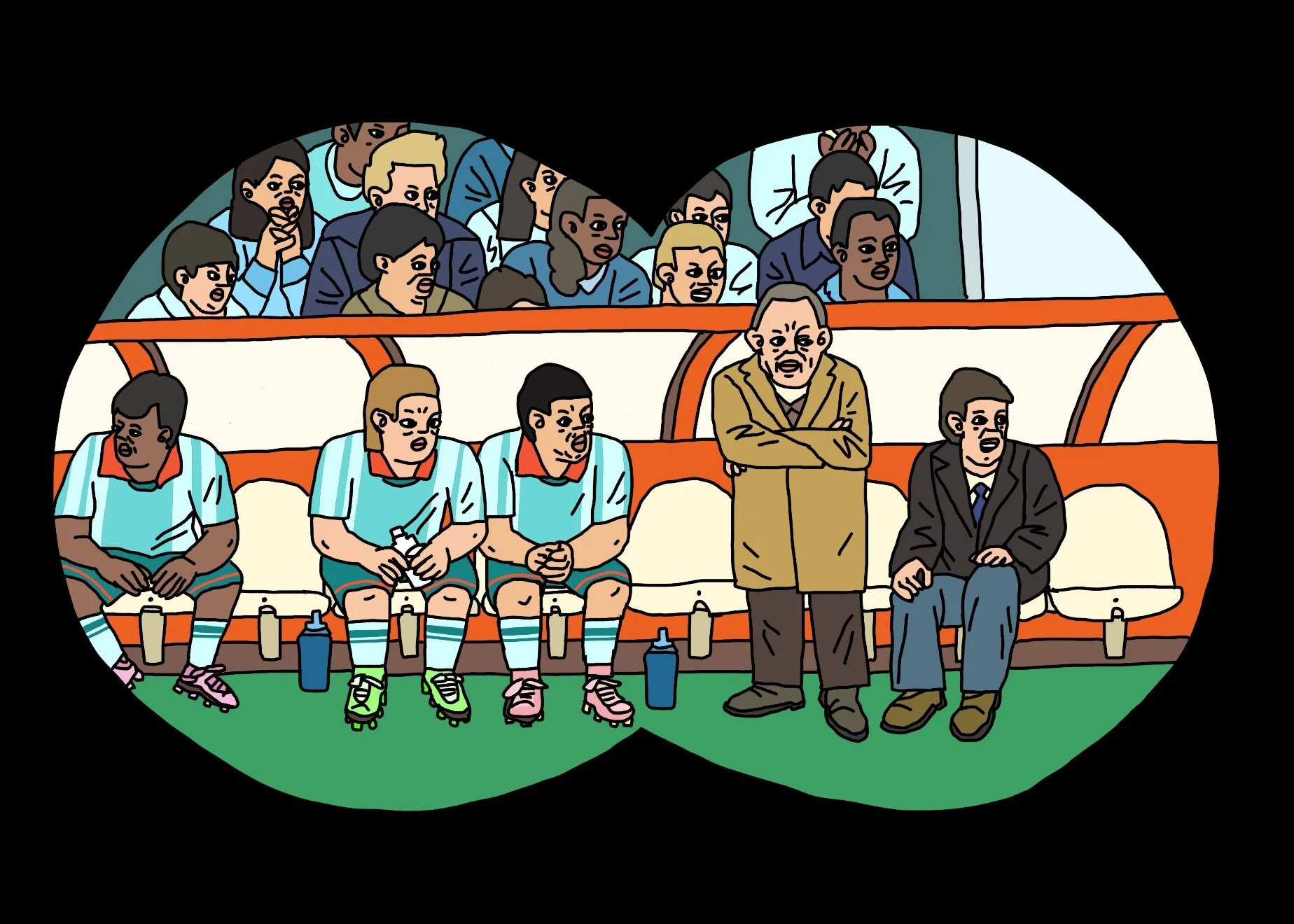
Soccer
Living in New York means being surrounded by constant movement and countless stories. How does the rhythm of the city influence the moments you choose to illustrate?
When I’m working on editorial projects, I usually start from the text, understanding its tone and structure, then translating that into an image. It’s a more defined process, where clarity and communication are important.
With personal work, the starting point is much more open. I often begin with a vague feeling or a small observed moment, and once I start drawing, the process becomes intuitive and exploratory. Without external constraints, I allow the image to develop on its own, moving toward something unknown.
In a way, editorial work moves from the outside in, while personal work grows from the inside out, but both are shaped by the same way I observe the world.
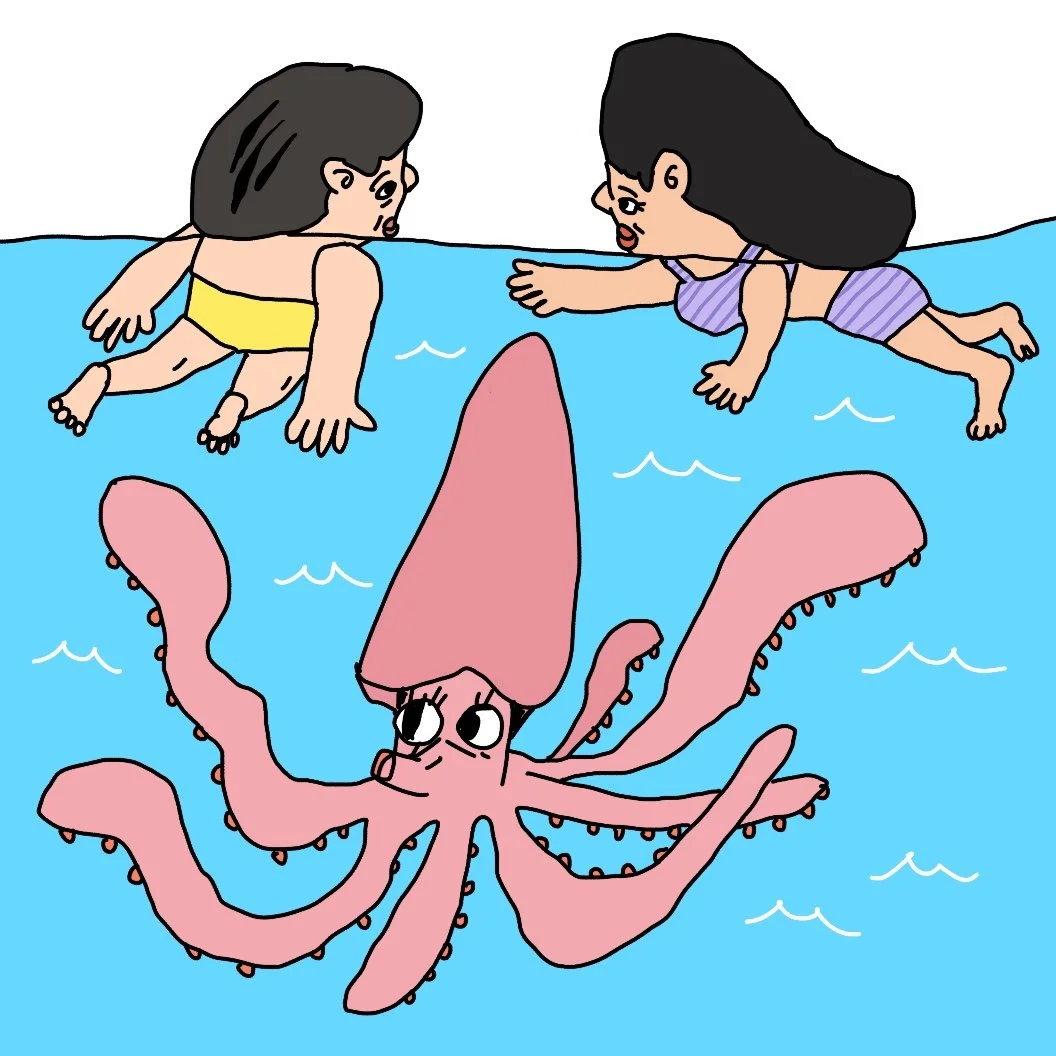
Swimming
You work across editorial and personal projects. How does your creative process shift when you’re responding to a brief versus when you’re drawing purely from your own experiences?
When I’m working on editorial projects, I usually start from the text. I try to understand the tone and structure first, then translate that into an image. It feels a bit like interpreting, finding a visual way to carry the idea, while still leaving space for my own perspective. There’s a clearer framework, so the decisions are more intentional from the beginning. I think more about clarity, and how the image communicates quickly within that context.
With personal work, it’s quite different. I usually spend a lot of time thinking at the start, but the starting point is often vague, a scene, a feeling, or a small moment I noticed. I don’t really set a clear narrative upfront. Once I begin, it becomes much more intuitive. Without constraints, I just respond to what’s happening on the page, and let it develop on its own. It feels like moving toward something unknown, figuring it out as I go.
I guess the difference is that editorial work starts from the outside and moves inward, while personal work comes from inside and moves outward. But in both cases, it still comes back to the same way I observe things.
Many viewers seem to find a sense of familiarity in your work. Have you ever heard a reaction from someone that surprised you or changed the way you thought about a piece?
I’ve occasionally heard people describe my work as feeling a bit “depressed,” which I found interesting at first. It’s not something I’m consciously trying to express, in fact, I usually use quite bright and lively colors.
Over time, I started to understand what they might be responding to. I don’t think it’s “depression” in a literal sense, but maybe more a kind of quietness or introspection, a way of being alone, even within a shared space. The figures in my work often exist on their own, and even when they’re together, there’s still a certain distance between them.
What I find interesting is that even though this isn’t something I intentionally build into the work, people still connect to it in a very personal way. It made me realize that meaning doesn’t really stay fixed, what I think I’m expressing can become something else for someone else.
Once the work is seen, it kind of takes on a life of its own, shaped by other people’s experiences as much as mine.
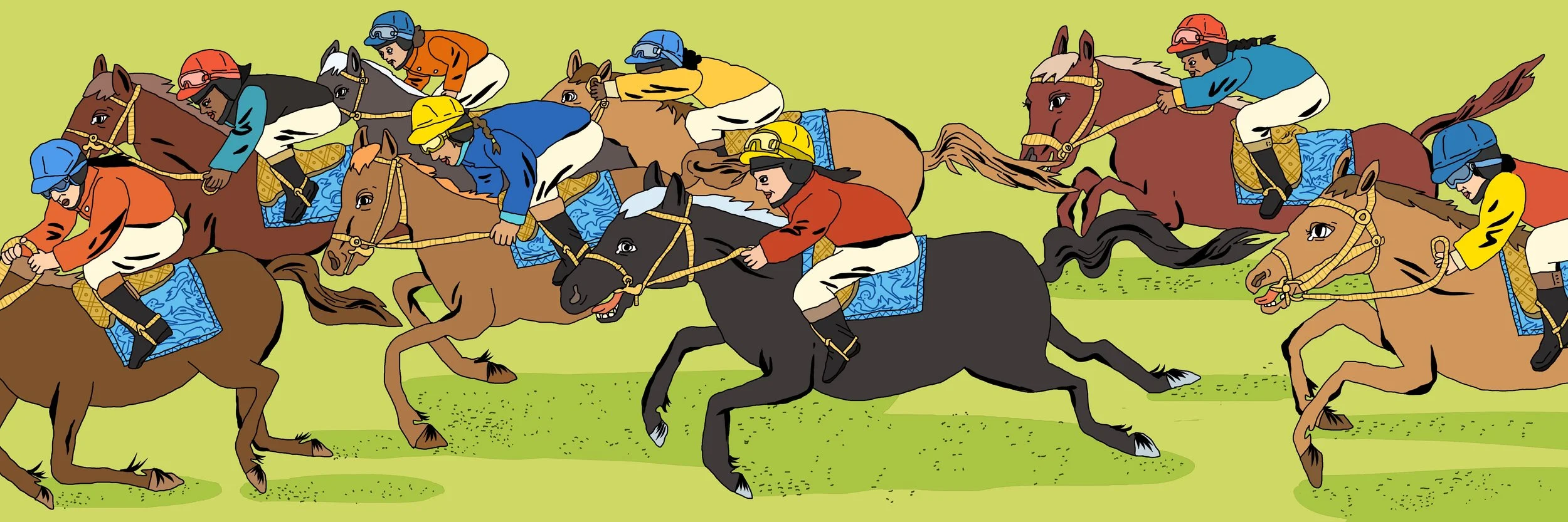
The Eight Horses
What is a fun fact about you?
I’m not sure if this could be a fun fact, but I started playing soccer once a week since last year. I actually didn’t try it until I was 25, which makes it feel a bit unexpected, but I ended up really enjoying it.
Sometimes when I’m doing sketches, I find myself looking at soccer-related scenes and drawing from them, so it has gradually become part of my observation and practice as well.
I also have a small wish that if I ever have a more complete “team,” I’d love to design a full set of jerseys for them.
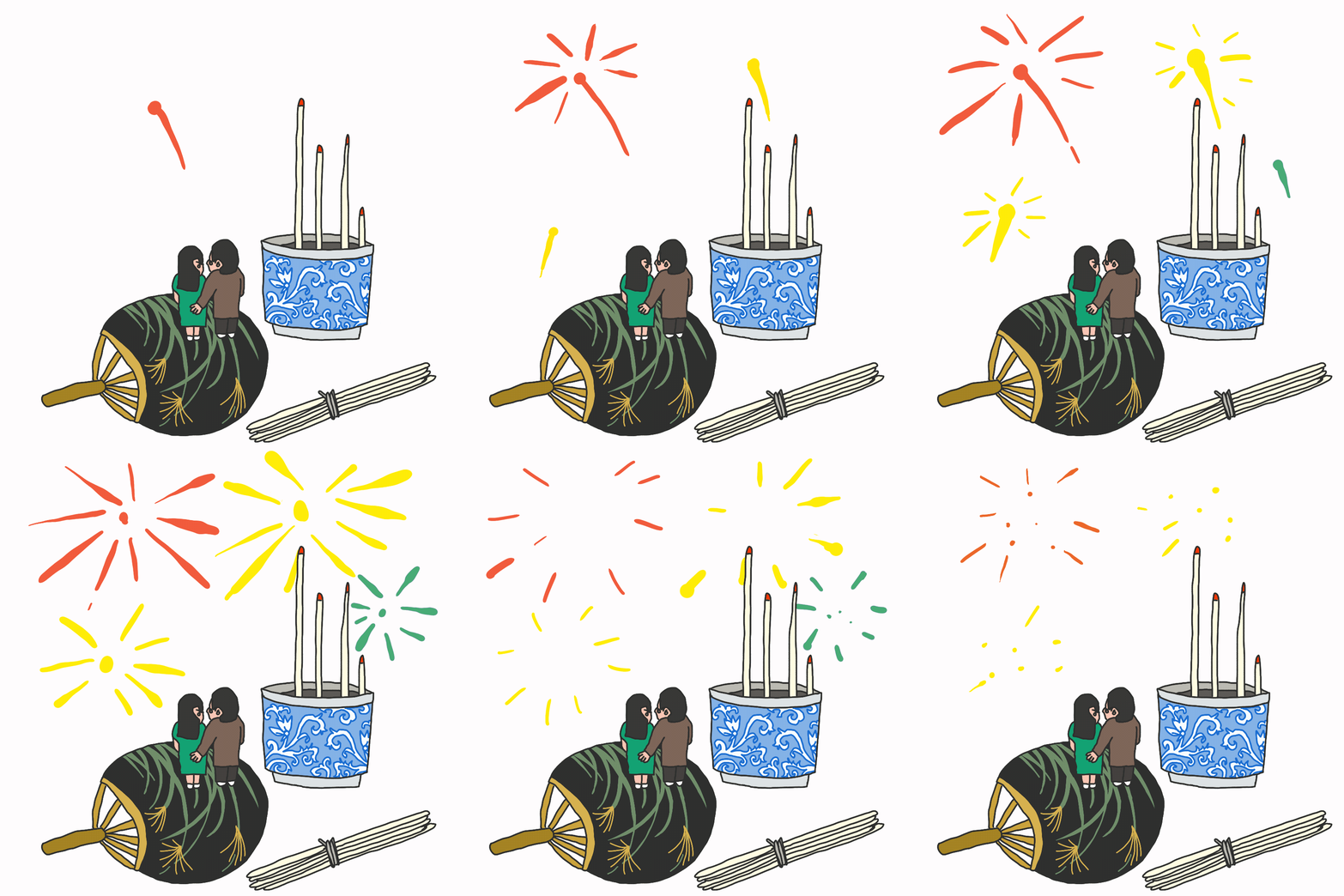
Firework
What else fills your time when you’re not creating art?
Living in New York, I spend most of my free time walking. I like moving through the city without a destination, just walking around anywhere in the city. I also take photos, on film, and spend time in the darkroom doing color enlargements. That process feels very satisfying to me, it requires focus, but at the same time, it’s almost meditative for me.
I also watch movies, and when I really like something, I tend to rewatch it multiple times. Each viewing feels slightly different.
I often feel like there isn’t enough time in a day, but overall, this rhythm of life makes me feel grounded and keeps me connected to what’s around me.
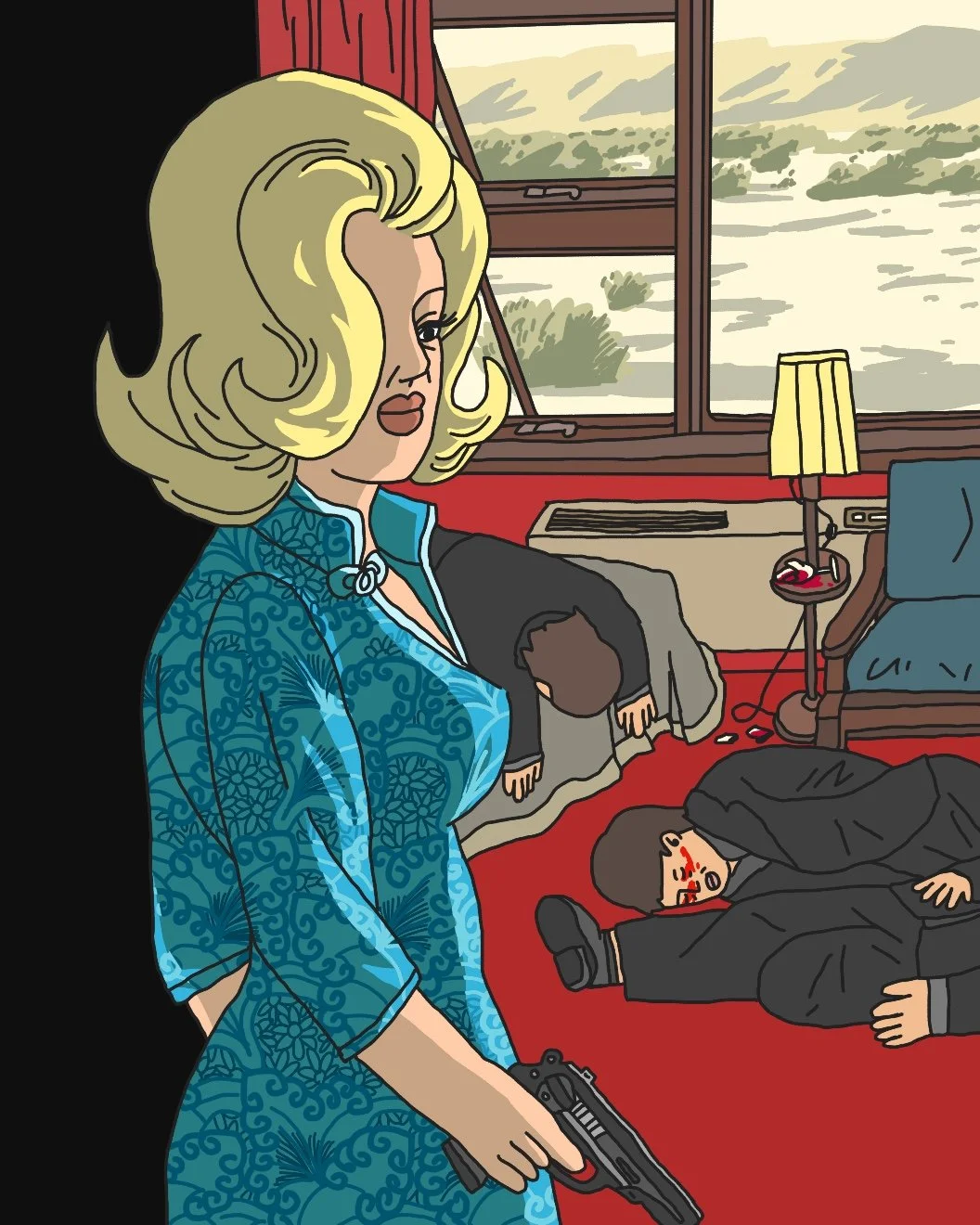
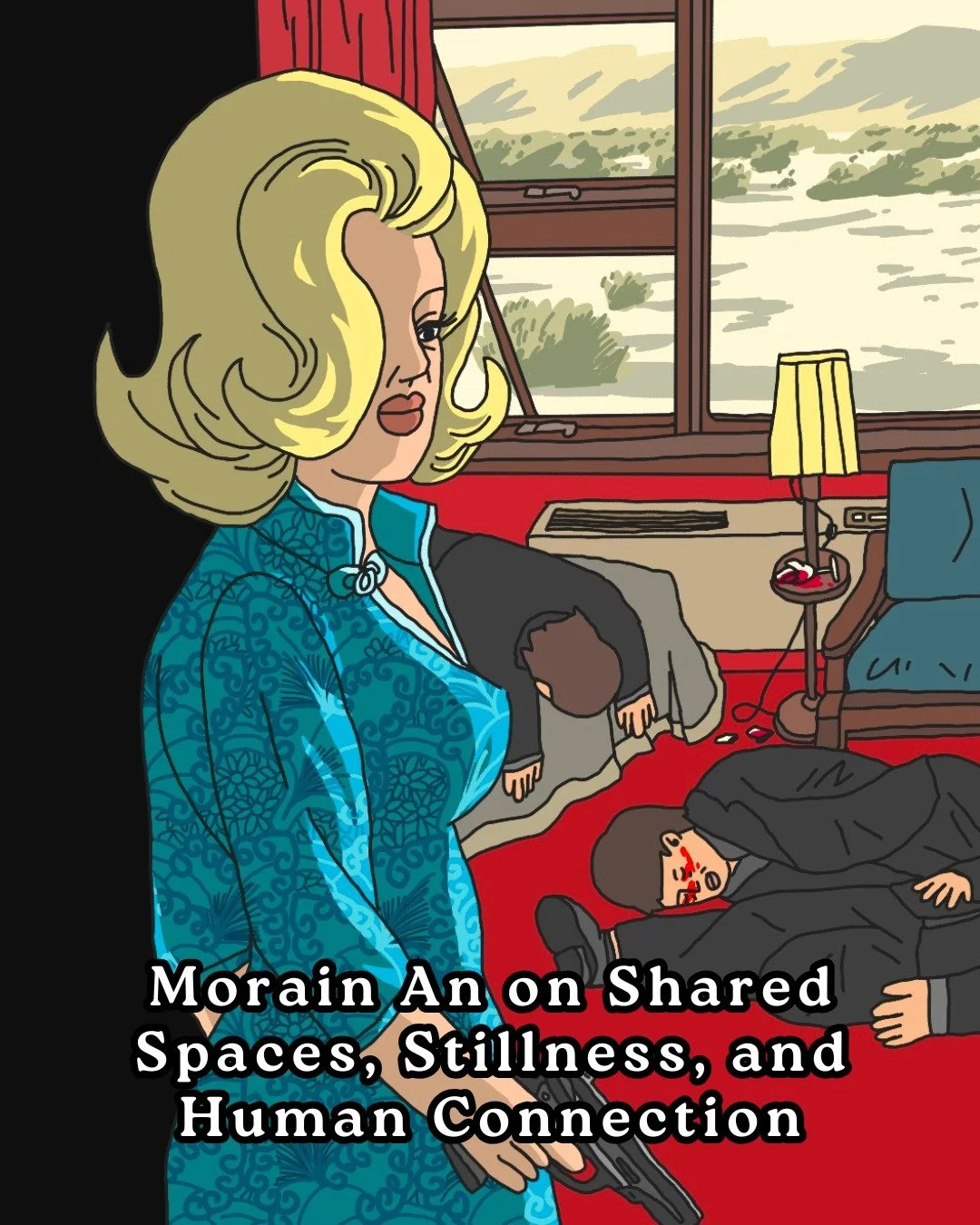
Why Woman Kill
Are you our next spotlight artist? Submit the form to apply to be featured!
We share works by digital artists as well as digital arts exhibitions, events, and open calls daily on Instagram — follow us for more and subscribe to our newsletter so you don’t miss new blog posts.
![Project Spotlight: pifmgr.dll’s [M]ETAL✨ @pifmgr.dll is a digital artist working at the intersection of audiovisual design, 3D experimentation, and atmospheric world-building. His project [M]ETAL explores metal both as a physical material and a](https://images.squarespace-cdn.com/content/v1/63b2fdbe4376de5bfdc6771f/1779108338452-QO04Q3MMJ3VMU8PJV1MD/image-asset.jpeg)