A Visual Poem About Belonging: Mrudula Kuvalekar
By Cansu Waldron
Mrudula Kuvalekar is a London-based illustrator and printmaker whose interdisciplinary practice explores queerness, memory, home, and migration through monoprint, collage, drawing, and writing. Drawing on her experiences of growing up queer in a homophobic environment and later building a life as a migrant in the UK, she uses illustration to explore the desire to belong and find community. Her work often sits at the intersection of personal storytelling, culture, and heritage, bringing together intimate experiences and broader questions about identity and the places we call home.
What stands out about Mrudula’s practice is the way she connects personal experience with stories that reach beyond her own life. Whether working with archival material or developing illustrations around cultural history, she approaches each subject through her own perspective, allowing the work to feel personal without losing sight of its wider context. This balance gives her illustrations a thoughtful quality, showing how visual storytelling can make histories and shared experiences feel more immediate and accessible.
Alongside her independent practice, Mrudula works in the education industry and freelances as an illustrator, collaborating with organizations including The Storybox Collective, the National Trust, and the Met Office on projects exploring British history and archives. With a background in graphic design and brand development, she brings an understanding of visual communication to both commercial and personal work, while continuing to ask how each project connects to her own experiences and values. She holds an MA in Illustration from Kingston University and was a 2023 Cheltenham Illustration Award winner. Outside her practice, she is fond of cats, coffee, and all things queer.
We asked Mrudula about her art, creative process, and inspirations.
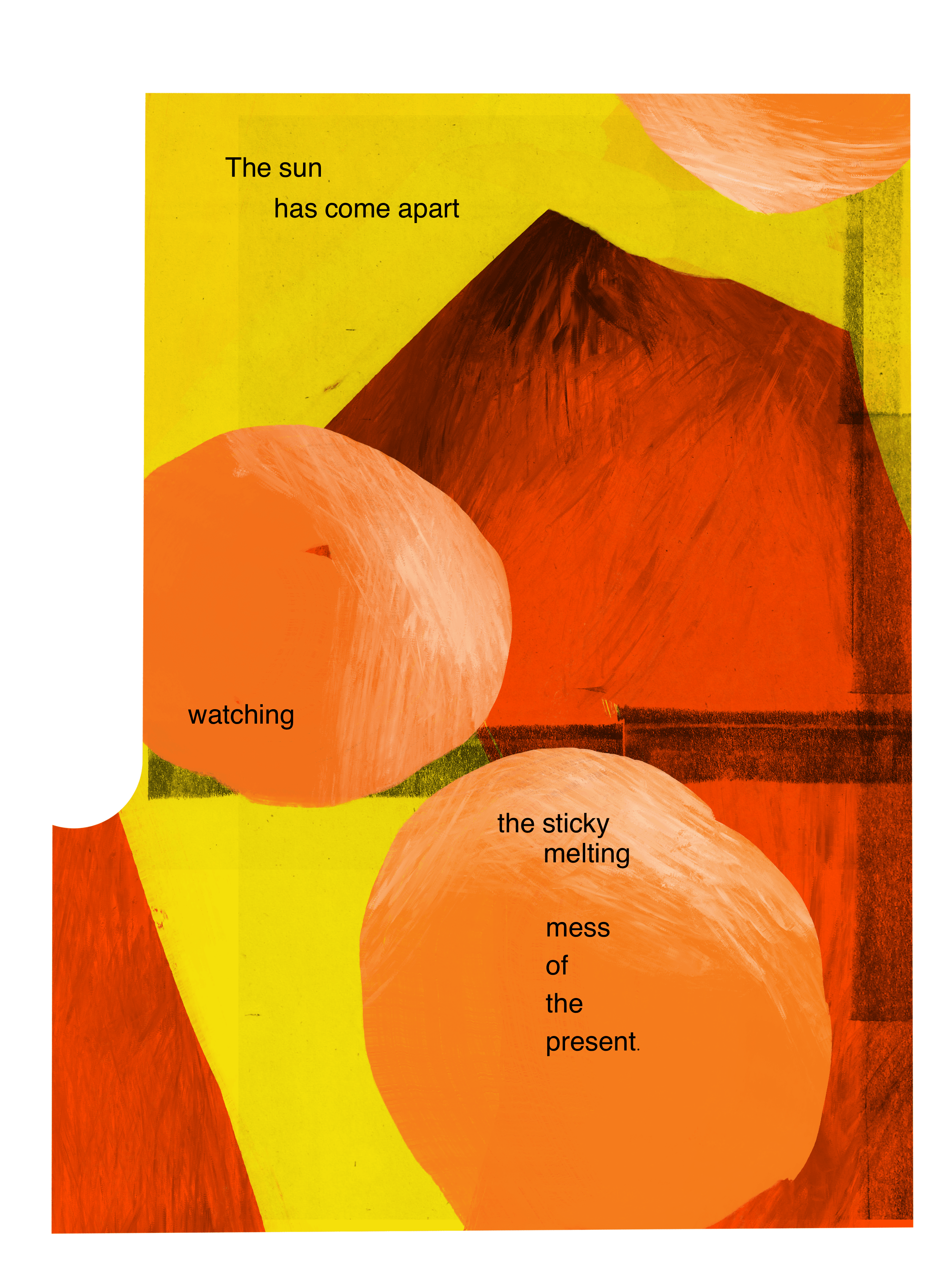
‘Boil’ - Poetry Comic, 2026
Your practice explores queerness, memory, home, and migration. What first brought these themes together for you, and how do they continue to shape the work you make today?
From growing up as a queer body in a homophobic environment to now living as a migrant in the UK, my work tries to reflect my own desire to belong and find community. This desire has become the connecting thread that informs the work I make, and why I make it.
This has led me to work at the intersection of illustration, culture and heritage, which is quite an interesting niche to have found! Over the past year, I've worked with The Storybox Collective, the National Trust, and the Met Office on projects that explore the UK's history and archives. Even on these more commercial projects, I always ask myself: how do I relate to this on a personal level, and how can I communicate what the client wants through my own lens? I think this makes my work more interesting and nuanced, and thus, more engaging to the audience.
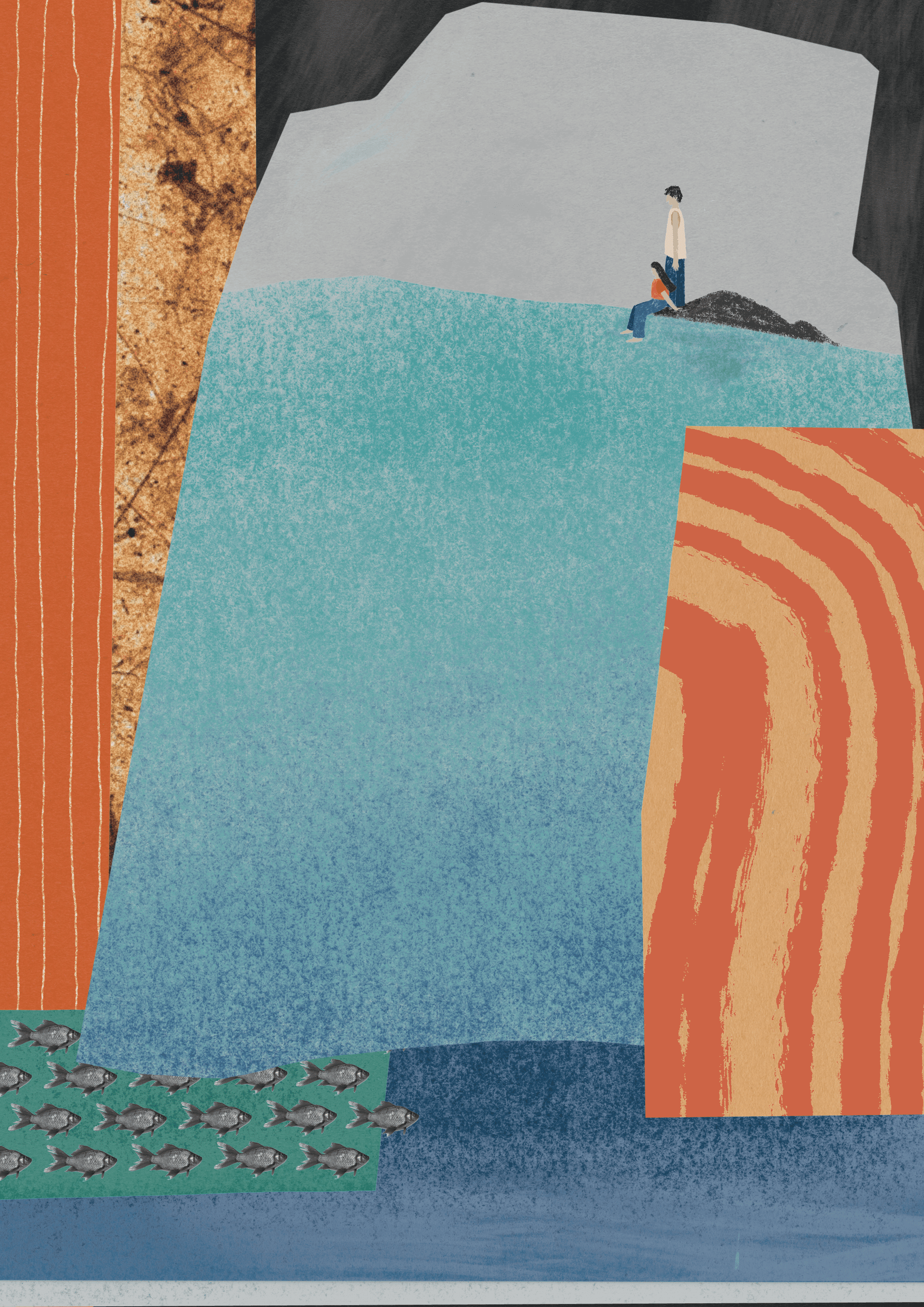
‘Childhood Frames’, 2024
Can you tell us about some of your favourite pieces of a past or upcoming project? What makes them special to you?
I just finished working on a self-published zine called ‘I’m still a Dyke’, which I’m really excited about! The zine imagines queerness through the eyes of a hound-like creature that is travelling across grassland moors in search of its pack members. It references memories of where I grew up and combines digital and analogue elements to create the final artwork. I really enjoyed working on this project because, beyond how close to my heart the subject matter is, it gave me a chance to explore new ways of working. I created the visuals by combining textures from scanned monoprints, paper cutouts and digital drawings. It also pulls text from a poem I wrote while on a lunch break at work. I've always enjoyed working with text and image together, but so far it's only been on one-off pieces. It was quite satisfying to see a full-fledged zine that still works as a visual poem.
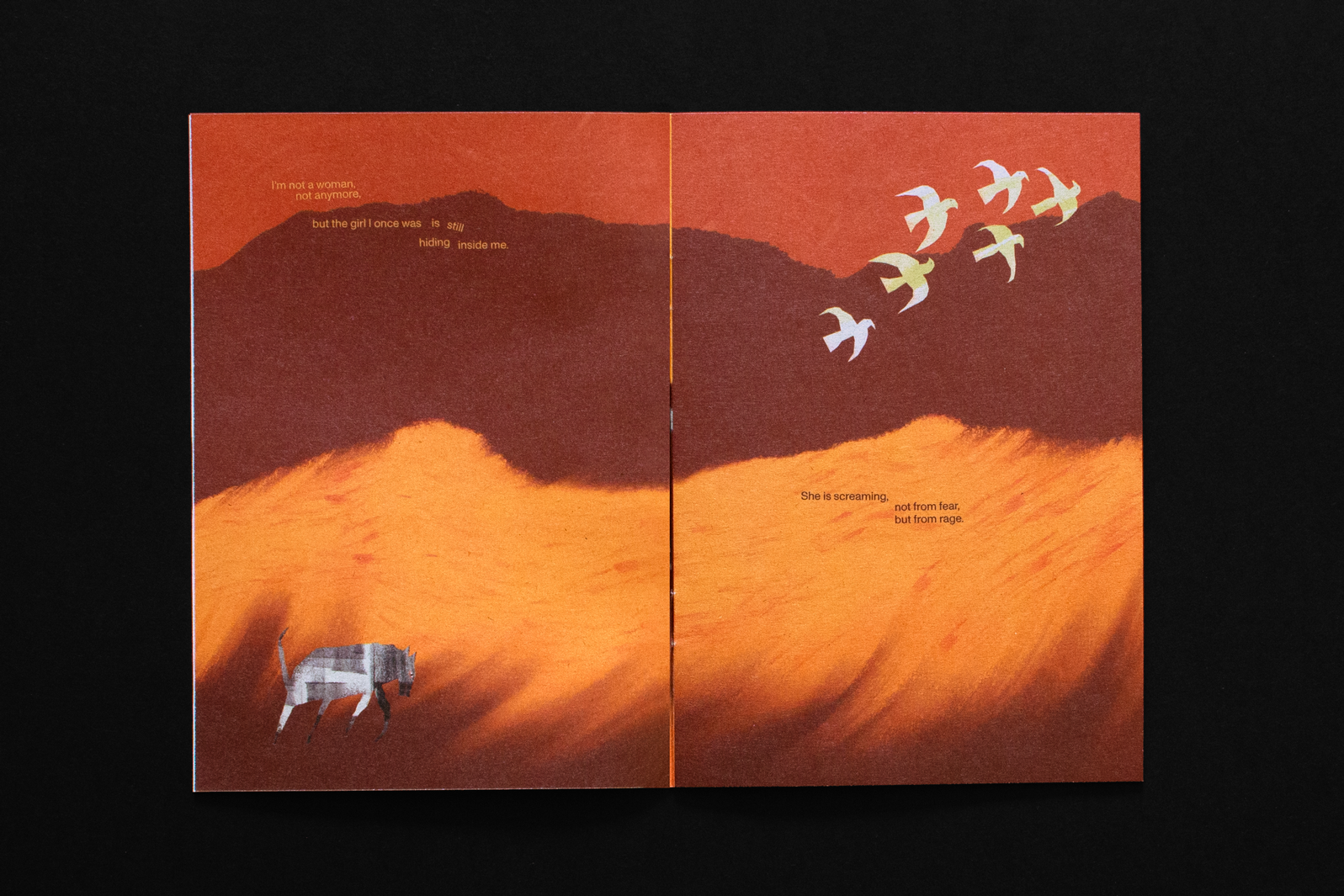
‘I’m Still a Dyke’, 2026
“Home” can be both a physical place and something carried through memory, language, relationships, and objects. What does home mean to you as an artistic subject?
Home, to me, is a lens through which I can examine memory, time, and belonging. To me, it evokes a sense of nostalgia and safety that is shaped by the objects we hold on to, the stories we tell, and the people we surround ourselves with. I can then use this ‘lens’ to infuse my work with meaning. For example, I recently had the opportunity to exhibit my zine, ‘Rooms’, as part of London Design Festival 2026. Through this project, I explored home as an archive: a collection of objects lost, collected, or left behind since childhood. Each page indexed objects against where they once lived, highlighting the ways in which our personal histories and material existence intersect. To give a very different second example, my piece 'Childhood Frames' explores how a memory itself can feel like home, carrying safety and warmth with it.
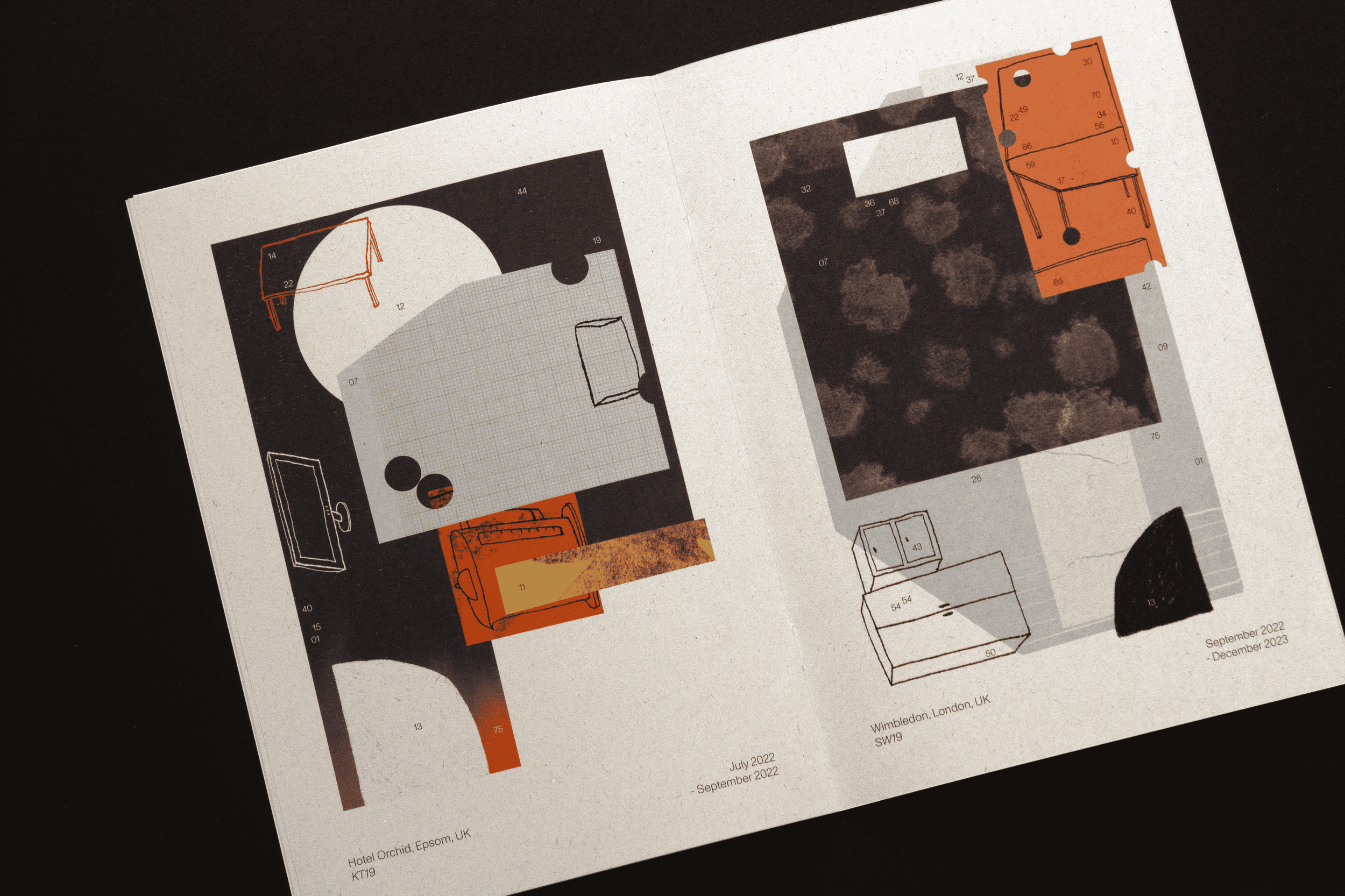
‘Rooms’, 2026
Queerness and migration can both involve questions of belonging and the feeling of being between different places or identities. Are you interested in the ways these experiences overlap?
Both queerness and migration involve navigating a world that isn’t built with you in mind, from differing social expectations to different cultures and languages. As a queer migrant, it often feels like a double-edged sword - I’m either explaining my queerness to people back home, or I’m justifying my existence as an immigrant here in the UK. Artist Do Ho Suh’s recent exhibition at Tate Modern really spoke to me about this, particularly his piece ‘The Bridge Project’. It explores the idea of creating a “perfect home" by mathematically calculating the midpoint between three places he considers home: Seoul, New York, and London. This midpoint turned out to be in the middle of the Arctic Ocean, uninhabitable by humans. The project then explores how he can survive there, with some eccentric bio-engineering inventions, including a ‘survival suit’ tailored to endure the extreme Arctic environment. It reminds me of how, as a queer migrant, I’ve built my own survival suit - but it only works on either my queer body or my migrant body. There is no midpoint, or if there is - it's uninhabitable.
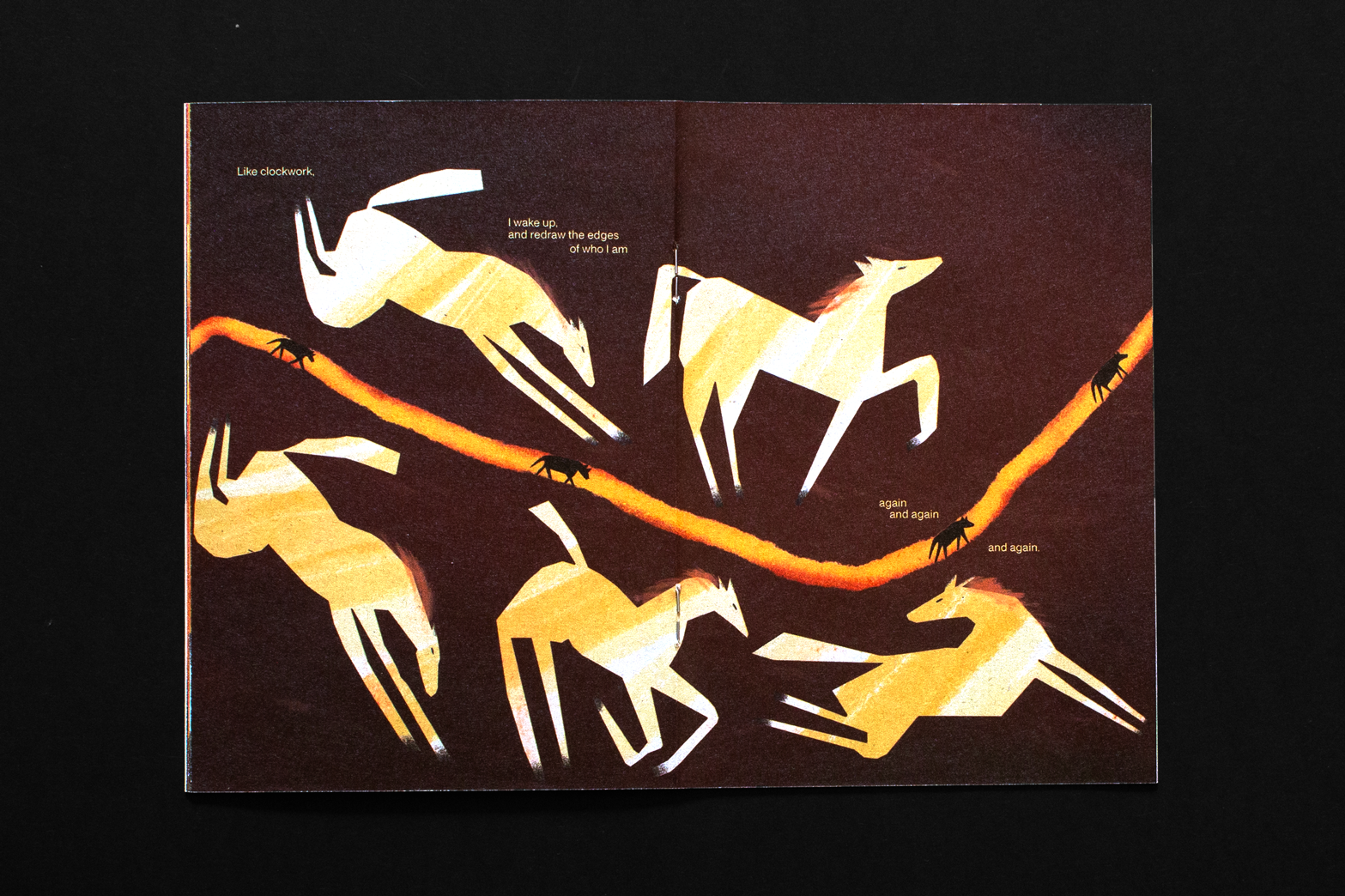
‘I’m Still a Dyke’, 2026
Are there any artists or creative influences that have had a significant impact on your work? How have they shaped your artistic style or approach?
While I primarily consider myself a visual artist, I find my influences across both art and writing. One of my greatest influences has been Ocean Vuong. His writing on queerness, family and migration hit close to home. His work, to me, shows how much can sit in between what hasn’t been said, which is what I try to do through my own work - letting words and images layer and shift in response to one another.
Louise Bourgeois is another influence, particularly her work with textiles. Her work, ‘Ode à l'Oubli’, a textile book she created in 2004, is a piece I really love. Physical materials, particularly textiles, have a way of holding memory in a way that is difficult to replicate, and I strive to bring that same sense of touch into my work, even when the final piece is digital.
I'm also influenced by contemporary illustrators like Peony Gent and Charlotte Ager. Peony’s work (her poetry comics in particular) has a more playful energy than Vuong’s, yet it shares his way of letting the unsaid fill the frame with tension. And that tension is what I would like to achieve with my own work.
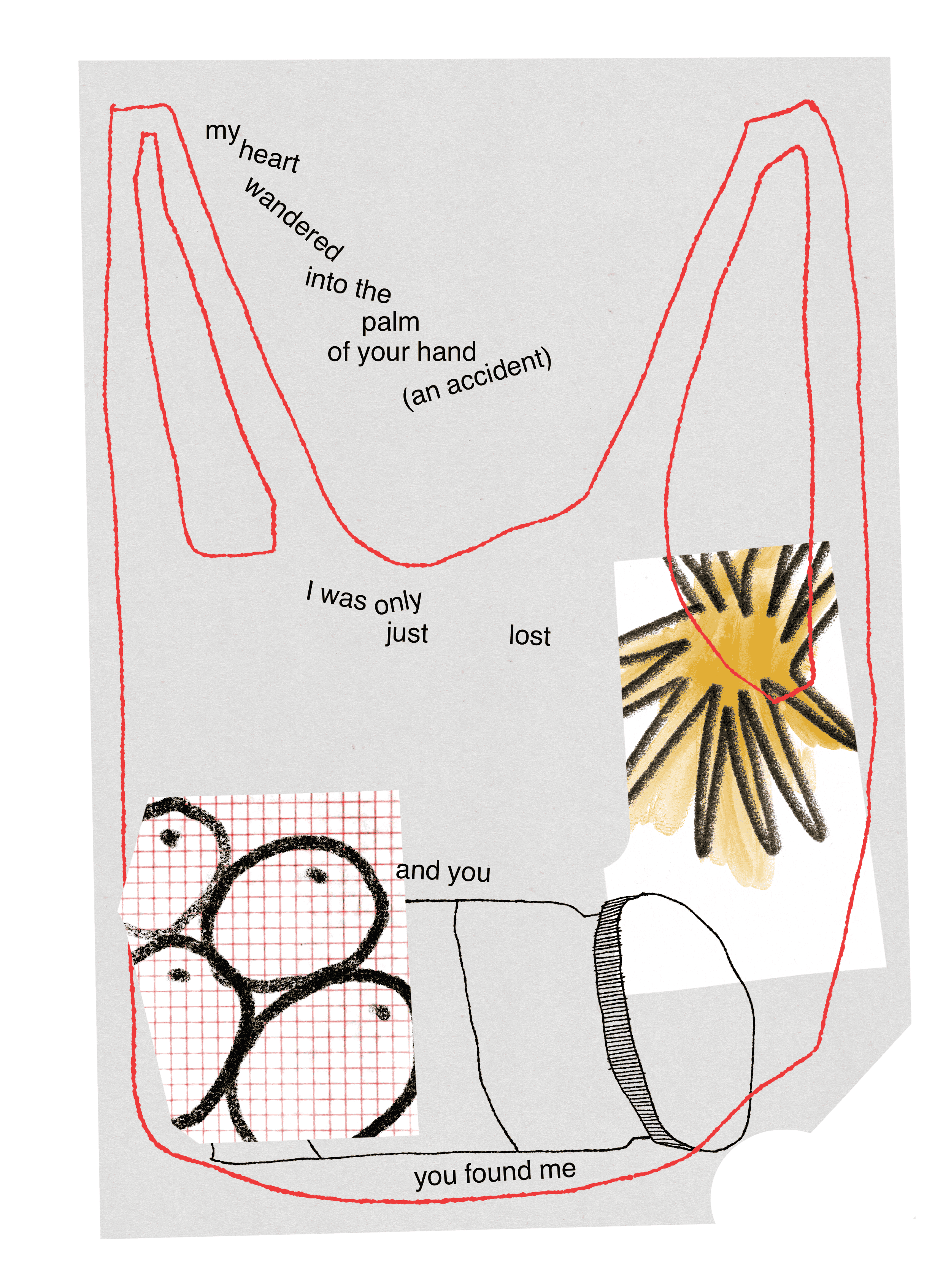
‘Tesco Aisle’ - Poetry Comic, 2026
Since completing your MA in Illustration in 2022 and receiving the Cheltenham Illustration Award in 2023, how has your practice evolved? Is there a direction you feel particularly drawn toward now?
I feel a lot more confident in my work, and I have a better understanding of the kind of work I want to make. For the past few months, I've also made a real effort to put myself out there rather than wait for opportunities to find me. I think it's so important for artists to market themselves, even if it's time-consuming and even if it's difficult to believe in your work.
My practice has also become more fluid. I move between mediums a lot more now, and I'm not afraid to play around with my practice and my process. I can tell the difference between an approach I admire and an approach I actually want to bring into my own work.
Right now, I'm most drawn toward breaking into the more commercial side of the illustration industry and being less niche than I am now. I want to expand! Partly it's because I enjoy flexing different parts of my artistic brain, and partly because I really love seeing my work live in people's everyday lives. I did my undergrad in graphic design, so illustration feels like the perfect mix of art and design, a bit like going back to my roots. I'd especially love to work on album covers and editorial work.
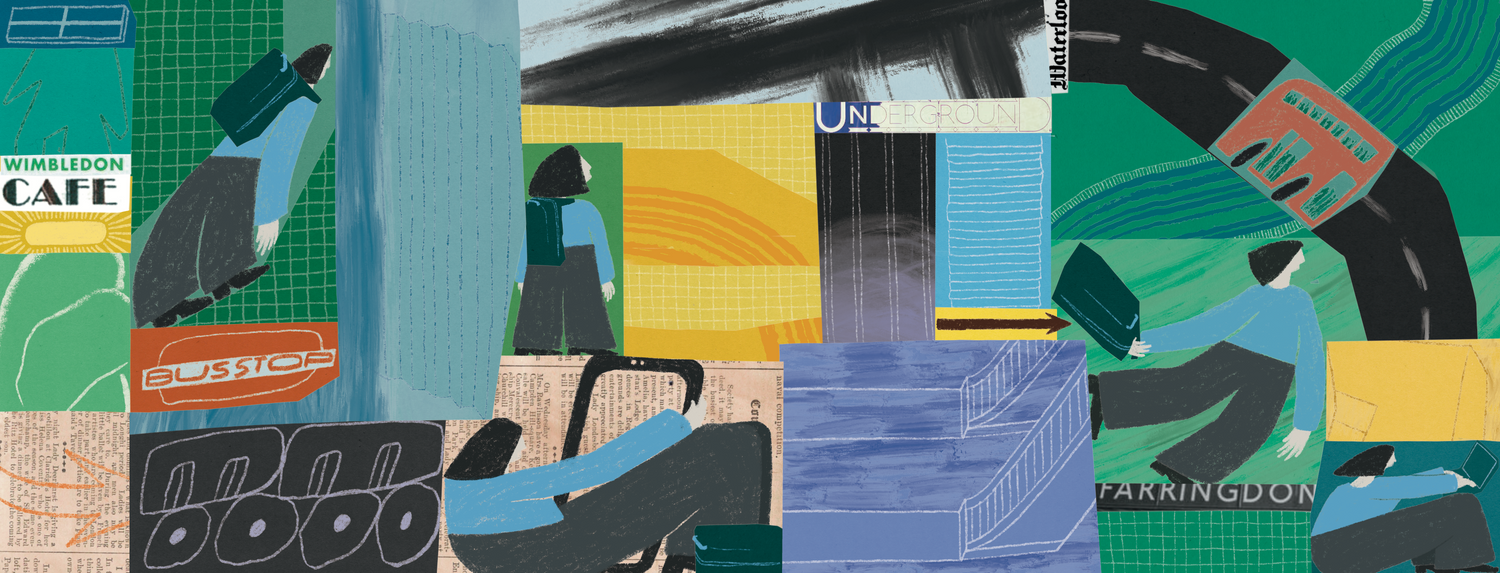
‘Ways Into Work’ – Cheltenham Illustration Award Winner, 2023
What is a profound childhood memory?
It's the memory I spoke about in 'Childhood Frames', of my brother and me, and it evokes feelings of loss and release. As kids, we wanted a pet goldfish and somehow convinced our parents to buy eight or nine at the local pet store. This was our first ever pet, and we spent all day digging a pond in our backyard, keeping the goldfish in a bucket in the meantime. By the time we finished it was dark, close to bedtime, and we checked on the fish only to find they had died. We were heartbroken. Our dad took us to a nearby river and we released them there. The memory is bittersweet: the time with my brother and the fun we had, and the loss of our first pets, all at once. It reminds me of the place I once considered home.
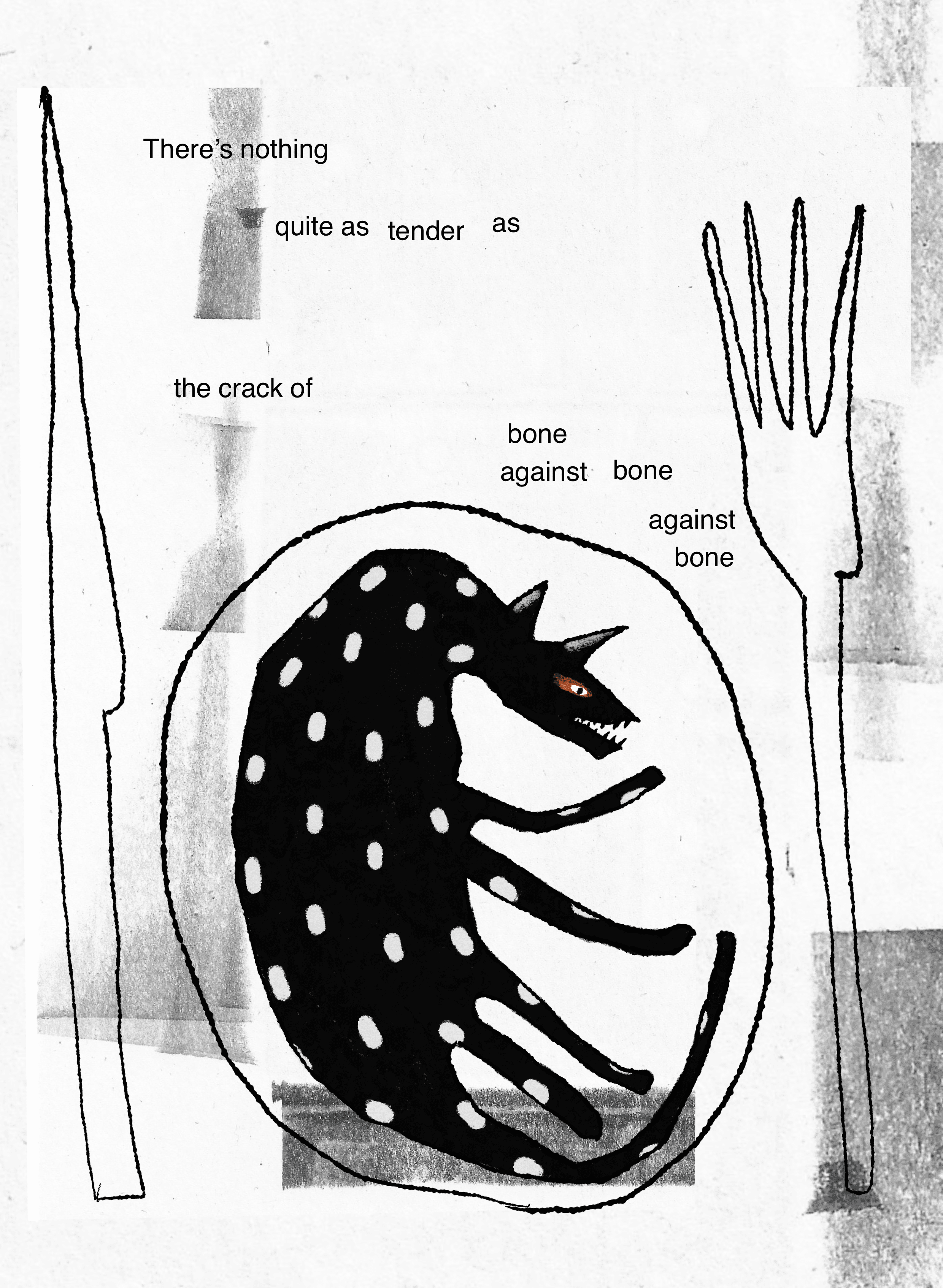
‘Violence’ - Poetry Comic, 2026
What is a dream project you’d like to make one day?
I'd love to start a magazine about illustration, arts and culture. I've wanted this ever since I worked full time at an art magazine a few years ago and loved putting together an issue, from the writing, to commissioning illustrators, to typesetting each word. Maybe one day, once I have some time and money!
Have there been any surprising or memorable responses to your work?
I still remember doing a local art fair in London, where I was displaying one of my zines, 'Lonely Bodies'. The zine explores the loneliness attached to the queer experience, and it was co-created through a series of collaborative, community-building workshops with LGBTQIA+ people, whose stories are part of it. A person walking by, who I hadn’t spoken to, looked through it and mentioned how much they connected with it, and how important it felt that other queer people could access it, especially those without a community around them. I was over the moon, because that was exactly why I made it. I wanted the zine to bring a sense of community to people who may not have one around them. Their response reminded me that the context I sometimes forget to explain is often what people intuitively connect with.
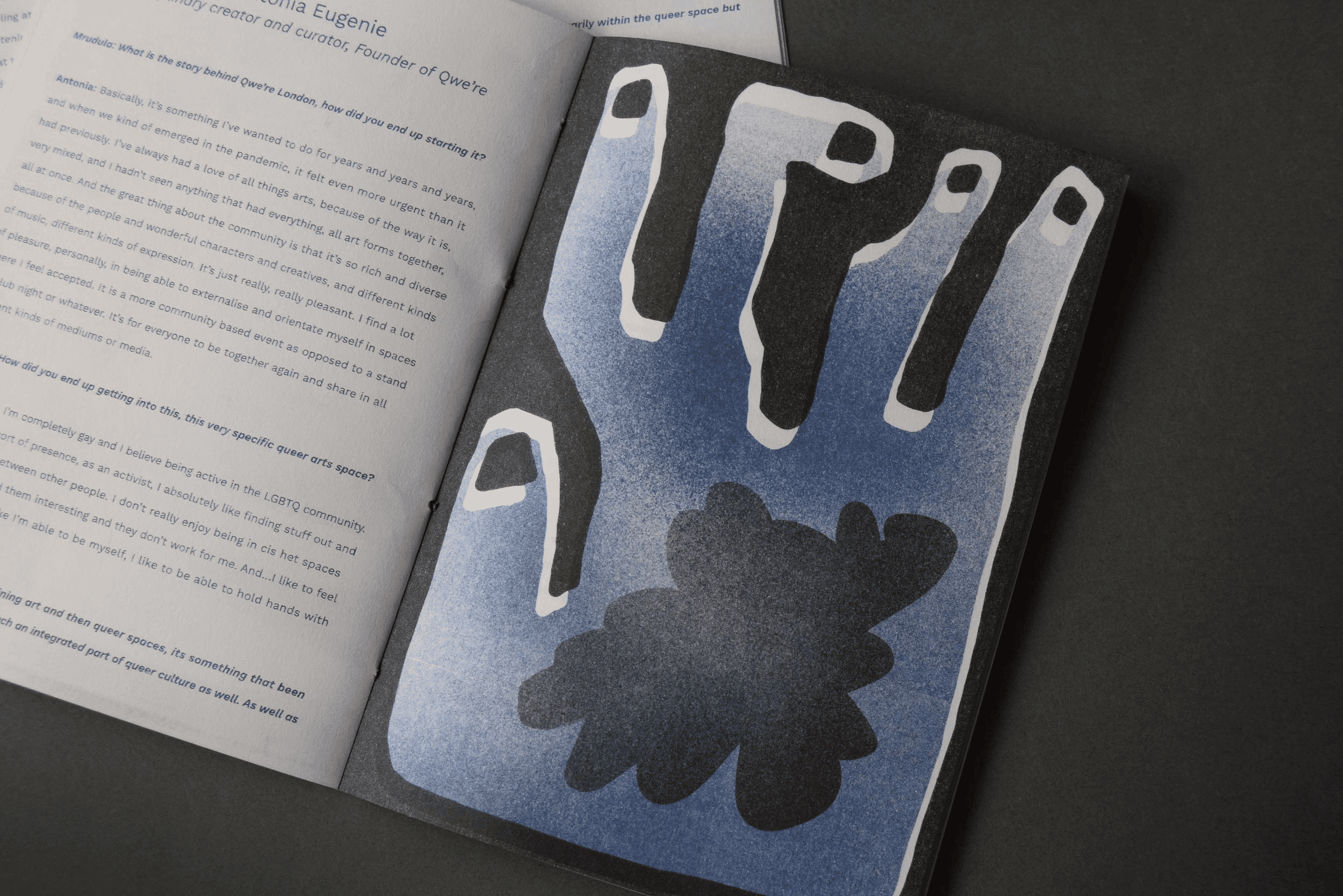
‘Lonely Bodies’ – Shortlisted at Creative Conscience Awards 2021-22, 2021
Are you our next spotlight artist? Submit the form to apply to be featured!
We share works by digital artists as well as digital arts exhibitions, events, and open calls daily on Instagram — follow us for more and subscribe to our newsletter so you don’t miss new blog posts.
![Project Spotlight: pifmgr.dll’s [M]ETAL✨ @pifmgr.dll is a digital artist working at the intersection of audiovisual design, 3D experimentation, and atmospheric world-building. His project [M]ETAL explores metal both as a physical material and a](https://images.squarespace-cdn.com/content/v1/63b2fdbe4376de5bfdc6771f/1779108338452-QO04Q3MMJ3VMU8PJV1MD/image-asset.jpeg)