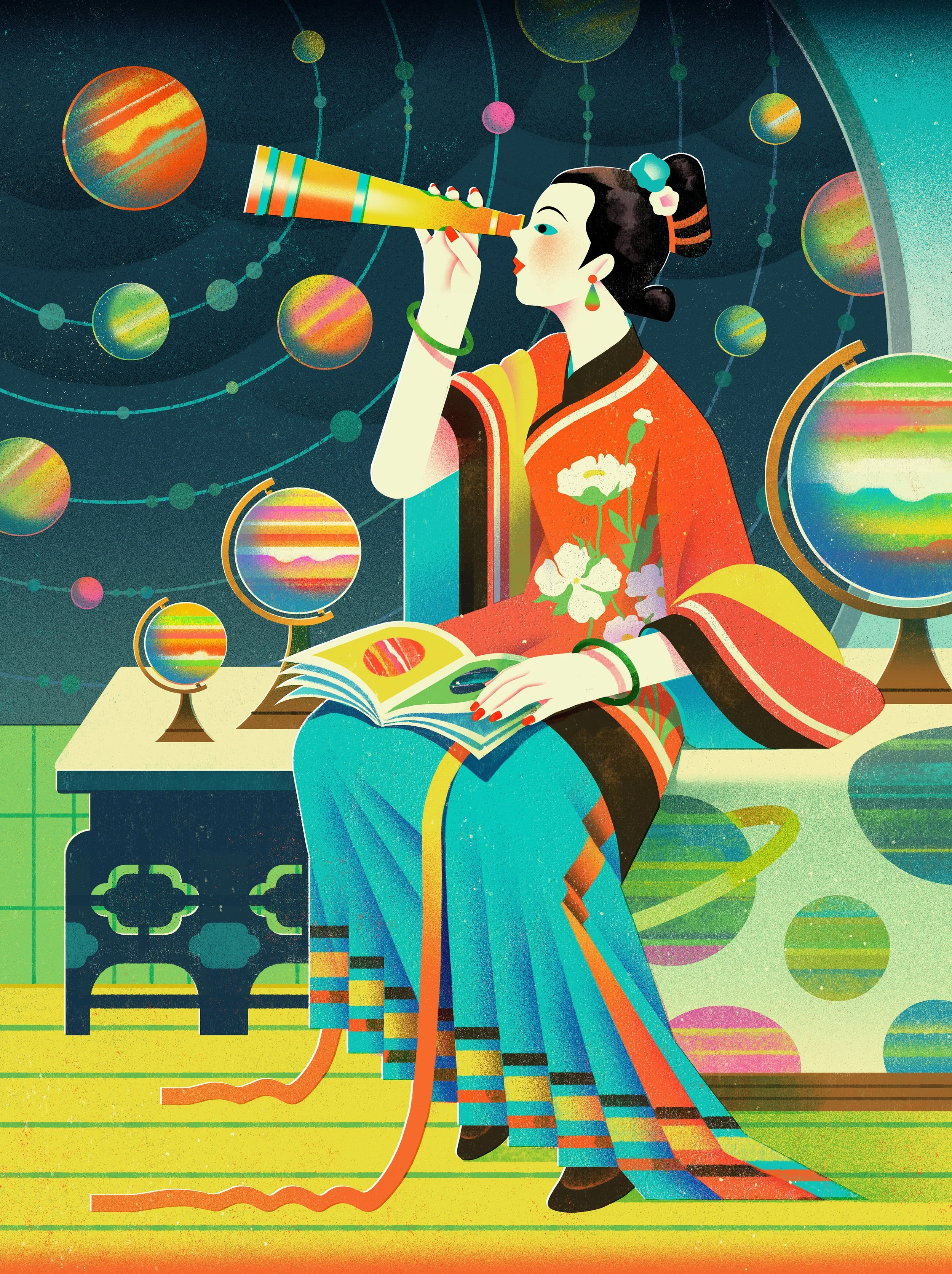
Peilin Li on Drawing Ordinary Moments Before They Disappear
By Cansu Waldron
Peilin Li is an illustrator and designer based in Los Angeles whose work moves between editorial, branding, advertising, and motion. At the core of her practice is illustration — her most instinctive and personal way of working. Influenced by childhood picture books, comics, and a lifelong habit of sketching daily life, Peilin creates lively, character-driven scenes that capture humor, chaos, and tenderness in everyday moments. Her images are often exaggerated yet grounded, combining bold composition with emotional nuance, and aim to spotlight the quiet beauty of ordinary life while offering viewers a small sense of comfort.
She has collaborated with clients including Disney, Huawei, and Farfetch, and her work has been recognized by the Society of Illustrators, American Illustration, Communication Arts, and the World Illustration Awards. These experiences shaped her into a multidisciplinary storyteller, blending illustration’s emotional warmth with the structure and clarity of graphic design.
We asked Peilin about her art, creative process, and inspirations.
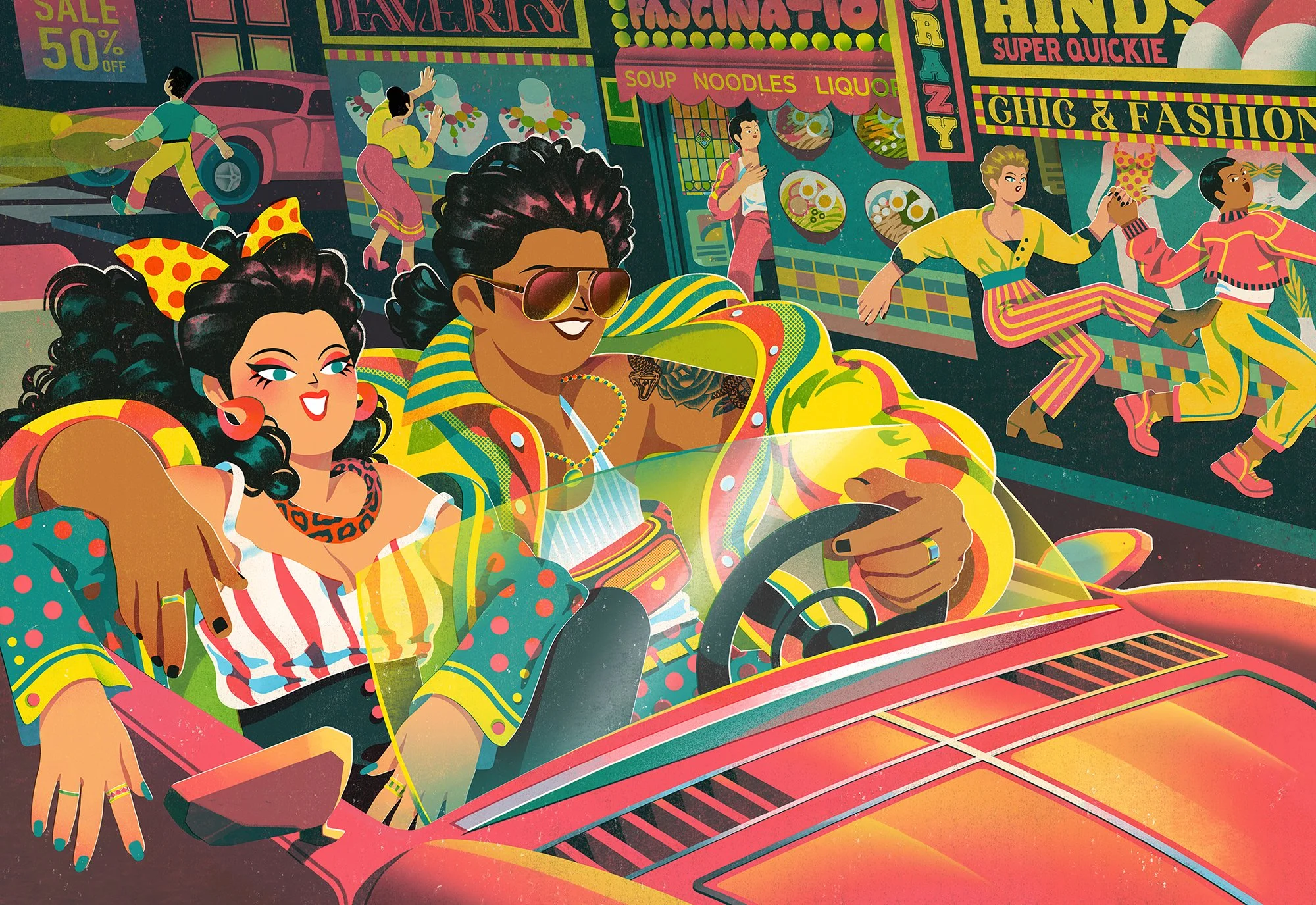
1980s New York
Illustration seems like your emotional home base — what keeps pulling you back to it, even as your practice expands into design and motion?
Rather than being my emotional “home base,” illustration is my most direct way of telling stories. Many of my ideas first take shape as illustrations and then expand into graphic design and motion. Design helps me organize and structure these stories, while motion gives them more life, but illustration is always where they begin.
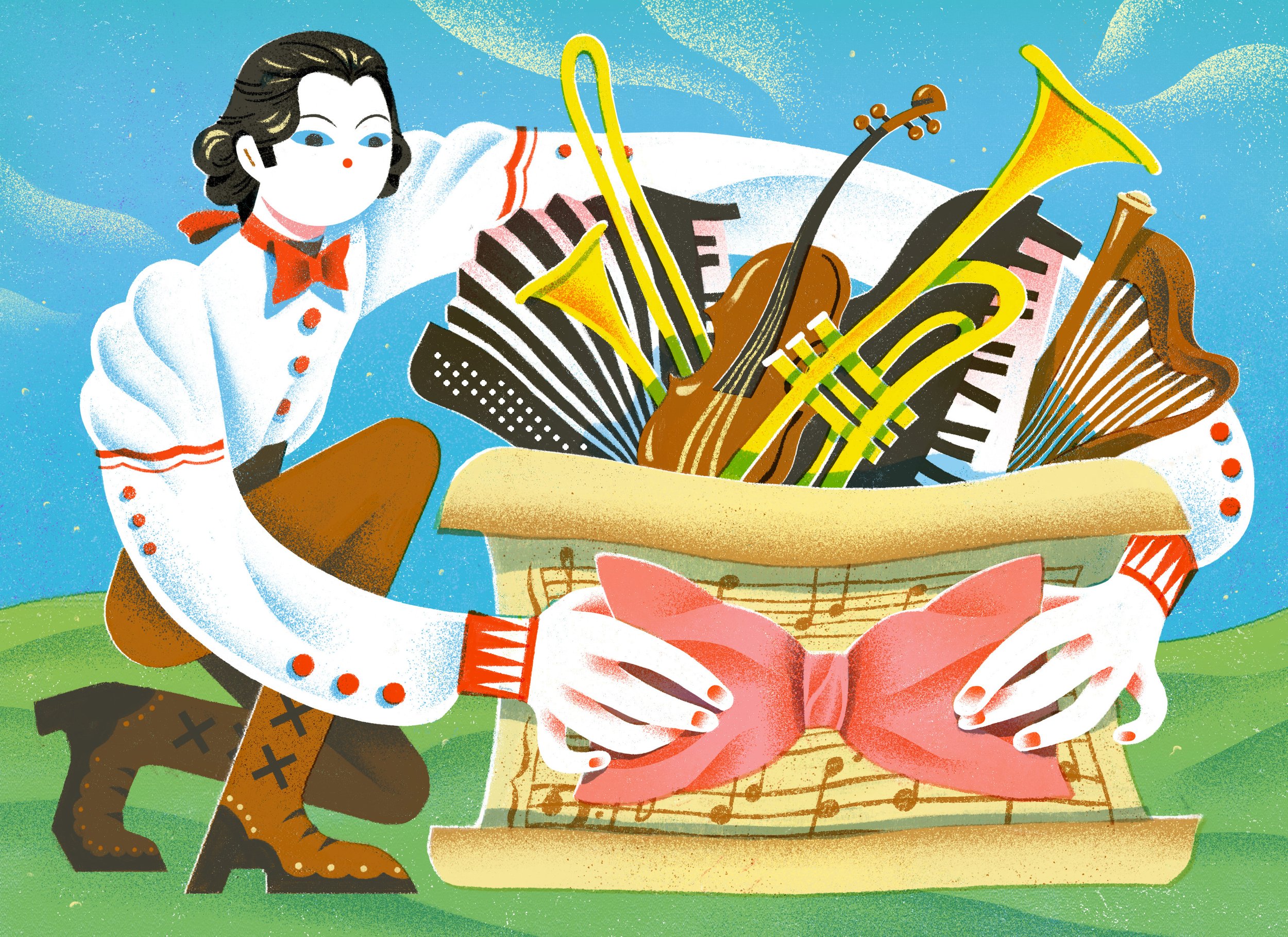
A Bow for Music (Client: Tadpole Ears)
Your work captures everyday chaos in such a tender, funny way. What kinds of moments are you most drawn to observing or turning into images?
I’m usually drawn to moments that simply make me happy. Sometimes it’s hanging out and talking with friends, and other times it’s those slightly messy everyday moments — like my cat suddenly biting my clothes, or fruit falling out of an overstuffed bag. It can even be something as small as standing on my balcony and watching the light change.
These moments are pretty ordinary and easy to miss, but that little bit of chaos and imperfection is what makes them feel real and interesting to me. I like turning them into illustration because they have emotion and a bit of humor in them. For me, drawing these moments is like keeping small records of life, holding onto feelings that would otherwise just pass by, and paying attention to things we don’t usually think of as “subjects.”
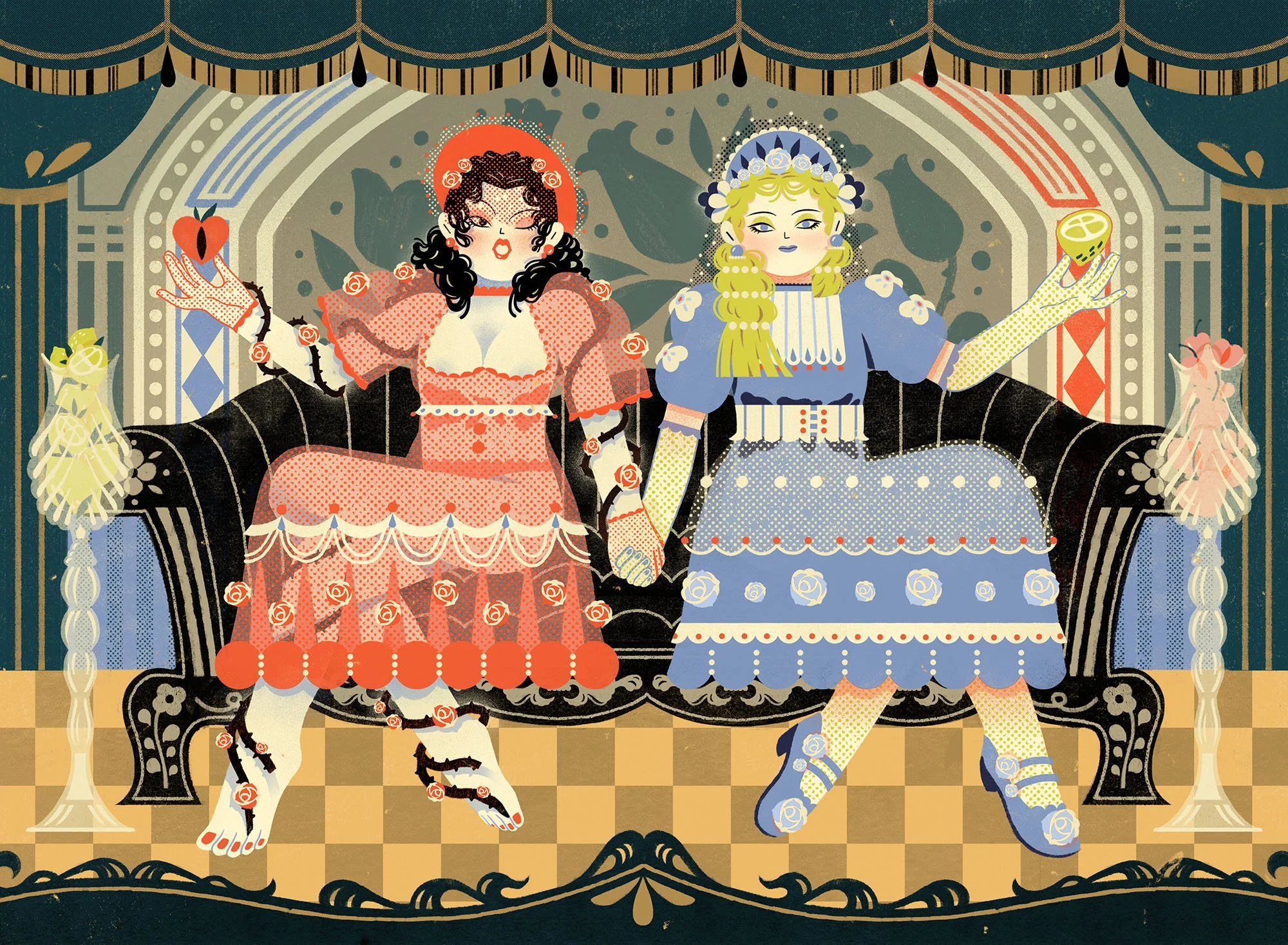
Chastity&Lust
Can you tell us about a piece that felt especially personal — one where the image said something you couldn’t quite put into words?
One piece that feels especially personal to me is Beautiful World, for two main reasons.
The first is the subject itself. Although it was an advertising illustration I created for Nongfu Spring, shown in an offline exhibition and displayed at city bus stops, the project gave me a great deal of creative freedom. With the theme “draw your own beautiful world,” I returned to my childhood memories and recreated a world from my imagination. Looking back at my childhood drawings, they were always filled with strange plants and animals, like an ecosystem that exists only in fantasy. In this piece, I imagined stepping into that world and playing music and living with its creatures. It reflects my nostalgia for childhood imagination and my belief that a “beautiful world” is more of an inner state than a real place. In a way, this is also where my interest in capturing small everyday moments in my work began.
The second reason comes from the project’s experience as a commercial work. It went through several rounds of revisions with the client, and during that process, I learned how to balance personal expression with practical needs, how to keep the emotional and narrative qualities of the illustration while allowing it to serve a brand and a public space. This experience made me realize that commercial illustration can still carry deeply personal feelings, as long as they are expressed with clarity and restraint.
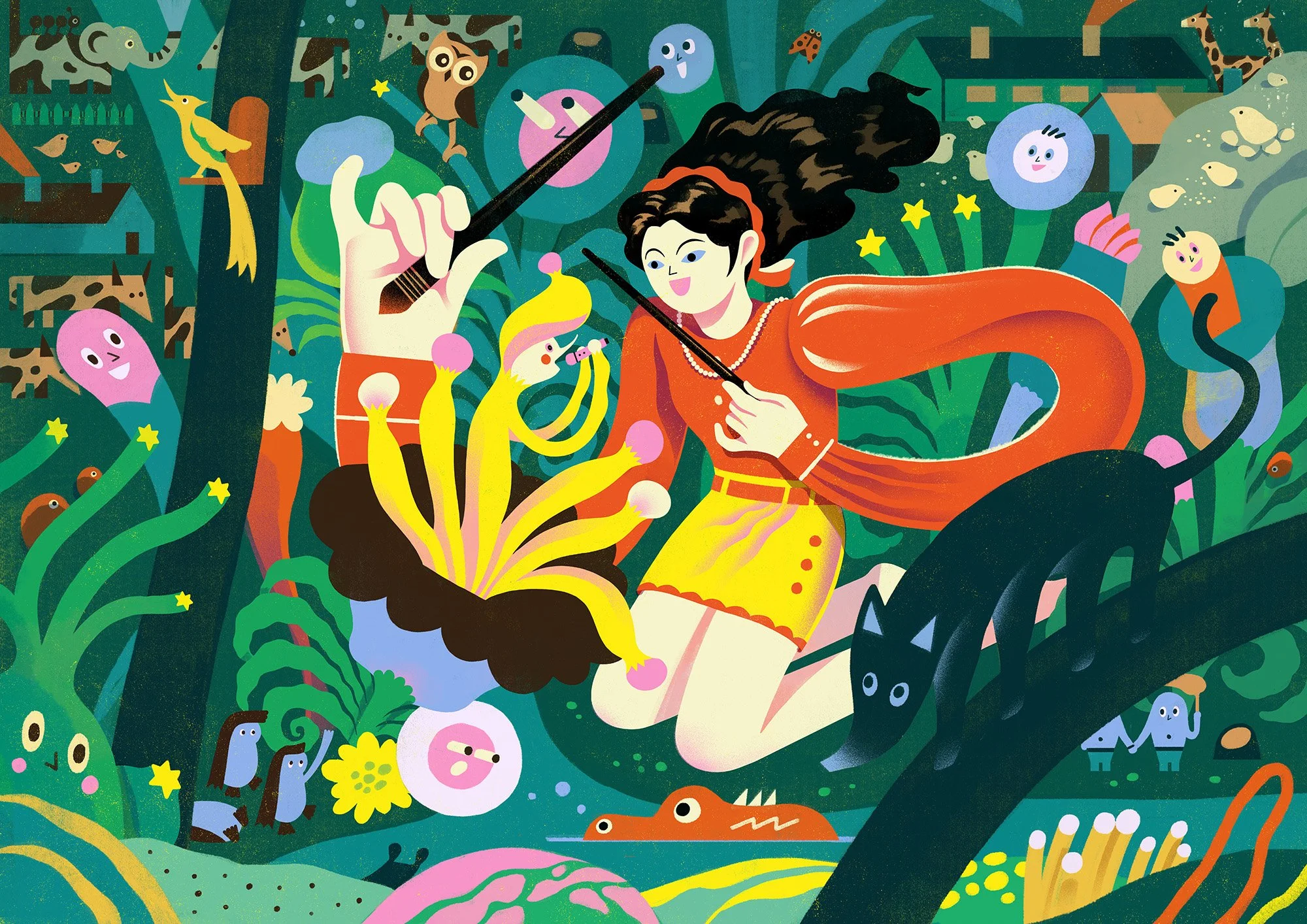
Beautiful World (Client: Nongfu Spring)
How do you handle feedback and critique of your artwork? Can you share an example of a time when feedback has helped you grow as an artist?
I take feedback and critique of my work very seriously. I remember someone once pointed out that my illustrations contained too much information and too many details, which made them feel visually confusing and hard to read at first. That comment had a strong impact on me and made me rethink the way I approached my work. I realized that I often had the impulse to “fill” the entire image, trying to include all the stories and ideas I wanted to express in a single composition, while overlooking the importance of negative space.
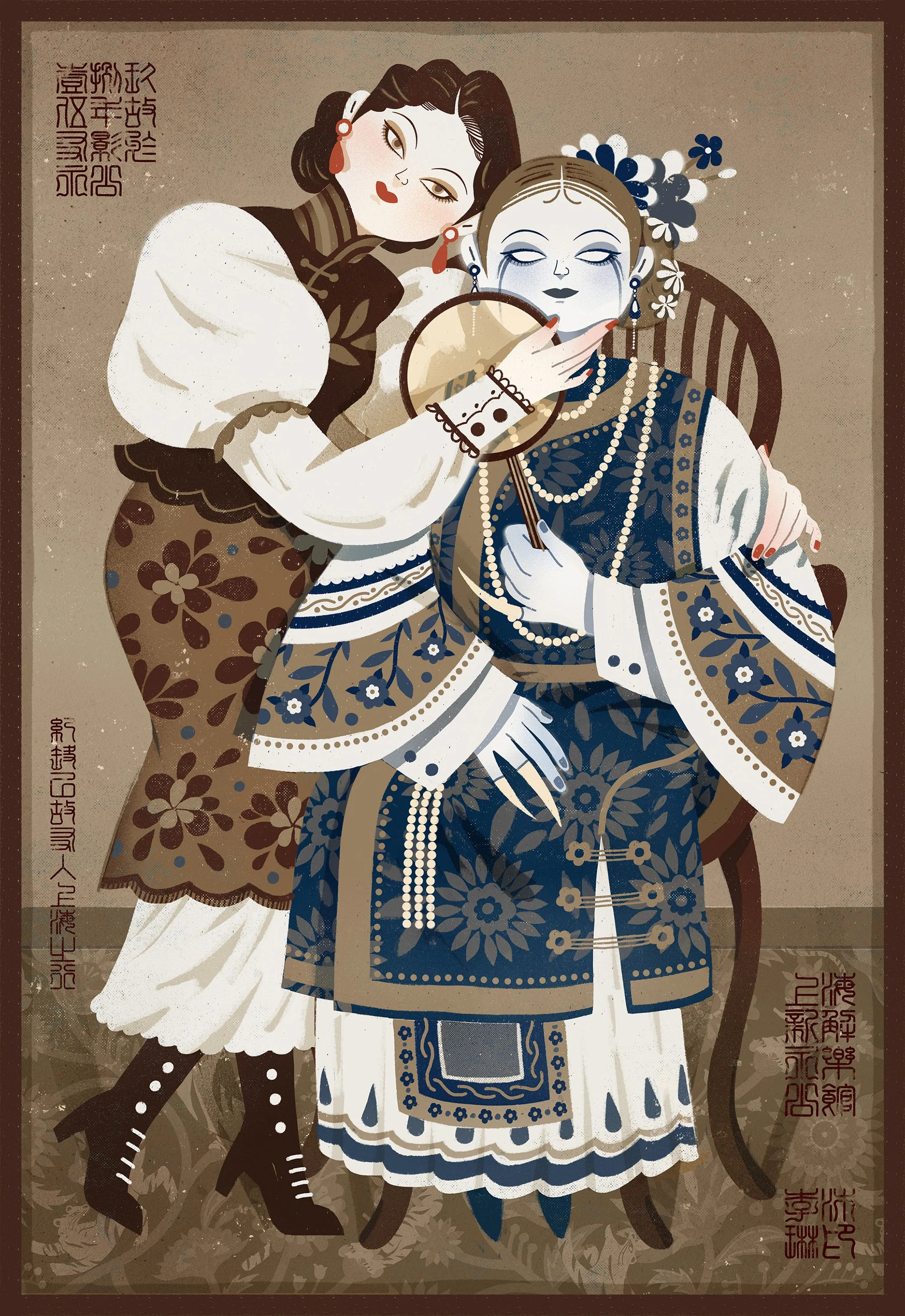
Horro
Since then, I’ve become more aware of visual hierarchy and composition, focusing on what should stand out and where space is needed to let the image breathe. This feedback helped me understand that sometimes reducing elements actually makes a story clearer, and that leaving space can give viewers more room for imagination. For me, this marked an important shift from simply pursuing visual density to focusing more on narrative clarity and visual guidance.
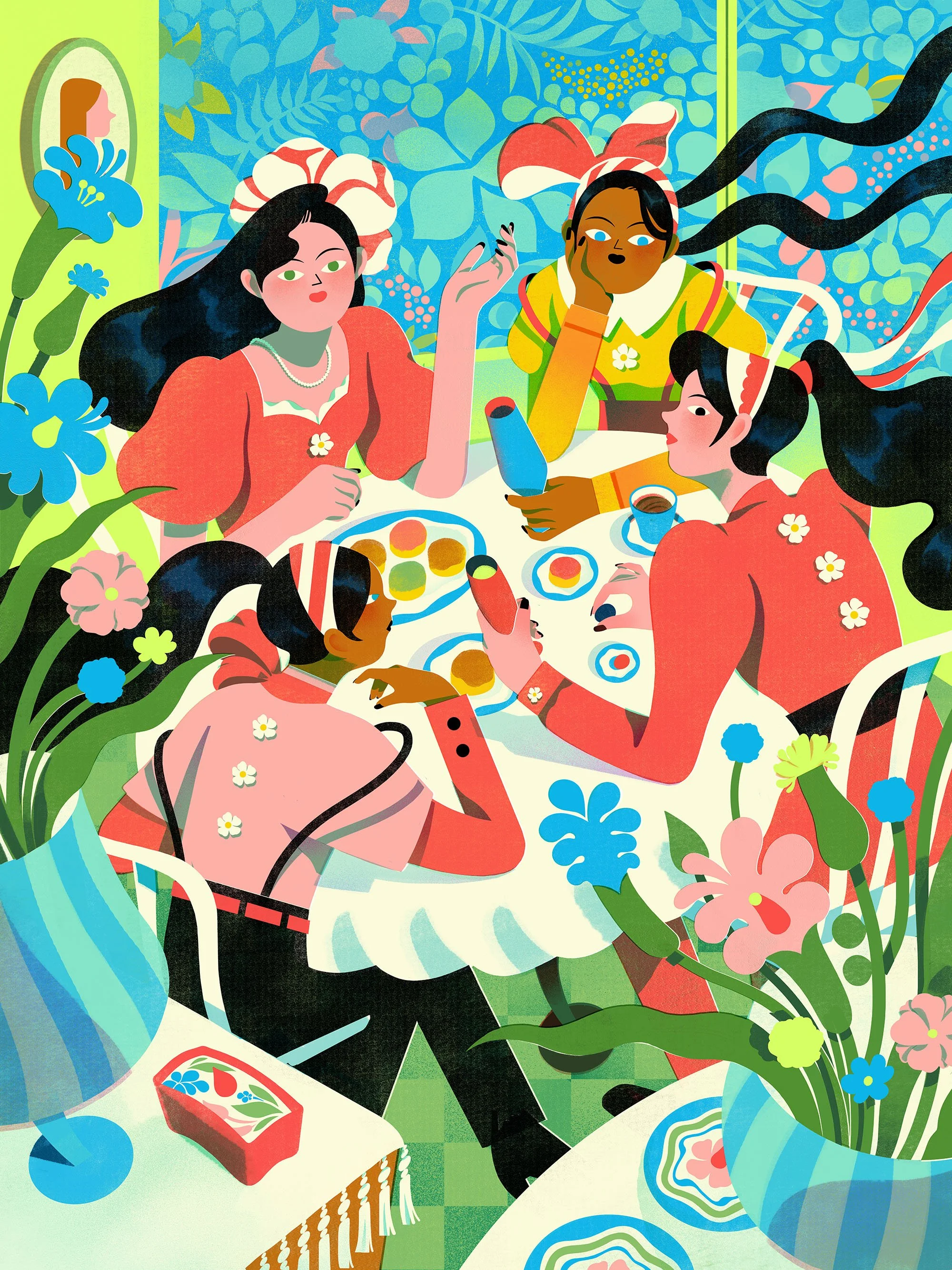
Spring
What did recognition from places like Society of Illustrators or American Illustration shift for you — creatively or emotionally?
Recognition from the Society of Illustrators and American Illustration brought more of a psychological shift for me than anything else. Before that, I often questioned whether the subjects I cared about were “interesting” enough, so I tried to look for themes that felt more unusual or appealing to others. That approach actually made me more hesitant and conservative in how I expressed myself.
Those recognitions helped me realize that what truly resonates is not how novel a subject seems, but how sincerely the artist connects with it. When I focused again on everyday moments and personal stories, my work became more natural and confident, and I began to trust my instincts instead of outside expectations.
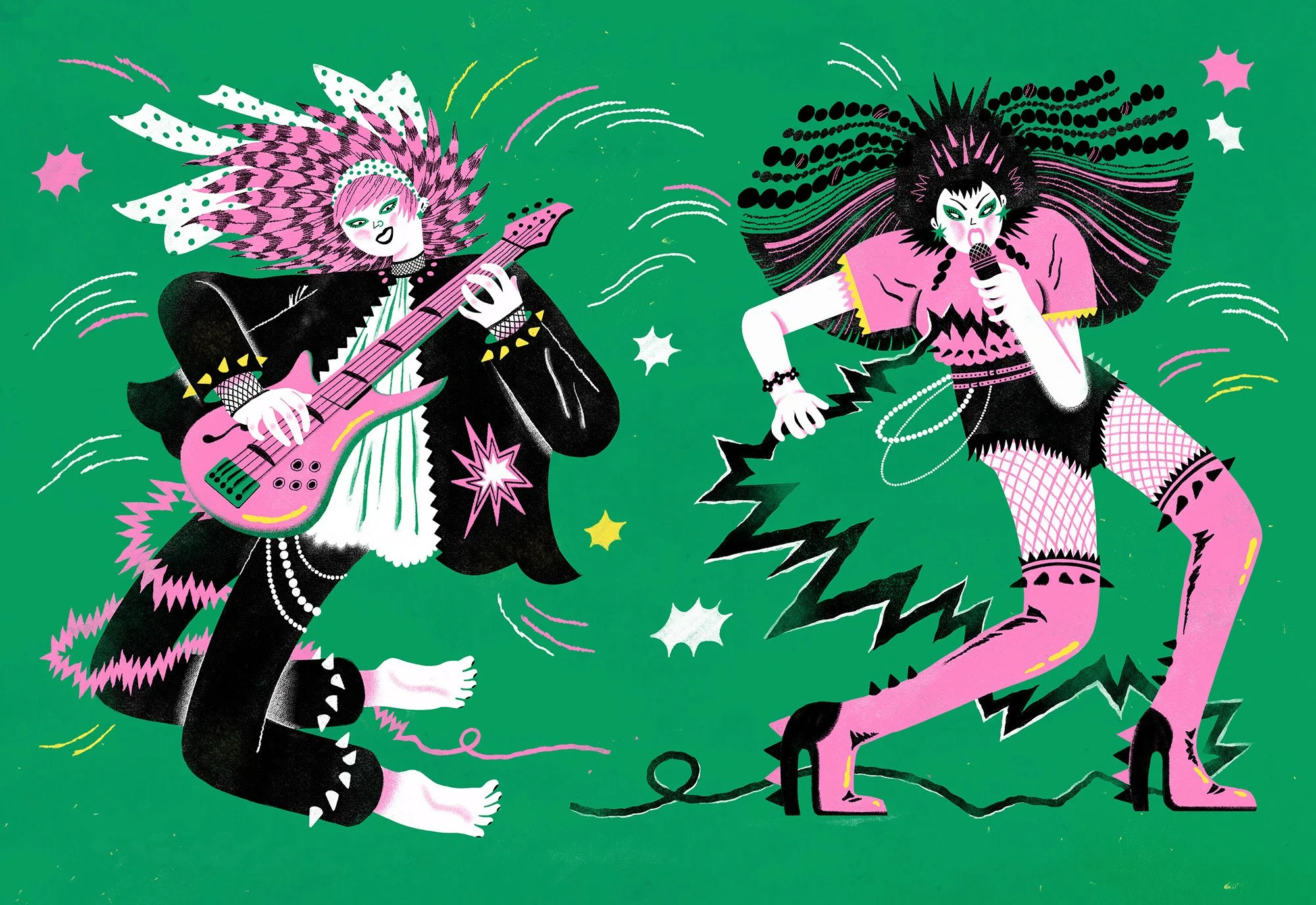
Rock N Rock
Emotionally, this shift also made me more willing to share my work. I used to hesitate, worrying about whether it was “good enough” or would be understood. Now I see making art as a form of communication: if the work is honest, it has the chance to be seen and felt by others. That change in mindset has had a deeper impact on me than the awards themselves.
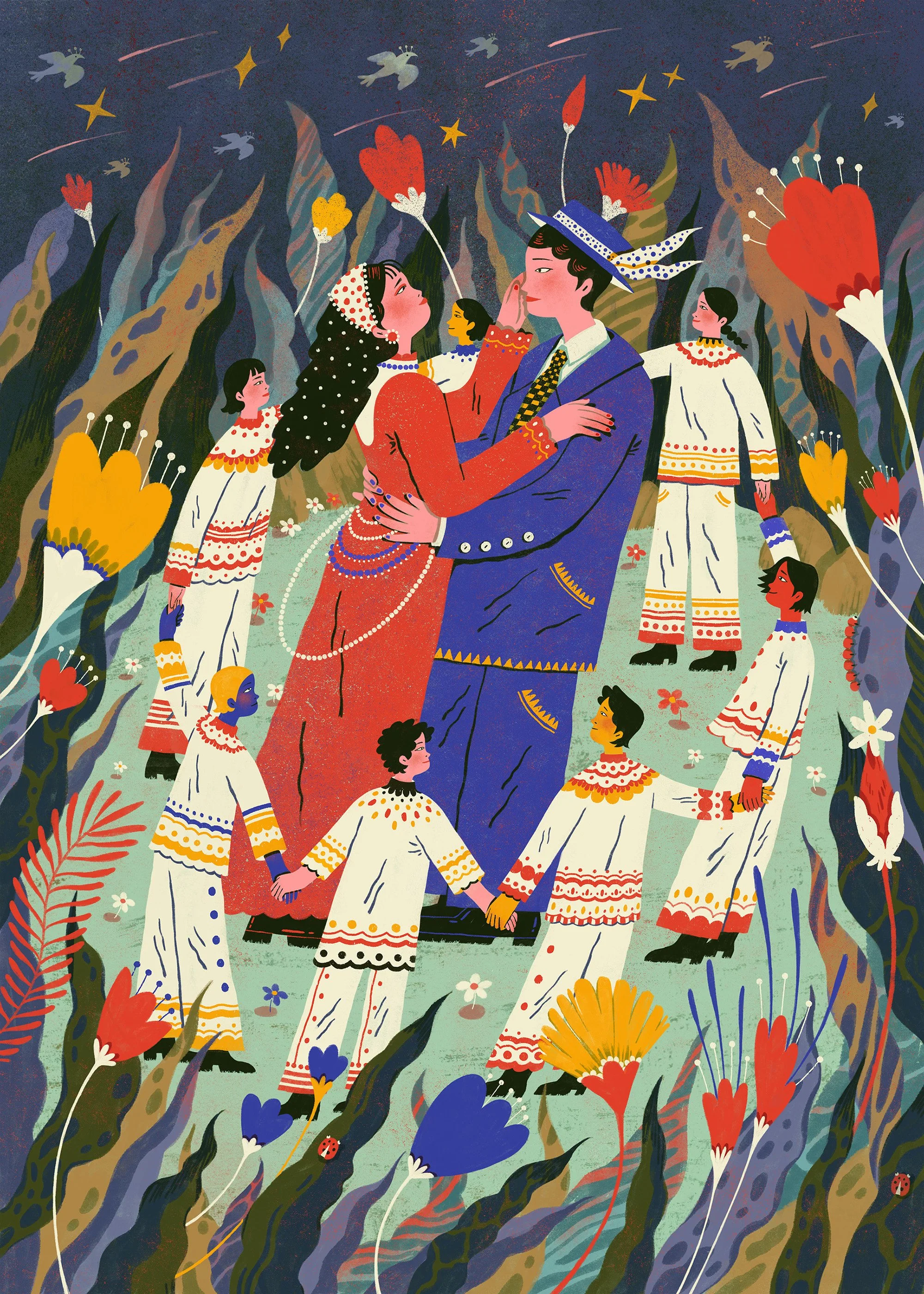
Love
When you’re stuck or uninspired, what usually helps you find your way back into making?
When I feel stuck or uninspired, I usually step away from making instead of forcing myself to keep going. I do things that aren’t directly related to creativity, like going for a walk, cooking myself a proper meal, or playing a game for a while. These ordinary activities help clear my head and pull me out of a constant state of thinking and judging.
For me, this kind of “pause” is a necessary form of rest. When I stop trying to solve a visual or conceptual problem, I often regain a clearer perspective. When I return to my work, I can look at my ideas more calmly and notice what can be adjusted or taken in a new direction. Sometimes what truly helps me move forward isn’t more inspiration, but giving myself time away from creating so my thoughts can naturally reorganize.
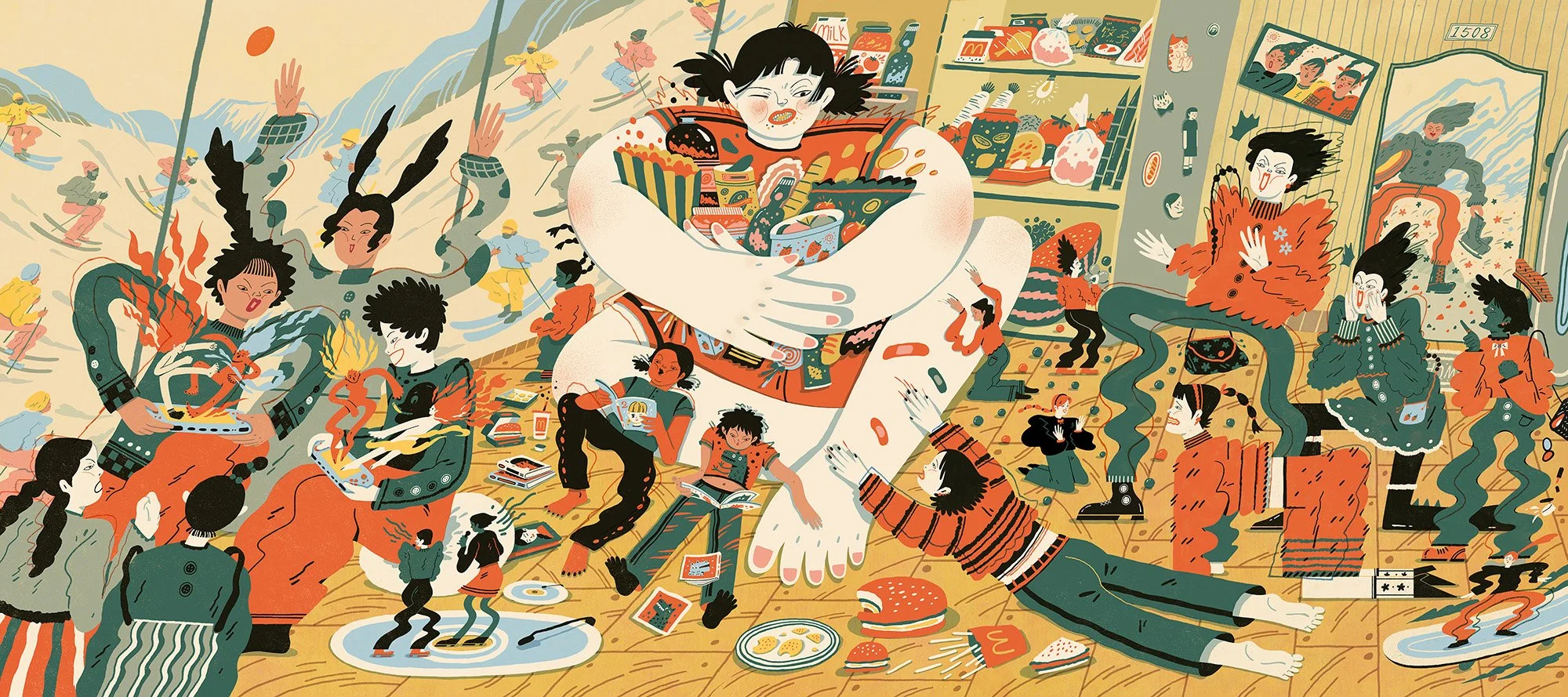
Otaku
What’s something about your creative process that might surprise people?
What might surprise people is that when I work on personal projects, I often don’t know what the final artwork will look like. Instead of starting with a complete sketch and executing it, I prefer to begin drawing right away and let the image grow as I go. Many times, it starts from a very simple scene or feeling, but as I keep drawing, the composition shifts, the characters begin to move differently, and even the theme can quietly change direction.
For me, this process of drifting away from the original plan is actually the most exciting part. Some things that look like “mistakes” at first end up becoming the most important elements of the image, and details I never planned to include sometimes turn into the heart of the story. I enjoy welcoming these changes, because they make me feel like I’m not repeating a known result, but discovering a new story together with the image.
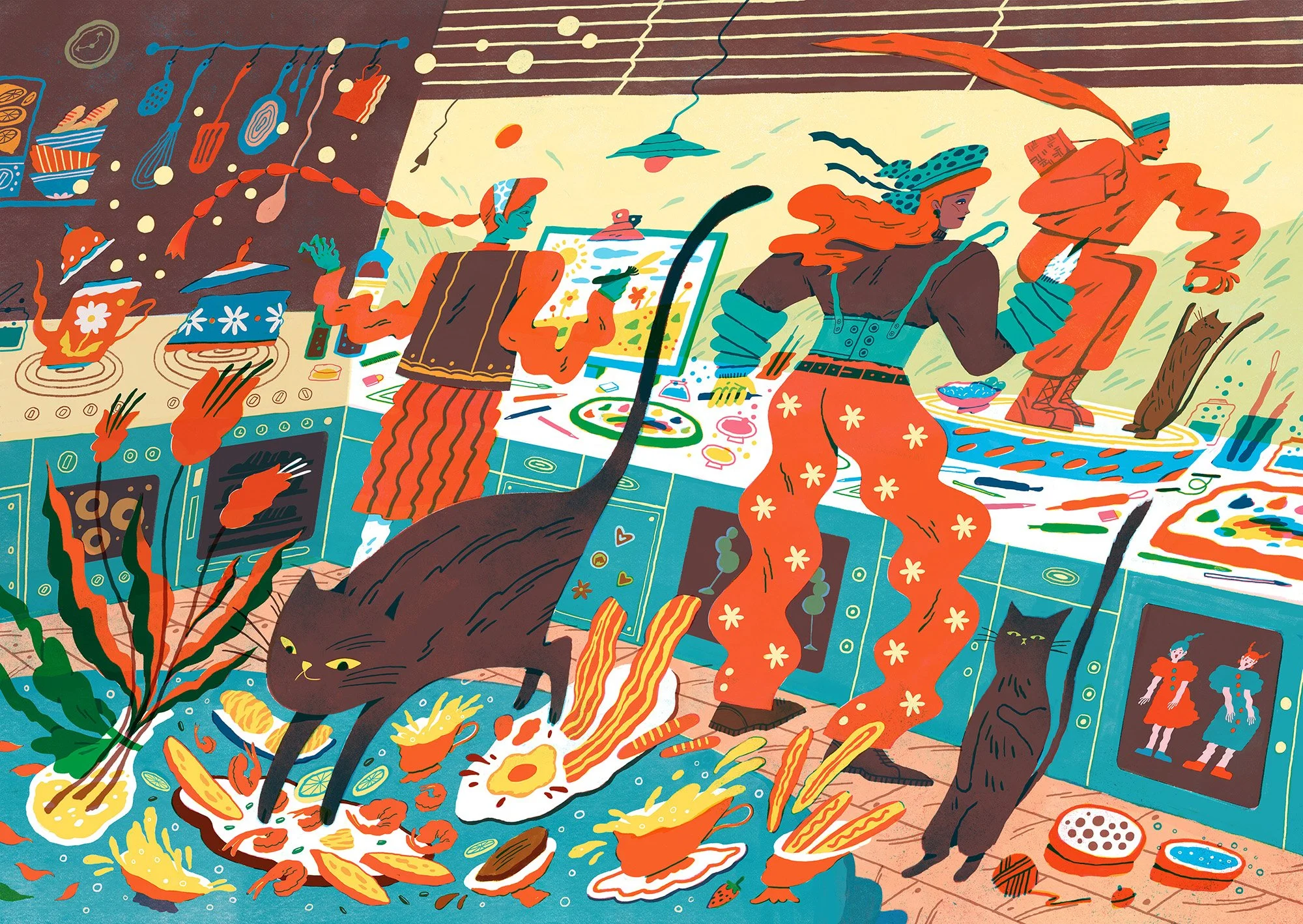
Studio Dream
Have there been any surprising or memorable responses to your work?
One memorable experience was at an art fair, where a viewer told me they could sense my emotional state through some very small details and objects in my work. Those elements weren’t meant to deliberately “explain” anything — they were just simply placed there naturally during the drawing process. I was surprised by how deeply they interpreted the illustration, often in ways I hadn’t anticipated myself. It made me realize that viewers can read much more from an illustration than we might expect, and it strengthened my belief in the power of the image itself, rather than relying on words to explain the work.
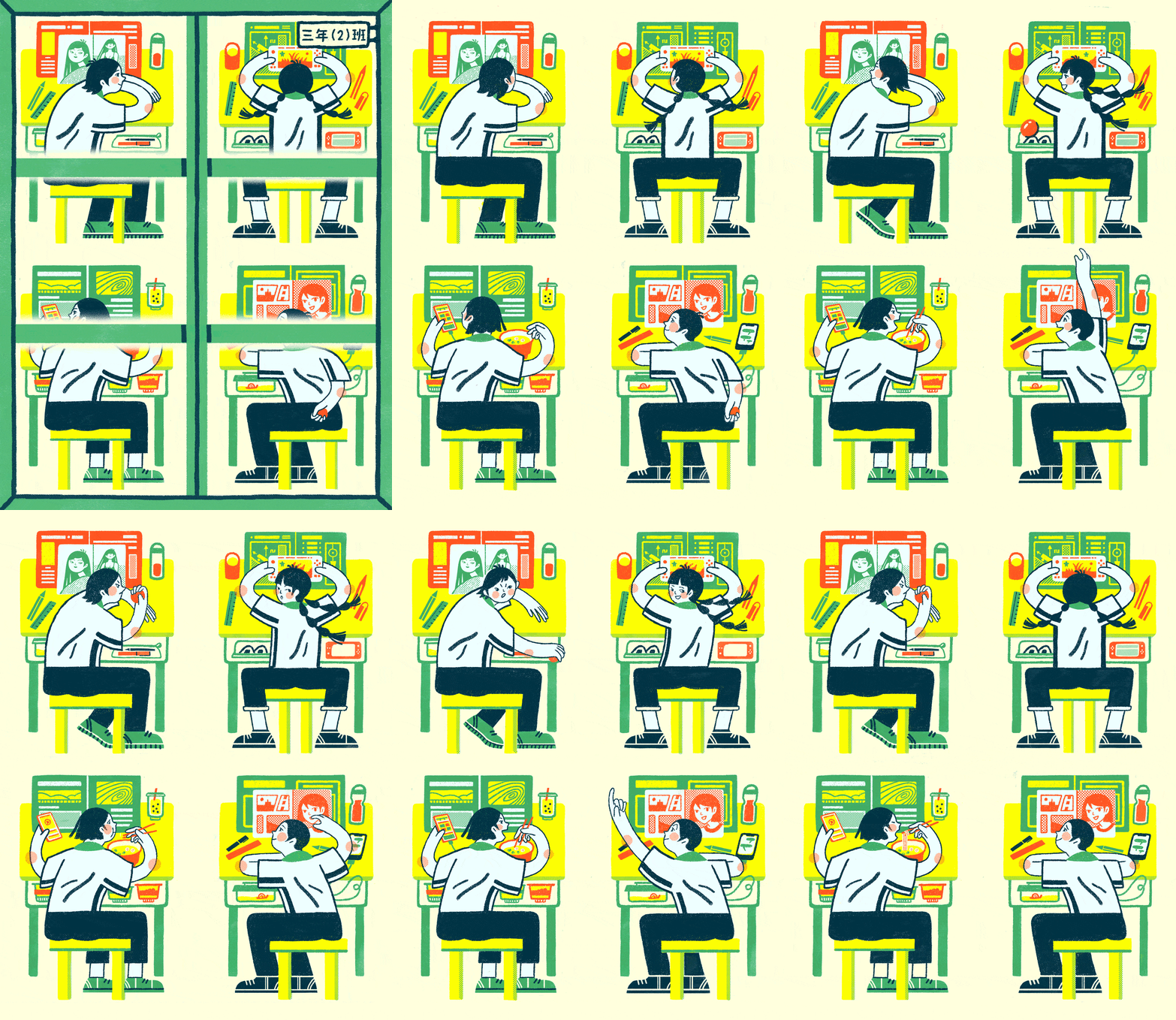
Classroom
What advice would you give to aspiring digital artists who are just starting out?
I would advise people who are just starting out in digital art not to worry too much about their skill level or whether their ideas are interesting enough. What often holds people back is not a lack of ability, but hesitation and fear of starting. Instead of asking yourself, “Is this good enough?” or “Is this idea worth drawing?”, it’s better to simply begin and learn through making.
I also think it’s important to face your weaknesses honestly. Sometimes, what feels like a limitation can become the starting point of your style. For example, since I’m not good at realistically drawing large, complex scenes, I started exploring more designed and subjective ways to express space and emotion. Over time, this approach naturally became part of my visual language.
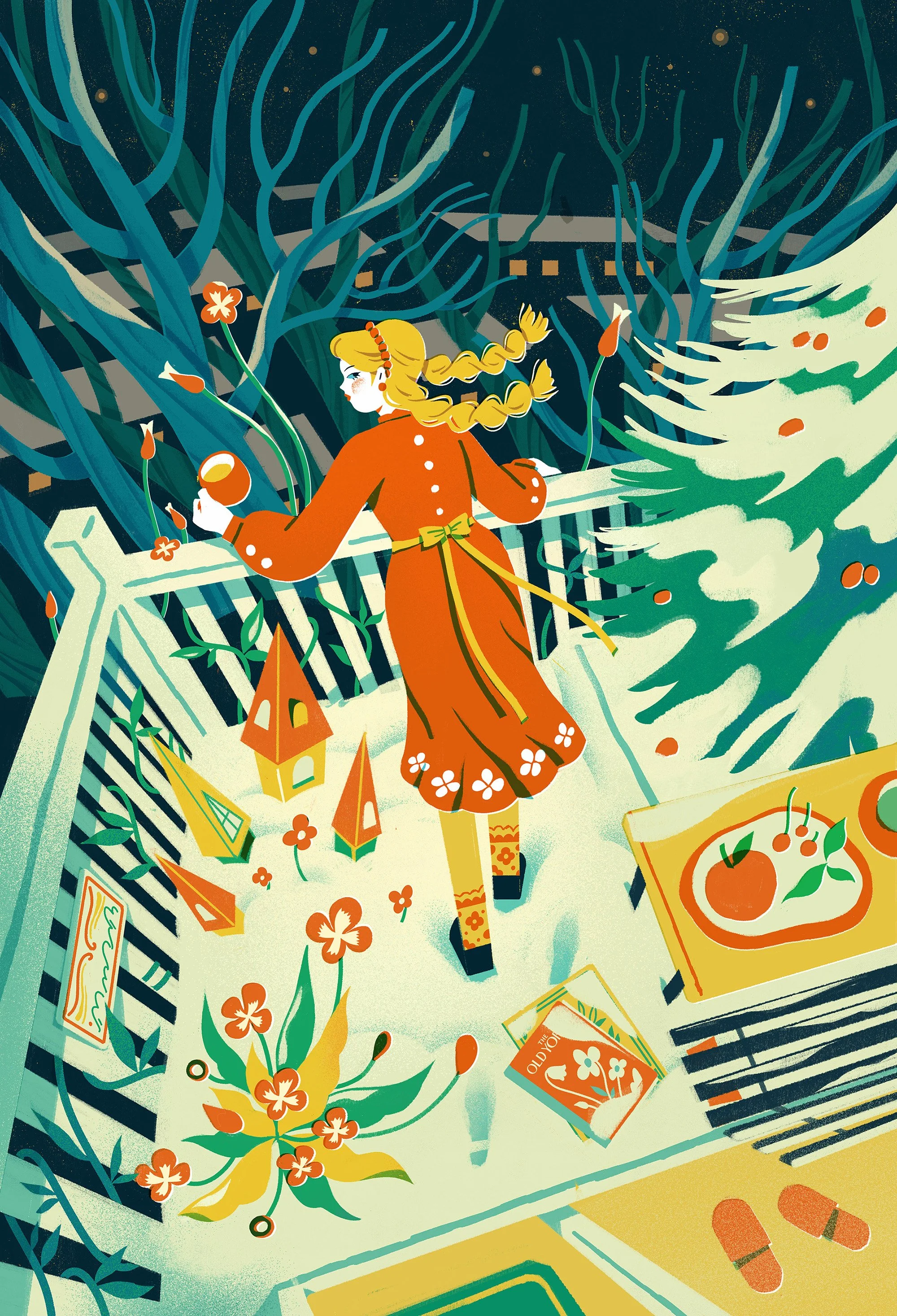
Winter on the Balcony
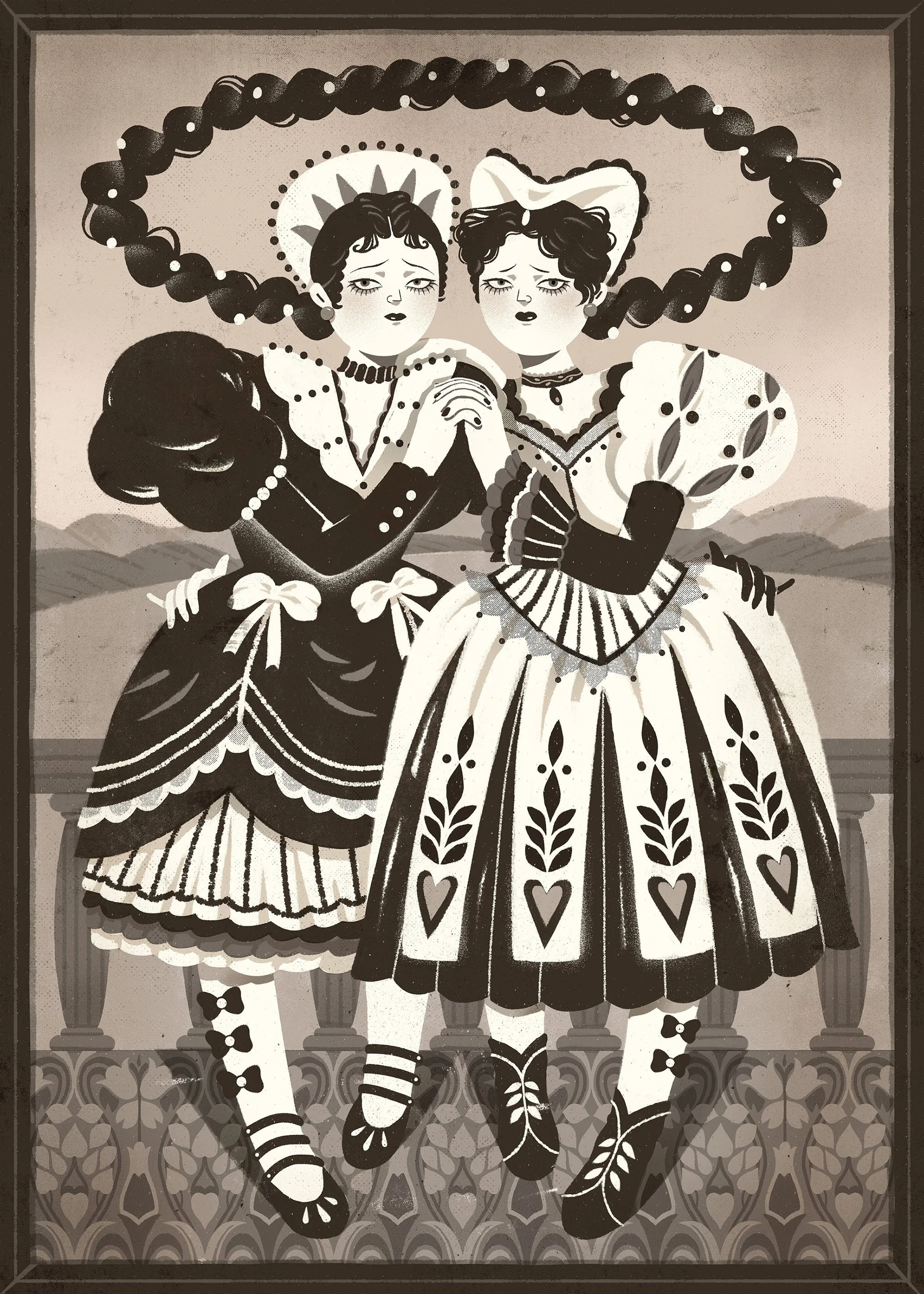
Twins