The Unphotographable Painting: The Frequency-Based Art of Scott Rummler
By Cansu Waldron
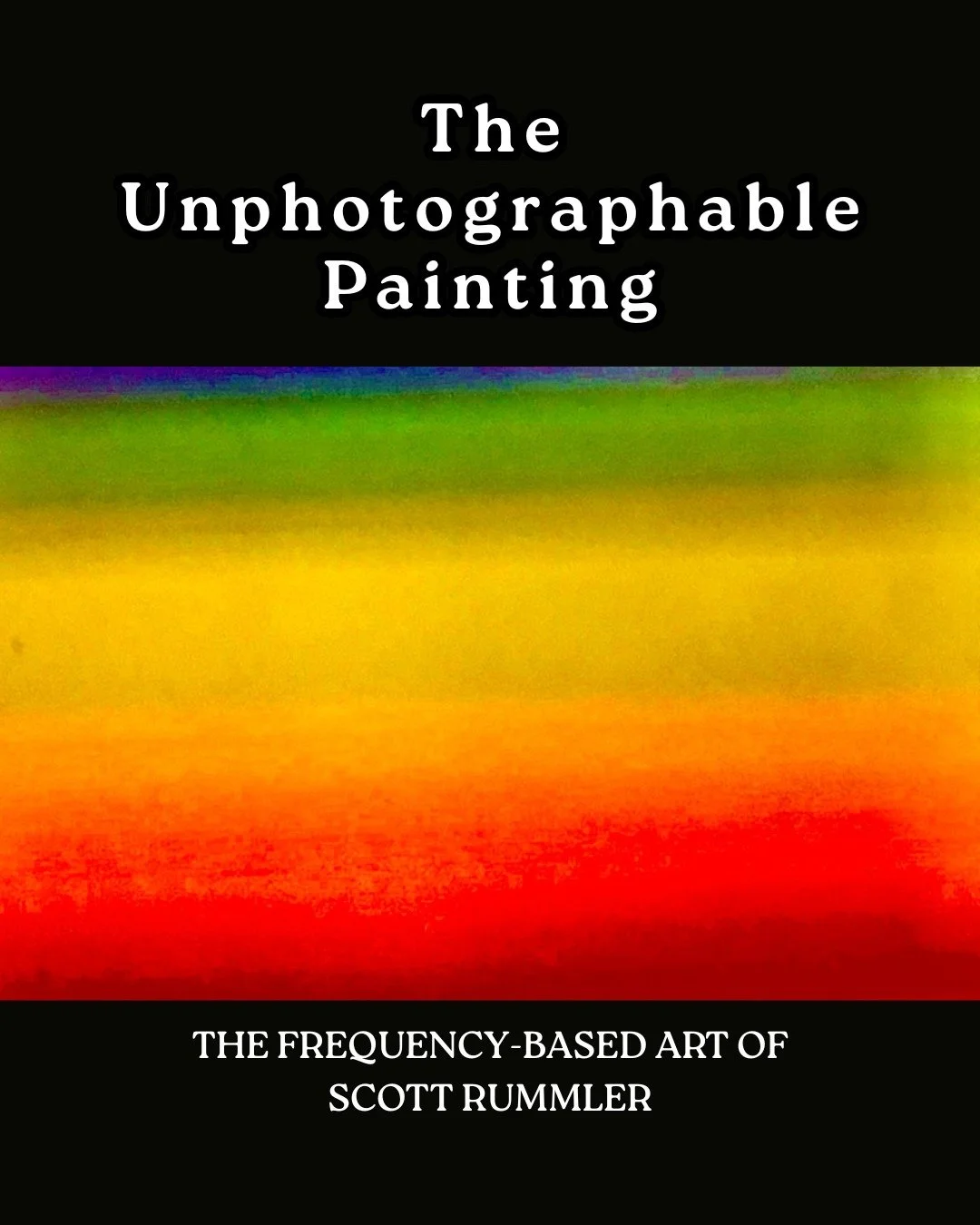
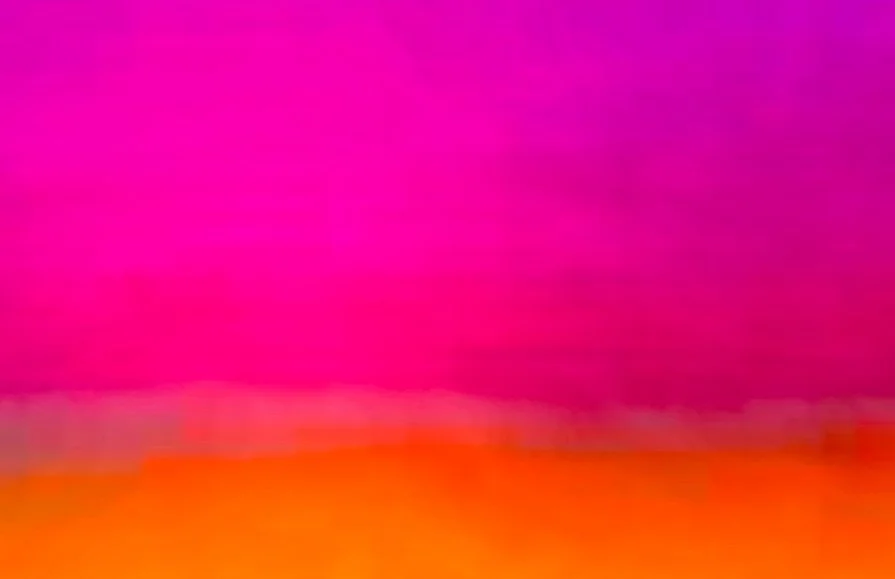
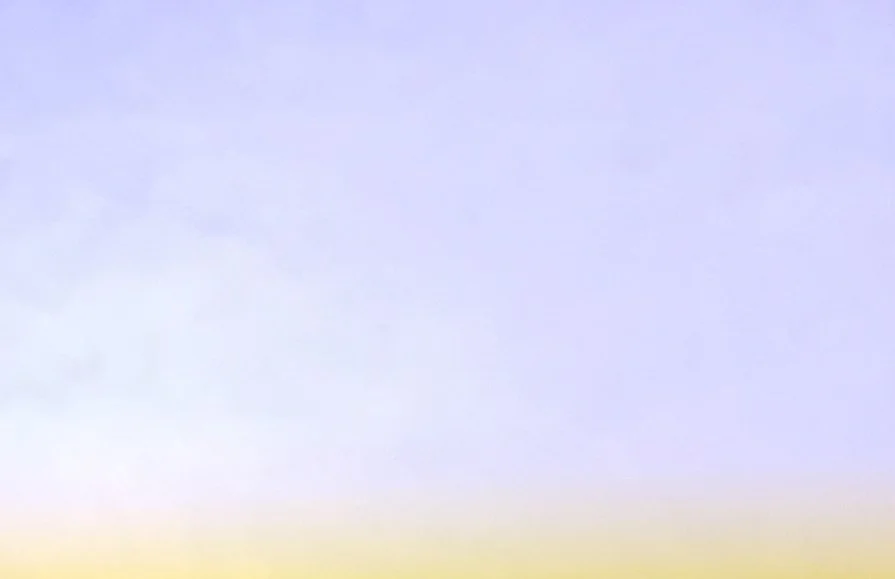
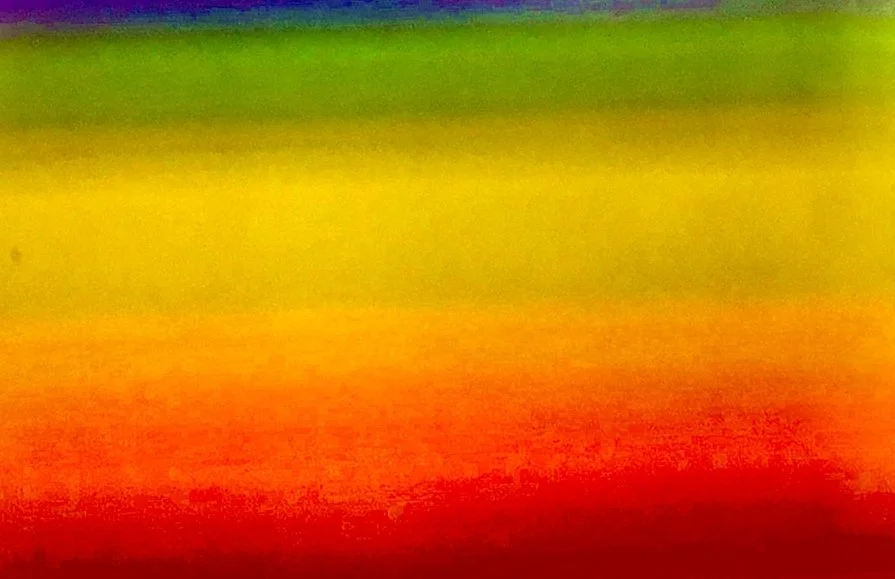
Scott Rummler is an artist exploring the limits of perception, painting, and digital representation. At first glance, his minimalist white canvases appear almost blank, but when viewed through a digital camera, they reveal shifting spectrums of color created through precisely calibrated interactions of paint and light. Because each photograph captures something slightly different, the works resist stable documentation, disrupting the usual relationship between a physical artwork and its online image. His practice sits at a compelling intersection of perception, technology, and painting, using subtle visual shifts to question how we experience and translate art in a digital context.
Developed in dialogue with visual science research, his work is grounded in an interest in how we see — but also in where science falls short. Rather than producing technology-driven imagery, he aims to create something transformative, pushing beyond representation by working directly with light itself. His Scalar Wave Paintings reflect this approach, offering experiences that are inherently fleeting and difficult to archive. In a culture driven by constant documentation, his work quietly resists permanence, suggesting that some encounters with art are meant to exist only in the moment.
We asked Scott about his art, creative process, and inspirations.
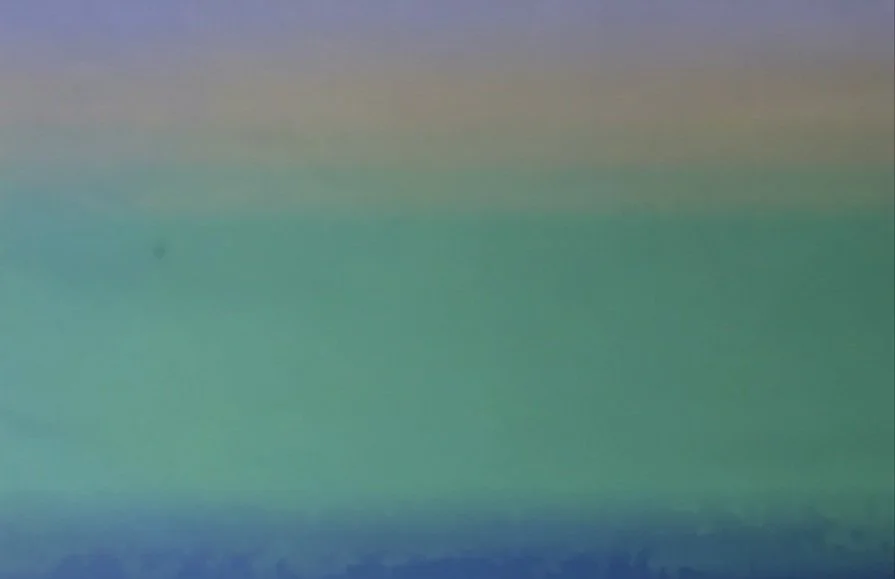
Your paintings reveal vibrant colors only through digital cameras, while appearing minimal in person. When you first witnessed this effect working the way you imagined, what did that moment feel like?
Honestly, it blew my mind. I was experimenting on a wide range of topics in my lab. It was a perfect storm that caused all of the puzzle pieces to fall into place.
Much of contemporary art today is designed to circulate easily online. Your work does the opposite — it resists being fully captured digitally. What interests you about creating art that requires physical presence?
I think everyone’s getting sick of ‘everything digital.’ Art is the one thing you have to see in person. The Internet makes it seem like you can view art online instead of going to a gallery or museum. But the digital experience of art is vastly inferior.
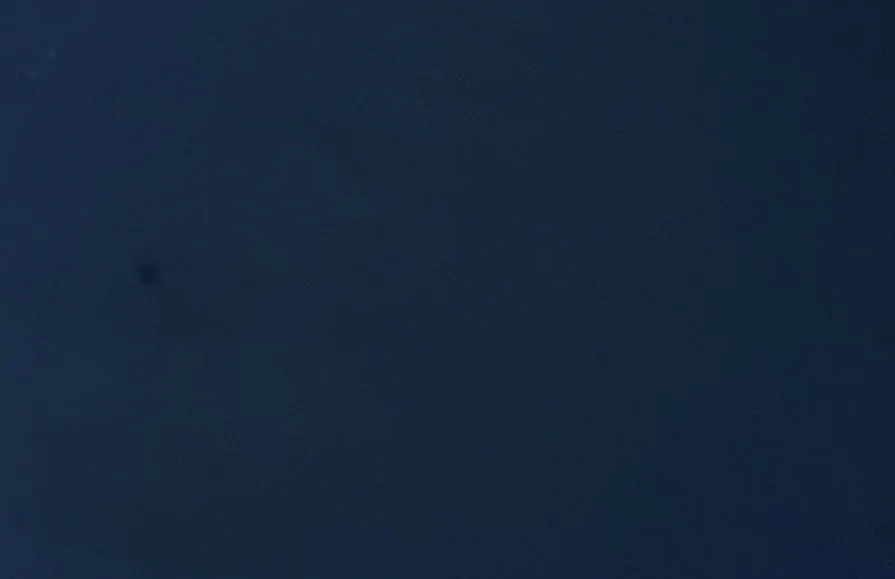
The interaction between paint, light, and camera sensors is central to your process. How much of the final result is controlled experimentation versus unexpected discovery?
It’s kind of a crapshoot. Some factors, like ambient light and the geometry of the viewing space, are wildcards. Each instance of the work is different in terms of the colors and the way they change over time.
You’ve mentioned working with visual science researchers while developing this technique. How did those conversations influence the way you think about perception and image-making?
Visual science contains a lot of interesting clues about the perception of art. But art is something that goes beyond the limits of science; it is transformative. A lot of technology-driven art doesn’t transform anything. Paintings of robots or AI-generated patterns are still basically representational images. I wanted to create art that overcame all of its perceptual, technical, and material limits. The Scalar Wave Paintings achieve this by transforming light itself.
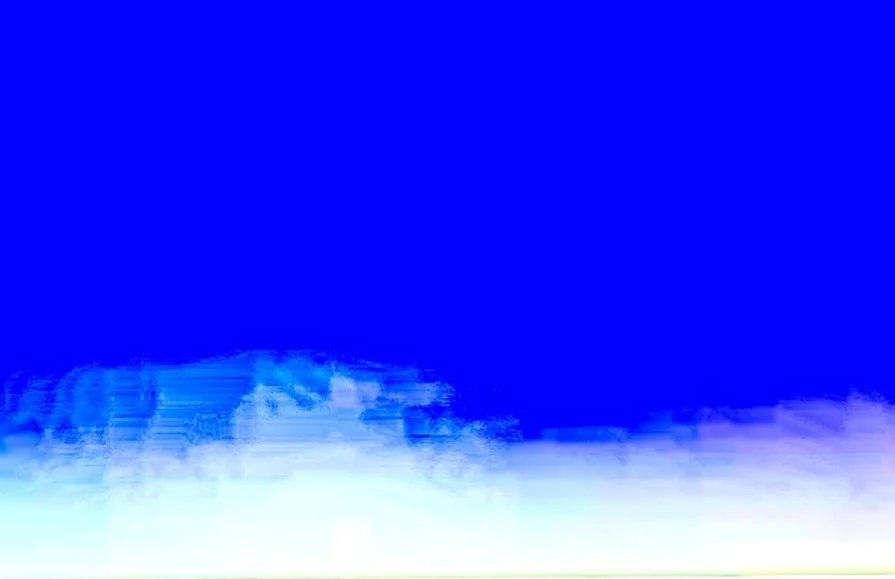
The idea that a single painting can produce countless different photographic outcomes is fascinating. Do you see each photo as a separate version of the artwork?
It’s all part of the same concept, but the photos are also interesting in their own right. They bring the conceptual context of the Scalar Wave Paintings with them. There is a lot of irony there since the photos don’t reliably capture the physical paintings on which they are based.
The individual images also have a lot to offer from an aesthetic standpoint. The colors and the way they blend are amazing. That surprised me because I thought the colors might resemble a TV test pattern. But that’s not the case at all. I’ve also thought about using next-generation photographic and printing technologies to enhance their presentation.
Your work raises interesting questions about documentation. If an artwork can’t be consistently photographed, how should it be archived, shared, or remembered?
Maybe art shouldn’t be digitally archived. Lots of people save photos that they never view again. They’re degrading the best experiences of their lives just so they can capture the poor man’s version on their phone. I’m relying on the phone too, in a subversive way I suppose, but the experience is transitory and can’t really be archived.
There’s an intriguing tension between your paintings and technologies like NFTs or blockchain, which rely on stable digital representation. What conversations do you hope your work sparks about digital ownership and authenticity?
Excellent question! One of the covert missions of the Scalar Wave paintings was to conceptually break the blockchain. You could sell the images as NFTs but the overarching concept eludes most of the traditions of digital asset management.

Have there been any surprising or memorable responses to your work?
I haven’t shown the work in a physical space so it’s hard to gauge the reaction. Some think the work is hard to comprehend. But it’s very simple and intuitive when you see it in person. You don’t have to read a conceptual text to enjoy the show!
Some people think the paintings require an app, or that they are a magic trick or science project. Others have told me that my work represents an existential threat to their worldview.
I’m a bit surprised that people miss the work’s significance from an art historical perspective. I look at the work as overcoming the conceptual and physical limits of art that have existed since the Lascaux cave paintings and Leonardo’s one-hair brush. So my work is connected to a wide range of other artists who have pushed the envelope, including Dan Flavin and those who make time-based art.
Are you our next spotlight artist? Submit the form to apply to be featured!
We share works by digital artists as well as digital arts exhibitions, events, and open calls daily on Instagram — follow us for more and subscribe to our newsletter so you don’t miss new blog posts.

![Project Spotlight: pifmgr.dll’s [M]ETAL✨ @pifmgr.dll is a digital artist working at the intersection of audiovisual design, 3D experimentation, and atmospheric world-building. His project [M]ETAL explores metal both as a physical material and a](https://images.squarespace-cdn.com/content/v1/63b2fdbe4376de5bfdc6771f/1779108338452-QO04Q3MMJ3VMU8PJV1MD/image-asset.jpeg)