By Cansu Waldron
Zhiyu You is an illustrator and visual artist from China whose work blends fine art sensibilities with contemporary illustration. fter studying Fine Art at the Central Academy of Fine Arts in Beijing, she earned her BFA in Illustration from the School of Visual Arts in 2022 and is currently based in New York. Her images often explore psychological tension, identity, and quiet emotional narratives, balancing delicate detail with symbolic, atmospheric compositions.
Zhiyu has created work for clients including The New Republic, Zócalo Public Square, Shenzhen Press Group Publishing House, and Tbaar, and her illustrations have been recognized by organizations such as Communication Arts, the Society of Illustrators, the London International Creative Competition, Creative Quarterly, and the 3×3 Illustration Awards.
Alongside her illustration practice, Zhiyu also works as a tattoo artist, an experience that has shaped how she thinks about composition and permanence. Designing for skin requires a different sensitivity — considering how an image moves with the body, how it will age over time, and how scale and clarity translate onto living surfaces. The process is also more collaborative and personal, as each tattoo is created for a specific person and place on the body. That intimacy adds another dimension to her work, reinforcing her interest in imagery that carries emotional weight and lives closely with the viewer.
We asked Zhiyu about her art, creative process, and inspirations.
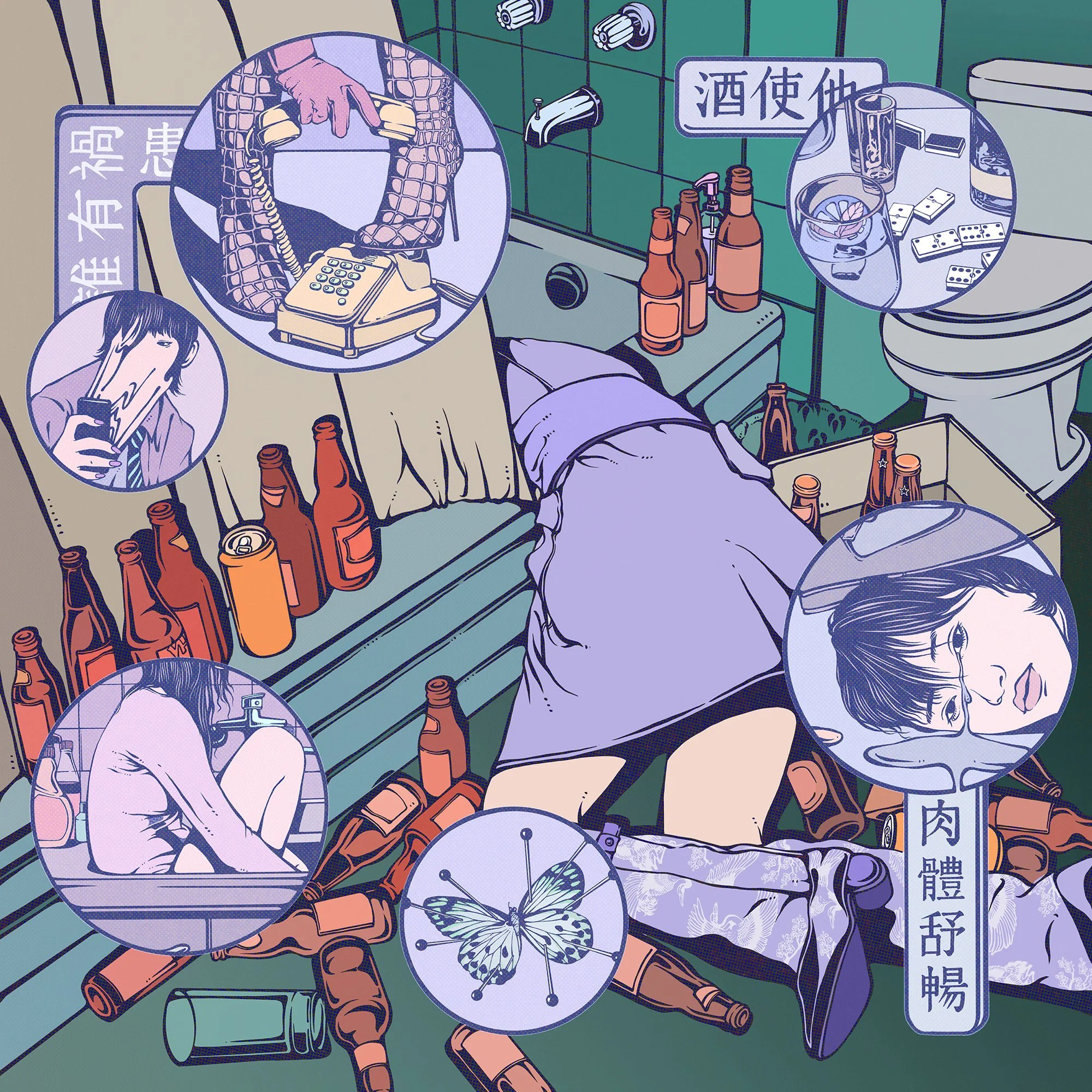
Envy, The Girl Never in the Mirror
Can you tell us about your background as a digital artist? How did you get started in this field?
I was trained in traditional fine art before transitioning into digital illustration. I later received my BFA in Illustration from the School of Visual Arts in New York, where I began integrating digital tools into my practice.
Digital drawing became less of a technical shift and more of an expansion of my visual language. It allows me to merge painterly sensitivity with precision, layering, and subtle control over atmosphere. I’m also interested in using digital tools to experiment with texture and materiality—sometimes “faking” the qualities of physical processes like printmaking or risograph printing through layered brushes, grain, and color separation.
No matter how the material changes, for me it is simply a shift in medium rather than a change in how I think about making images. My work moves fluidly between traditional and digital processes, and I tend to see digital media as an extension of painting rather than a separate category.
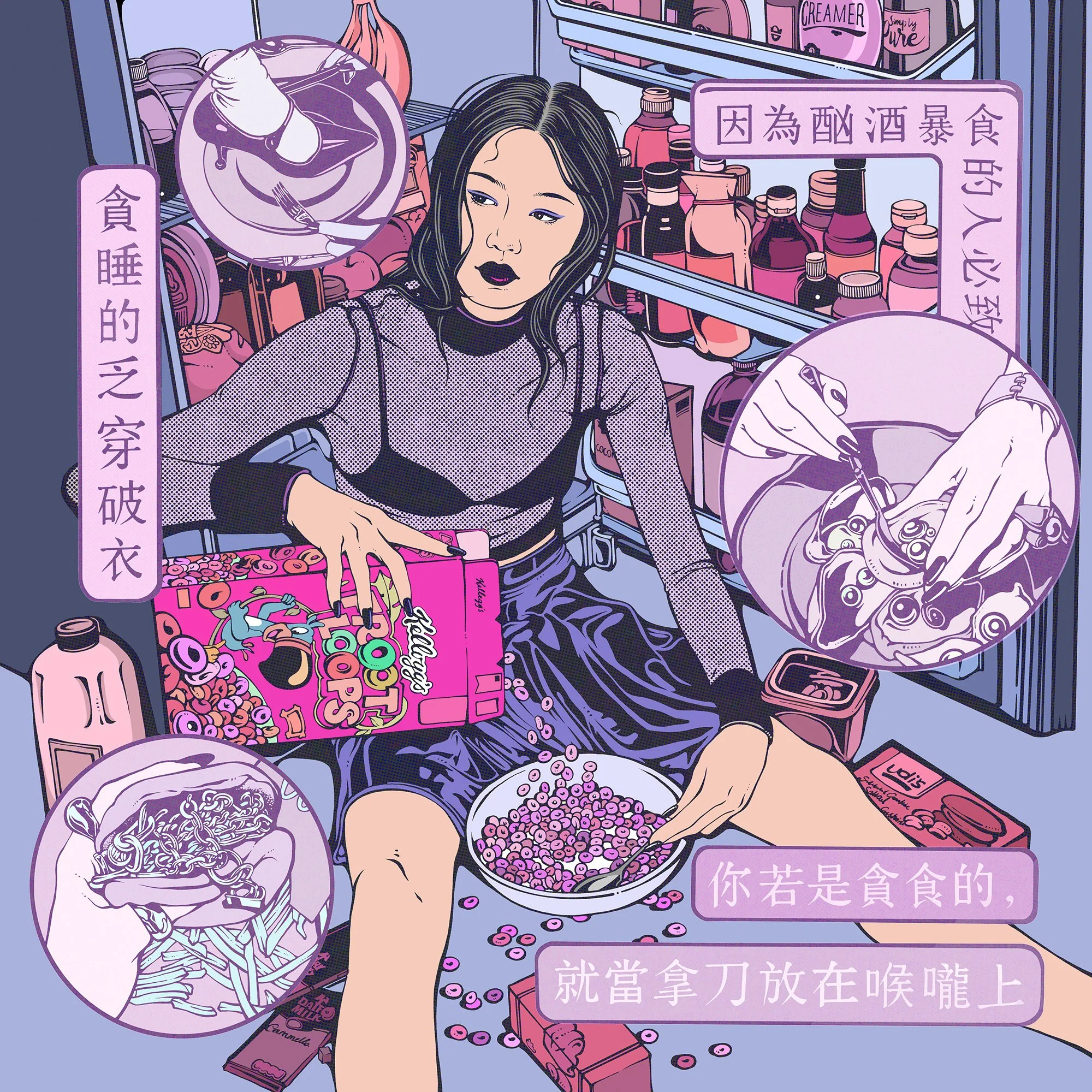
Gluttony, The Feast of Emptiness
Is there an emotional tone you find yourself returning to again and again?
I often return to quiet tension, emotional states that exist beneath the surface of everyday life. I’m less interested in dramatic moments and more drawn to subtle feelings like restraint, vulnerability, or a quiet sense of unease.
Visually, my work often appears calm or soft at first, but there’s usually something slightly unsettling underneath. I’m interested in that contrast, the space where something looks ordinary, yet emotionally feels complicated.
Many of my pieces explore emotions that are present but not openly expressed, especially the subtle psychological pressures embedded in daily routines and relationships.
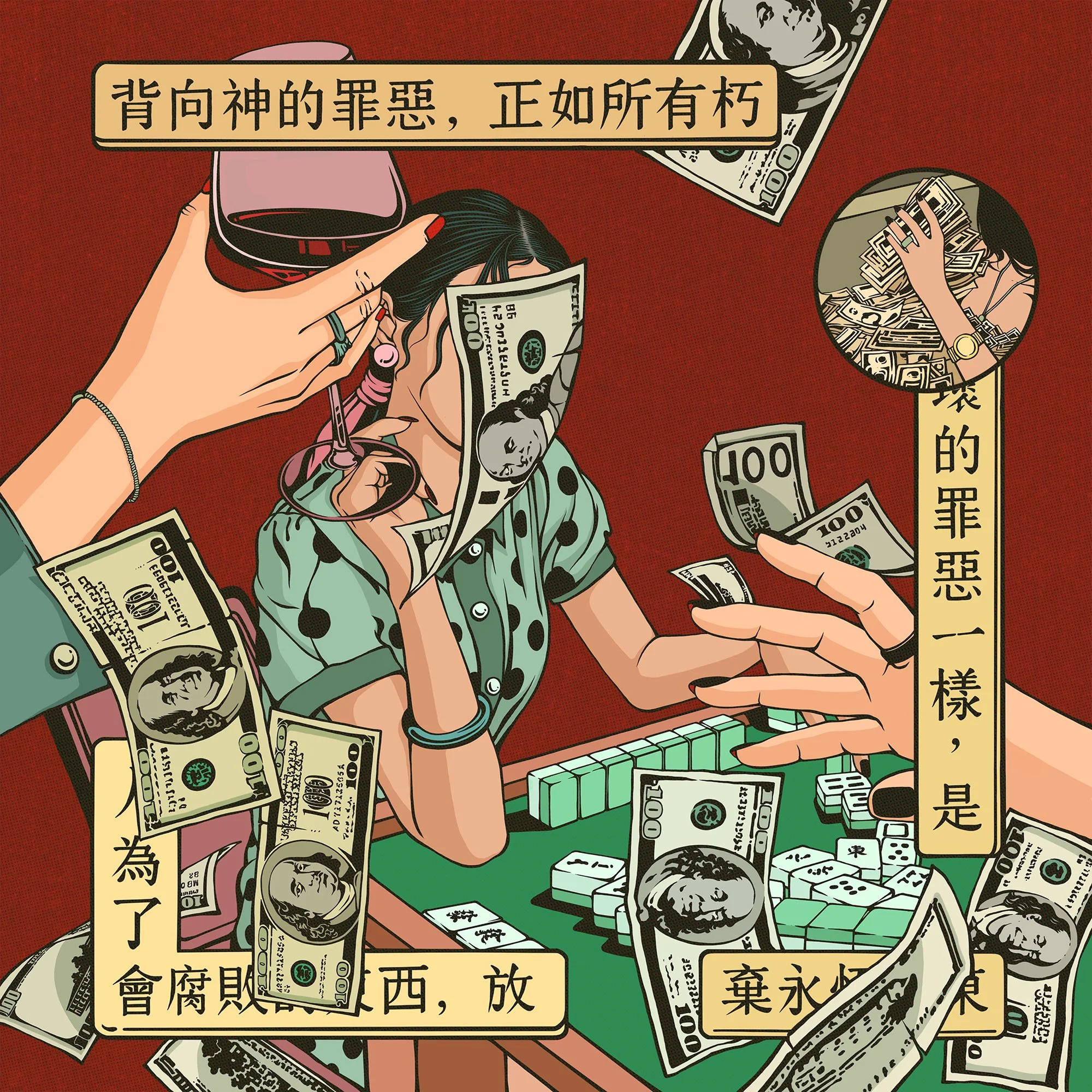
Greed, Hands That Are Never Full
Can you tell us about some of your favorite pieces? What makes them special to you?
One body of work that is especially meaningful to me is my series The Modern Seven Deadly Sins. In this project, I reinterpret the classical concept of the seven deadly sins through small, everyday scenes in contemporary life. Instead of dramatic moral narratives, the “sins” appear as quiet habits or emotional patterns—overconsumption, exhaustion, self-doubt, or the subtle pressure to constantly produce. I’m interested in how these states quietly accumulate and shape our daily lives.
Another project, the Hell Scene Paintings series, is one of the earliest completed projects in my practice. In this body of work, I reimagine traditional depictions of hell through contemporary domestic spaces. The works are inspired by historical Chinese hell scrolls, but the scenes are transformed into familiar environments like kitchens, childcare, and household routines. Bright, playful colors contrast with unsettling imagery, creating a tension between surface and meaning.
Both projects are special to me because they allow me to connect historical visual traditions with present-day emotional experiences. Through these works, I try to explore how larger cultural ideas—morality, labor, care, and suffering—can appear in subtle, almost invisible ways within ordinary life.
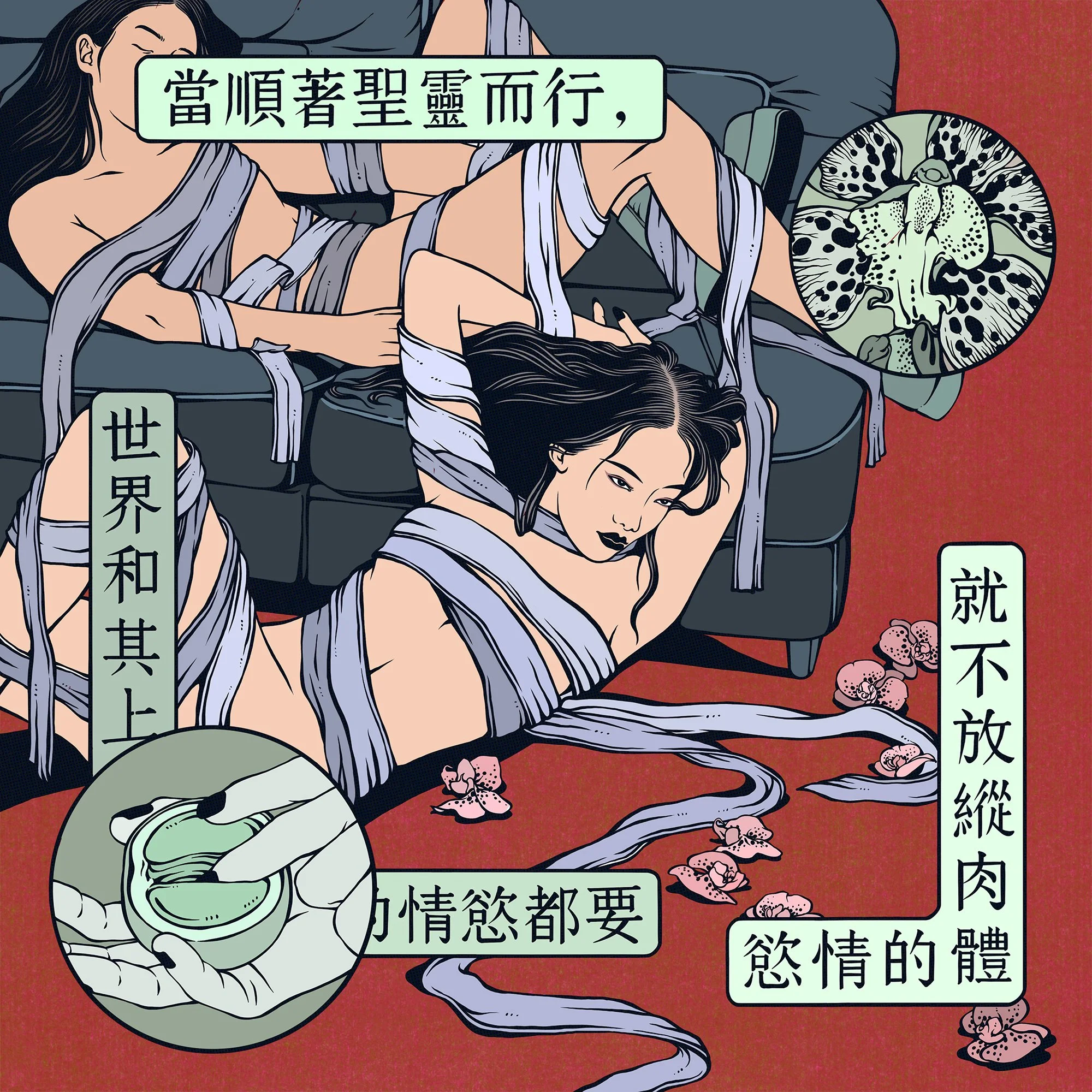
Lust, Skin Just Out of Reach
Do you think differently when making personal work versus editorial commissions?
In some ways, the process is different, but in other ways it’s quite similar for me. Editorial commissions usually begin with a specific topic, text, or audience in mind, so my role is to interpret the ideas of the article and translate them into a clear visual concept. There are also practical constraints—deadlines, communication with art directors, and the need for the image to quickly convey the core message.
When I’m working on my own projects, the starting point is usually more personal. The process is slower and more open-ended, and I tend to have a stronger emotional connection to the work.
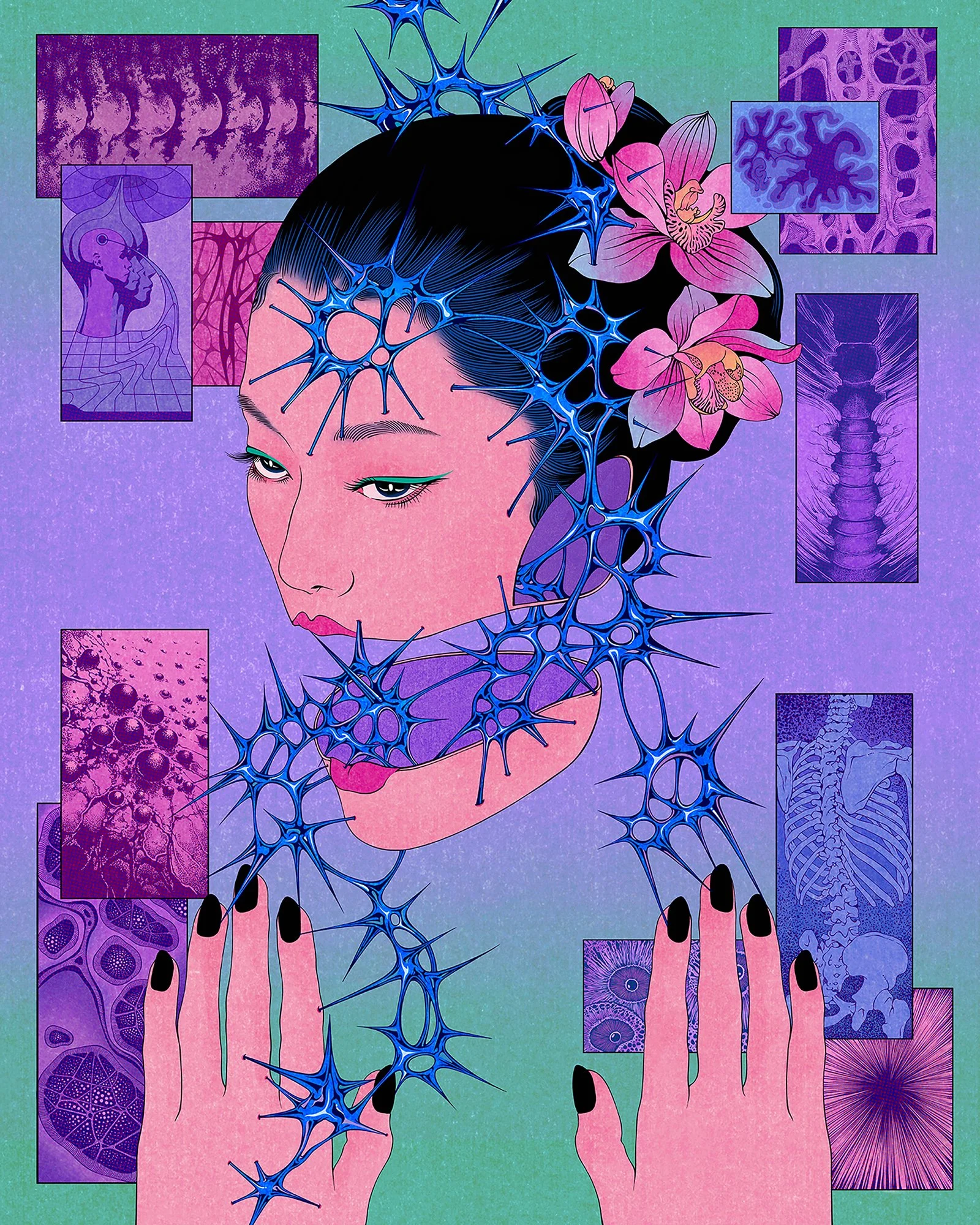
Pressure Beneath the Skin
Have there been any surprising or memorable responses to your work?
Sometimes people also interpret the work in ways I didn’t originally intend. I actually enjoy that part of the process. Once a piece is finished, it no longer belongs only to me, each viewer brings their own experiences and emotions to it, which can open up new meanings I hadn’t considered.
Those moments remind me that illustration and art can create a quiet form of connection between strangers.
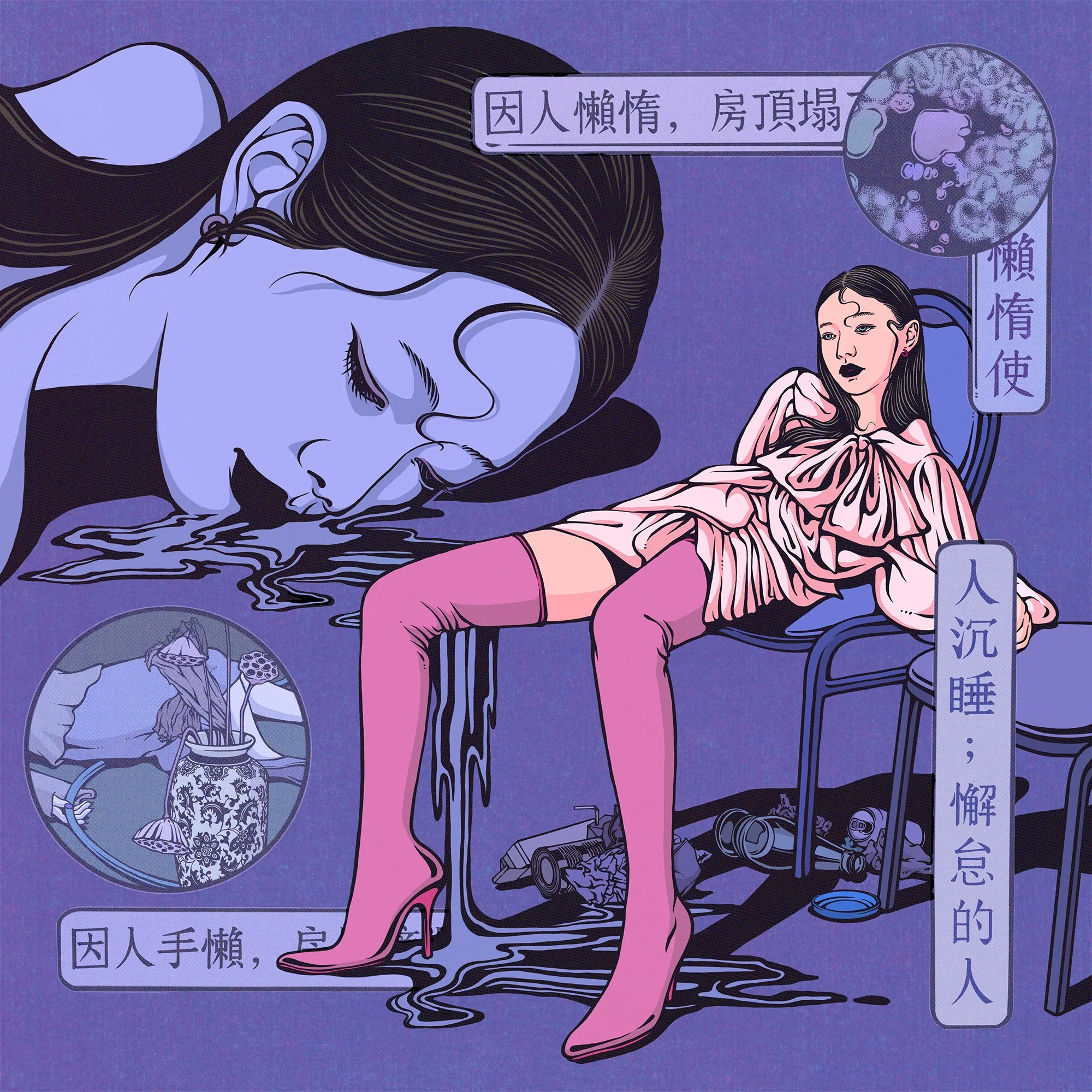
Sloth, The Comfort of Collapse
You’re also a tattoo artist – how does designing for skin differ from designing for paper or screen?
Designing for skin is quite different from drawing on paper or a screen because the body becomes part of the composition. Skin moves, stretches, and ages, so a tattoo has to be designed with the body’s anatomy and long-term readability in mind. I often think about how the design will flow with the natural curves of the body and how it will age over time.
Scale and clarity are also very important. Some details that work well in an illustration might not translate well to skin, so I often simplify forms and focus more on strong lines, shapes, and negative space.
At the same time, tattooing is much more collaborative. Each design is created for a specific person and a specific place on their body, so the process involves listening to their ideas and translating them into something that will live with them for a long time. In that way, tattooing feels more intimate and personal than most of my illustration work.
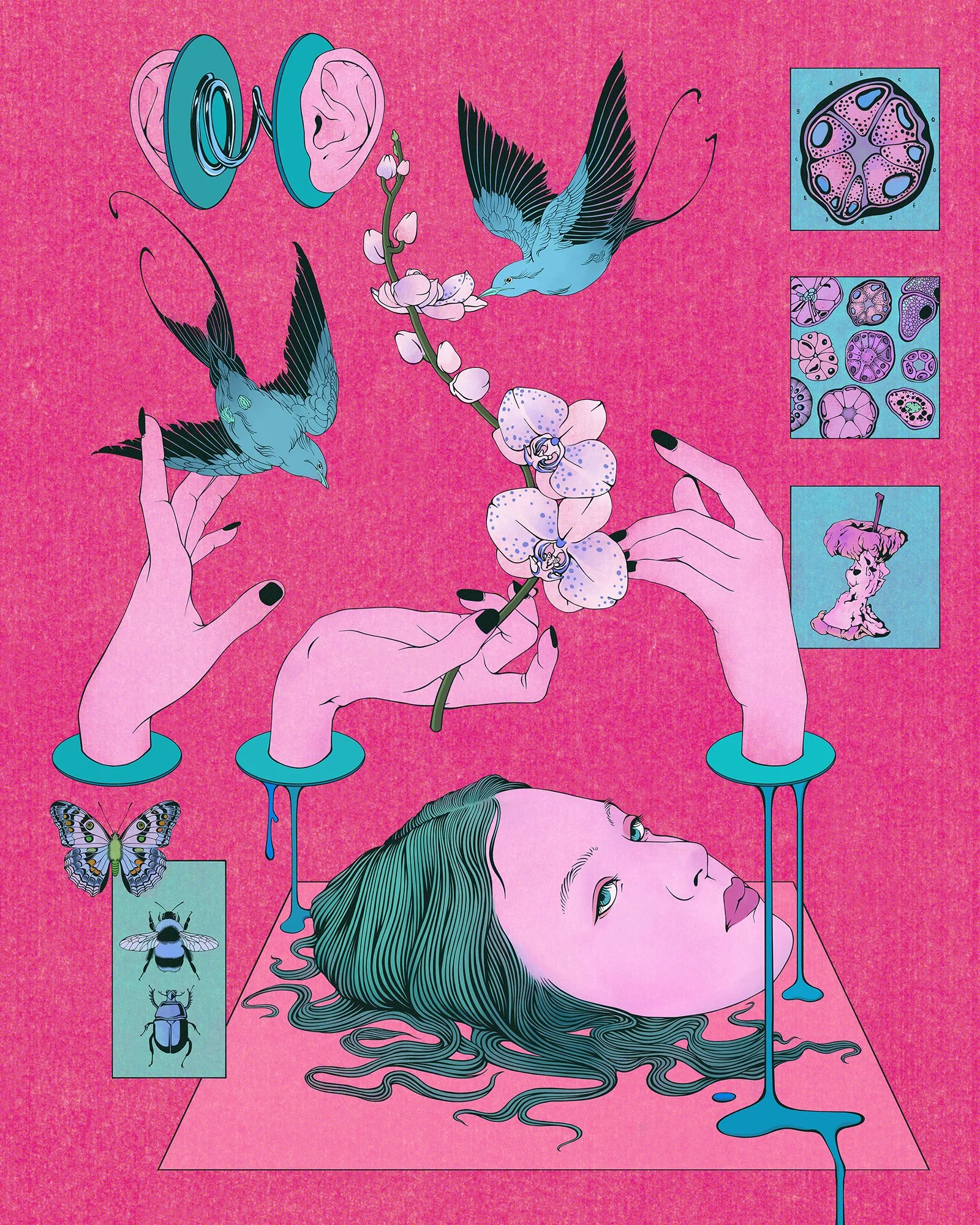
The Quiet Bloom of Otherworlds
What is a profound childhood memory?
One of the most profound memories from my childhood is the love and support from my family. Without them, I don’t think I would have been able to come this far or pursue my dream of becoming an artist.
Drawing was something that brought me simple joy as a child. I spent a lot of time making still life drawings and drawing birds. While I carefully observed what I saw, I also liked adding my own imagination to the images.
Birds were especially meaningful to me because my father is a bird watcher. He often took me to wetlands and forests to watch birds together. Those trips taught me how to observe nature closely and appreciate small details, which still influences how I see and create images today.
Looking back, I realize that the encouragement and support from my family were the foundation that allowed me to continue pursuing art.
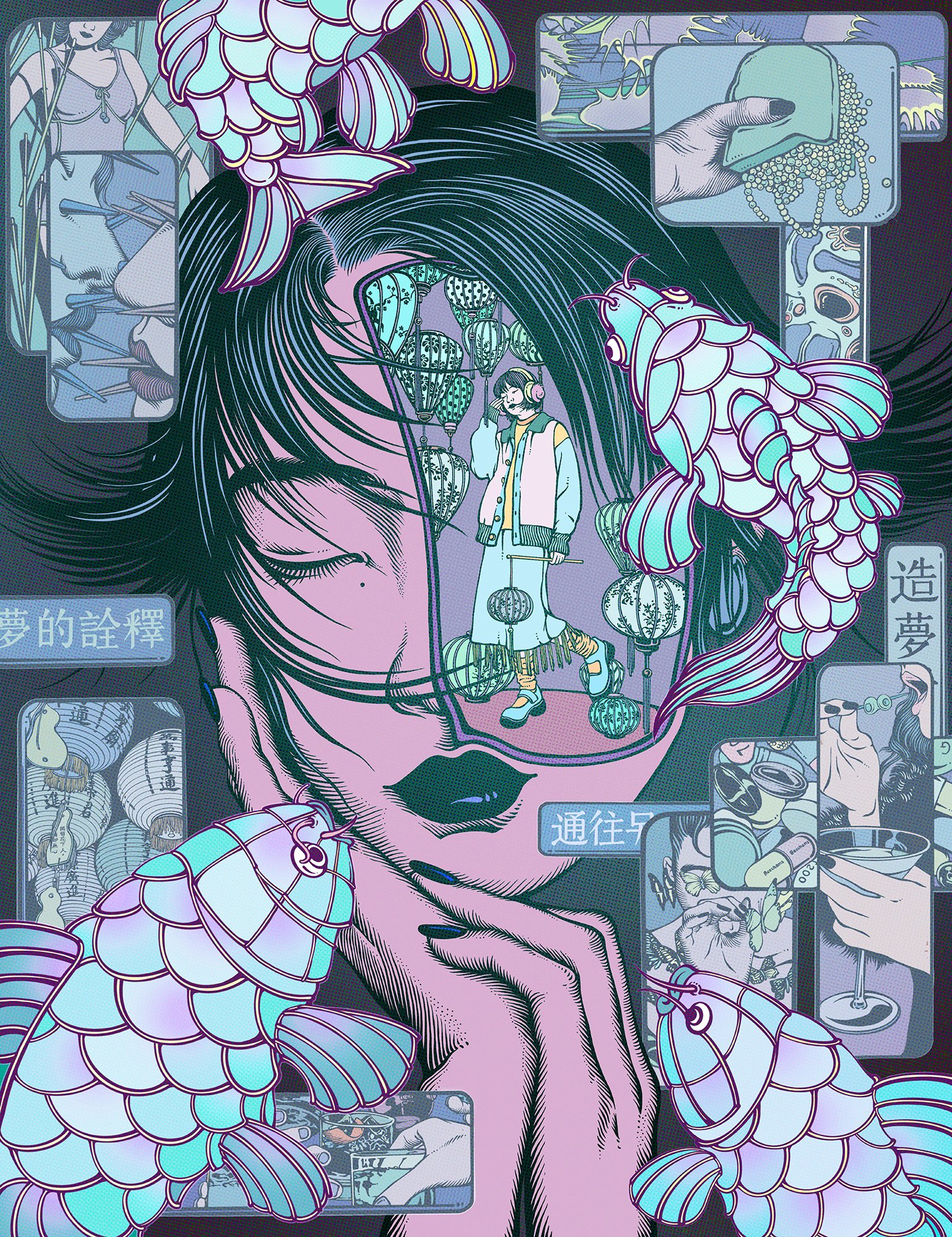
What’s in a girl’s head, The Dreamer
What is a fun fact about you?
A fun fact about me is that I started rock climbing about a year ago. As someone who spends a lot of time drawing and tattooing, climbing became a great balance for me. It helps me step away from work, clear my mind, and recharge.
It’s also surprisingly helpful for tattooing. Climbing builds strength and endurance in my arms and hands, which makes long tattoo sessions easier.
I’ve also made some friends at the gym, and when they hear that I’m an artist, they’re often a little surprised. People sometimes assume artists aren’t very active or athletic. But for me, trying different things is part of the spirit of being an artist. Life is an adventure, and I think those experiences outside the studio also shape how we see the world and create.
What emotional state are you most interested in exploring right now?
Right now, I’m particularly interested in exploring emotional states that exist between calmness and unease. I’m drawn to those quiet moments when everything appears normal on the surface, but there is a subtle tension underneath.
Many of my recent works focus on emotions that are difficult to define clearly—feelings like quiet pressure, emotional fatigue, or a sense of being suspended between endurance and change. These states are often invisible in everyday life, but they shape how people experience the world.
I’m interested in using imagery to make those subtle emotional conditions visible, allowing viewers to recognize something familiar within them.
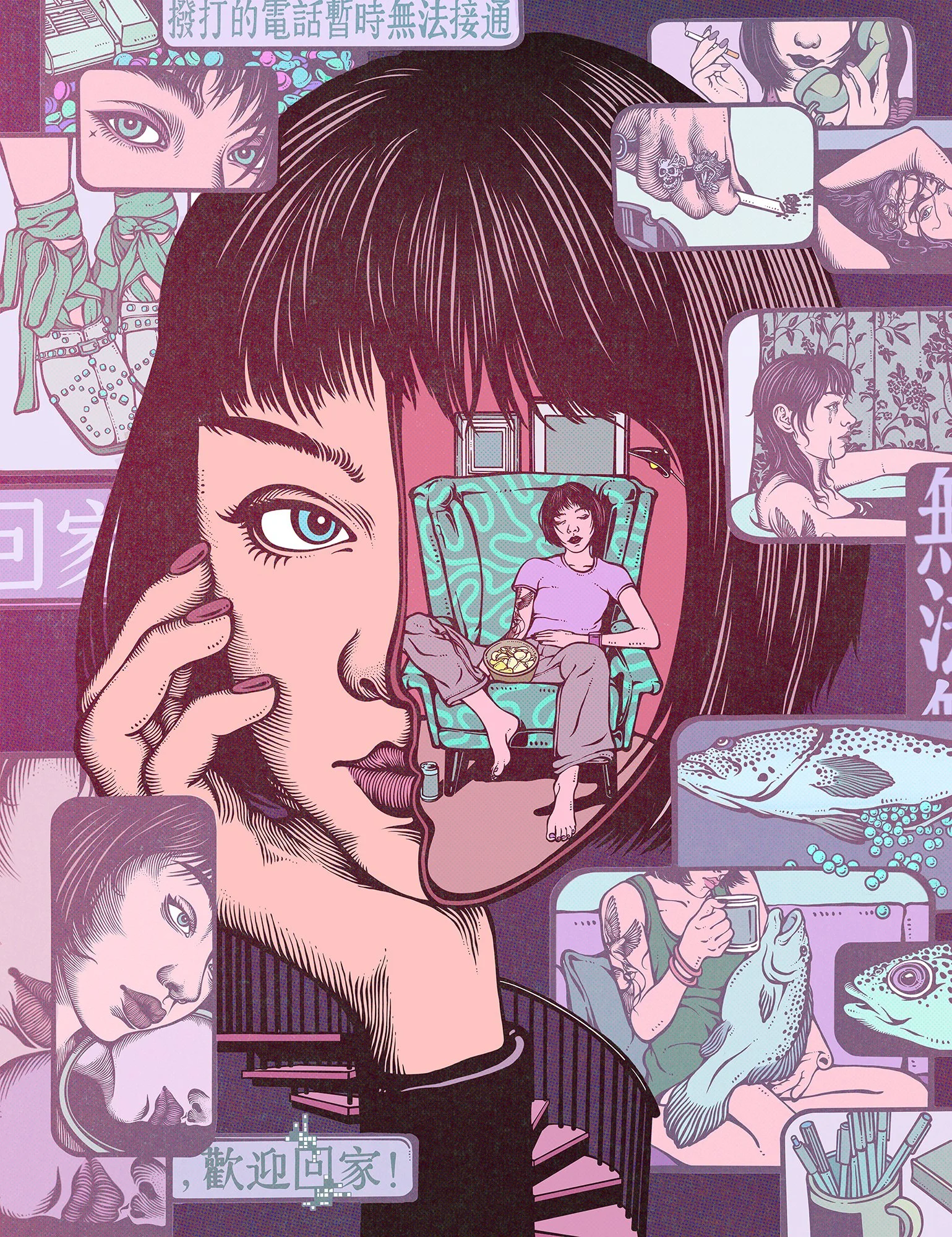
What’s in a girl’s head, The Dreamer
Are you our next spotlight artist? Submit the form to apply to be featured!
We share works by digital artists as well as digital arts exhibitions, events, and open calls daily on Instagram — follow us for more and subscribe to our newsletter so you don’t miss new blog posts.
![Project Spotlight: pifmgr.dll’s [M]ETAL✨ @pifmgr.dll is a digital artist working at the intersection of audiovisual design, 3D experimentation, and atmospheric world-building. His project [M]ETAL explores metal both as a physical material and a](https://images.squarespace-cdn.com/content/v1/63b2fdbe4376de5bfdc6771f/1779108338452-QO04Q3MMJ3VMU8PJV1MD/image-asset.jpeg)