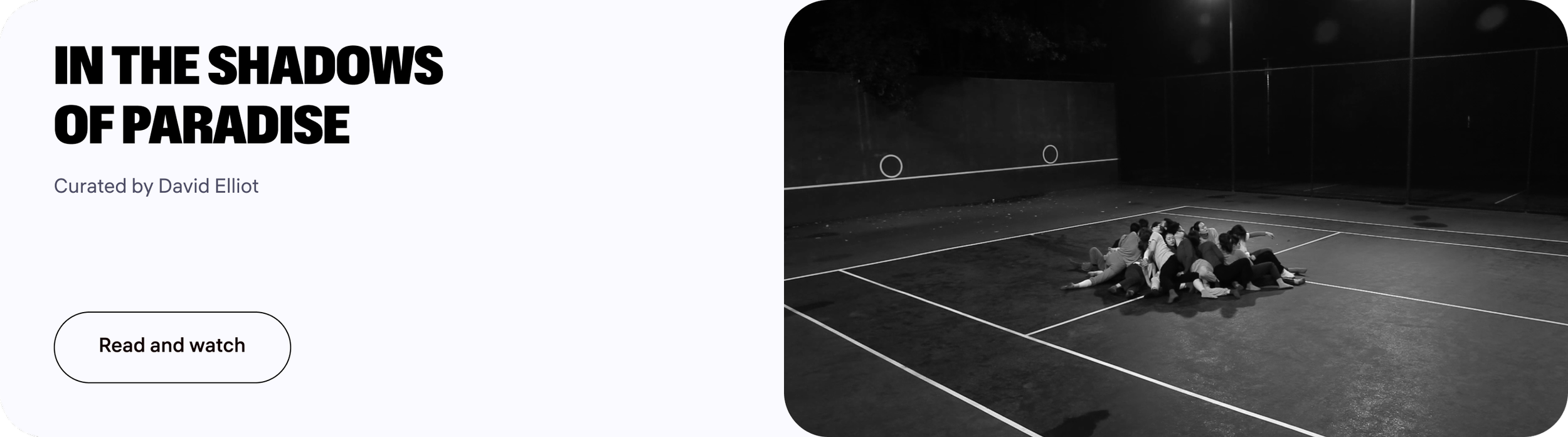
CIFRA Presents In the Shadows of Paradise, Curated by David Elliott
The online exhibition brings together video works produced over the past three decades, examining how artists across different countries and contexts respond to changing environments and structures of power.
CIFRA presents In the Shadows of Paradise, an online assembly of video works produced over the past three decades and curated by David Elliott. The exhibition brings together artists and collectives from Africa, China, Europe, Japan, Russia, and Singapore, exploring how ideas of paradise intersect with political power, social change, memory, environmental transformation, and individual freedom.
In the Shadows of Paradise joins a series of CIFRA exhibitions examining how artists anticipate and respond to changing environments and structures of power. Conceived as a continuing project, it will develop over time.
The exhibition builds on an idea Elliott first explored at Troy House in London in 2022 in a smaller presentation focused exclusively on video works from China. The version presented by CIFRA expands this framework internationally and across a longer time span.
At the centre of the exhibition is the contradiction contained within the idea of paradise itself. Political ideologies, religions, and other structures of power have repeatedly used promises of an ideal future alongside strategies of attraction, fear, belief, compliance, and submission. Taken to extremes, such frameworks leave little space for personal speculation, disagreement, or alternative ways of imagining the future.
In the Shadows of Paradise proposes a different model. Here, the shadows are a space in which artists can question established structures, imagine alternatives, and examine the tensions between desire, pleasure, abjection, and fear. Paradise becomes less a fixed destination than a relative andaspirational idea through which individual experience can be considered in relation to collective survival.
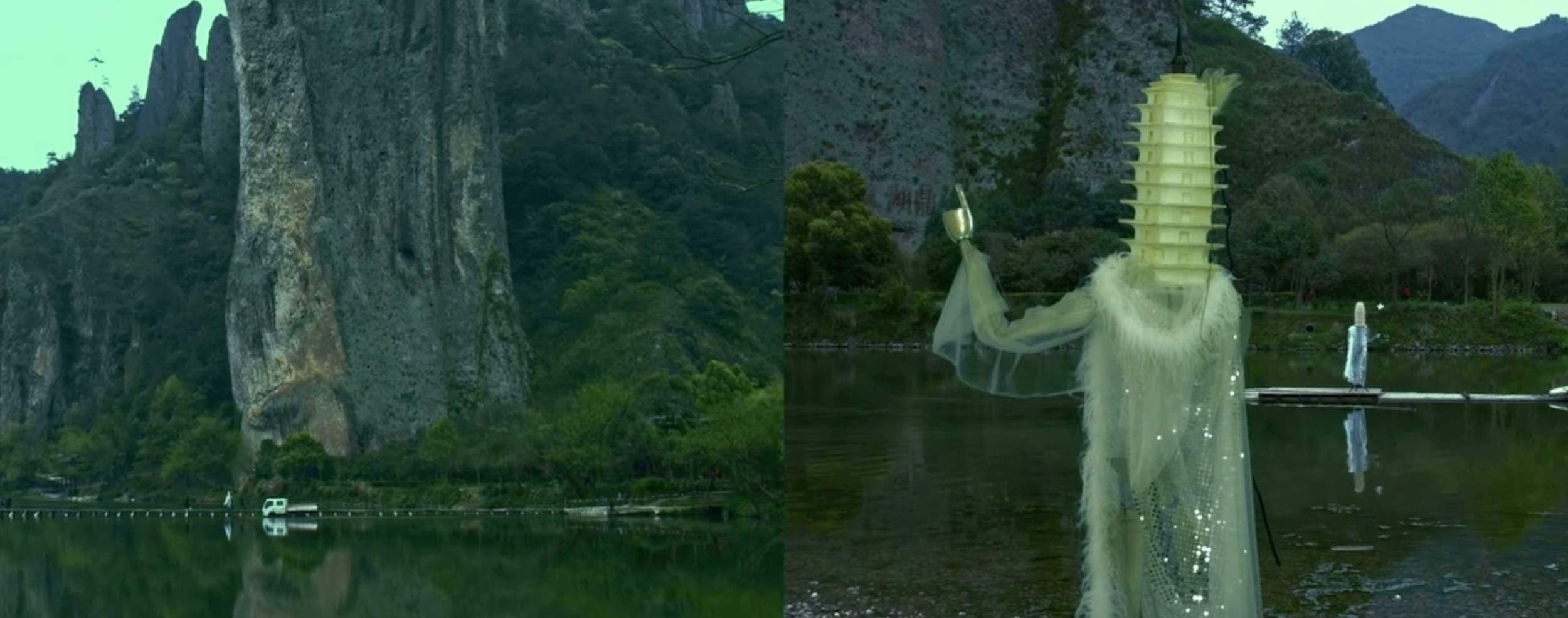
The exhibition includes works by Shingo Yoshida, Theo Eshetu, Liang Yue, Shen Xin, Chen Qiulin, Loong Pan, Chto Delat, Zheng Guogu, AES+F, Zhou Xiaohu, Pavel Otdelnov, and Ong Kían Peng. Across these works, landscapes, cities, political systems, technologies, and personal histories become sites where competing ideas of progress and paradise are tested.
Shingo Yoshida's Haunting Spirits (2019) returns to the volcanic landscape of Izu Oshima, where criminals and dissidents were once confined, tortured, and executed. Theo Eshetu's Dead Boys in Paradise (2024) moves through the waters surrounding Lamu, Kenya, connecting histories of the slave trade, colonialism, mortality, and deep human time.
Liang Yue's No Where (2003) and Mind Rehearsal (2018) consider beauty within China's changing urban and cultural environment. Shen Xin's Warm Spell (2018) follows travellers arriving on a small Thai island in search of paradise, temporarily disrupting the lives of its inhabitants.
Chen Qiulin's Farewell Poem (2002–2007) documents the transformation of landscapes and communities during the construction of the Three Gorges Dam, while With Light with Shadow (2019) uses movement to consider identity, physical distance, and independence. Loong Pan's Wind Bell (2021) examines industrial pollution through phytoextraction, recovering copper from organic matter contaminated by electronic waste.
Questions of ideology and mediated reality emerge in Chto Delat's One night in a Social Network (2020), an opera-farce addressing propaganda, social media, and the construction of truth. AES+F's The Feast of Trimalchio (2009) draws on Petronius' first-century satire to examine luxury, hierarchy, and social division through a contemporary vision of paradise.
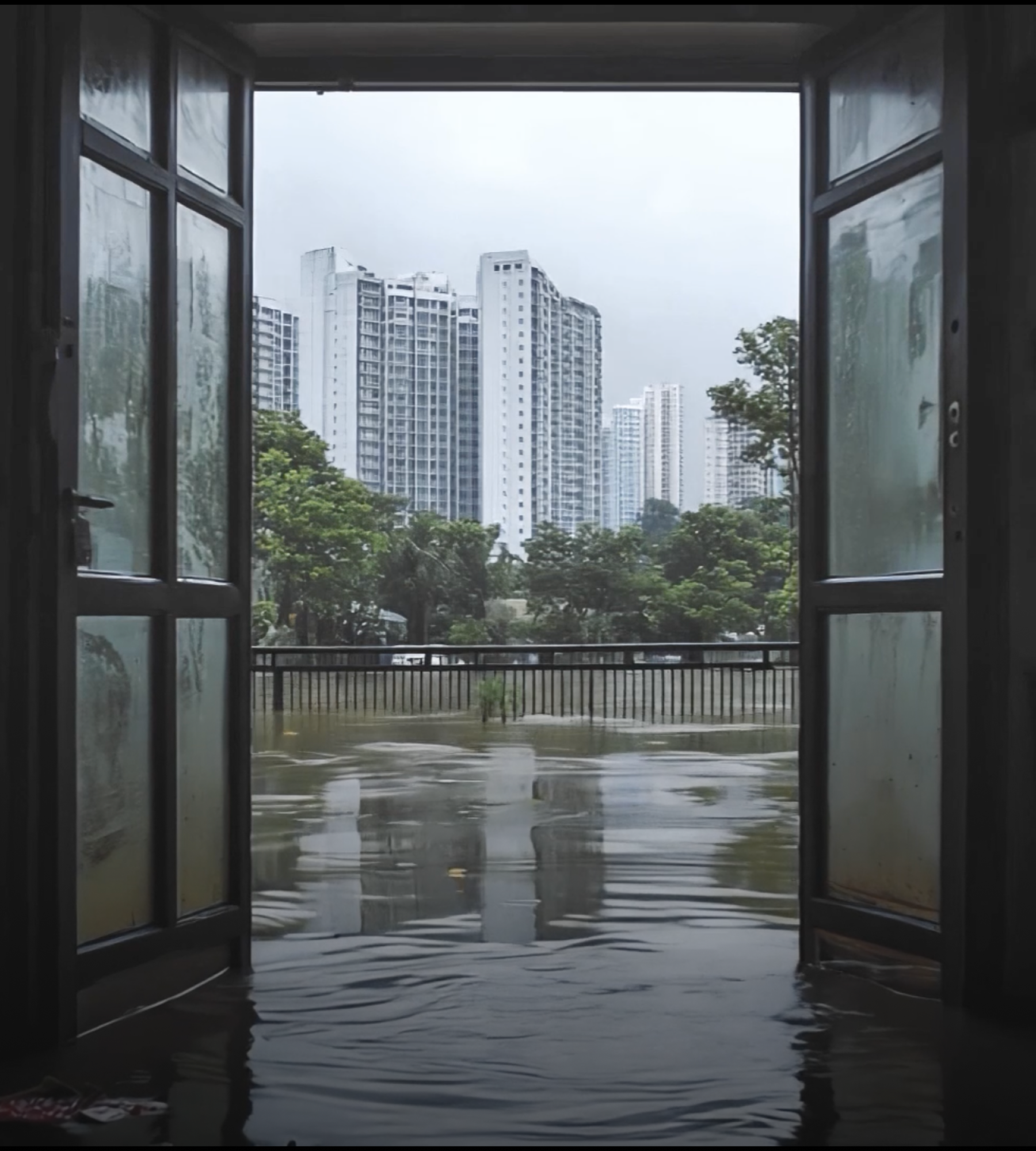
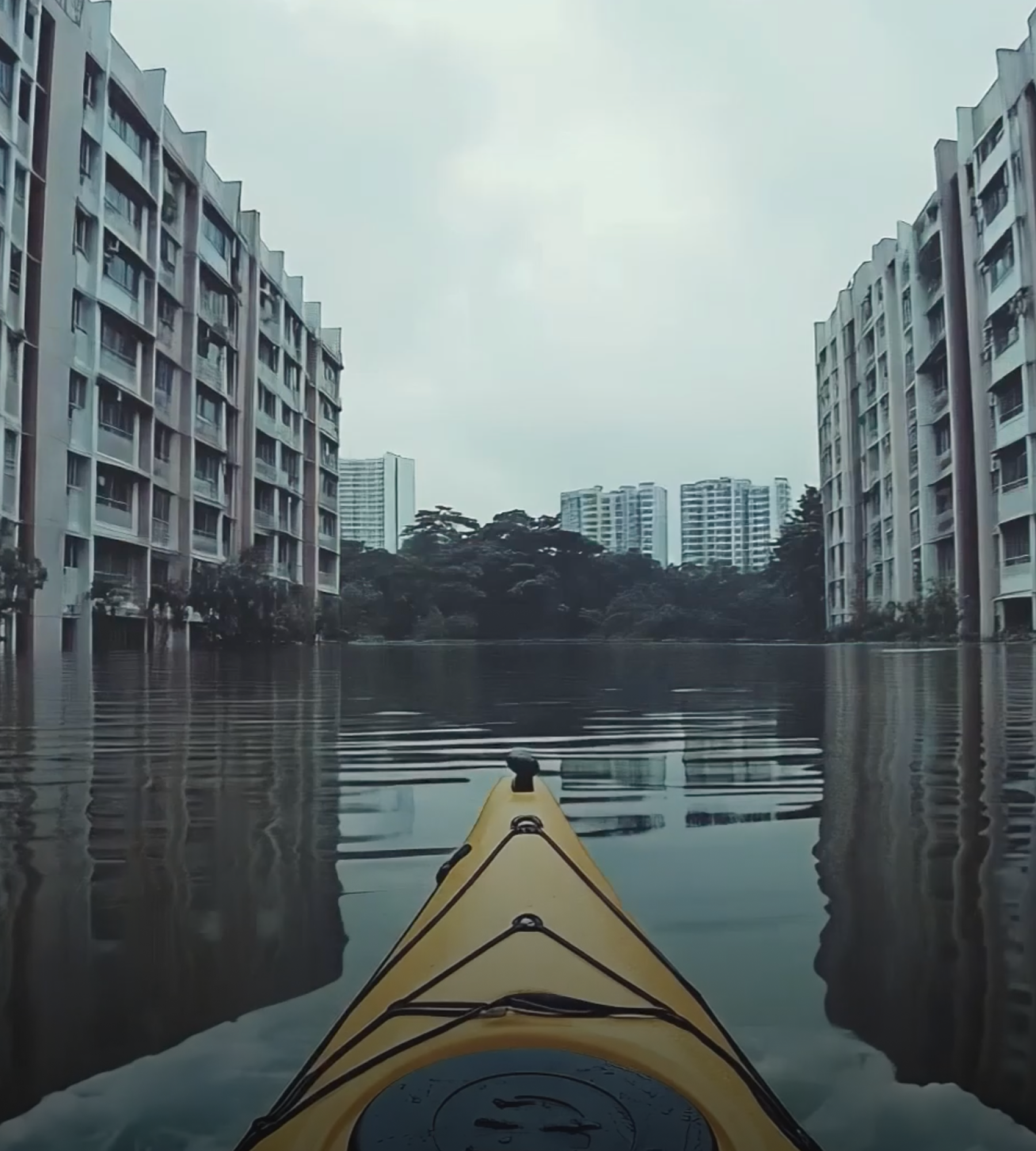
Zheng Guogu's Me and My Teacher (1995) follows a homeless young man in Yangjiang whose commitment to spontaneity and freedom offered the artist an alternative model of living and working. Zhou Xiaohu's A Garden of Earthly Delights (2016) combines references ranging from Hieronymus Bosch and classical Chinese painting to contemporary industrial and rural landscapes in an examination of false utopias, desire, and power. Pavel Otdelnov's Subjects of Memory (2016) traces his family's history in Dzerzhinsk alongside the environmental legacy of its chemical industry. Ong Kían Peng's AI-generated Disaster Free (2024) imagines a future Singapore shaped by global warming, rising sea levels, and catastrophic flooding.
David Elliott Asks What Remains of Paradise in a New Essay for CIFRA
The curator and writer brings together 14 works by 12 artists and collectives to examine paradise through power, memory, environmental change, consumerism, and the human desire for happiness.
CIFRA presents In the Shadows of Paradise, a new curatorial essay by David Elliott, bringing together 14 works by 12 artists and collectives from Africa, China, Europe, Japan, Russia, and Singapore.
Written for CIFRA, the essay considers paradise not as a fixed ideal, but as an idea shaped by religion, political ideology, economic systems, and individual desire. Elliott looks at the spaces that emerge when artists question these structures — and at what lies in the shadows of utopian promises.
“The Shadows of Paradise shown here imply an expansive model — an untrammelled range of ideas and creative structures — through which artists and others may critique, dream, live and work, ” writes Elliott.
The selection moves across different geographies and generations. Shingo Yoshida’s Haunting Spirits (2019) returns to the history of Izu Oshima, now a tourist destination but once a place of imprisonment and execution. Theo Eshetu’s Dead Boys in Paradise (2024) reflects on history, mortality, and the right to happiness through a journey across Kenya’s Lamu archipelago.
Elsewhere, Chen Qiulin documents communities transformed by the Three Gorges Hydroelectric Project, where, Elliott writes, “it seemed like they were demolishing one paradise in order to build another. ” Loong Pan examines the environmental consequences of electronic waste, while Chto Delat considers how truth is constructed and destabilised through social media.
Across the essay, paradise becomes less a destination than a way of examining the conditions in which people live, remember, consume, imagine, and coexist.
“Paradise here, should it exist, may also imply a relative, aspirational, anti-Darwinist model: one made in a spirit of critical circumspection where the fate of the individual is tied to the survival of all.”
About David Elliott
David Elliott is a curator, writer, lecturer, and cultural historian with more than four decades of experience in modern and contemporary art. He has directed institutions across Europe and Asia, including the Museum of Modern Art Oxford, Moderna Museet in Stockholm, Mori Art Museum in Tokyo as its founding director, and Istanbul Modern as its first director. From 2015 to 2019, he was Senior Curator and Vice Director of the Redtory Museum of Contemporary Art.
His curatorial practice has brought Western and non-Western contemporary art into dialogue, with a particular focus on Asian, African, Latin American, Russian avant-garde, and Central and Eastern European visual cultures.
Elliott has served as artistic director and curator of international biennales and large-scale exhibitions including the 17th Biennale of Sydney, the first Kyiv Biennale, the 4th Moscow Biennale for Young Art, and the 56th Belgrade October Salon. He has also held visiting academic positions in Europe and Asia and continues to write, lecture, and advise cultural institutions internationally.
About CIFRA
CIFRA is a curatorial media art platform for the presentation, documentation, and long-term presence of media art. It connects artists, galleries, curators, institutions, spaces, collectors, and audiences through works presented with curatorial and institutional context.
CIFRA creates an environment in which media art can remain visible and contextualized beyond the exhibition cycle, supporting its continued presence across digital, cultural, and commercial spaces.
We share works by digital artists as well as digital arts exhibitions, events, and open calls daily on Instagram — follow us for more and subscribe to our newsletter so you don’t miss new blog posts.

![Project Spotlight: pifmgr.dll’s [M]ETAL✨ @pifmgr.dll is a digital artist working at the intersection of audiovisual design, 3D experimentation, and atmospheric world-building. His project [M]ETAL explores metal both as a physical material and a](https://images.squarespace-cdn.com/content/v1/63b2fdbe4376de5bfdc6771f/1779108338452-QO04Q3MMJ3VMU8PJV1MD/image-asset.jpeg)