I Went Down to the Titanic in VR — and It Changed How I Think About the Tragedy
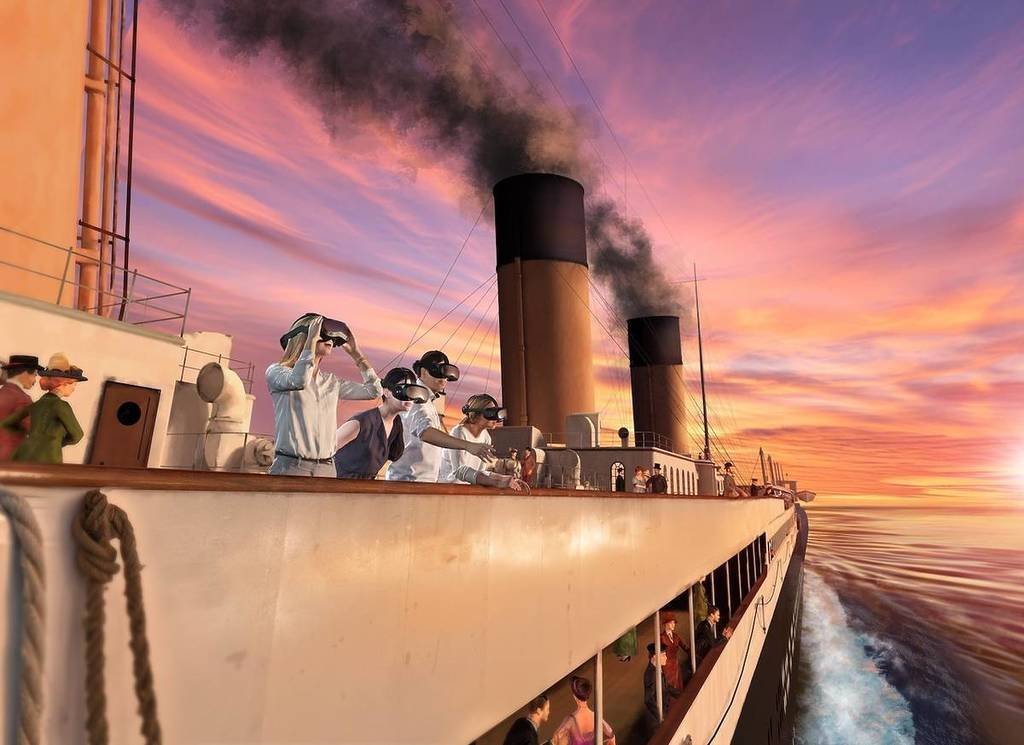
I’ve been a fan of Eclipso’s immersive VR experiences for a while now. Tonight with the Impressionists, Paris 1874 showed me that virtual reality is probably the best way to teach art history, and Horizon of Khufu set the bar for how much you can learn with immersive tourism. So when I saw that Eclipso had released a new experience centered on the Titanic, I didn’t hesitate.
I thought I knew this story. Rose and Jack, of course. I didn’t expect to leave having learned so much, or feeling shaken.
Titanic: Echoes from the Past is not a sensational retelling of the Titanic disaster. It’s measured, cinematic, and truly educational.
A Descent into Silence
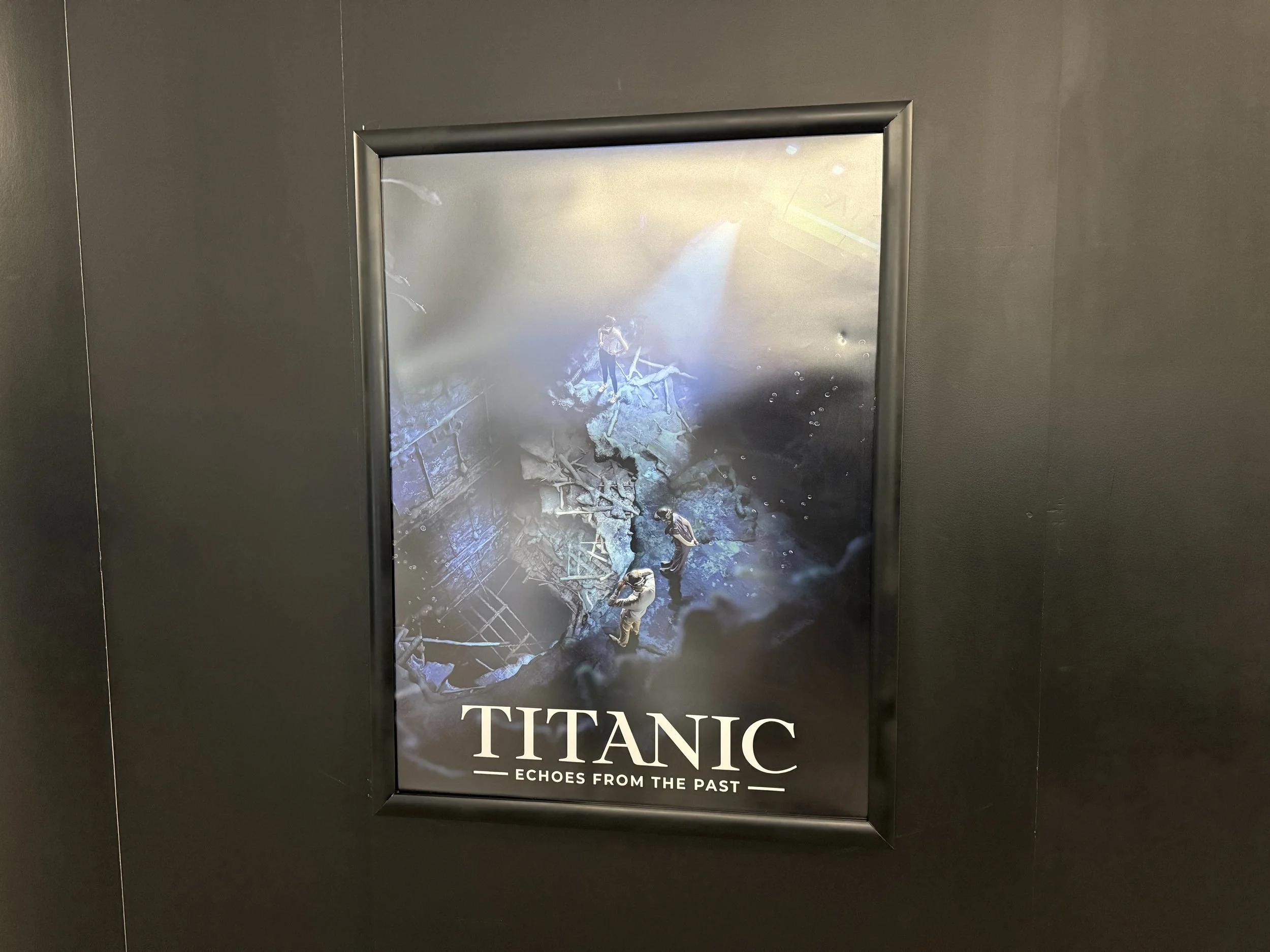
The experience begins underwater, nearly 3,800 meters below the surface of the North Atlantic. You’re suspended in darkness, drifting above the wreck of the Titanic as it exists today — broken, fragile, and impossibly still. Fish swim past you. Debris rests undisturbed. The scale of it all is overwhelming.
You’re not rushed. You’re allowed to look, to hover, to absorb the weight of time.
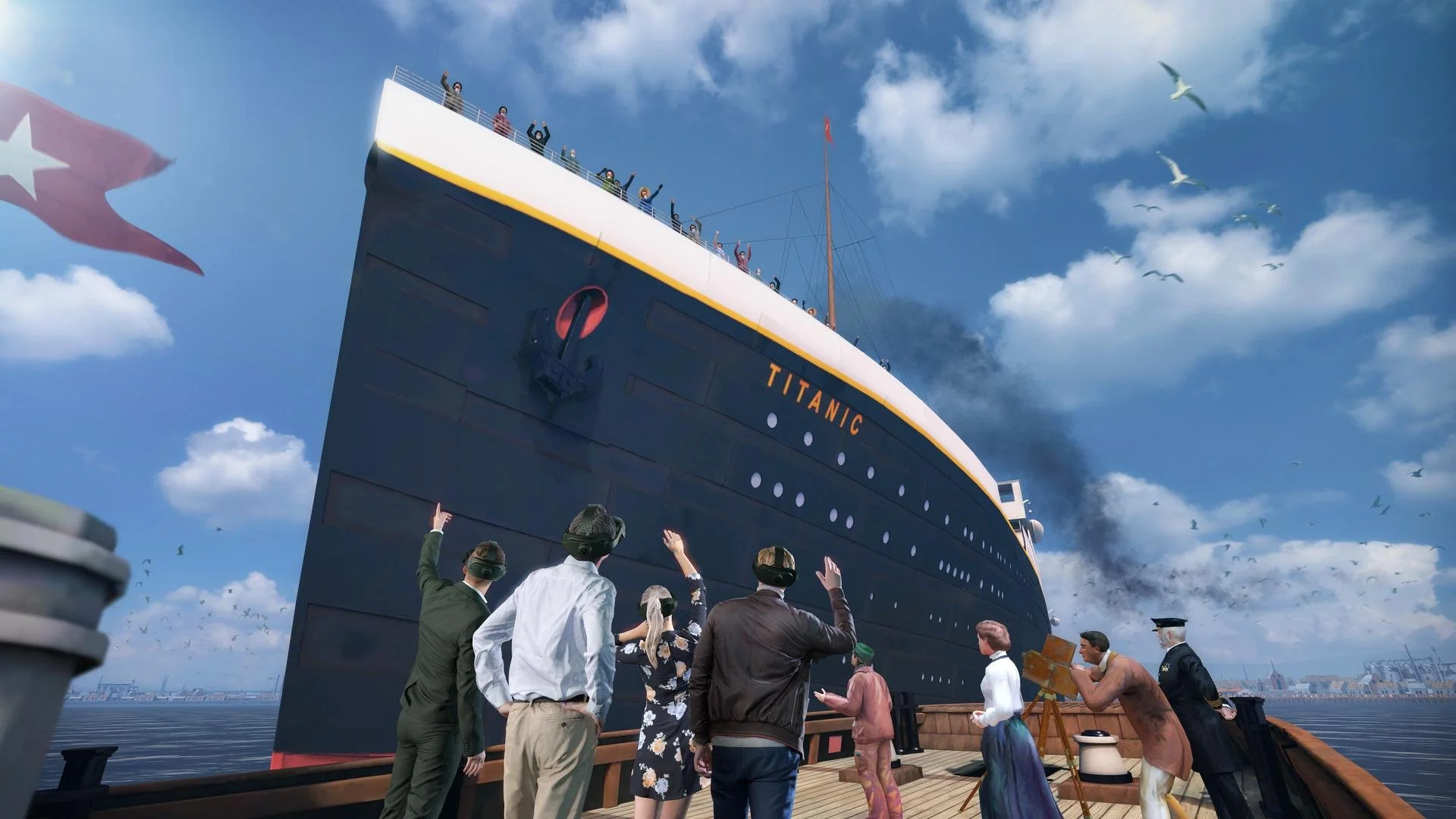
Then, the wreck dissolves into motion, and you are transported back to 1912, boarding the Titanic for its maiden voyage.
What Eclipso does so well here is pacing. This isn’t a checklist of historical facts. It’s a narrative that unfolds slowly, guided by characters, voices, environments, and carefully chosen perspectives.
Time, Inevitably, Runs Out
As you walk into the experience, timestamps anchor you in reality:
23:40 — The Titanic strikes an iceberg on the starboard side.
00:05 — The captain orders passengers to board the lifeboats.
02:20 — The Titanic sinks into the waters of the North Atlantic.
What struck me most is where the experience chooses to end. It stops at the moment of impact — the collision with the iceberg. We are spared the horror of the hours that followed.
It feels intentional, even respectful. Rather than recreating chaos and suffering, the experience focuses on understanding what led to that moment — the systems, decisions, and social structures already in place long before the ship hit the ice.
Class, Comfort, and Cruel Inequality
One of the most unsettling parts of the experience is how clearly it illustrates the class divisions aboard the Titanic — and how deadly those divisions became.
Third Class passengers, more than 700 of them, were largely European emigrants crossing the Atlantic in search of a better life. Their accommodations were simple: shared cabins, communal bathrooms. And yet, by the standards of the time, the Titanic still offered them unprecedented comfort — real mattresses, proper ventilation, and plentiful food.
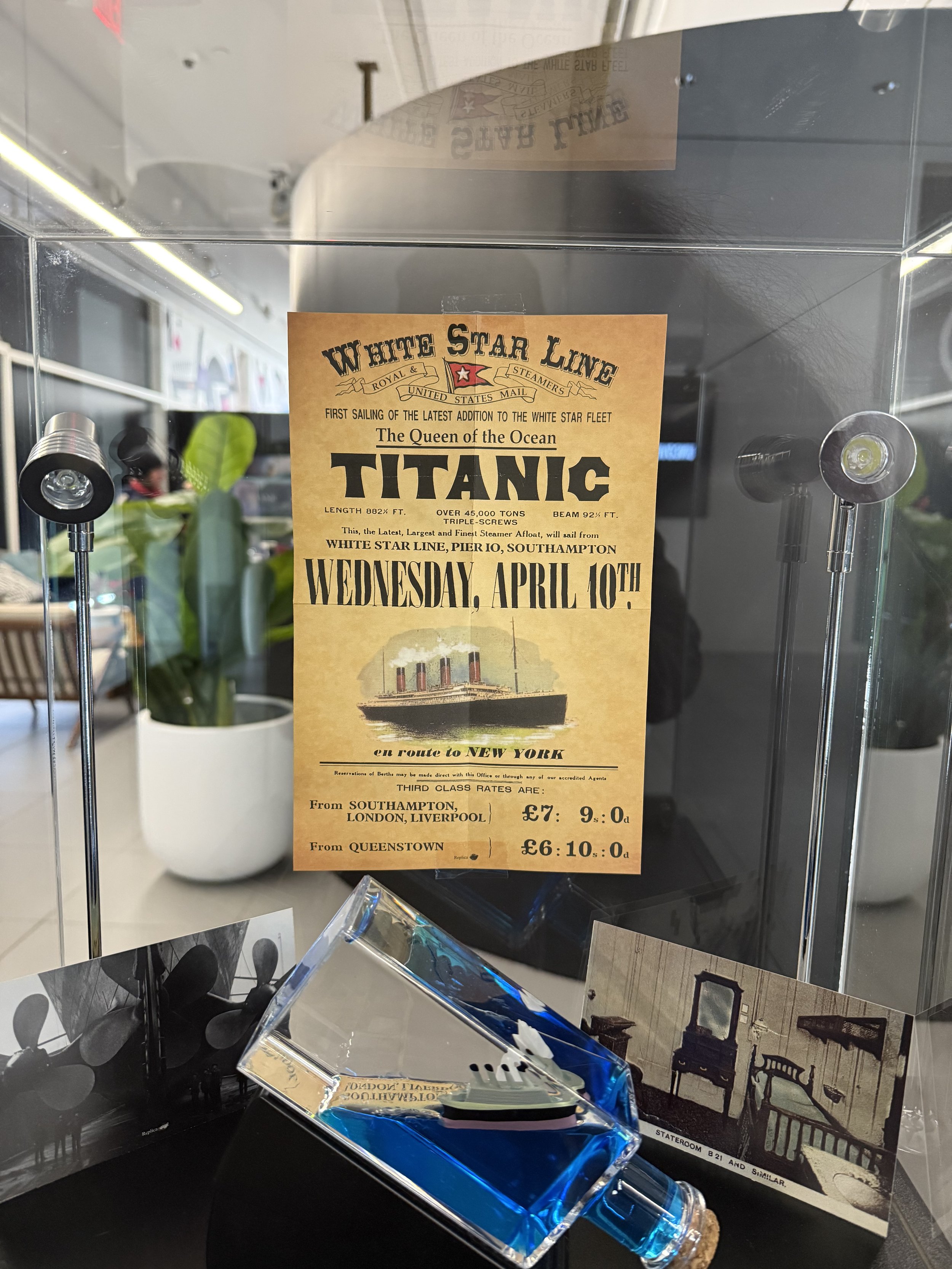
A third-class ticket cost around $40 (roughly $900 today). For many, this voyage represented hope. A future. A beginning. That night in April 1912, those dreams were left adrift in icy water.
Second Class passengers were mostly teachers, middle-class families, and tourists, who experienced a level of comfort that, on other ships, was reserved only for first class. Elegant dining rooms, libraries, reading lounges, even a music room. Tickets ranged from $60–$80 at the time (about $1,500–$3,000 today), and it was considered exceptional value.
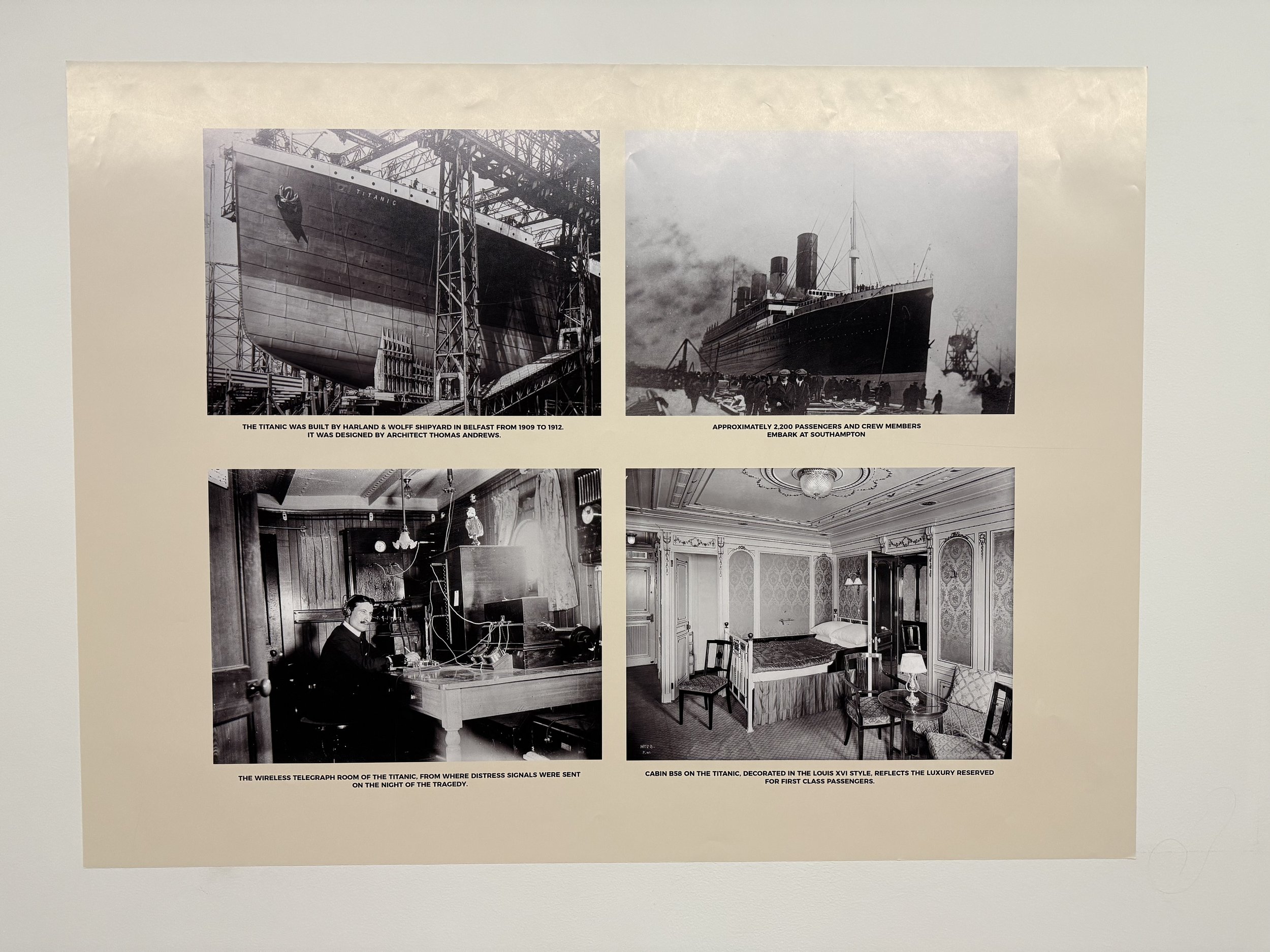
First Class, meanwhile, was something else entirely. More than 700 passengers traveled in near-palatial luxury: fine wood interiors, crystal chandeliers, private suites with lounges and libraries, a gymnasium, a swimming pool, even Turkish baths. Tickets could cost up to $4,500 at the time (over $100,000 today!) accessible only to the global elite.
Knowing that lifeboat access and survival were shaped by these divisions makes the tragedy even more horrifying. Discrimination between first and third class during a moment of absolute chaos is hard to sit with.
The Story I Had Never Heard
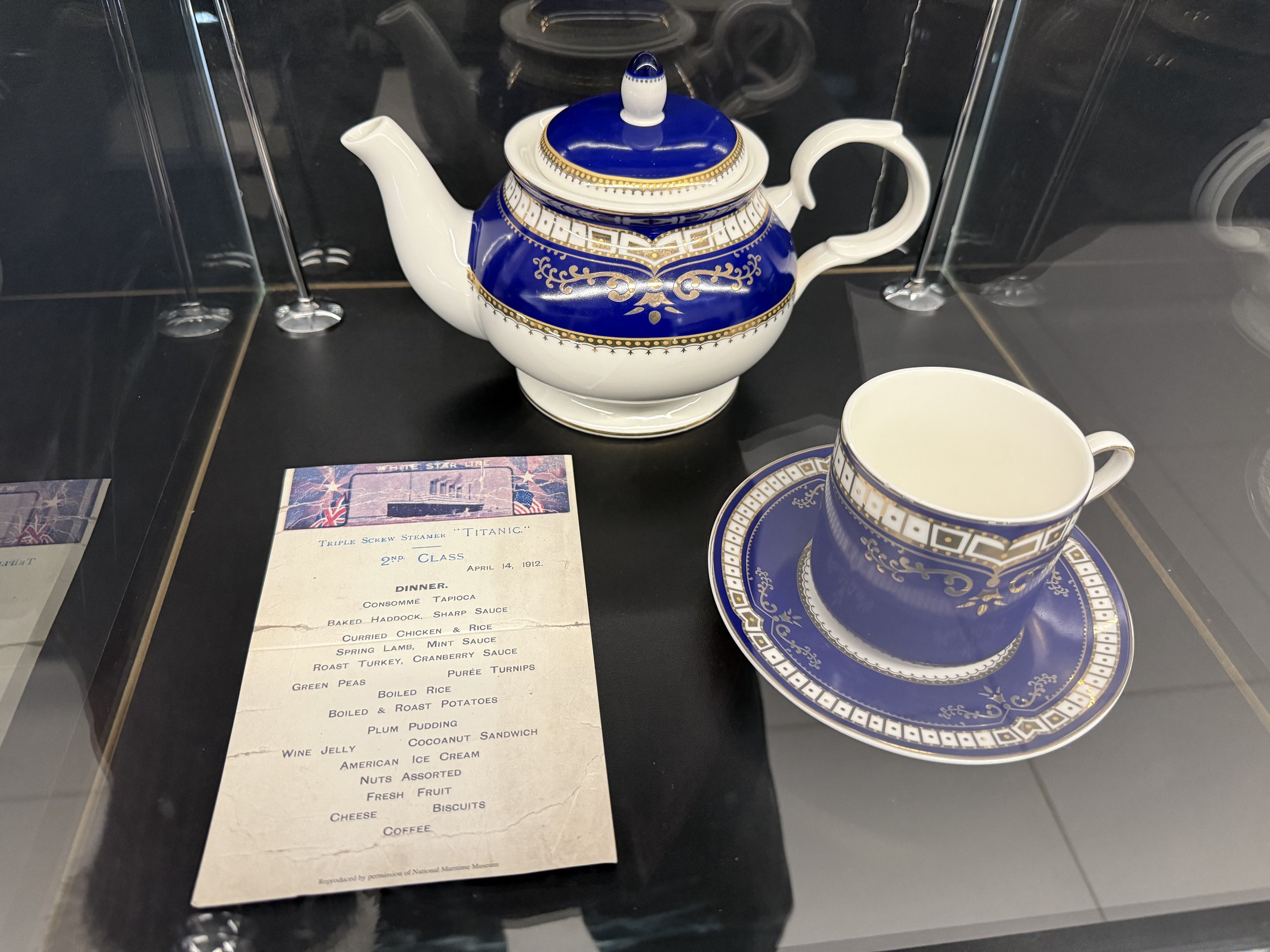
It was moving to remember that history is made up of individual lives. I learned about the Chinese sailors of the Titanic — a story I had never encountered before.
Eight Chinese men boarded the Titanic in third class: Ah Lam, Fang Lang, Len Lam, Cheong Foo, Chang Chip, Ling Hee, Lee Bing, and Lee Ling.
They were traveling to New York before continuing on to Cuba to work aboard another ship. Six of them survived the sinking — five by boarding Lifeboat C, and one who was later found clinging to debris in the Atlantic.
But survival wasn’t the end of their ordeal.
When they arrived in the United States, they were denied entry under the Chinese Exclusion Act of 1882 and forced to leave the country.
They survived one of the deadliest maritime disasters in history — only to be met with racism and rejection on land.
I sat there thinking: how many Titanic stories do we think we know, and how many were never told?
Seeing the Titanic Through a Filmmaker’s Eyes
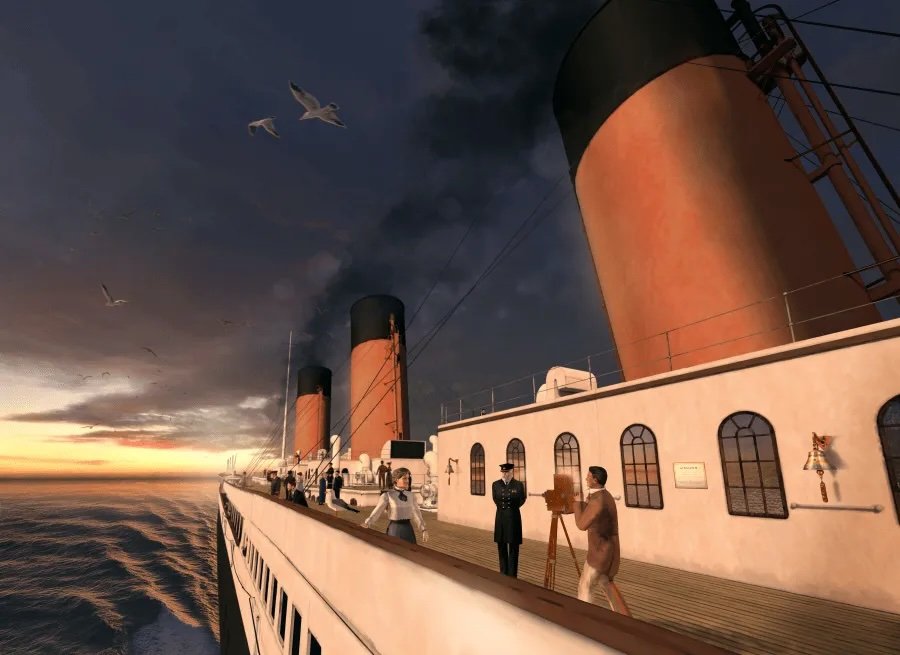
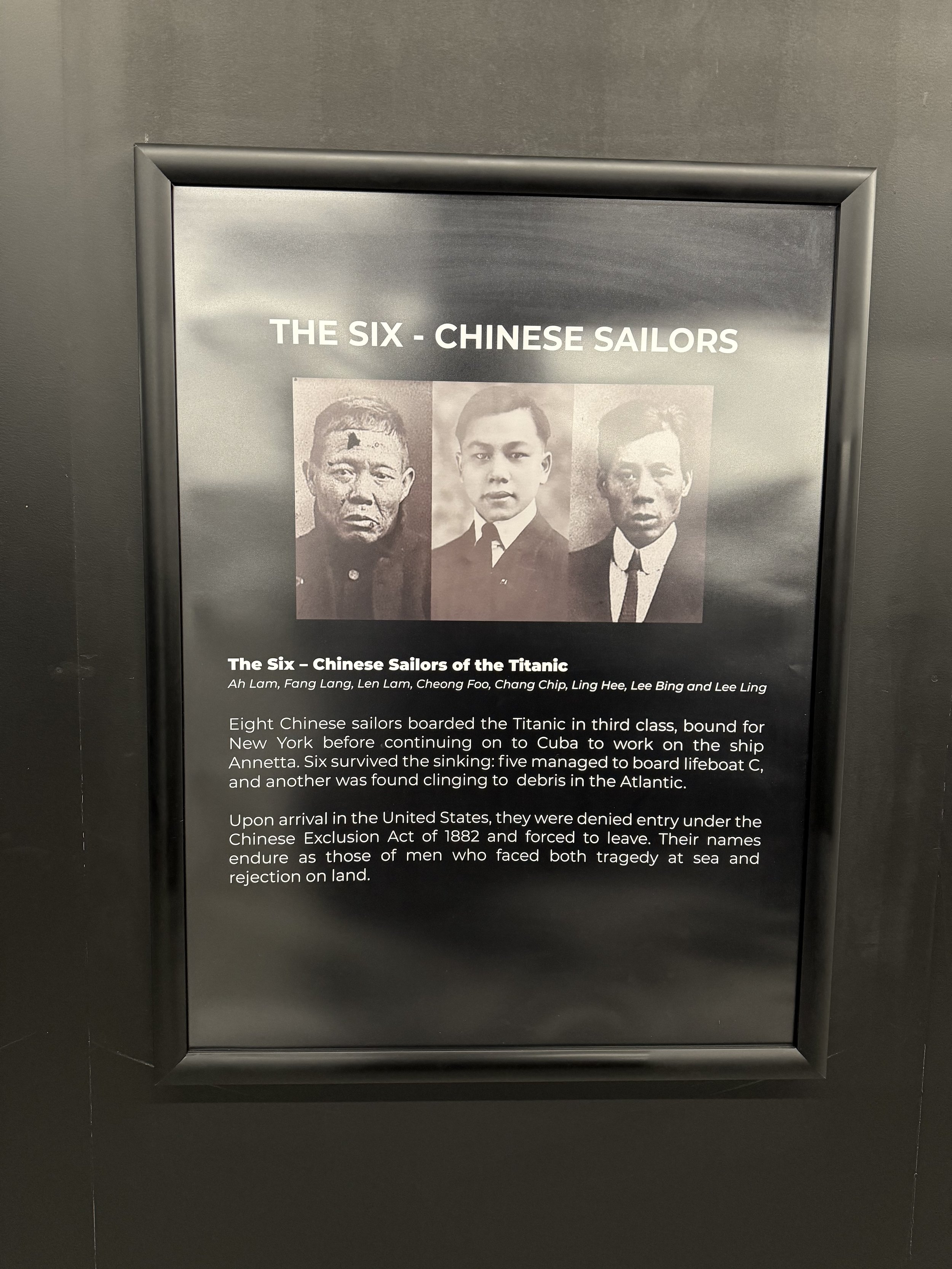
Another narrative thread follows William Harbeck, the Titanic’s official filmmaker.
Born in 1869, Harbeck was a pioneer of documentary cinema and boarded the Titanic with his partner, actress Mary Perreault, carrying valuable film equipment. He intended to document the voyage — perhaps creating what could have been the only moving images of the Titanic.
His body was later recovered from the Atlantic. His recordings were never found.
There’s something especially haunting about that: the idea that history almost had moving images of this ship, this moment — and that they were lost forever to the sea.
A Captain’s Final Promise
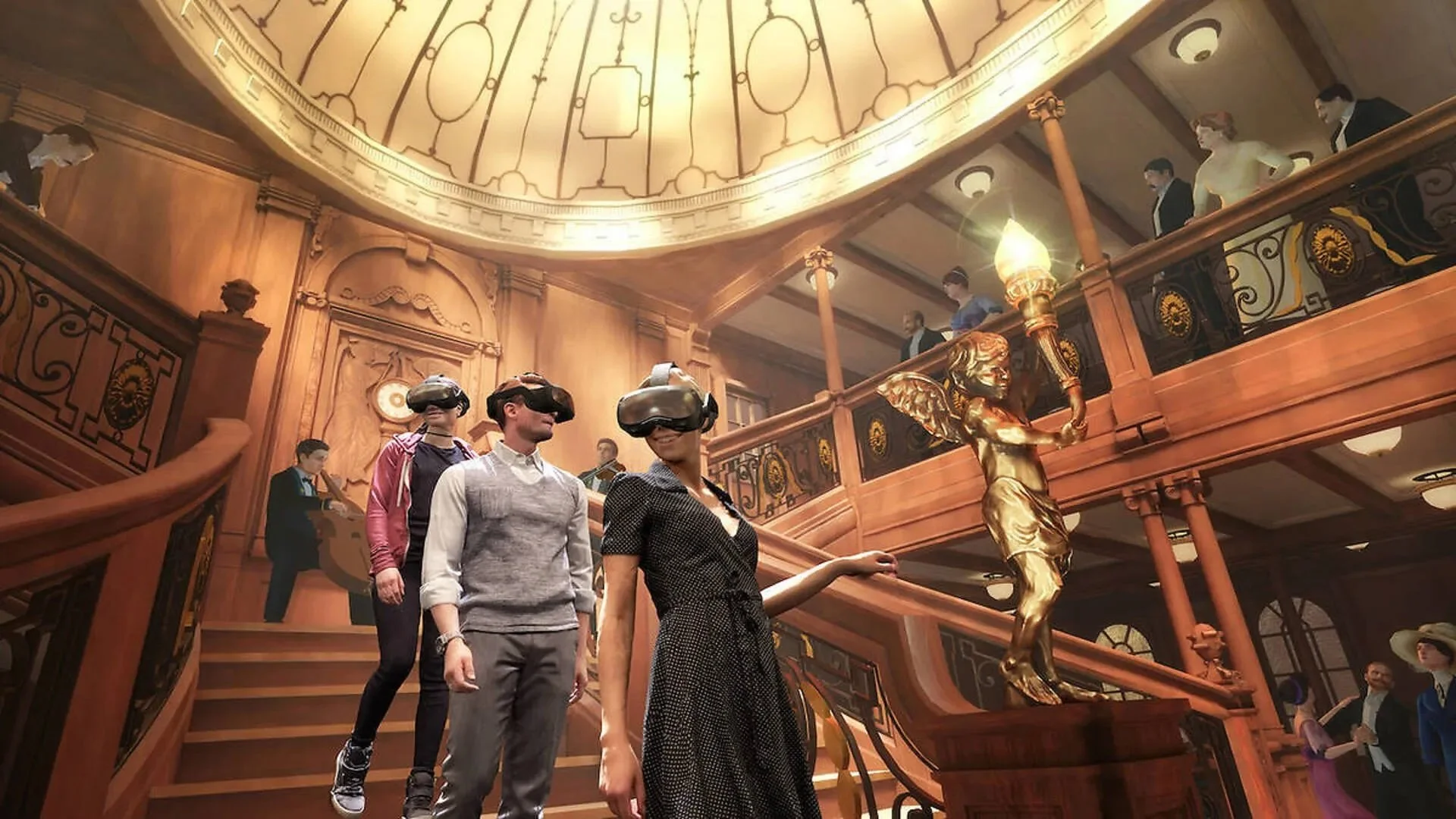
Born in 1850, Captain Edward J. Smith was 62 years old when he accepted command of the Titanic. He was the most respected captain of the White Star Line and had planned to retire. He reportedly promised his wife and daughter that this would be his final voyage.
On the morning of April 15, 1912, he remained on the bridge until the very end.
Whether mythologized or true, his story has endured as the symbol of the captain who went down with his ship — another tragic coincidence in a journey full of them.
So many people boarded the Titanic believing they were at the beginning of something — a career, a new country, a fresh life. Instead, their stories interrupted mid-sentence.
Interaction As Well As Immersion
What surprised me most is how interactive the experience is. At moments, you can interact with marine life swimming around the wreck and even take the wheel and try, briefly, to change fate by steering away from the iceberg Of course, we know how it ends.
Why This Experience Works
This Titanic VR experience is the result of two years of rigorous research, drawing from the archives of the Cité de la Mer in Cherbourg-en-Cotentin and the National Oceanic and Atmospheric Administration (NOAA). Every detail feels considered, cross-checked, and grounded in historical care.
It’s a co-production between Eclipso and Small Creative, guided by an enormous interdisciplinary team — from historians and narrative designers to 3D artists, motion capture performers, composers, and voice actors. The original score by Matthieu Tosi adds emotional restraint rather than spectacle, letting silence do some of the work.
What I appreciated most is that the experience doesn’t try to overwhelm you. It trusts the material. It trusts the audience.
Practical Information
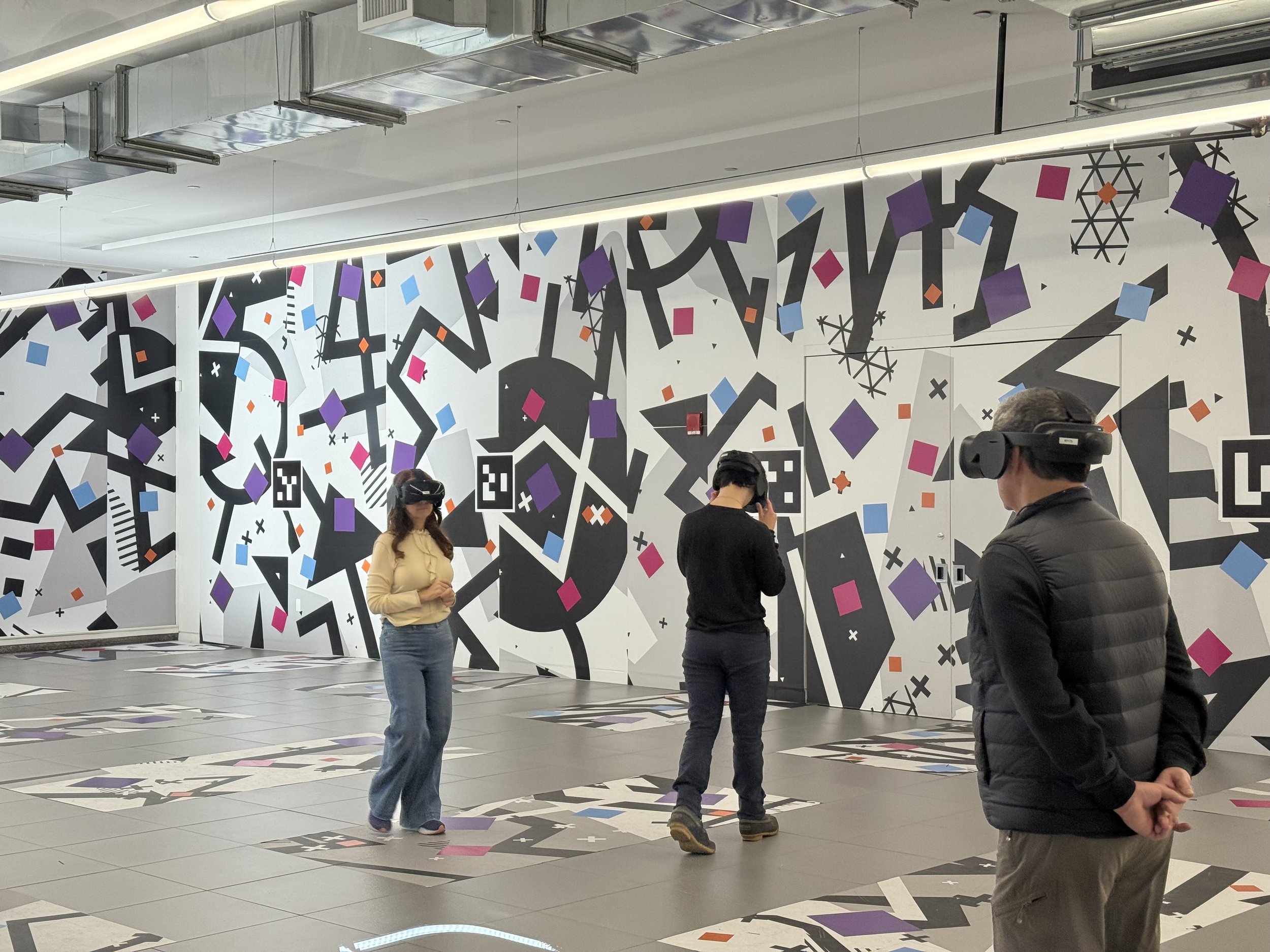
Duration: The VR experience lasts about 30 minutes. Allow 40 minutes total including registration and pre-entry briefing.
What to wear: Comfortable clothing is recommended. Avoid hats, caps, or bulky head accessories since you’ll be wearing a VR headset.
Lockers: Free lockers are available for personal belongings.
Booking: You can book online up to 3 months in advance. Tickets may be available on site, but booking ahead is recommended.
Age requirement: Participants must be at least 8 years old. Children under 8 are not permitted.
Health notice: The experience is not recommended for people with heart conditions or epilepsy.
Read next:
The Best Immersive Art Experiences in NYC this Winter
Immersive Art Experience: Mercer Labs
Immersive Art Experience: INTER_
We share works by digital artists as well as digital arts exhibitions, events, and open calls daily on Instagram — follow us for more and subscribe to our newsletter so you don’t miss new blog posts.



![Project Spotlight: pifmgr.dll’s [M]ETAL✨ @pifmgr.dll is a digital artist working at the intersection of audiovisual design, 3D experimentation, and atmospheric world-building. His project [M]ETAL explores metal both as a physical material and a](https://images.squarespace-cdn.com/content/v1/63b2fdbe4376de5bfdc6771f/1779108338452-QO04Q3MMJ3VMU8PJV1MD/image-asset.jpeg)