By Cansu Waldron
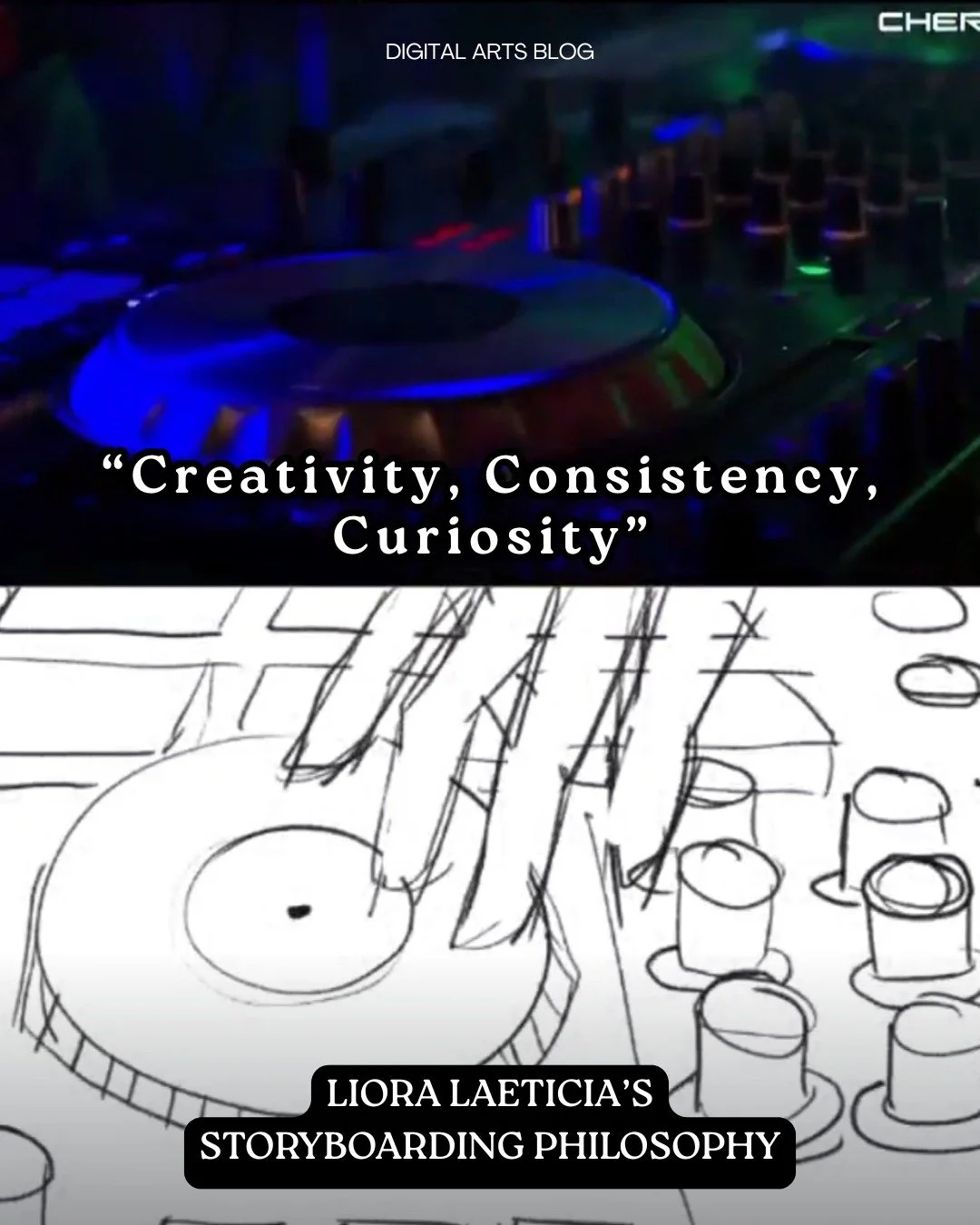
Liora Laeticia is a Jakarta-based Indonesian storyboard artist and illustrator who brings stories to life through dynamic visual storytelling. Working across brand commercials, illustration, and narrative media, she focuses on translating scripts into clear, expressive sequences that guide how a scene unfolds on screen. Her projects have included work for companies like Chery, Shopee, and Antam. At the heart of her practice is a simple principle she calls the “3C”: creativity, consistency, and curiosity — values that shape the way she approaches every storyboard and visual narrative.
Liora’s passion for storyboarding grew out of a deep interest in visual storytelling and the unique role storyboard artists play in shaping how stories are understood. For her, each project is an opportunity to interpret a script visually — experimenting with composition, pacing, and perspective to find the most effective way to communicate a scene. Outside of professional work, she also creates fan art inspired by SEGA characters, including the iconic Sonic the Hedgehog. One of her pieces, featuring Joe Musashi, was showcased at the SEGA ATLUS Festival SEA 2026 in Jakarta — an experience that reflects both her enthusiasm for gaming culture and her continued curiosity as a visual storyteller.
We asked Liora about her art, creative process, and inspirations.
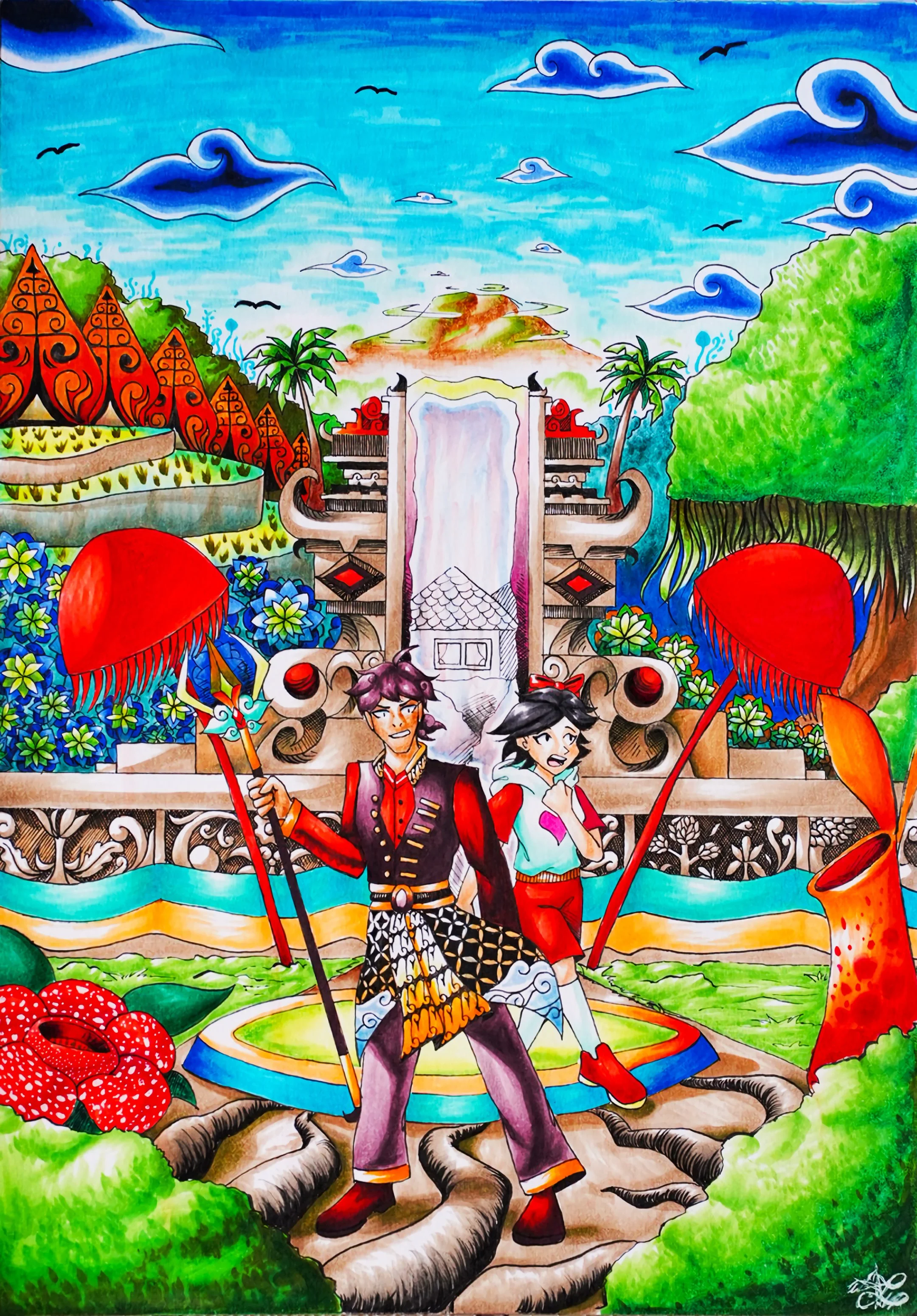
The Emerald Archipelago Nusantara for Copic Awards
Storyboard artists often work behind the scenes, yet they shape the entire visual narrative. What first drew you to storyboard art, and what keeps you passionate about it today?
What fascinates me about storyboard art in the first place and keeps me passionate till this day stems from my own interest in visual storytelling, which is a main aspect in creating a good storyboard. My job as a storyboard artist is to bring a scene to life through visuals that can help the viewers understand a story or scene, and each storyboard holds their own unique visual needs depending on what type of media it is or message being told.
To flesh out a script, it’s up to storyboard artists to explore with their creative freedom on how a scene can be interpreted, that way we can find the best suitable sequence to get the message across. It serves as an important guide for the Directors and Production team on how the visual is going to turn out. These aspects align with my own principles of being creative in each storyboard scene I make, consistent in the quality of the shots and styles of the production, and curious or being open to exploring themes, shots, and references to enrich my own skills in visual storytelling.
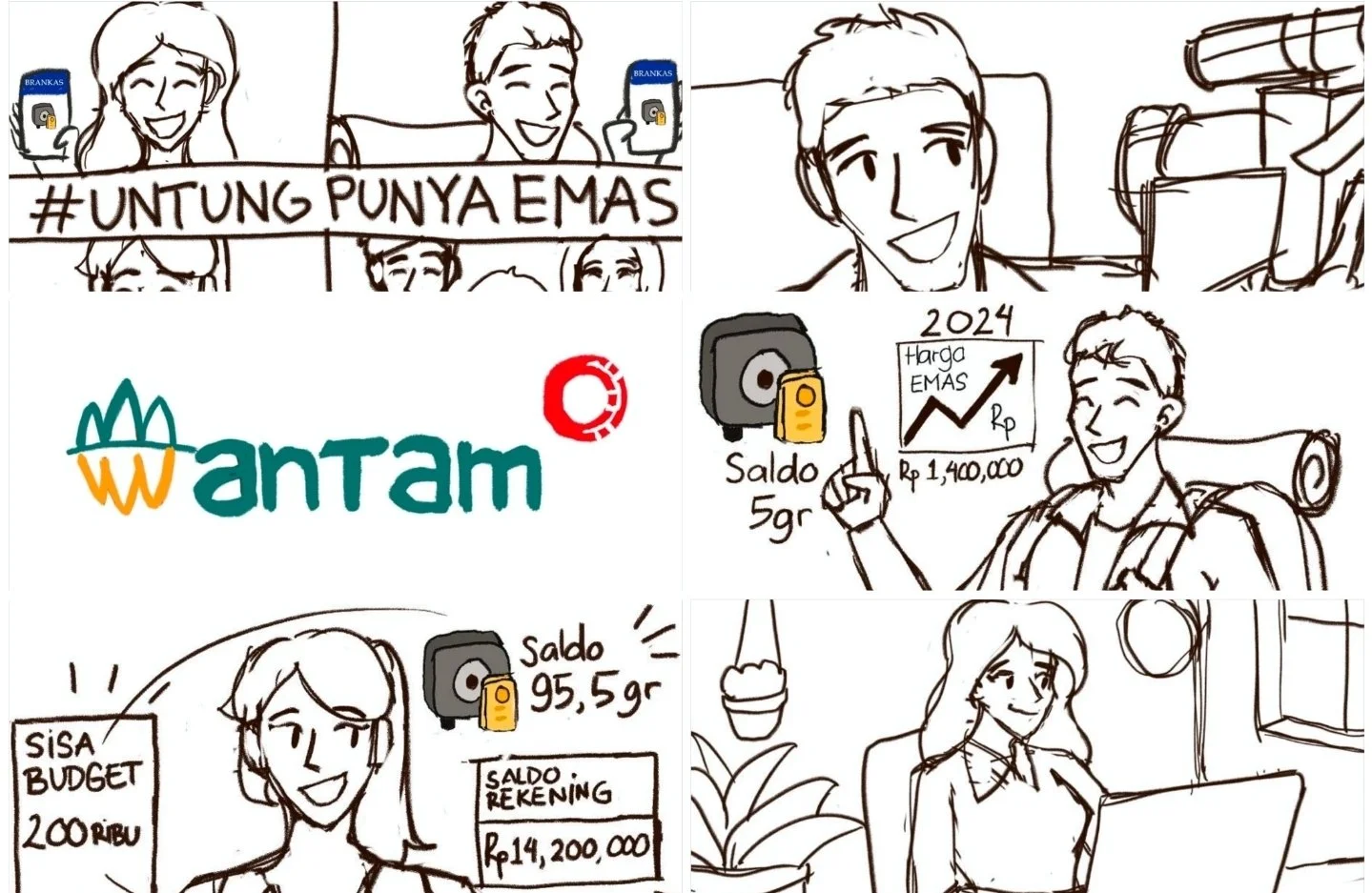
Antam Storyboard
You’ve worked on brand commercials for companies like Chery Motors, Shopee, and Antam. How does storytelling change when you’re working with a commercial brand versus a personal or illustrative project?
In a typical storyboard, the visual storytelling is used to enable the audience to understand the message or story its telling. Illustrative projects such as book covers, posters or illustrations focus on an image rather than a compact moving sequence, so visual storytelling elements that are used are more versatile in color, composition, design that could appeal at a glance to people, while understanding the message.
However for brand commercials, it is rather similar but the storytelling changes to get the brand identity of the featured product or company across, and making it relatable for their aimed market.
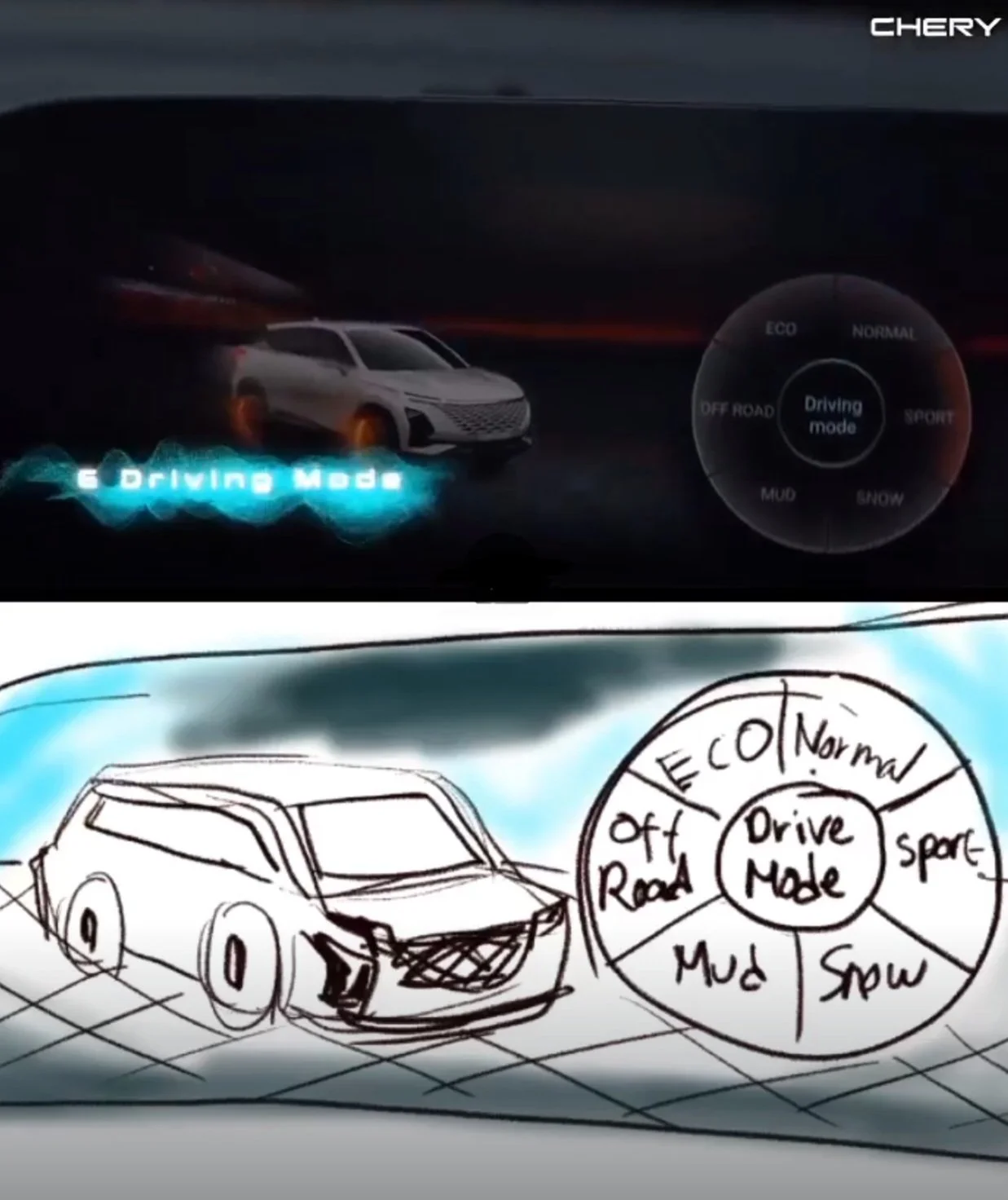
One of my favorite examples is the storyboard I had to work on for Chery Motors Indonesia for their new release of the Chery Omoda GT 5 car. It needed me to make the audience understand the features of the car and how it can be used for any occasion through different segments. In the storyboards, I explored various close up shots or even wide shots that can showcase the cars features while having different stories for each segment one showcasing day to day usage, night time use for late night drives, and nature outing purposes, then tie them together in the end to unify the whole sequence as if it were three friends meeting up.
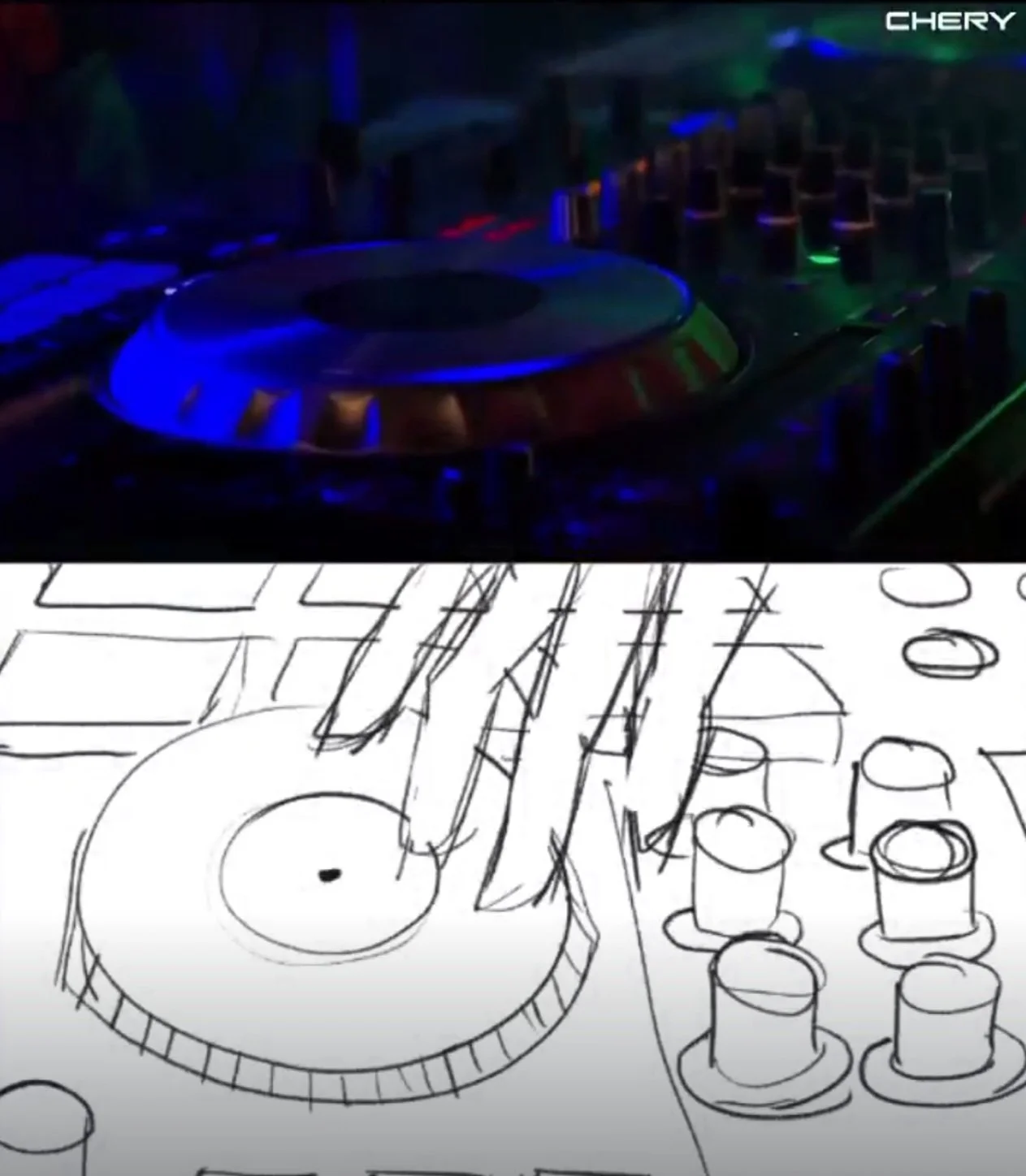
Chery Motors Storyboard Comparison
You describe your guiding principle as 3C: Creativity, Consistency, and Curiosity. How do these three ideas show up in your day-to-day creative process?
These three ideas show up in every aspect of my day-to-day creative process from starting to finishing an illustration or storyboard even when I’m practicing or improving my skills.
To be able to know how to draw something or have a large visual library that can help me come up with many ideas, I have to be curious in exploring or gaining new knowledge of something, and it applies not only on analyzing other artworks, but reading or watching any media while experiencing life in general through various activities that can be a source of our inspiration.
I also need to be consistent not only in the quality of works or artstyle I make, but in exercising things I’ve learnt daily even if it’s just for a short while, to make me understand how a certain thing works and improve on it.
Afterwards, I can be creative by applying what I’ve explored in a consistent quality and be curious to new ideas as I go along the way in making thumbnails, sketches, lineart and rendering in my creative process for finishing a piece.
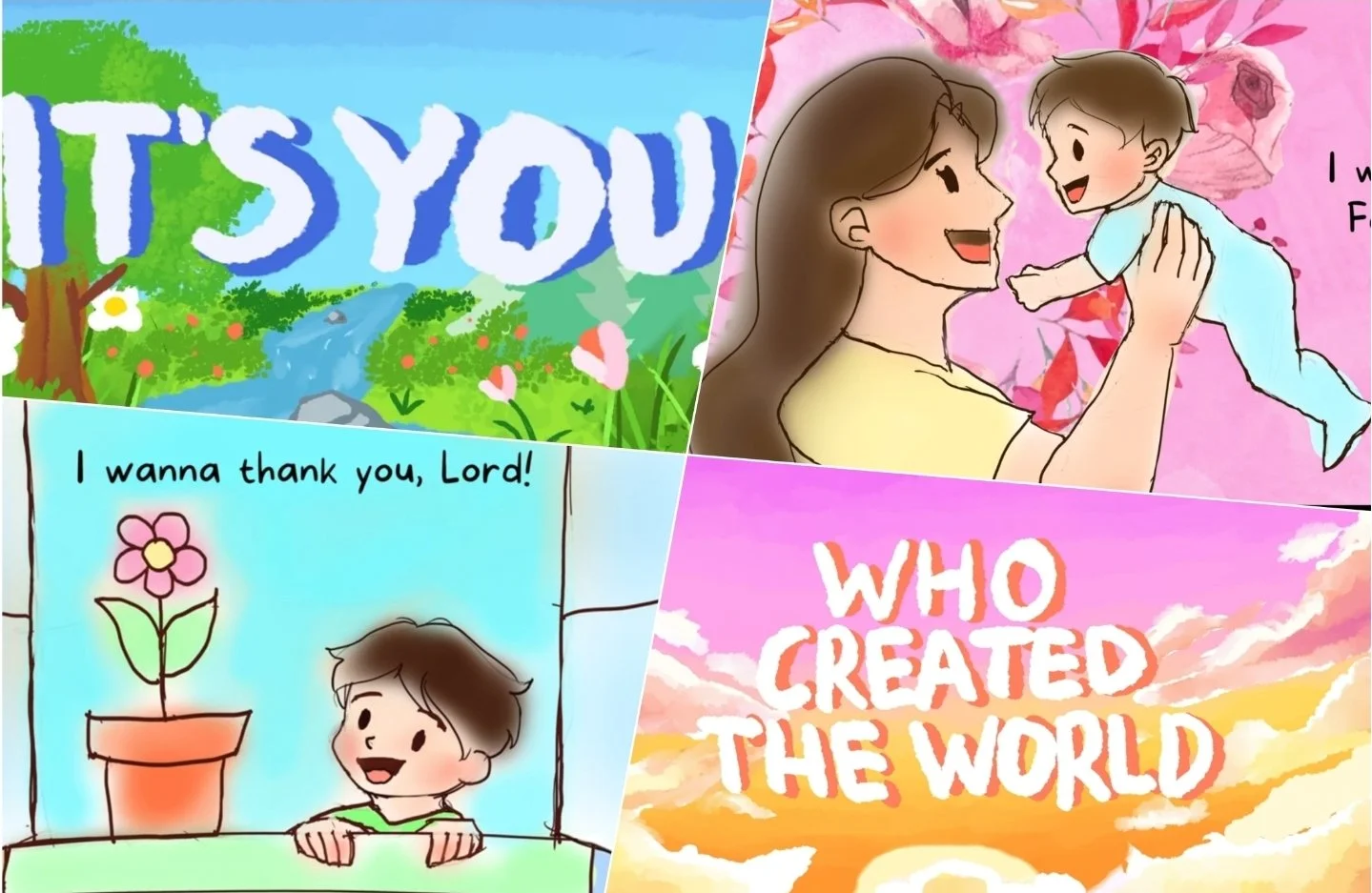
GKMI Worship visuals
Storyboarding requires translating scripts into clear visual sequences. What’s the most challenging part of turning written ideas into compelling visual narratives?
The most challenging part from turning scripts into visual sequences is making sure that each shot used is actionable and has compositions that don’t confuse the viewers or the production crew, while also keeping the same message as intended in the script. Another thing that is challenging is maintaining a consistent good quality for every board used in the storyboard whether it’s fixed proportions, perspectives, and many more.
One example for this is my storyboard on handling Shopee with many different segments for each of their features, needing different storyboards yet still having the same people and setting involved, therefore I have to keep everything from character designs and location settings consistent, especially with limited resource references of the actual location, so I have to be able to visualize how the settings would look from different angles. To minimize these challenges over the works I’ve done, 3C helps me a lot in overcoming them.
I make sure to thoroughly read through the script and establish what the core intentions of the story are, doing rechecks of continuity of each sequence, carefully visualizing or analyzing the location references, and avoiding overcomplicating shots.
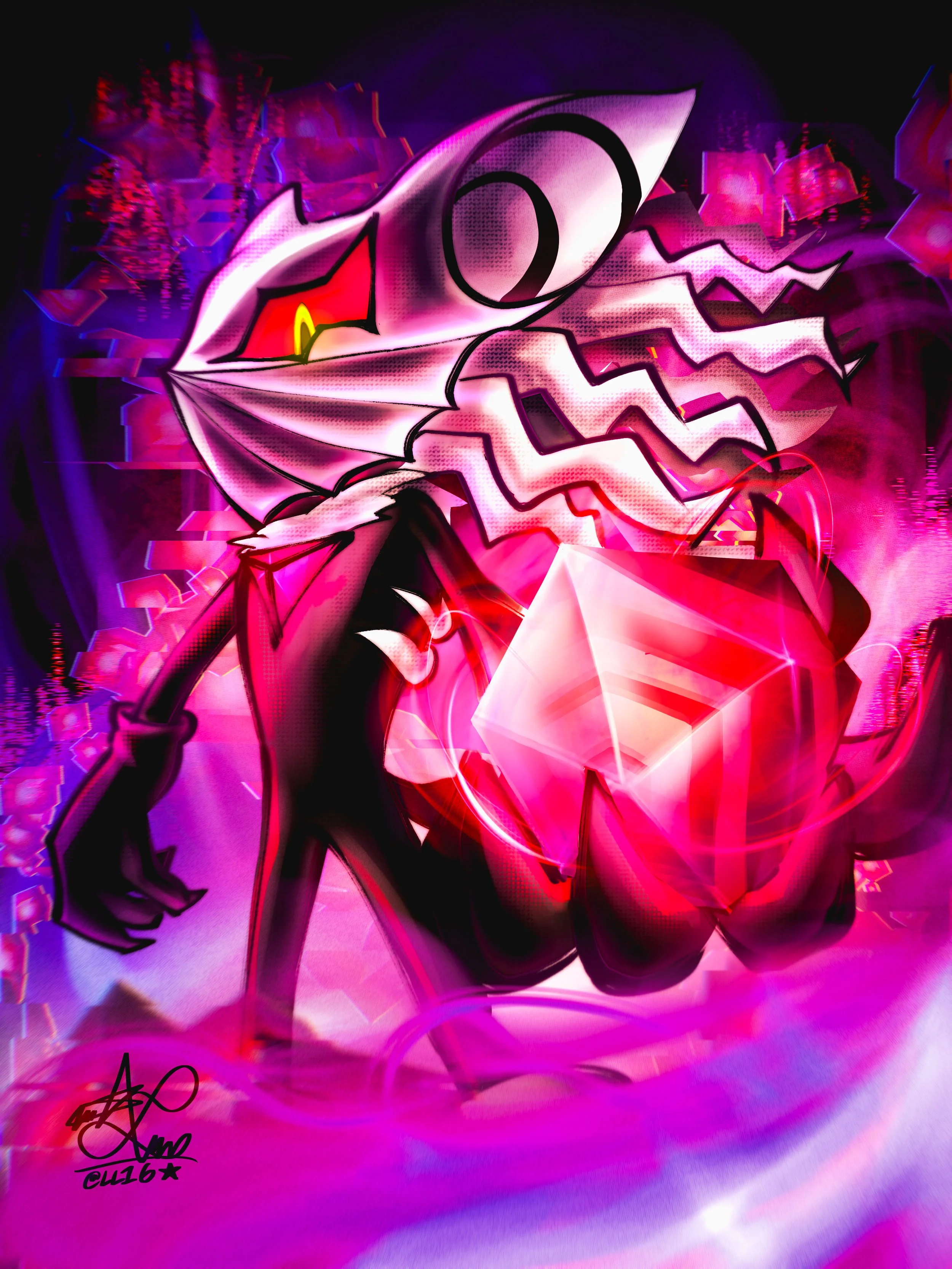
Infinite The Jackal Fanart
Working in Jakarta’s creative industry, how do you see the local illustration and animation scene evolving right now?
From my experience seeing what’s happening in Indonesia’s Creative Industry, it is having a significant growth and improvement, with Indonesia’s Creative Economy government focussing and supporting all kinds of art forms, including illustration, animation, video games and many more through additional funding programs, showcases, and galleries. They also provide free accessible workshops and seminars to spread awareness of how the animation industry works, or illustration classes to inspire and grow people's love for art especially for the younger generation.
A lot of Indonesian artists or works have gained huge success recently, one of them is the animated movie “Jumbo” by Ryan Andriandhy that manages to have releases outside of Indonesia, and collaborated with more than 400 local artists to make the movie. More art based communities are also thriving recently to support illustrators and animators alike, making more Indonesian people understand and appreciate art in many different forms.
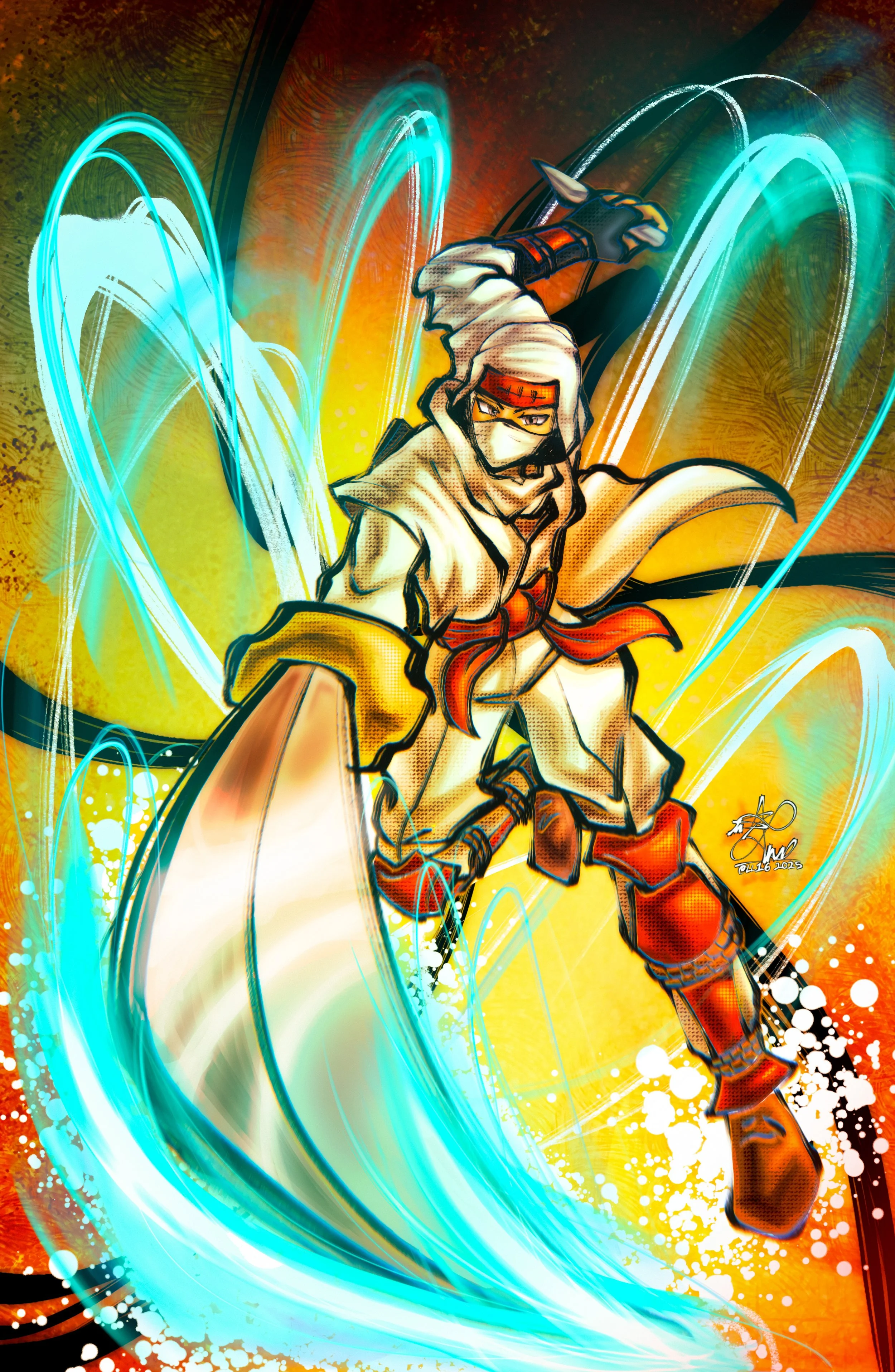
Joe Musashi from Shinibi Art of Vengeance Fanart
What else fills your time when you’re not creating art?
Whenever I’m not creating art I find myself reading books of all kinds, writing stories, watching behind the scene documentaries or watching movies and series I love of many genres especially Adventure and Scifi themed to keep my own references updated and explore more. I also love to sing and have done some recordings or gigs myself on the side. For physical activities, I would go for a run around the neighbourhood or practice my rollerblading daily.
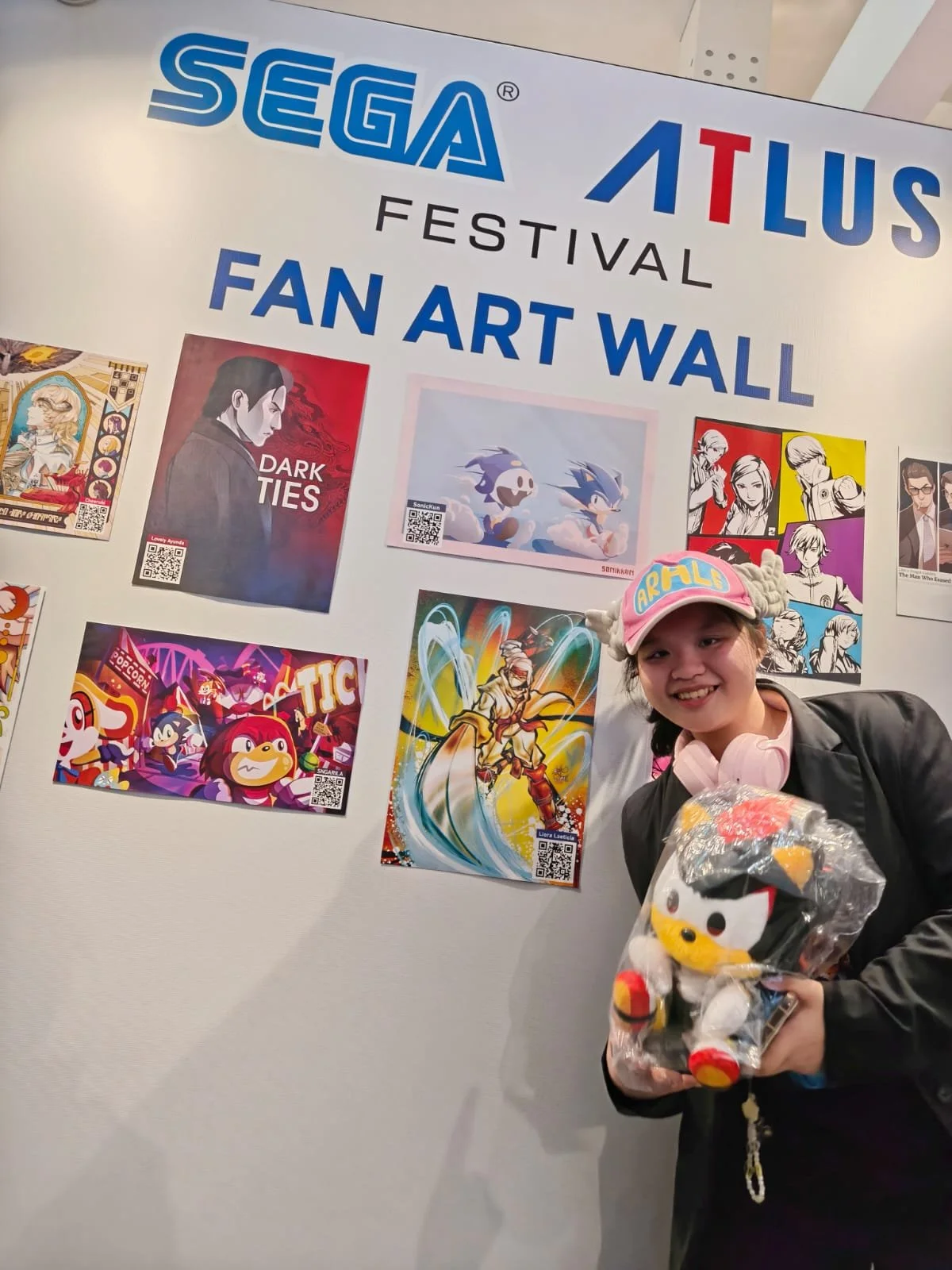
Sega Atlus Festival Art Gallery
What is a dream project you’d like to make one day?
I would like to work on a comic or visual graphic novel of my own one day with my own characters with their animated show too. Especially if those works are adventure or scifi related that are based on my own culture of Indonesia, so people outside of Indonesia can discover the beauty of our culture, nature and traditions more deeply. Seeing my works out there would make me very happy and hopefully through those, I can inspire more people to create things and love art.
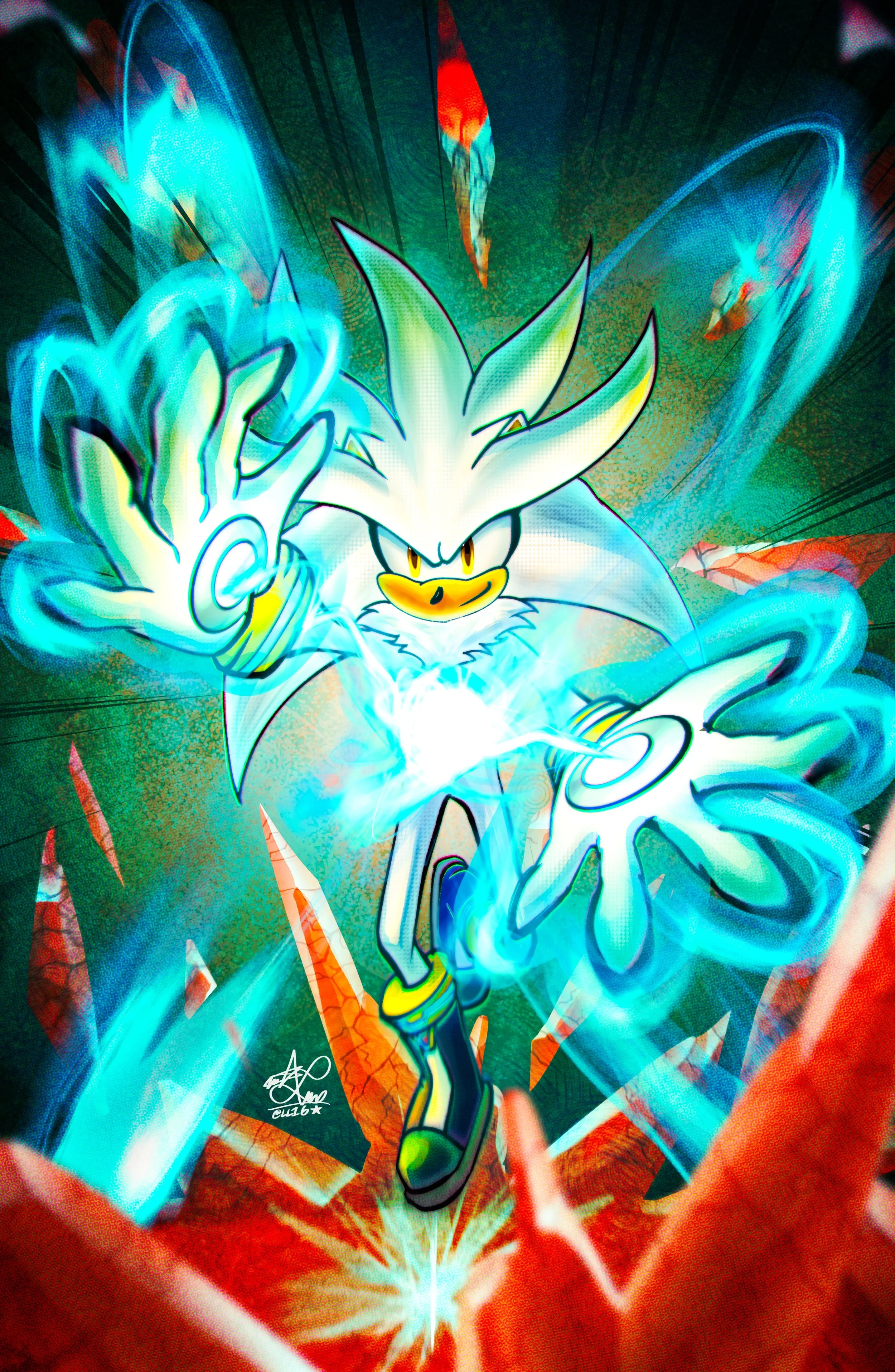
Silver The Hedgehog Fanart
Have there been any surprising or memorable responses to your work?
The most surprising and memorable responses of my works are from the recent SEGA ATLUS SEA 2026 Festival, where my artwork of Joe Musashi from Shinobi Art of Vengeance got chosen by SEGA Southeast Asia to be displayed amongst 24 other artists from all of Southeast Asia. This event was SEGA’s very first event held in Indonesia and to celebrate Sonic Racing Crossworlds Asia Tour.
Many people congratulated and loved the work even people from SEGA themselves were very happy, one of which is Justin Scarpone, SEGA’s Global Head of Transmedia who loved the artwork of Joe Musashi as well. I got to meet amazing well known youtubers from Indonesia named Luthfi Halimawan, David Beat and Miawaug who also expressed their amazement for my artwork.
Having my artwork displayed there was like a childhood dream come true, and it motivates me even more to keep creating with joy and learning new things for my art. Till this day I’m very thankful for every opportunity and appreciation I have gotten so far, I’m ever grateful for my family and friends that have supported me along the way, I hope I can keep making people happy whenever they see my artworks.

What is a profound childhood memory?
One of the most profound childhood memories is having my late dad teach me how to draw, and telling stories with him together. He is my very first inspiration when it comes to drawing and making art, he taught me all the fundamentals I needed, while supporting me throughout my art journey. I’d go to movie theatres or musicals to watch with him, and I was first introduced to animated movies and storyboards from him as well.
Those days made me realize how I have to be genuine and passionate in every artwork I make to get each story across, and make them feel more “alive”. As a child, I also love having weekly mini “art galleries” of my own in the family’s living room showcasing all my crayon like drawings, but little did my younger self know that it would come true one day in the future.
Chery Omoda Storyboard Comparison
Are you our next spotlight artist? Submit the form to apply to be featured!
We share works by digital artists as well as digital arts exhibitions, events, and open calls daily on Instagram — follow us for more and subscribe to our newsletter so you don’t miss new blog posts.

![Project Spotlight: pifmgr.dll’s [M]ETAL✨ @pifmgr.dll is a digital artist working at the intersection of audiovisual design, 3D experimentation, and atmospheric world-building. His project [M]ETAL explores metal both as a physical material and a](https://images.squarespace-cdn.com/content/v1/63b2fdbe4376de5bfdc6771f/1779108338452-QO04Q3MMJ3VMU8PJV1MD/image-asset.jpeg)