By Cansu Waldron
Natalia Titova is a digital artist specializing in literary-inspired digital collages. Since beginning her artistic practice in 2022, she has been developing a distinctive visual language shaped by her lifelong fascination with writers, their texts, and the emotional landscapes they create. Drawing on her background as a graphic designer, she embraces the freedom of pixels — a space without physical limits, where ideas can unfold, shift, and transform.
Her work explores the intimate dialogue between literature and personal imagination, translating the emotional undercurrents of reading into layered visual forms. Russian classics remain a steady source of inspiration, informing her poetic, atmospheric approach. Through her collages, Natalia examines how stories travel across time, how texts resonate differently with each reader, and how literature can become a catalyst for new creative worlds.
We asked Natalia about her art, creative process, and inspirations.
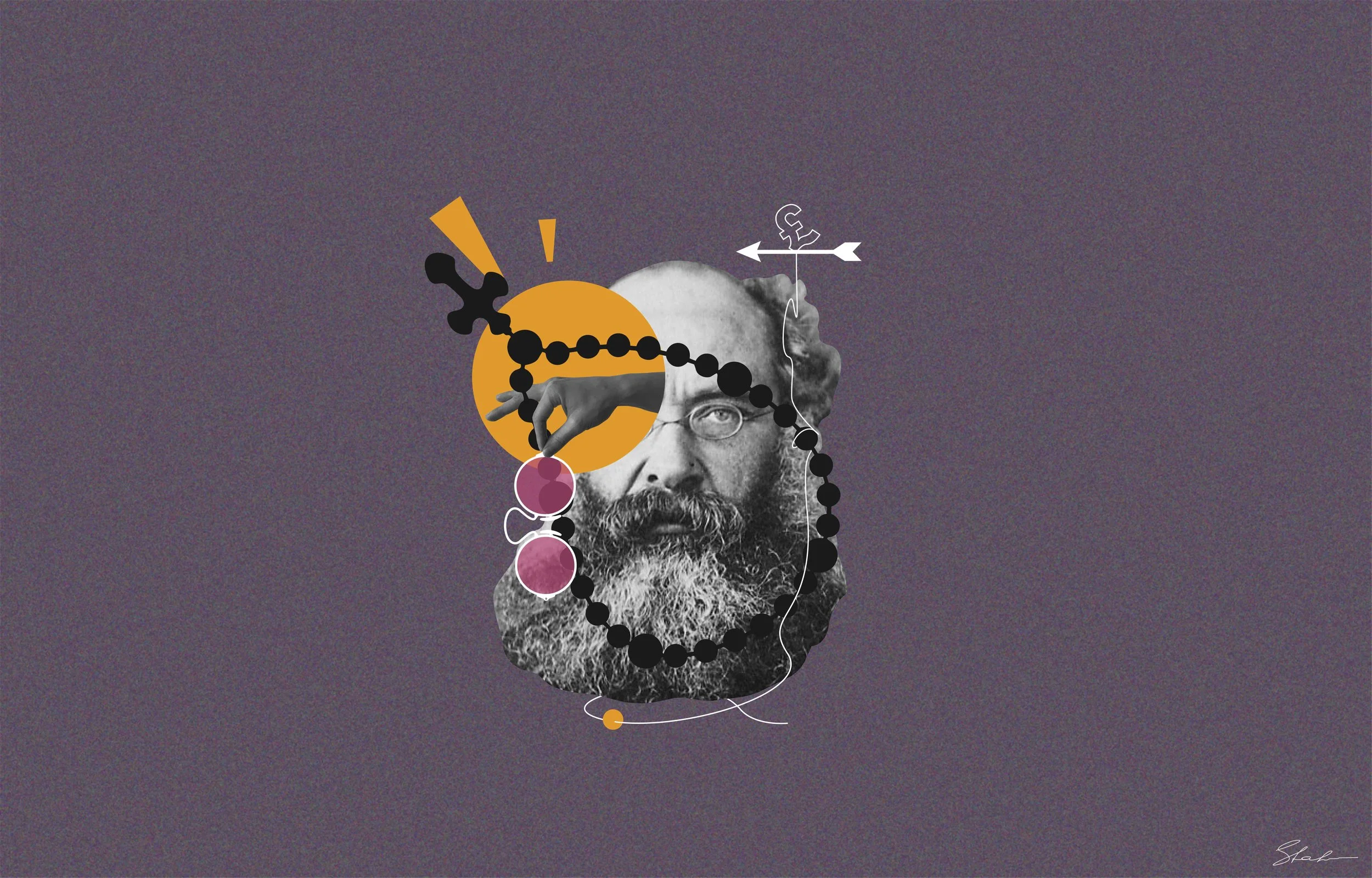
Natalia Titova, Anthony Trollope
Can you tell us about your background as a digital artist? How did you get started in this field?
Before reaching that important moment, I had been working as a graphic designer for several years, and a laptop had long been my main working instrument — something I genuinely loved. Creating on a borderless digital canvas gives you so much freedom. You can experiment without physical limitations, explore ideas more boldly, and let the work evolve in unexpected ways. That sense of openness and possibility was what drew me into digital art.
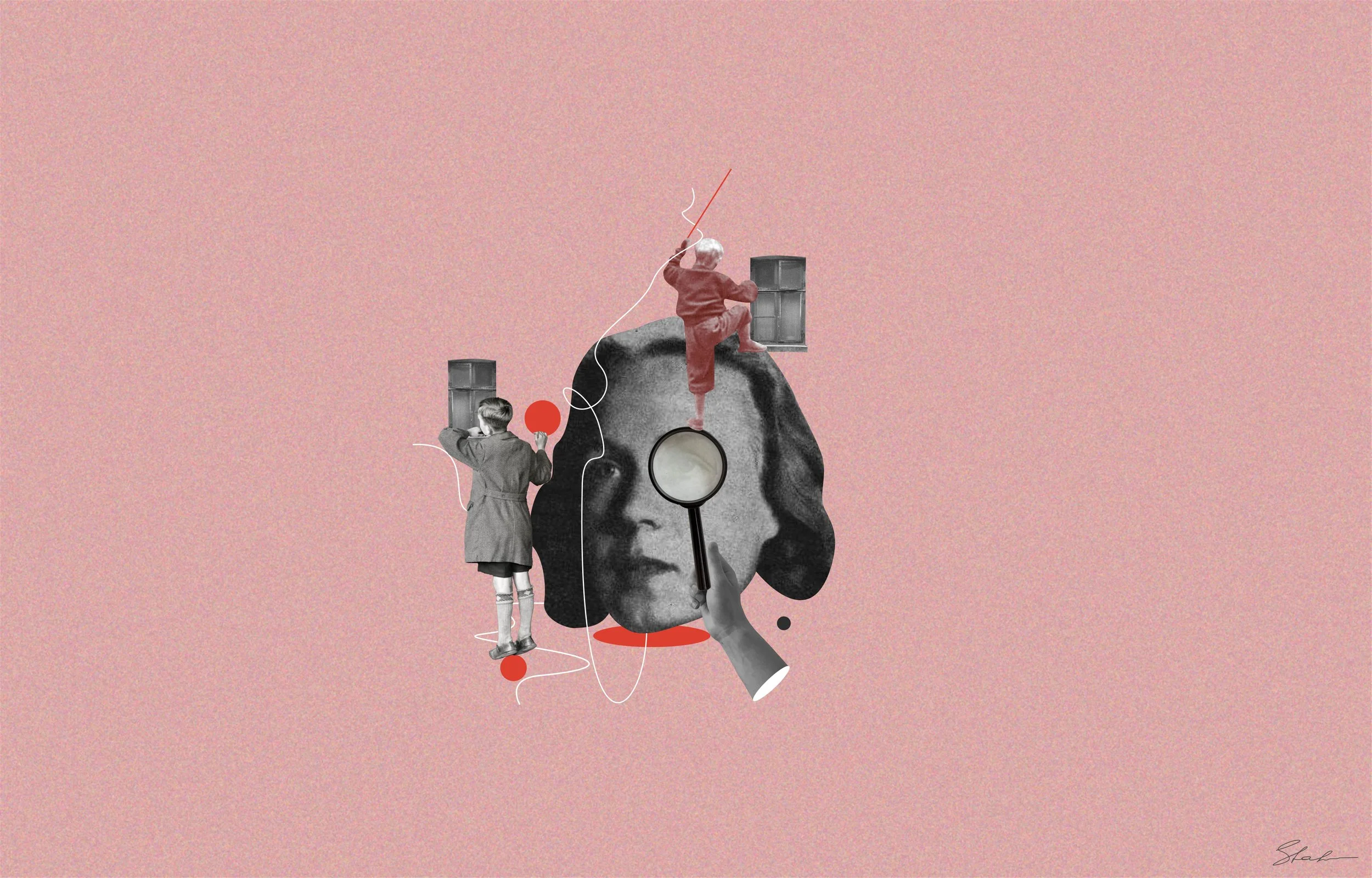
Natalia Titova, Childhood
What first sparked your desire to translate literature into visual form?
At some point, I found myself with an overwhelming desire to depict the emotions I experienced while reading — to translate that deeply personal interpretation into something new, a visual form born from the text. I believe each of us has our own emotional journey when we read, and that makes the act of reading unique and intimate. I love combining those personal emotions with the author’s ideas, creating a dialogue between the text and my own imagination.
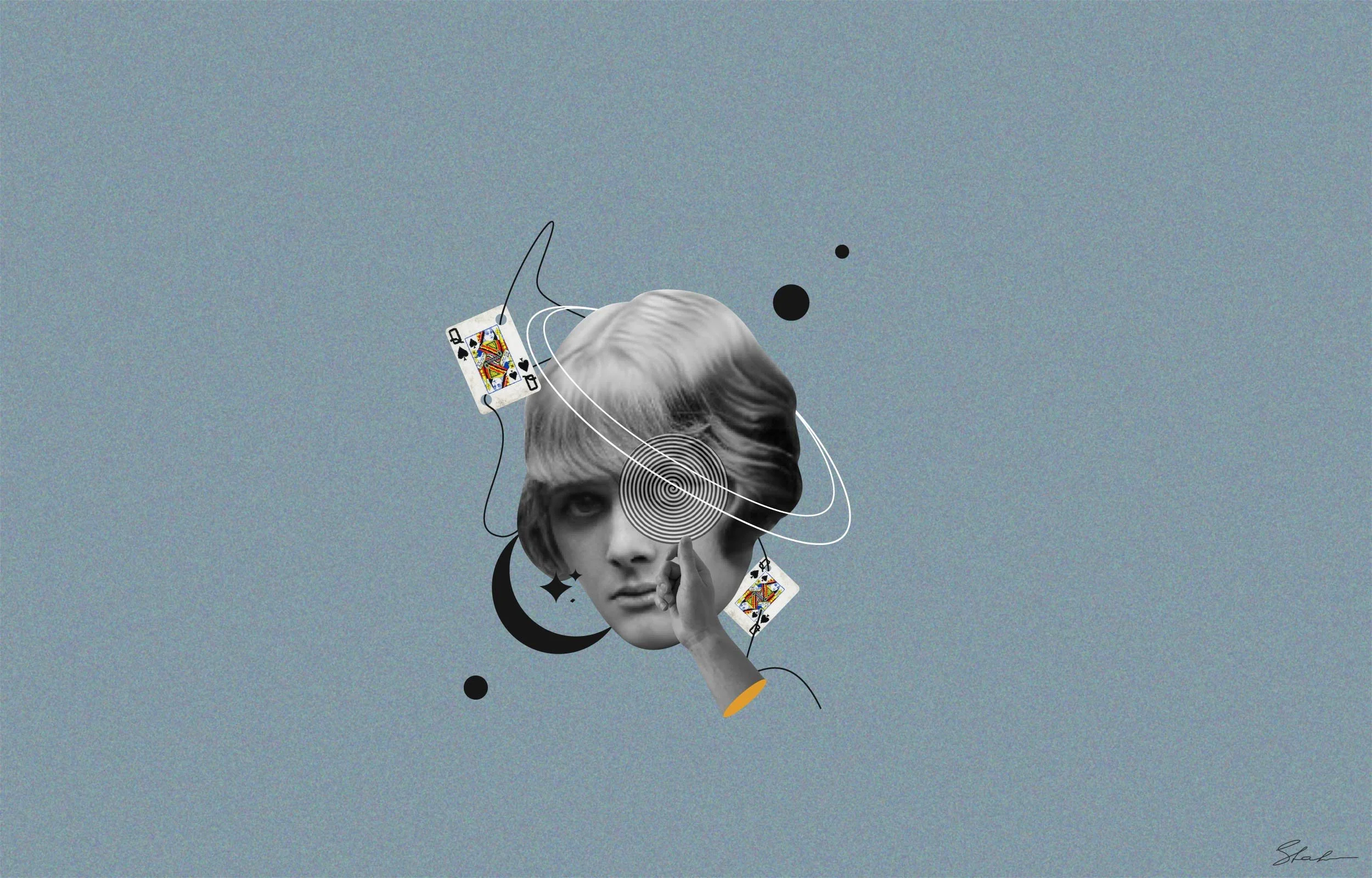
Natalia Titova, Dame Daphne du Maurier
Was there a specific book, writer, or moment that made you think, “I want to make art about this”? And has your relationship to reading changed since you started treating literature as raw artistic material?
I wouldn’t say there was just one particular book. The idea had been growing inside me for quite some time, and eventually it simply took shape. Russian classics have inspired me all my life — they are dense, wistful, and somehow manage to speak through centuries. Since I began treating literature as creative material, reading has become even more layered: it’s no longer just about following a story but about sensing shapes, textures, and visual metaphors within it.
Are there authors you return to again and again for inspiration?
I return to the classics. The greatest minds of all time always offer something new — a spark, an insight, a feeling you haven’t noticed before. Their themes are timeless, and human emotions haven’t changed in their essence. Each rereading feels like rediscovering an old friend who still has something important to say.
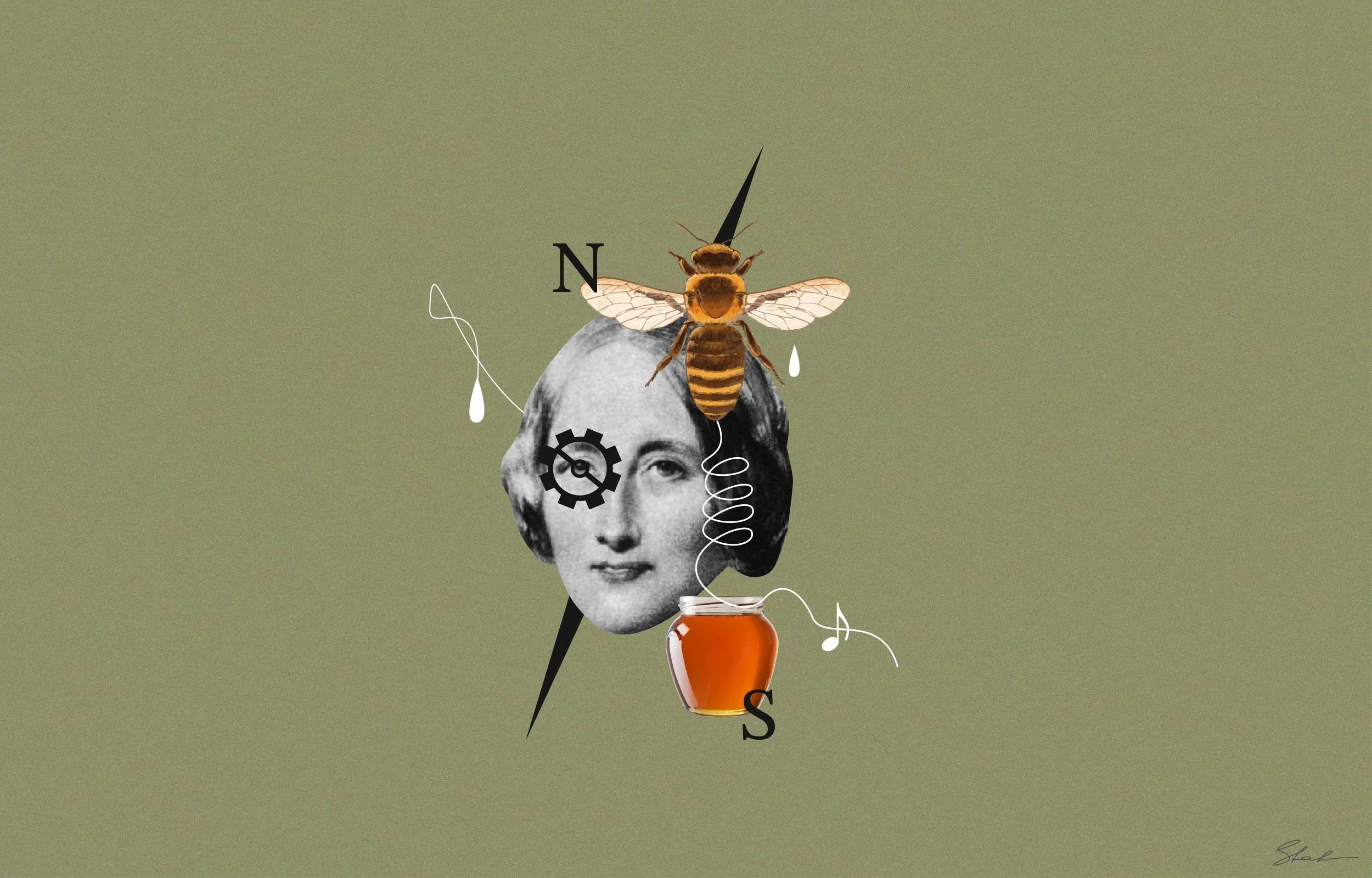
Natalia Titova, Elizabeth Gaskell
Can you tell us about some of your favorite pieces or a past or upcoming project? What makes them special to you?
One of my recent series is dedicated to Virginia Woolf. In these collages, I used water as the central element — both the source of creation and the source of destruction. Water carries ideas, memories, and inspiration, but it can also overwhelm; you can lose yourself in its infinity. For me, this series is a reminder not to drown in the depths, even when those depths are your own talent or imagination. It’s a very personal dialogue with Woolf and her inner currents.
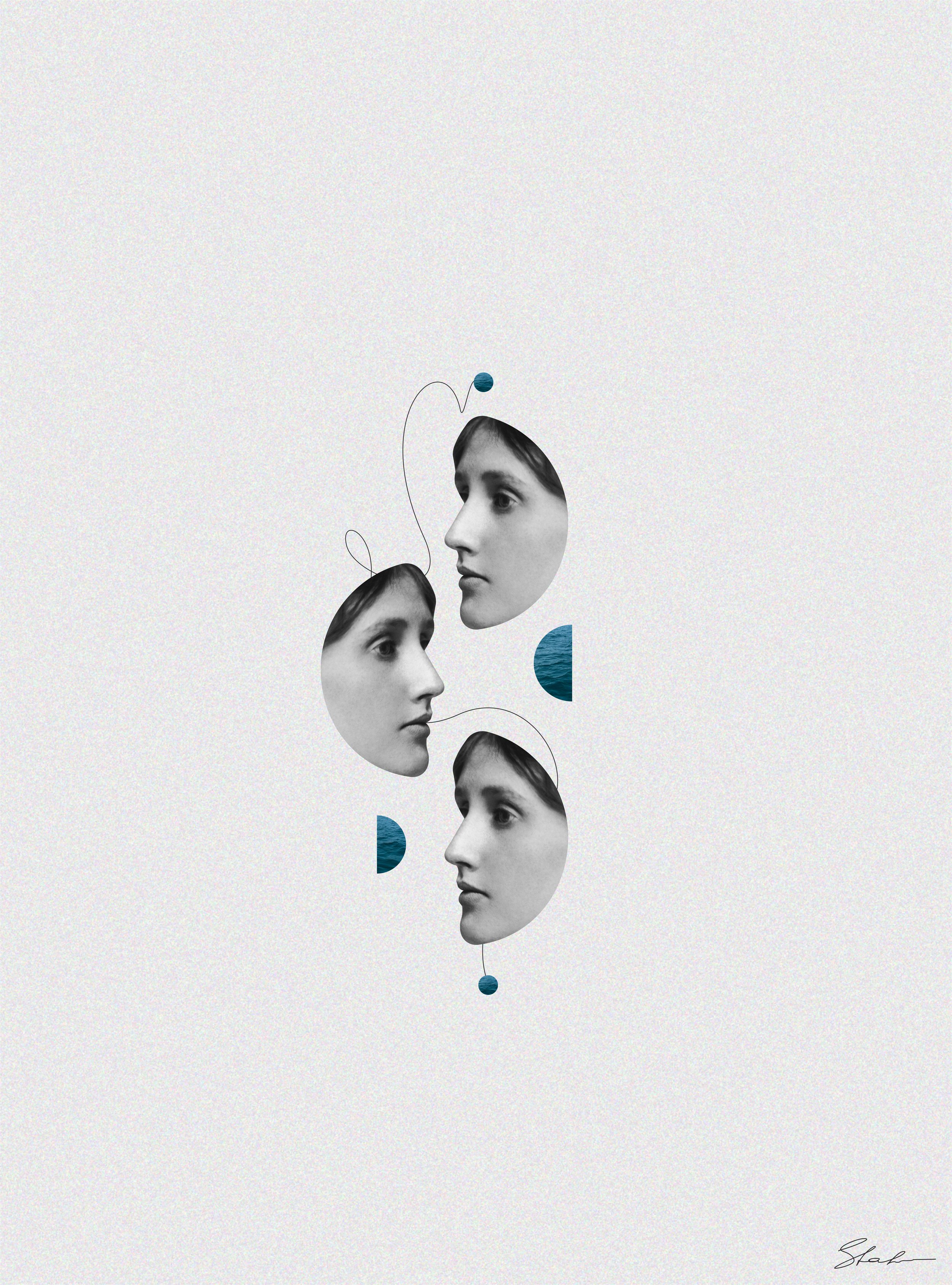
Natalia Titova, Virginia Woolf
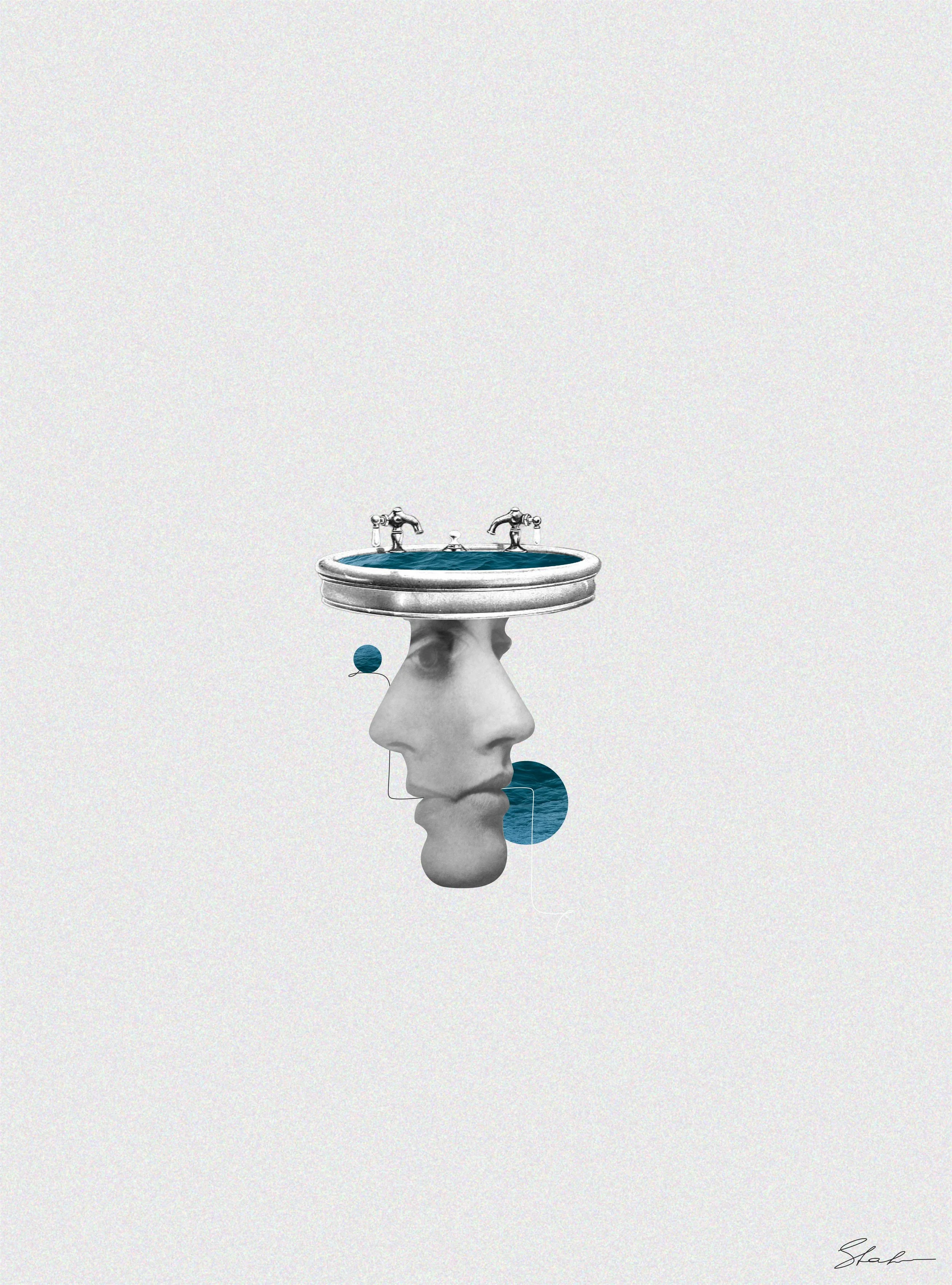
Natalia Titova, Virginia Woolf
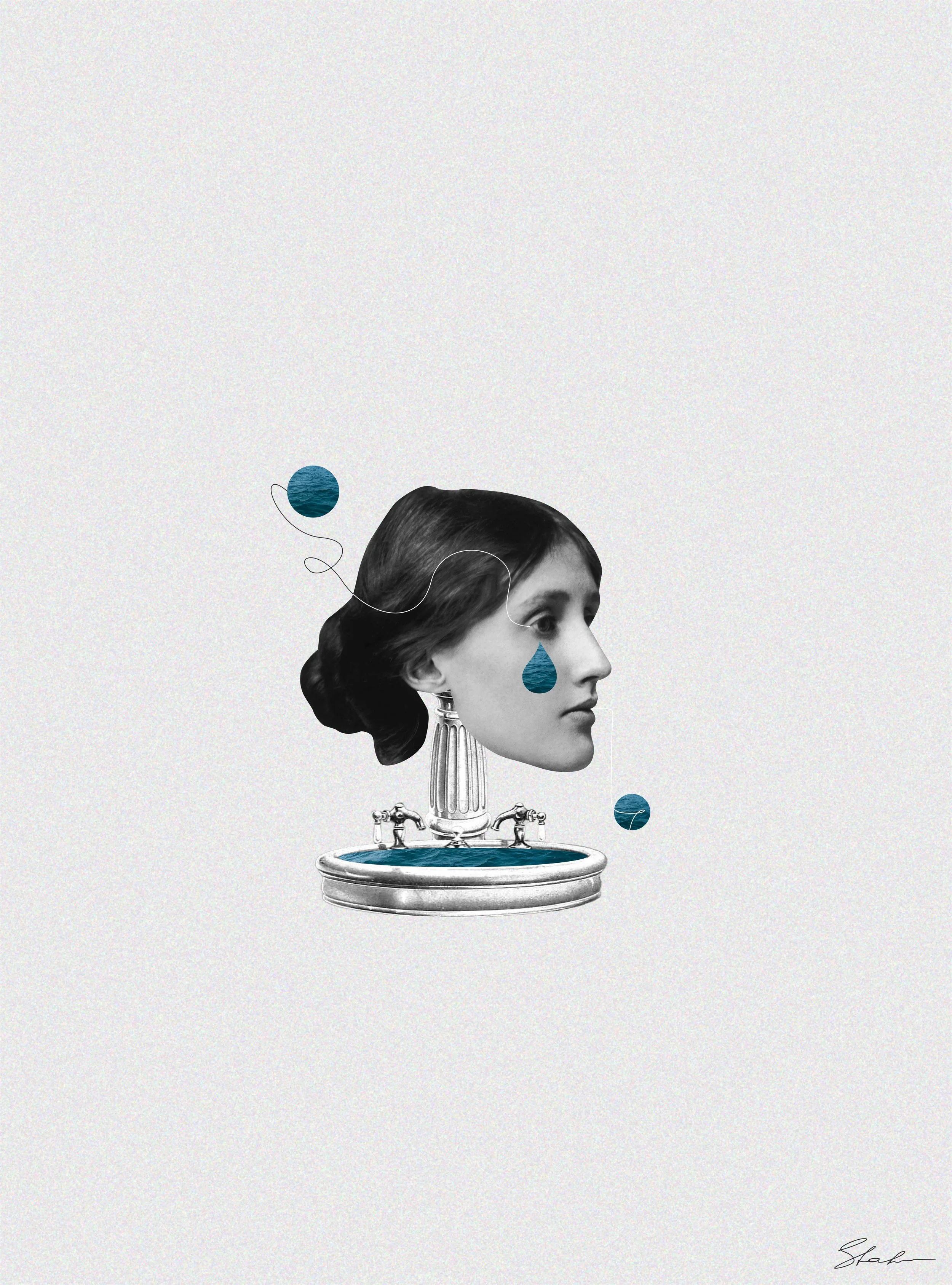
Natalia Titova, Virginia Woolf
What role does digital manipulation play in your work compared to traditional collage techniques?
Digital manipulation gives me the freedom to work with precision and fluidity that traditional techniques can’t always offer. It lets me adjust the smallest details, explore multiple versions of the same idea, and experiment with scale, rhythm, and structure without losing the spontaneity of collage. At the same time, I try to keep the tactile feeling of traditional collage alive — the textures, the layering, the sense of something crafted by hand.
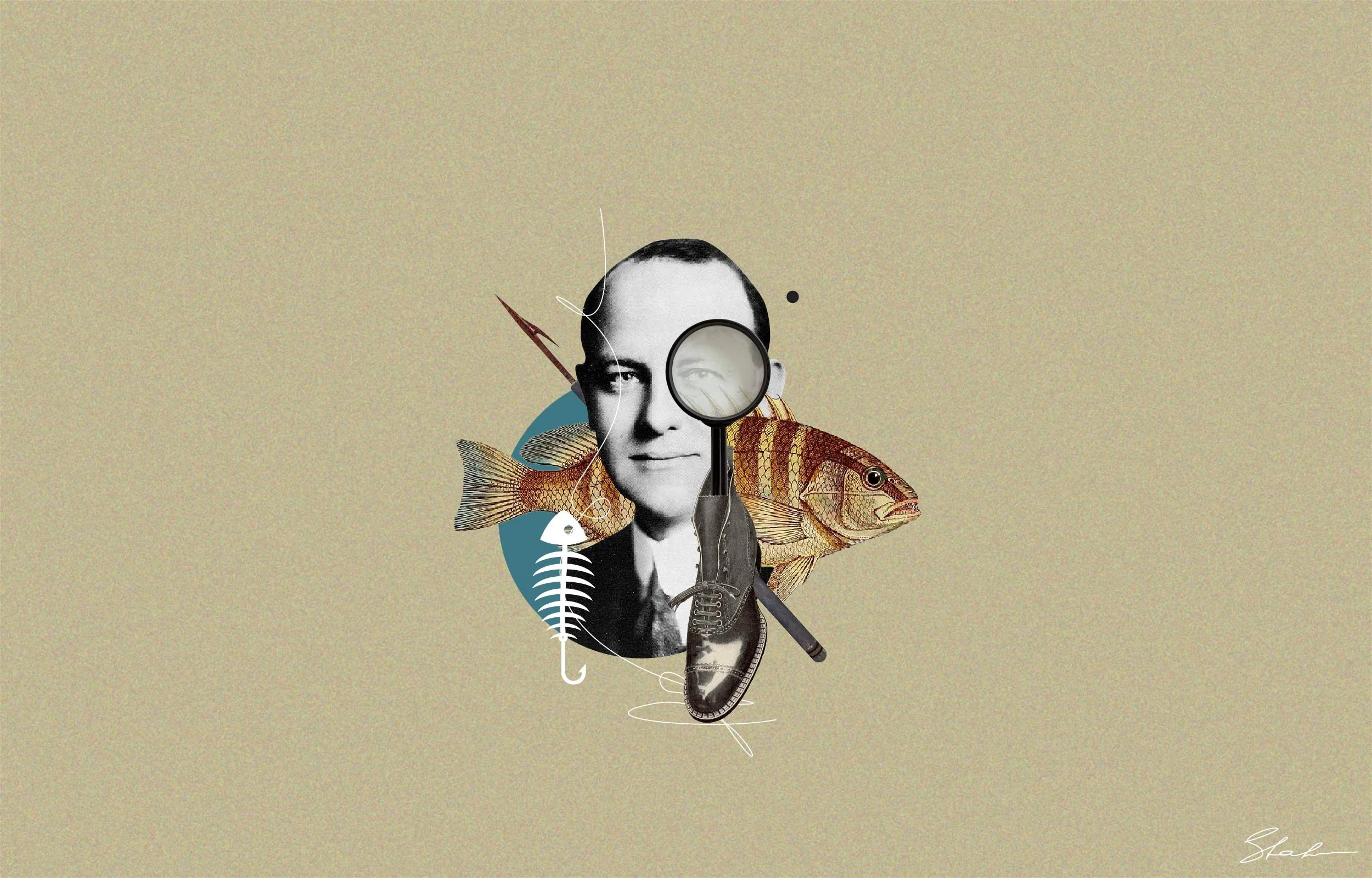
Natalia Titova, P. G. Wodehouse
What do you hope viewers take away from your art? Are there any messages or emotions you aim to convey?
Through my art, I try to remind people to slow down. We’re always rushing somewhere, always in a hurry, and sometimes we simply need to pause. Literature teaches us this too — that you need time to enter a story, to sit with its emotions, to notice what lies between the lines. I hope my work creates a similar space for reflection: a moment to reconnect with one’s inner world, with the feelings a book evokes, and with the things that truly matter. If a collage makes someone reconsider a feeling, a memory, or even rediscover a book, that would be very meaningful to me.
Are there any new themes, techniques, or authors you're excited to explore in your upcoming work?
Lately, I’ve begun a series inspired by Franz Kafka. I’m exploring the themes of loneliness, refuge, and loss that run through his writing — especially his sense of being small and unseen within an overwhelming world and an indifferent state. I’m trying to translate that quiet despair and the feeling of being trapped in something vast and impersonal into visual form. Through these collages, I want to reflect the tension between isolation and the search for meaning, and to share the emotional stories his work continues to awaken in me.
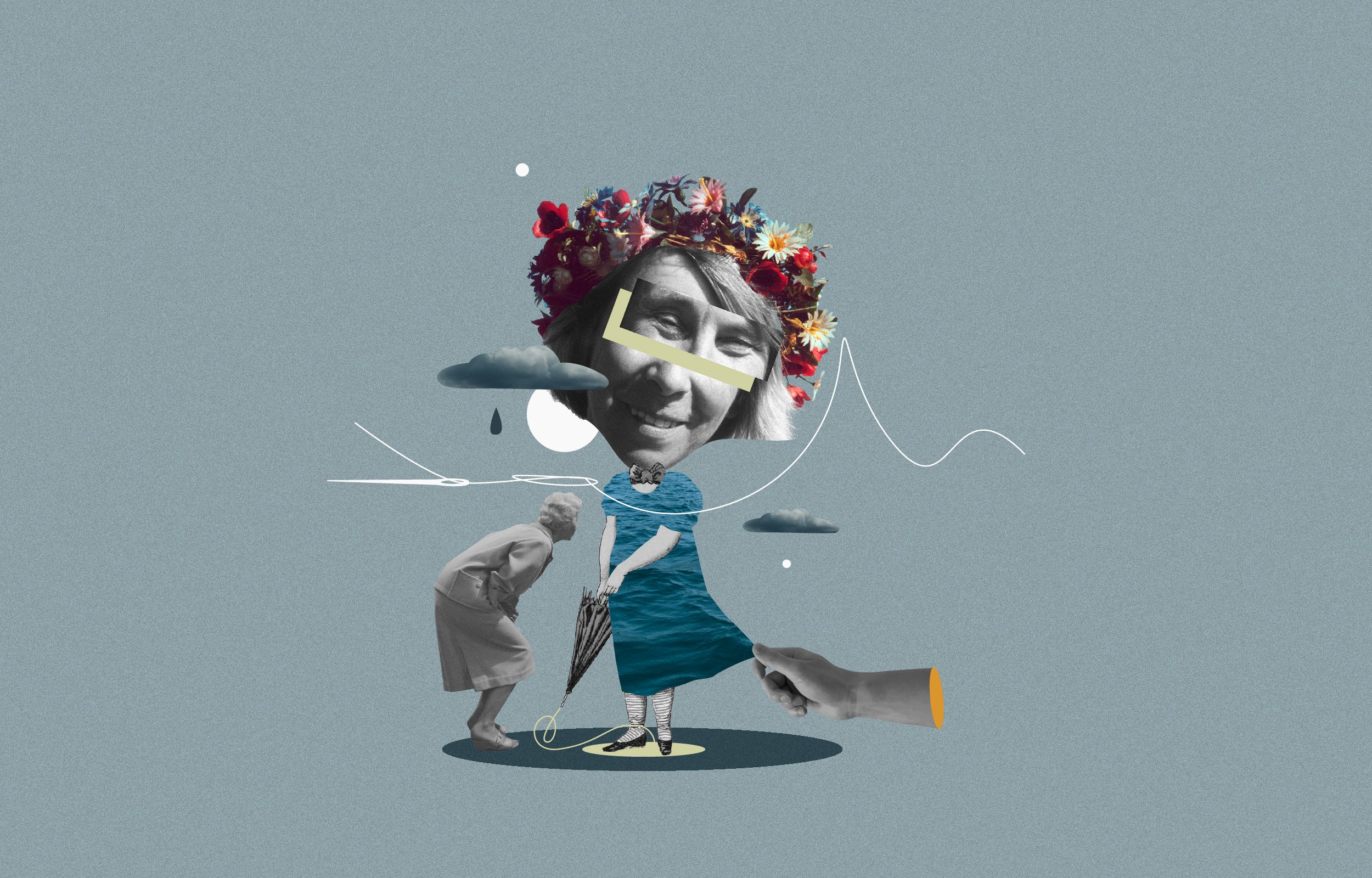
Natalia Titova, Tove Ditlevsen
Are you our next spotlight artist? Submit the form to apply to be featured!
We share works by digital artists as well as digital arts exhibitions, events, and open calls daily on Instagram — follow us for more and subscribe to our newsletter so you don’t miss new blog posts.
![Project Spotlight: pifmgr.dll’s [M]ETAL✨ @pifmgr.dll is a digital artist working at the intersection of audiovisual design, 3D experimentation, and atmospheric world-building. His project [M]ETAL explores metal both as a physical material and a](https://images.squarespace-cdn.com/content/v1/63b2fdbe4376de5bfdc6771f/1779108338452-QO04Q3MMJ3VMU8PJV1MD/image-asset.jpeg)