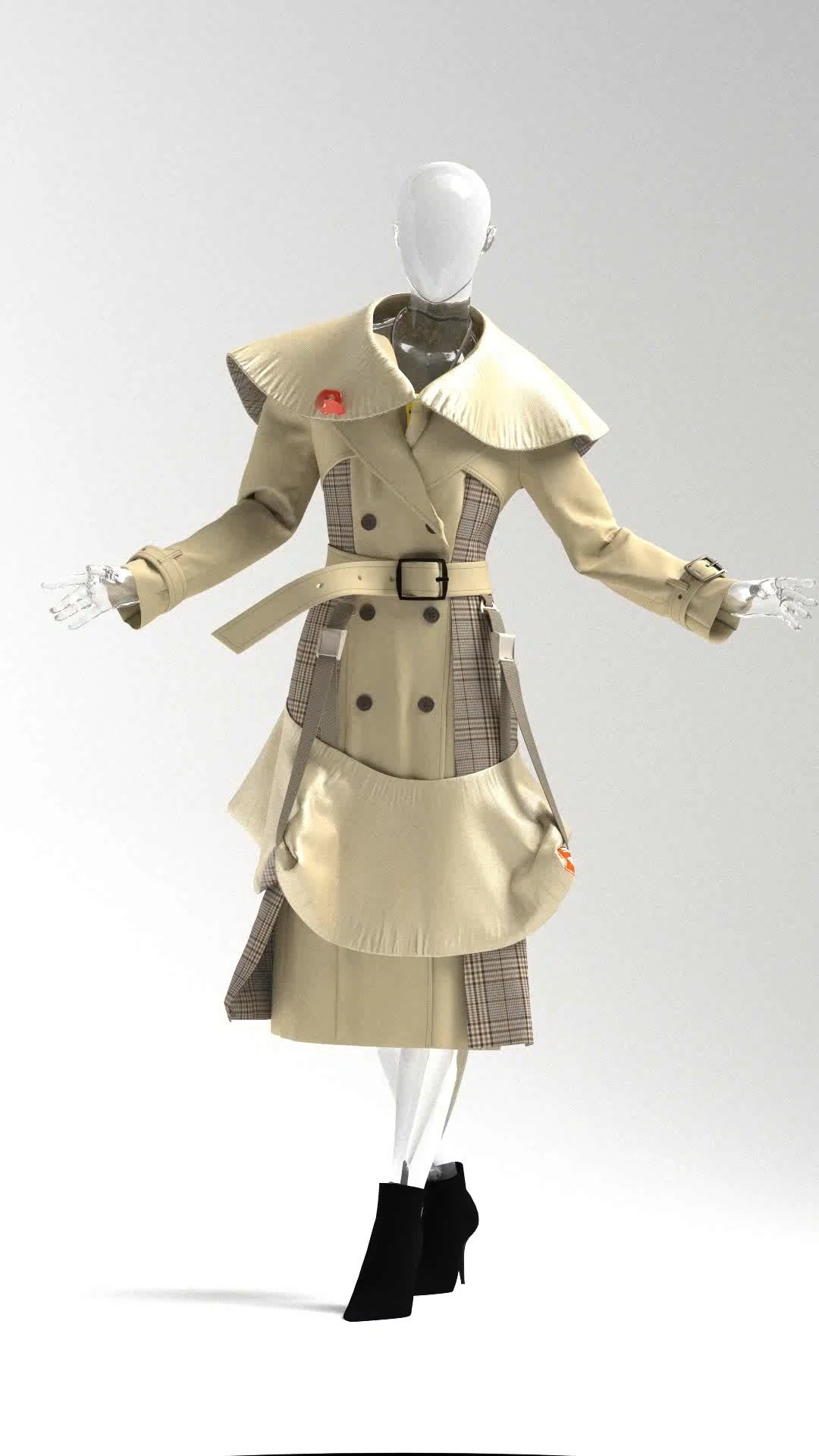
Giving Error a Body: Natascia Menegatti on RGB_N.E.AtA
By Cansu Waldron
Natascia Menegatti is a multidisciplinary artist and creative director whose research-based practice moves between art, fashion, costume design, and visual experimentation. Her work explores the relationship between the body, matter, memory, and technology, often using the tools and processes themselves as a way to investigate these connections. By translating real-life stories and communication projects into dreamlike visual narratives, she creates work where strategy, material, and creative direction come together in constantly evolving ways.
This approach is reflected in RGB_N.E.AtA, a collaborative video work directed by Menegatti and Riccardo Chiarini that brings together costume, digital art, performance, and sound. Created as a continuation of the video Varese tra le stelle e i laghi (Between Stars and Lakes), the work begins where its predecessor ends, using RGB as a conceptual framework for a dialogue between nature and matter, light and energy, and acoustics and sound. With costumes by Menegatti, digital art by Edoardo Massenza Milani, performance by Jelena Savic, and music by Access to Arasaka, the project brings these distinct languages together to explore a transition between the physical and digital.
We asked Natascia about RGB_N.E.AtA, her creative process, and inspirations.
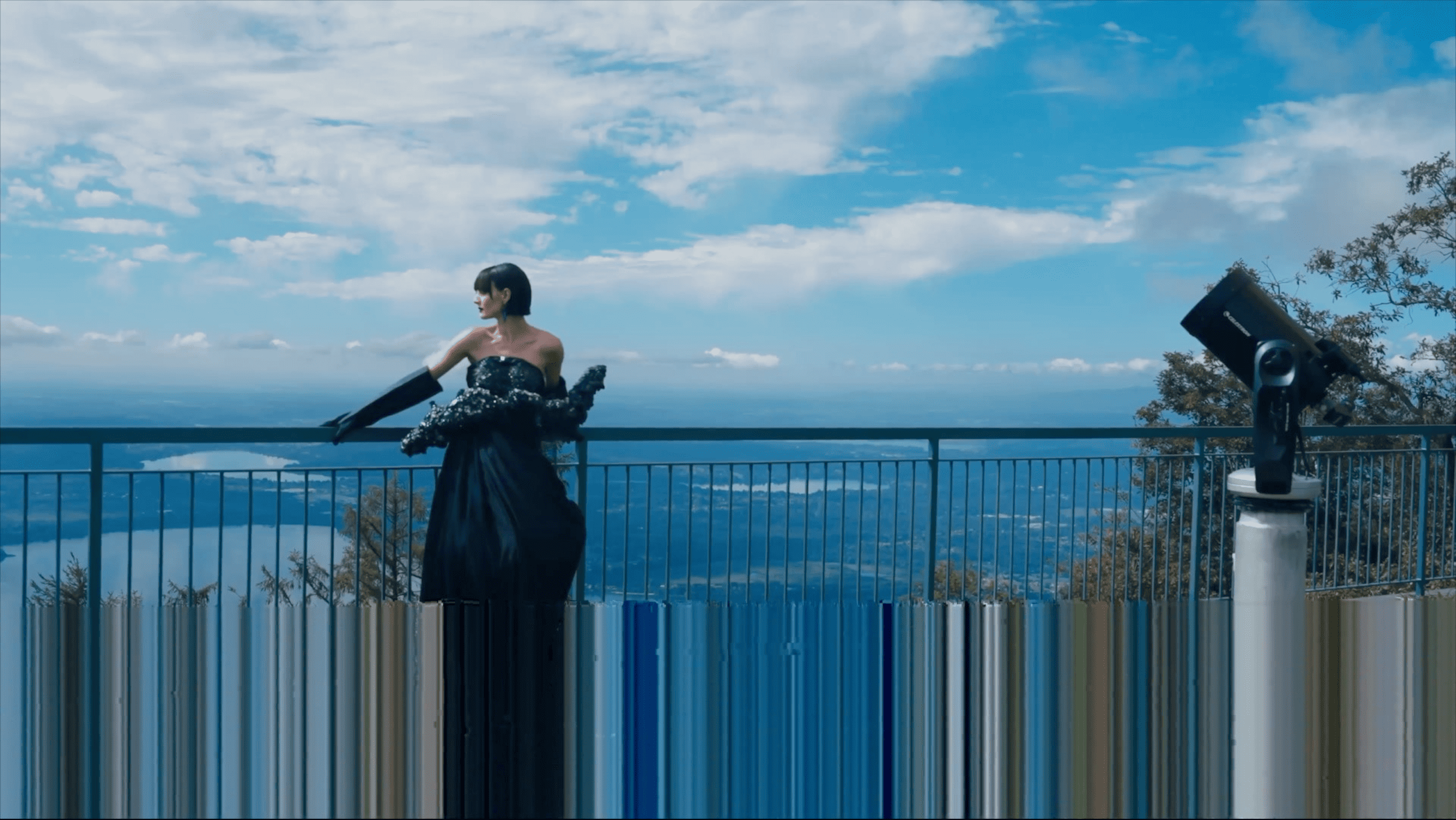
The title RGB_N.E.AtA feels almost like a piece of code itself. What does the title mean, and how does it relate to the ideas explored in the work?
I wanted to play with it ironically, framing it as if it were a fragment of code, but it is actually a genuine conceptual map of the project. RGB represents the invisible grammar of light that powers every screen. N.E.AtA encodes both our key elements and collaborators: N, myself, stands for Nature/Matter (the body and costumes), E for Energy/Light (the digital projections by Edoardo Massenza Milani), and AtA for Acoustics/Sound, leading directly to(Access to Arasaka: musician).
RGB_N.E.AtA was born as a continuation and completion of the video Varese tra le stelle e i laghi- Between Stars and Lakes. While the previous work moved progressively toward a digital dimension, this piece starts directly from its conclusion, turning the end into a new beginning through a dialogue among our three distinct languages.
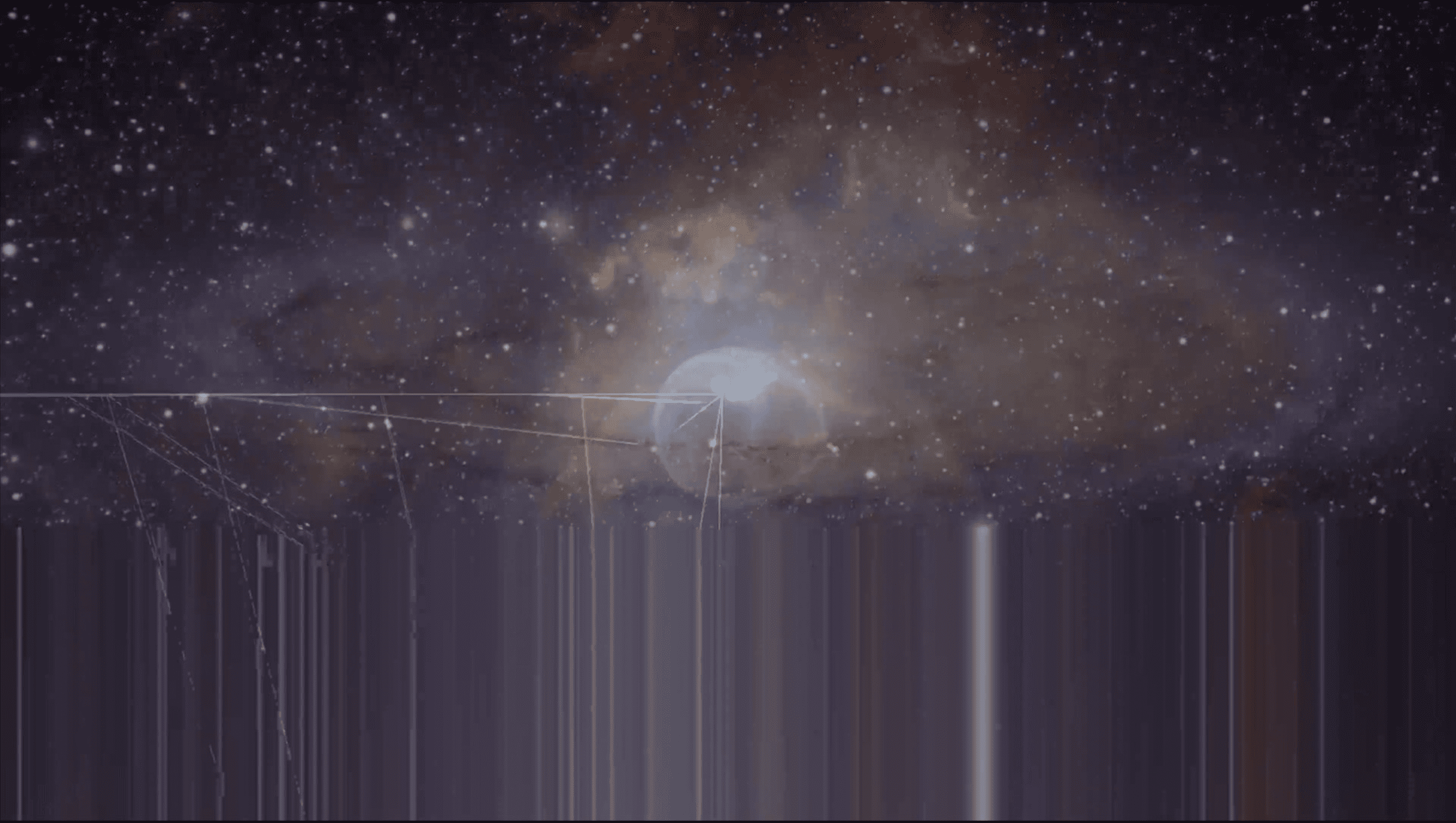
One of the central ideas is that “every error is a possibility.” What attracts you to error and digital corruption as artistic materials?
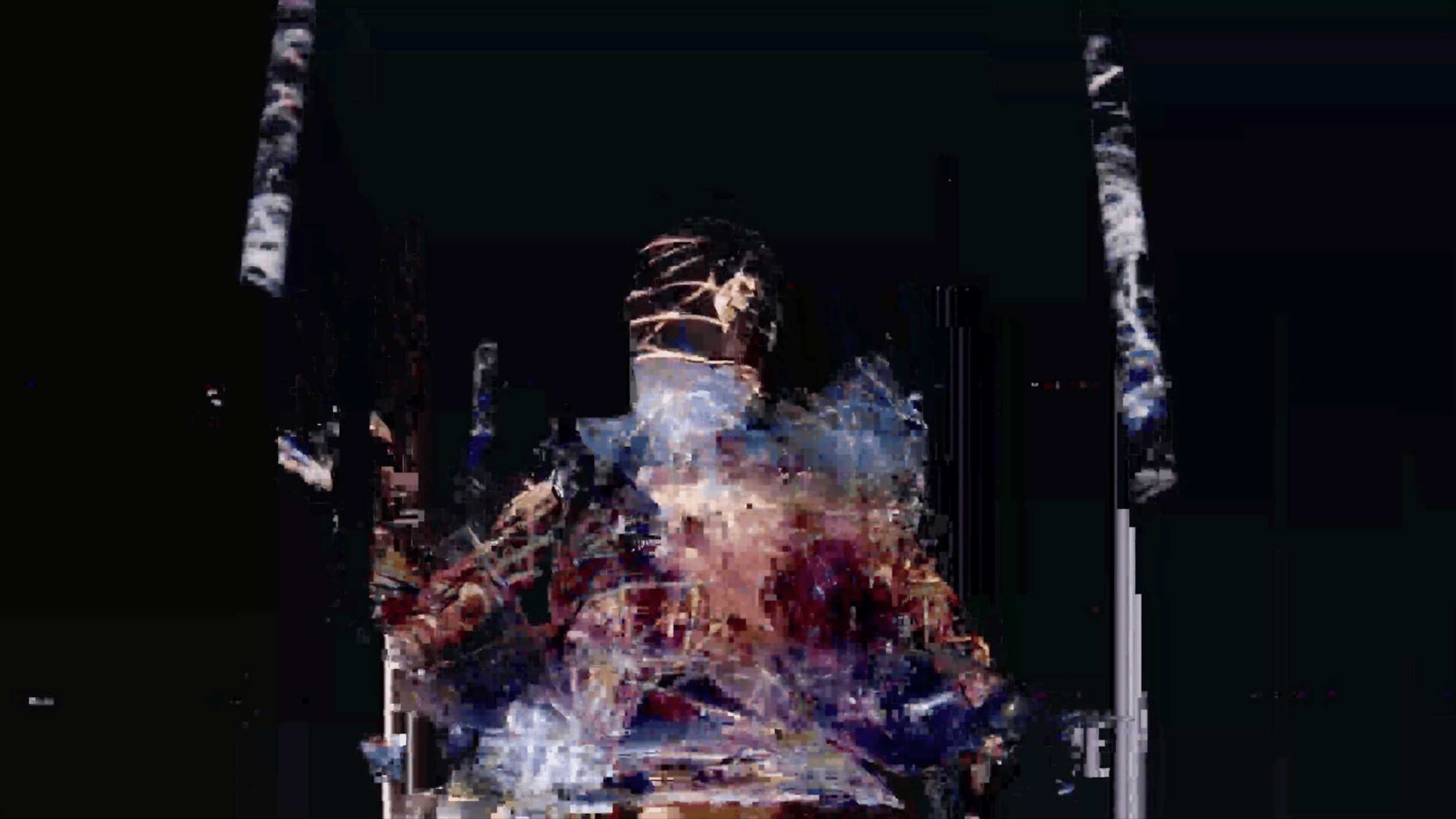
I am not interested in glitch as a purely aesthetic or decorative exercise. To me, file corruption is the digital equivalent of a thread fraying along the hem of silk organza: it is the moment when matter rebels against perfection to claim its own history. If memory is static, error is the process that sets it back in motion. A corrupted file is not destroyed; it is a file that refuses to remain identical to itself, transforming.
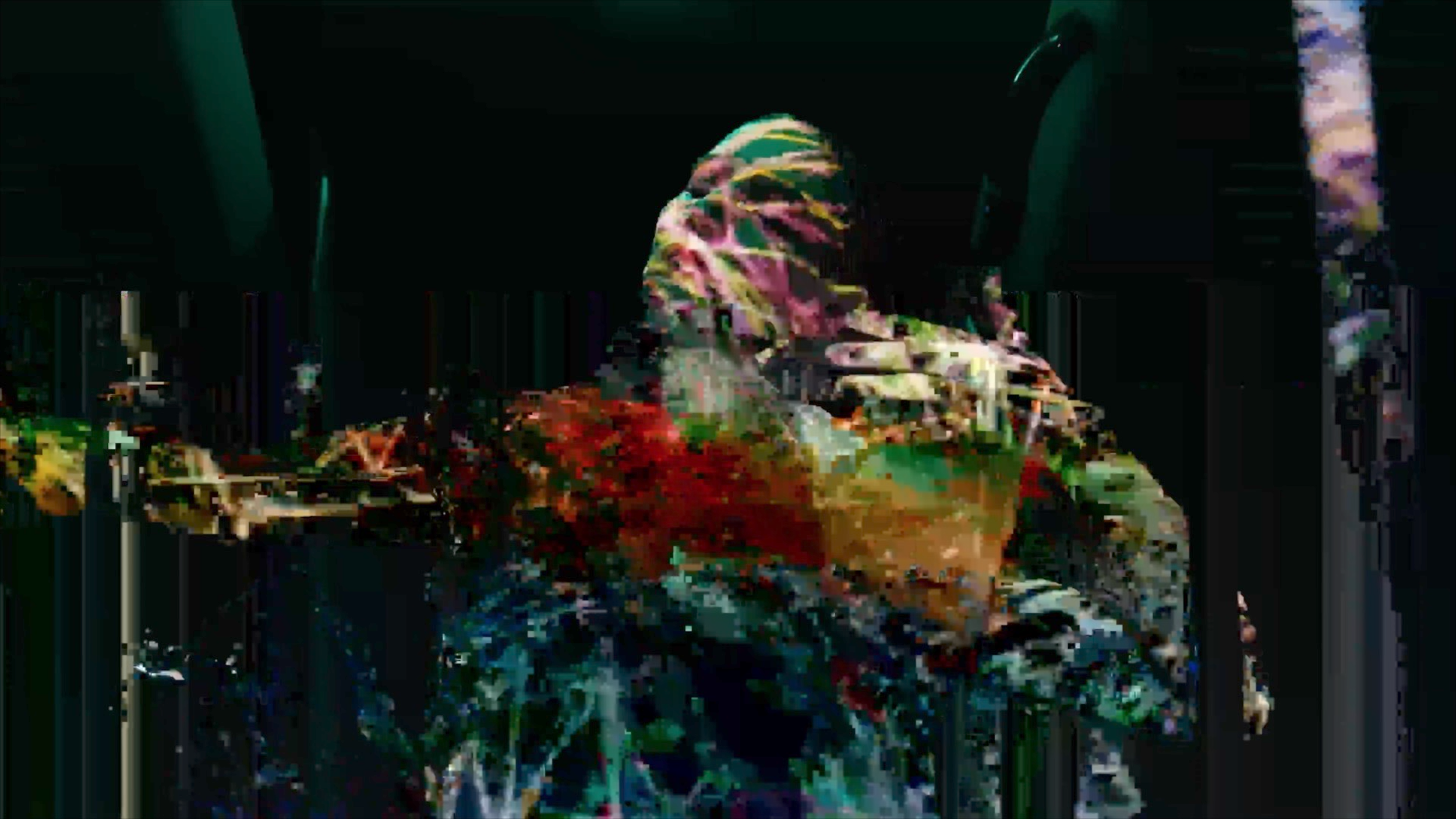
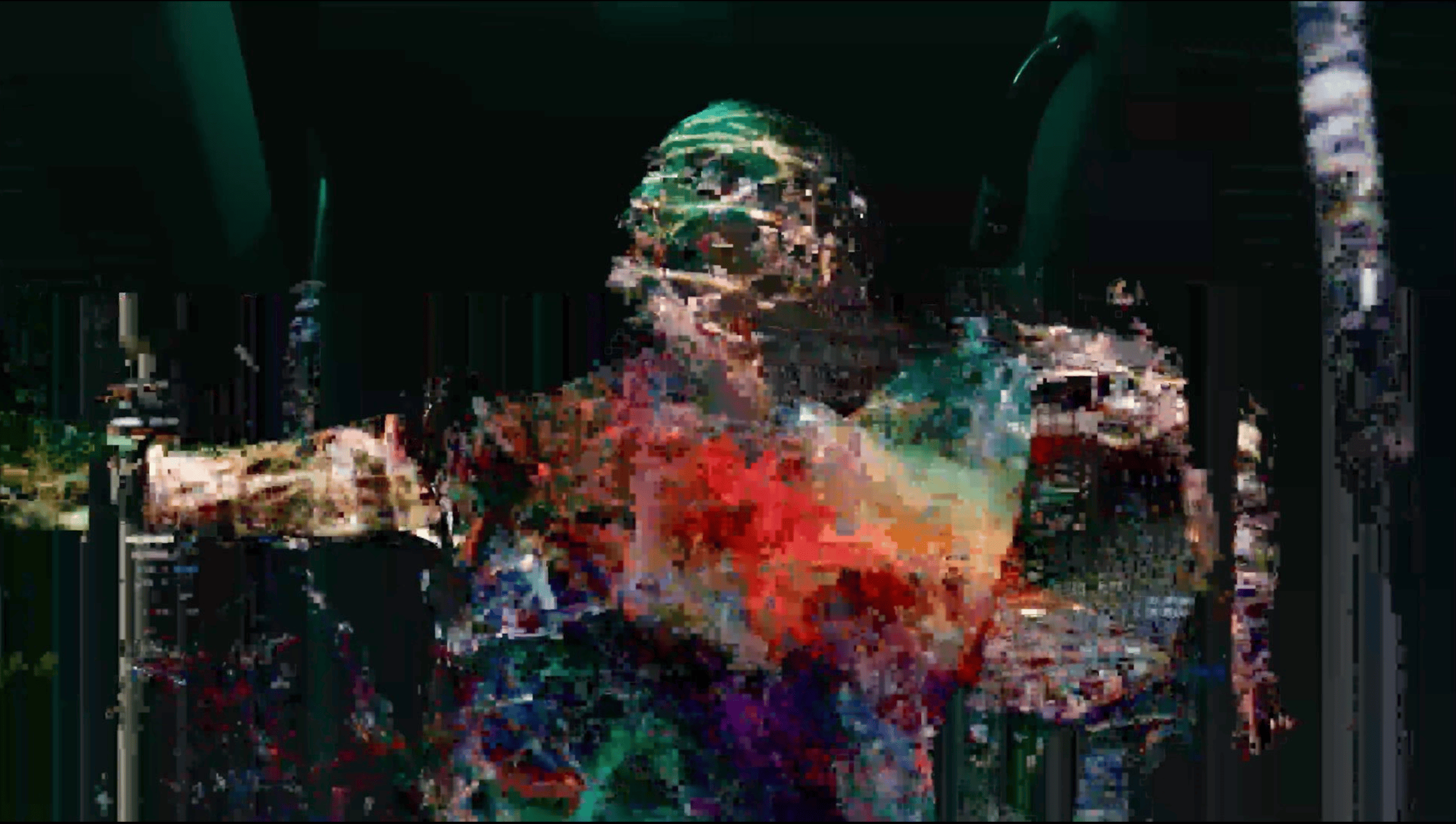
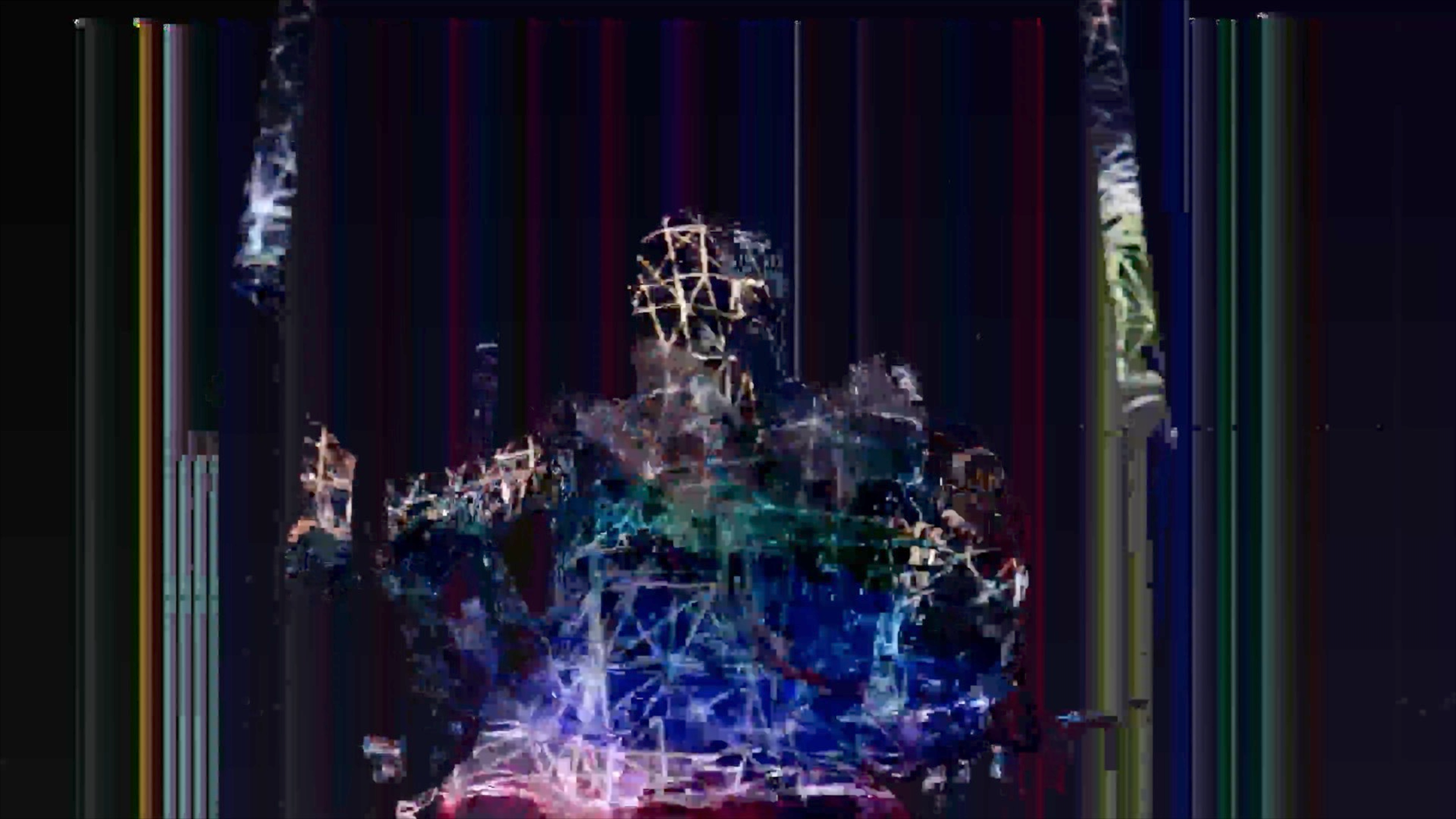
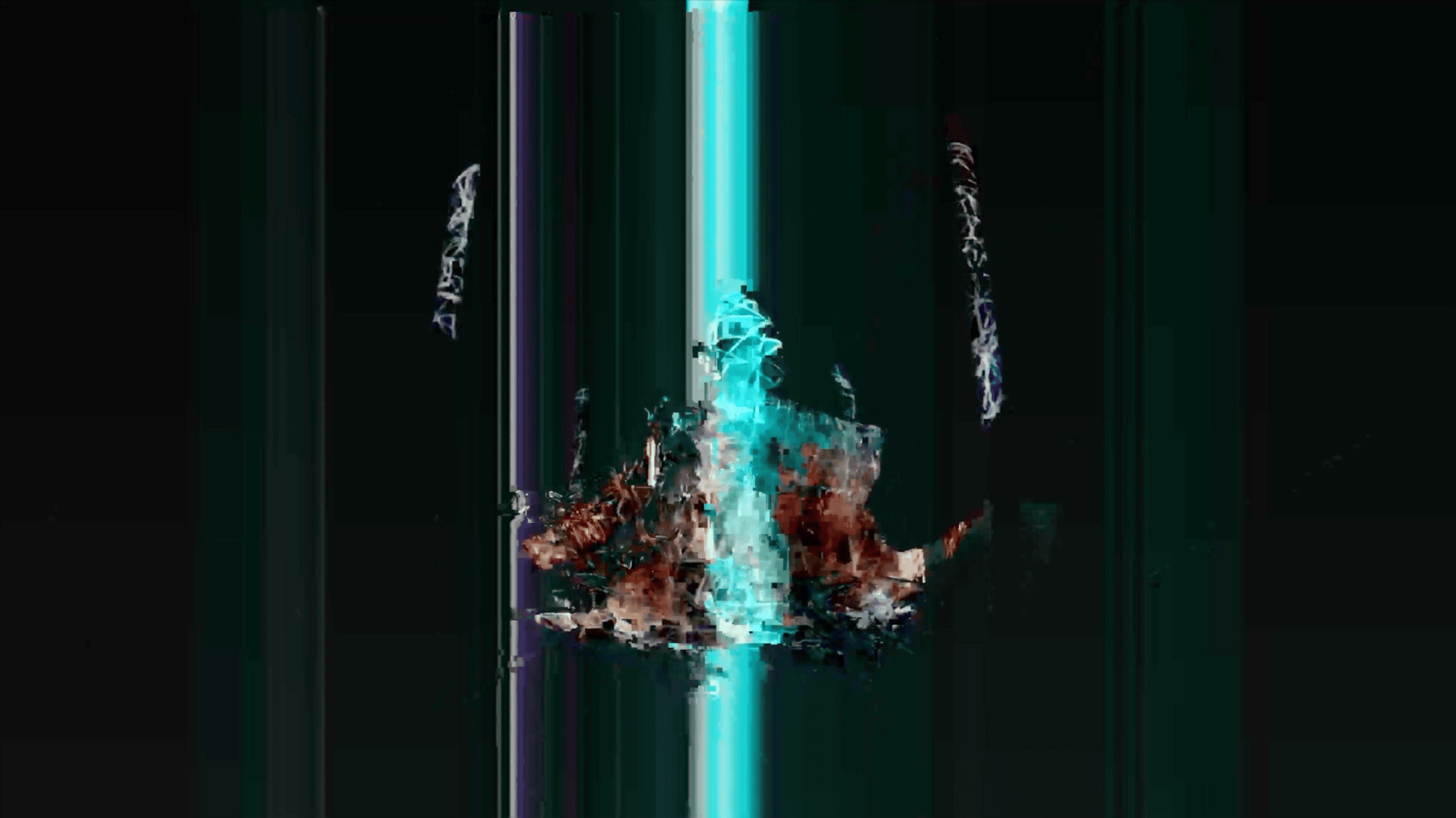
In RGB_N.E.AtA, the error does not stem from isolation in front of a screen; it is motion-bound and visceral. Inside the bus—a real space of transit traversing the territory—vibrations, shifts of light, and the movement of the performer turn into pure interference. When the system glitches and digital matter "bleeds," exposing its sub-pixels, fractured patterns, and runaway vectors, it isn't merely revealing the hidden anatomy of the code beneath the polished surface of perfection. It is chewing through the landscape, the layered textures of a territory between stars and lakes, and the physics of my costumes. Error draws me in because it desynchronizes the rigid memory of the original work: colors and gradients emerge freely and randomly, allowing territory, code, and body to merge into a new, fluid geography—discordant, yet in perfect balance.
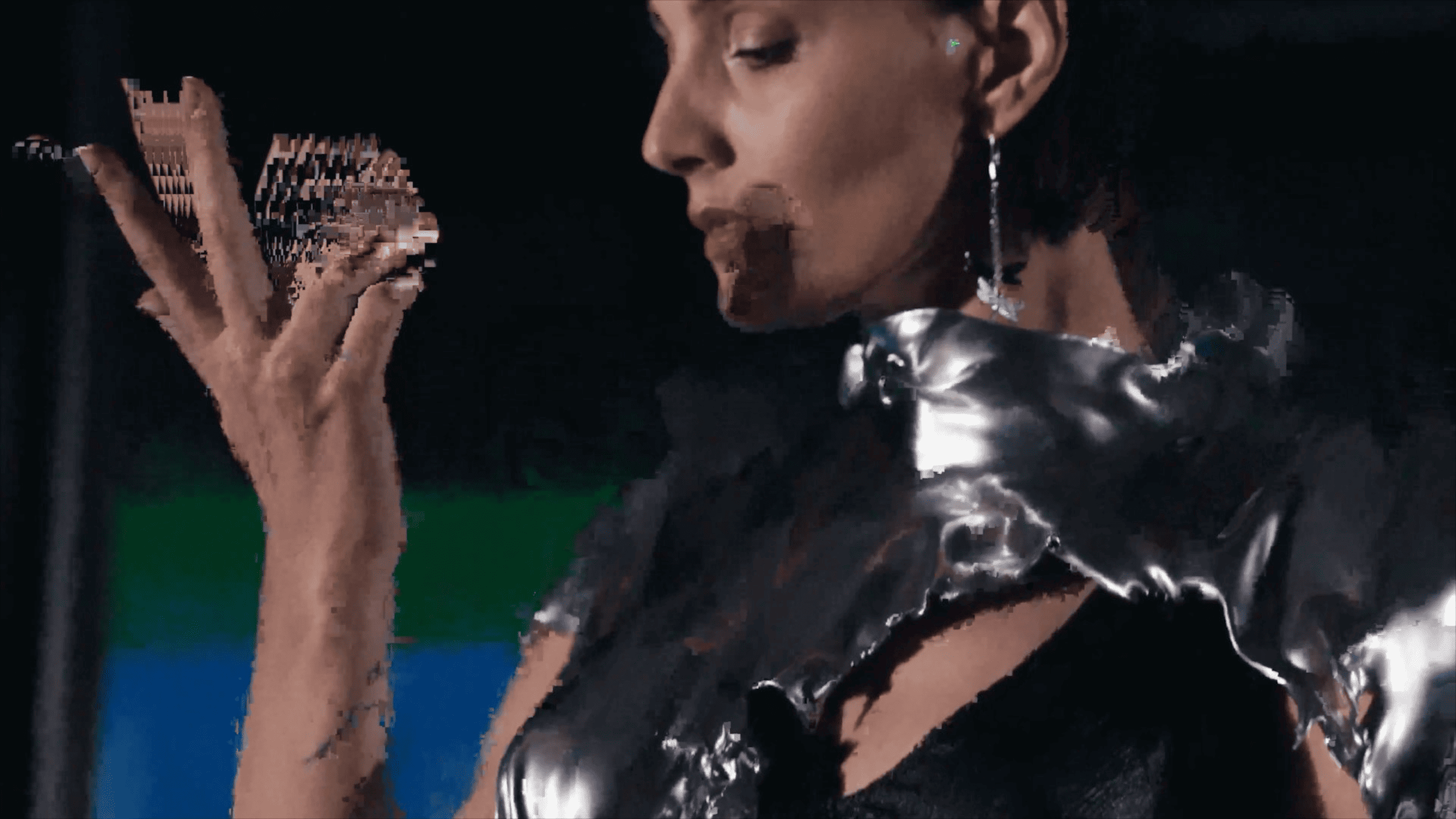
The female body is the meeting point between the different artistic languages in RGB_N.E.AtA. Why was the body important as the site of this transformation?
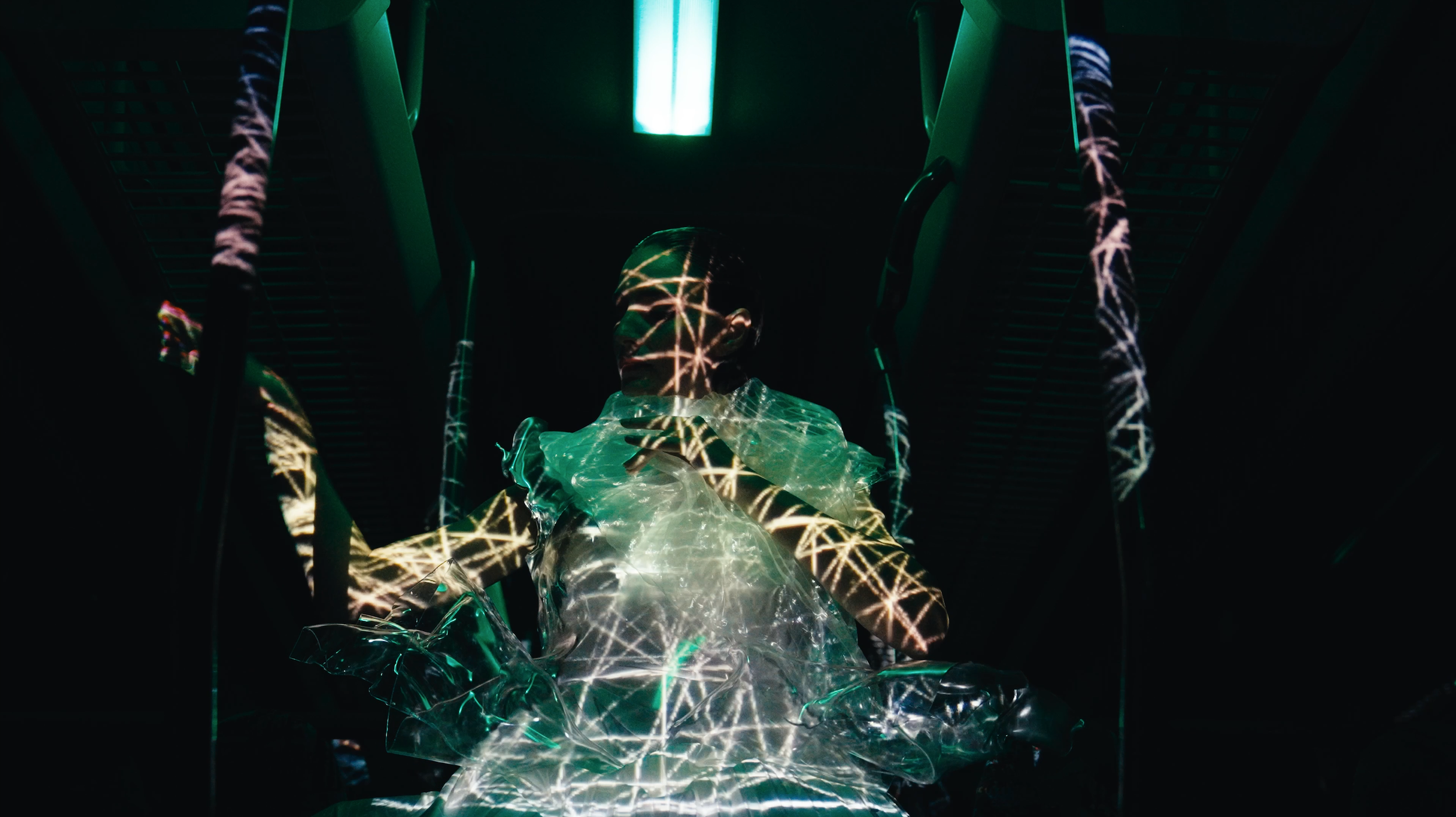
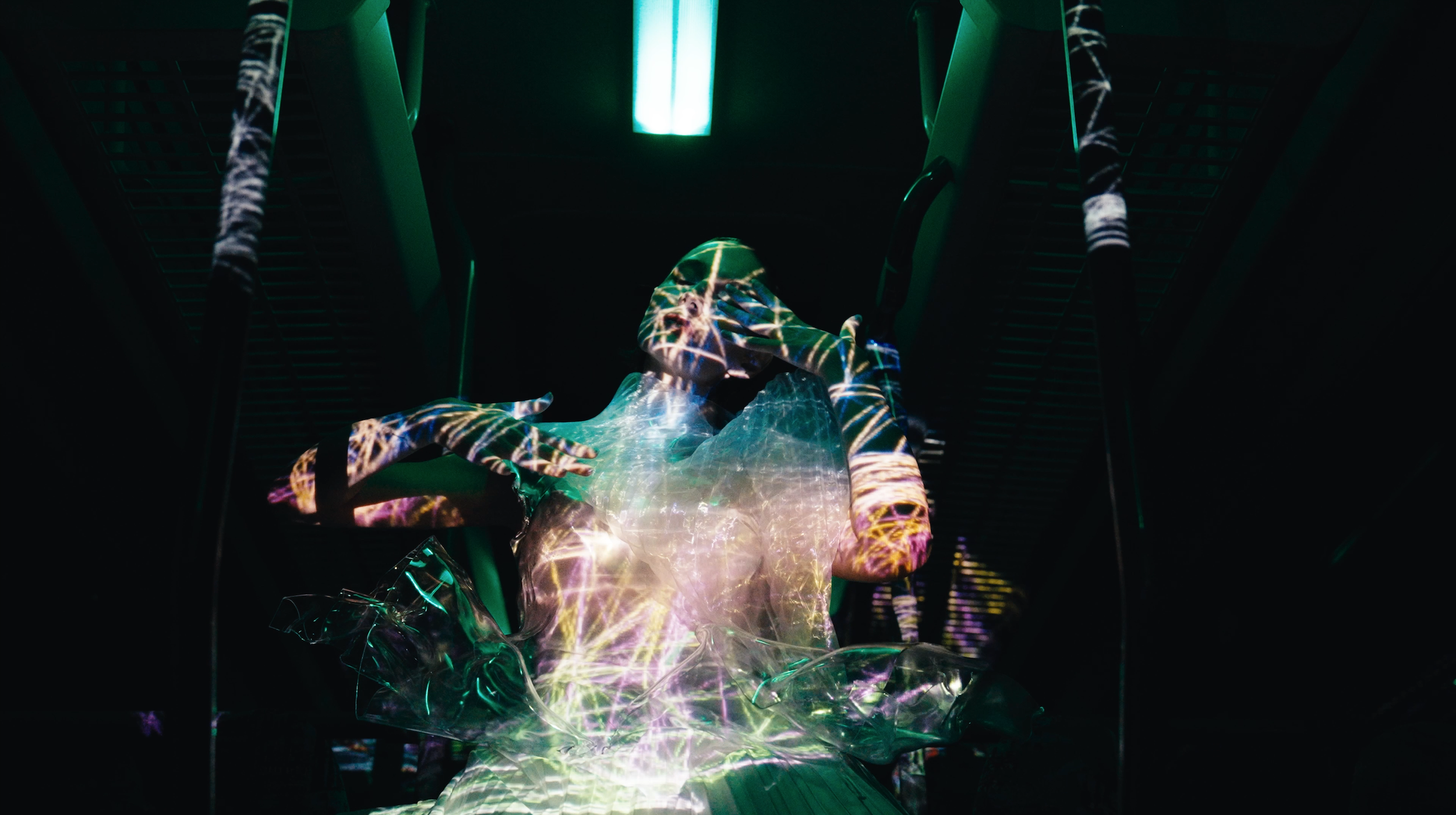
At the center of the narrative is a performative presence traversing the landscape. Through the costumes I designed and crafted her body becomes a narrative surface—the ultimate site of metamorphosis—with the costume acting as a second skin in constant dialogue with light and space.
The journey culminates inside a bus—a symbolic space of transit where digital projections transform the protagonist into a fluid image suspended between the physical and the virtual. Through file corruption and the force of sound, the body dissolves and recomposes itself. The female figure becomes the living matrix in which flesh converges with code:technology is no longer something the body undergoes, but the vehicle through which it becomes pure emotional resonance.
There’s an interesting tension between control and loss of control in the project. How much of the final transformation can you actually anticipate, and how much comes from allowing the technology to behave unpredictably?
It is a delicate balance, almost a pact I forge with the medium. While the direction is rigid—the creation and choice of the costumes, the performer's movements, the selection of the sound—there is an underlying awareness that the glitch responds to its own laws. I am not seeking absolute control; I am looking for a trigger, dynamic also because I deeply love imperfection.
Together with the digital artist, we trace the perimeter, but leave an open threshold for the unexpected. When the code gets corrupted or the signal distorts, technology stops being a passive tool and speaks with a voice of its own, producing chromatic fractures we could have never designed on paper. My control returns in the editing phase: I select, cut, and give shape to that unpredictable material.
The final transformation is the result of this ongoing negotiation: we lay the ground and the gravity of flesh, the machine and code introduce chaos, and I welcome that chaos back, shaping the final work. It is precisely within that margin of unpredictability—where control gives way to chance only to find shape again through editing—that the image ceases to be a predefined idea and becomes living matter.
You describe the altered images as revealing “historical breaks, layers of stratification, and traces of the territory,” almost as though corruption allows something buried within an image to surface. What do you think an error can reveal that an intact image cannot?
The intact image shows only the glossy surface of things, a frozen present pretending to have no past or fragility. Error, on the other hand, brings stratification to light: it shows that beneath the visible image lie layers of code, attempts, history, and matter that resist.
A perfect image erases time; a corrupted image reveals the footprint of its passage. There is a deep parallel with our lives: the unexpected and the error shatter the linearity of our plans, forcing us to renegotiate our direction. Error reveals the roughness of reality and its profound fragility, transforming interference and chance into an unrepeatable poetic value.
The music by Access to Arasaka makes the visual transformation possible for this project. How did you want the audience to experience the relationship between sound and image?
Not as a simple overlay, but as a single organism. The track xt10.20zp9 from the album :Port has a life of its own; entering this project, it created a genuine short circuit. Through experimental electronics, IDM, ambient, and glitch, the sound builds an architecture made of textures, rhythmic fragmentations, and suspended perceptual spaces between memory, technology, and perception.Sound thus becomes a space to traverse, guiding and accompanying the transition from physical matter to digital information. It is not mere background, but a shaping force: the performer becomes one with the visual matter through the movements the track prompts her to make—much like a true choreography to follow, yet entirely free. These are those visceral emotions that only music can sculpt and trace onto a body.
In this dialogue, visual error and sonic interference respond to each other: the music gives weight and flesh to the sub-pixels, while the image restores body to the sound, making the viewer's experience a total, tactile, and hypnotic immersion—or at least, that is what I hope for.
It was precisely the impact of this expanded and abyssal soundscape that made me feel the radical need to not limit file corruption to small doses, but to push it all the way to the end. The sound demanded total surrender: only by letting the code crumble completely could the image break away from reality and resonate with that unknown immensity.
Were there moments when the technology, sound, or another collaborator fundamentally changed your original artistic intention?
Absolutely, with both artists. A true turning point emerged from encountering Edoardo Massenza Milani's work and his research on the relationship between sound, image, and creative coding. Edoardo had already created a patch in Max MSP—a reactive audio-visual system designed to transform sound into manipulable digital matter, capable of adapting to different contexts.
However, that system had never been tested on a complex surface like the performer's body in motion, immersed in the volumes of my costumes—made of silks, organza, synthetic glass, and bulky structures—and inside a real, restricted space like a bus.
Initially, I had planned a dark costume to test subtler light refractions. But knowing all too well that black absorbs light, I abandoned the idea at the last minute and created a new costume in shades of white, turning the body into a true living screen.
This last-minute shift made me realize that the heart of the story couldn't be frozen in advance. Co-creating means exactly this: bringing your vision into dialogue with living matter, with the physical laws of light, and with the sensitivity of other artists, accepting that the project reshapes itself in the field, and allowing yourself to be amazed by the unexpected.
In the same way, Access to Arasaka’s sound expanded the narrative scope. The inspiration linked to the Astronomical Observatory—which in the full-length video had an entirely different value, tied to a dialogue with the territory—recalibrated the project from a local dialogue to a cosmic, expanded landscape. It is as though another story was born: a universe of unknown sounds evoking worlds yet to be explored, where simply looking up at the sky is enough to imagine the voice of a single pinpoint of light in space.So, while I initially imagined achieving the metamorphosis between the body and its second skin through the sheer light of sound, today I like to think it was the distorted space of a galaxy that did all the work. :)
What was the most unexpected thing that happened while making RGB_N.E.AtA?
To realize that this work has no real end. Every new file corruption is a continuous generator of new forms. When the projections envelop the performer's body, the image itself becomes unstable matter.
From this emerged the need for a circular model: in the future, I would like to create real costumes starting directly from the patterns and colors generated by the glitch. It becomes a perpetual cycle—the physical costume generates the digital image, the signal corruption transforms it, and from that digital output, inspiration for a new tangible costume is born.
What do you hope remains with the viewer after the body, image, sound, and code have all transformed and the work comes to an end?
I hope they perceive that sounds can truly draw images and that a body knows how to move through the light of a sound. Beyond the technological complexity, I would like them to experience digital matter as a living and fragile organism—and that, in the end, they feel a deep sense of wonder and emotional resonance, through a simple smile.
Are you our next spotlight artist? Submit the form to apply to be featured!
We share works by digital artists as well as digital arts exhibitions, events, and open calls daily on Instagram — follow us for more and subscribe to our newsletter so you don’t miss new blog posts.
![Project Spotlight: pifmgr.dll’s [M]ETAL✨ @pifmgr.dll is a digital artist working at the intersection of audiovisual design, 3D experimentation, and atmospheric world-building. His project [M]ETAL explores metal both as a physical material and a](https://images.squarespace-cdn.com/content/v1/63b2fdbe4376de5bfdc6771f/1779108338452-QO04Q3MMJ3VMU8PJV1MD/image-asset.jpeg)