Building Atmosphere Through Illustration: The Work of Yiming Zhai
By Cansu Waldron
Yiming Zhai is an illustrator and mural artist whose work combines playful visual storytelling with a strong sense of rhythm, movement, and atmosphere. Drawing inspiration from everyday life, urban environments, and personal experiences, he creates character-driven illustrations and large-scale murals that balance bold compositions with an approachable sense of humor and warmth. Holding a BFA in Illustration from the School of Visual Arts and an MFA in Illustration from the Savannah College of Art and Design, Yiming is interested in how images can shape the feeling of a space while still leaving room for viewers to discover their own connections within the work.
Alongside his professional practice, Yiming’s personal work reflects an ongoing exploration of creative freedom, self-expression, and the emotional pressures that often come with making art. Over time, he found himself moving away from perfectionism and technical rigidity, choosing instead to focus on honesty, intuition, and the simple desire to communicate something meaningful. That shift became especially important as conversations around AI and image-making began reshaping the creative landscape. Through recurring characters and open-ended visual narratives, his work often returns to the idea of continuing to create despite uncertainty — holding onto curiosity, humor, and the instinct to leave a personal mark.
We asked Yiming about his art, creative process, and inspirations.
Can you tell me a bit about your journey into art? What led you from studying illustration to focusing on murals?
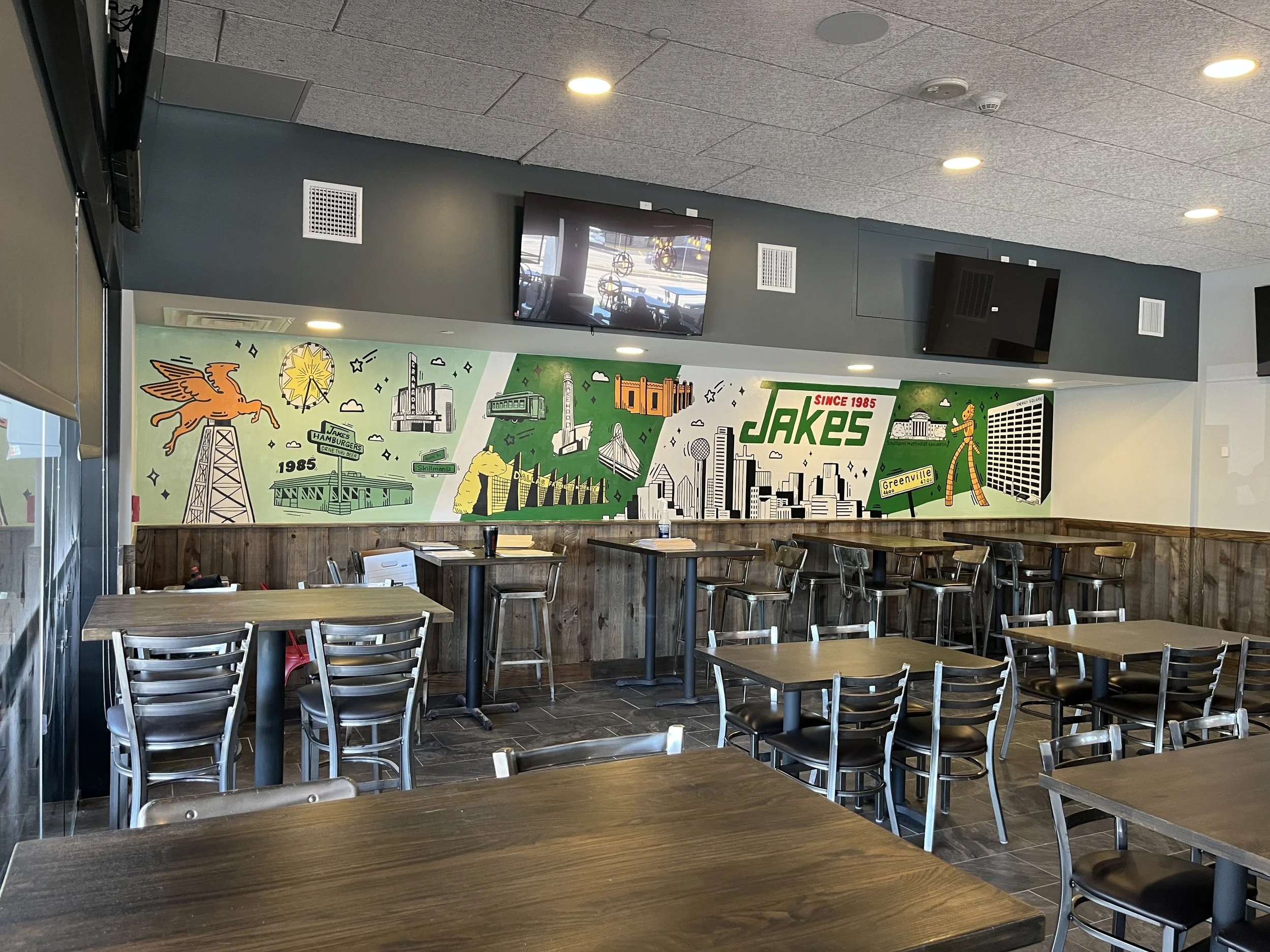
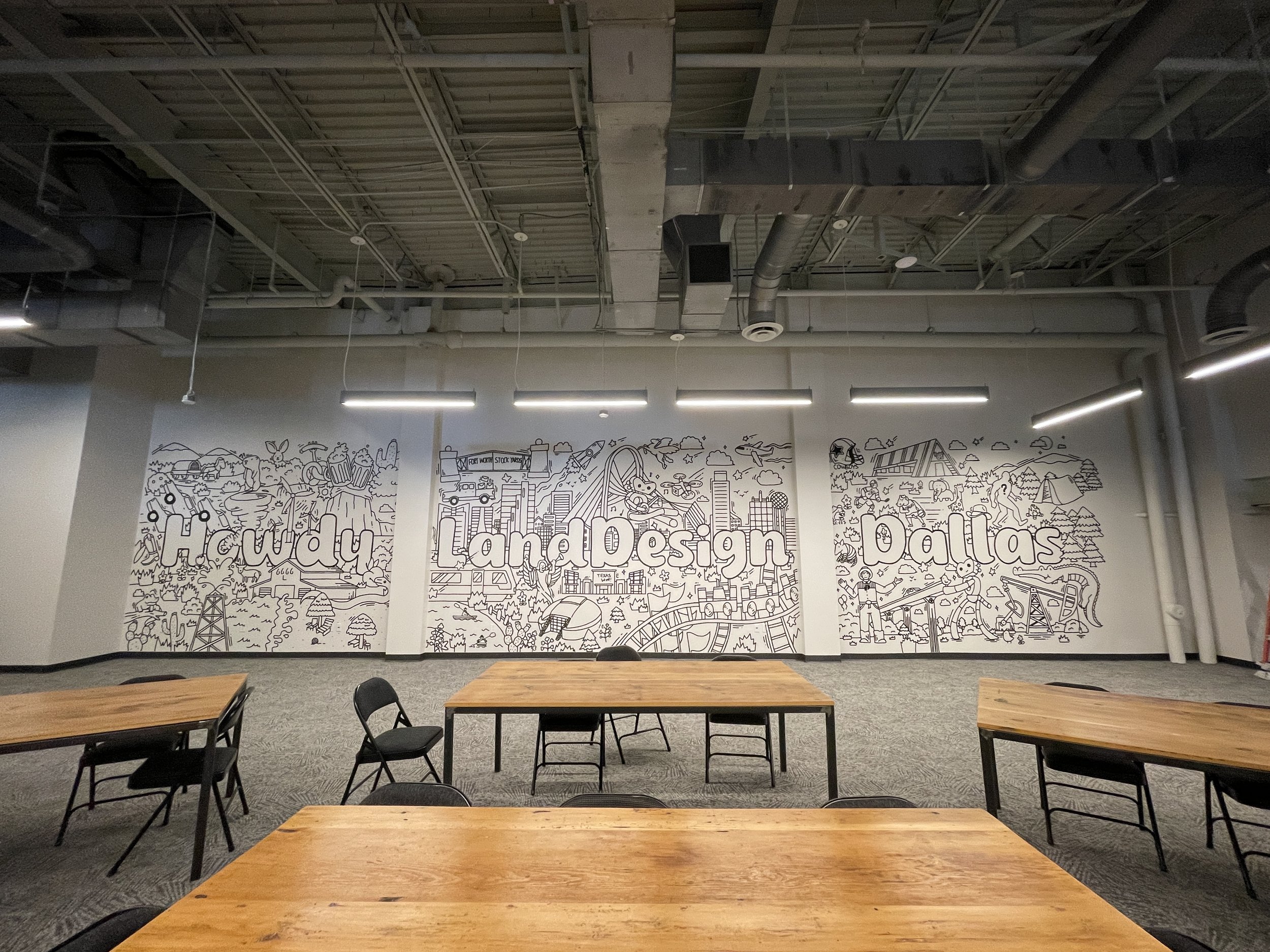
After graduating from art school, I focused primarily on children’s book illustration. My entry into mural work came through an unexpected opportunity. Heth Kendrick, the head of LandDesign, saw my work and invited me to create a mural for a large blank wall in the company’s new Dallas office.
That project became my introduction to mural practice. After people saw the completed piece, more clients began reaching out and inviting me to create murals for their own spaces. In that sense, Howdy LandDesign Dallas was an important turning point in my practice. It allowed me to bring my illustration language into a larger architectural setting and understand how my work could operate beyond the page, within physical space.
You’ve studied at School of Visual Arts and Savannah College of Art and Design. How did those experiences shape your voice as an artist?
Studying at SVA and SCAD helped me become much clearer about the kind of artist I wanted to be. At SVA, my professors often encouraged me to “be myself,” and that idea stayed with me. It pushed me to trust my own instincts instead of following whatever visual style was popular at the moment.
That mindset became the foundation of my visual voice. I started paying closer attention to the elements that naturally appeared in my work: playful characters, humor, bold shapes, dense compositions, and small narrative details. Over time, I began to understand those elements not as random habits, but as part of my own artistic language.
SCAD helped me develop that language with more clarity and intention. It gave me the space to refine my work while also thinking more seriously about how art functions in the real world, whether in a book, on a wall, or inside a public or commercial space. I became more aware of audience, scale, and context, which are now central to the way I approach my practice.
Together, those experiences shaped a voice that is personal, playful, and visually direct. They also helped me carry a consistent artistic point of view across illustration, storytelling, and murals.
Murals often interact with the public in a direct way. How do you think about the audience when you’re designing a piece?
When I design a mural, I think about how people will encounter it in the space. Some viewers may pass by without focusing directly on the wall, while others may stop and look closely at the details. Howdy LandDesign Dallas is a good example of that approach. For people moving through the office, I wanted the mural to contribute to the atmosphere even when it was not the center of attention. In that sense, the work needed to function almost like a visual texture within the space. That is why I added many small lines and details throughout the composition. They create rhythm and density, allowing the wall to feel active even from a distance. For viewers who spend more time with the mural, I wanted the piece to offer enough illustrative content to reward closer attention. In that work, no line is accidental. Every element contributes to the rhythm, structure, and storytelling of the mural.
You’re currently working on a children’s book, Look! This Is My Dinosaur!. How does your approach to storytelling change when you’re creating for a younger audience?
The biggest difference is how I manage visual information. Different audiences process images in different ways, and younger readers often need a clearer balance between detail and readability.
When I create for adult audiences, a higher level of visual density can make an image feel richer and more layered. But for children, too much information can become overwhelming. So when I work on a children’s book, I think carefully about how much detail to include, how clearly the image communicates, and how to keep the composition engaging without making it too complicated.
For me, part of being an illustrator is understanding the audience and finding the right level of visual information for them.
Are there recurring themes, characters, or ideas that keep appearing in your work, even unintentionally?
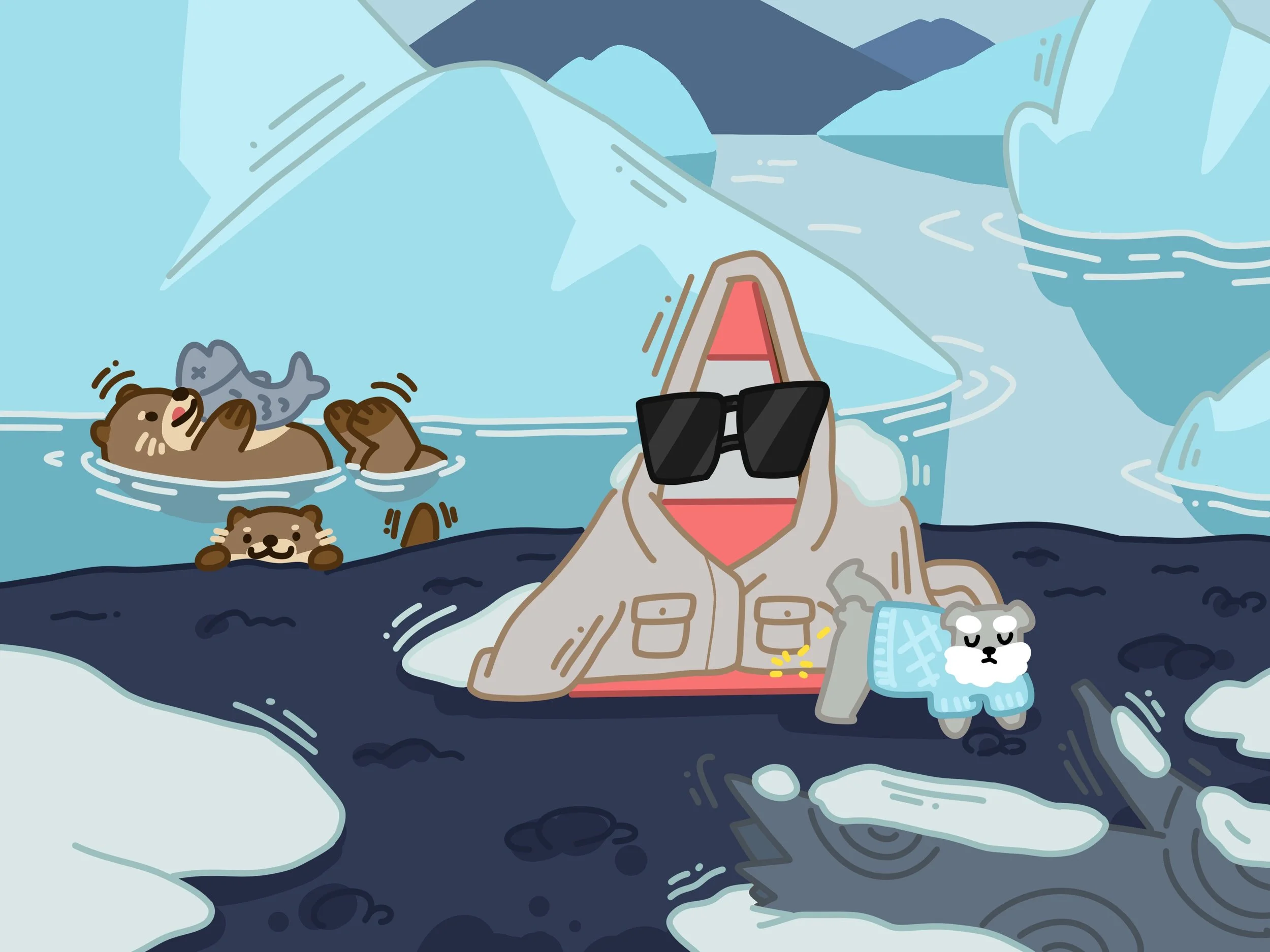
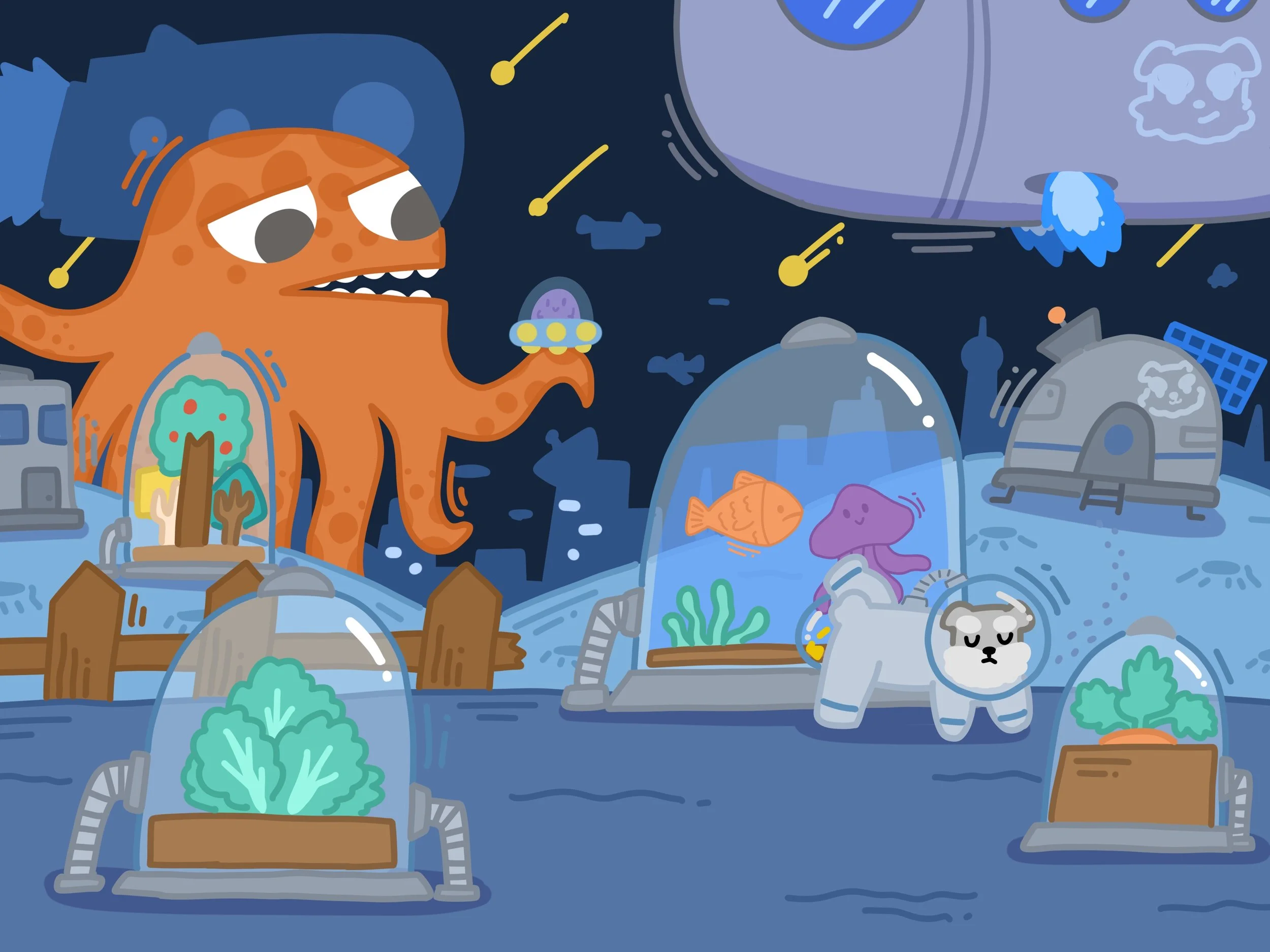
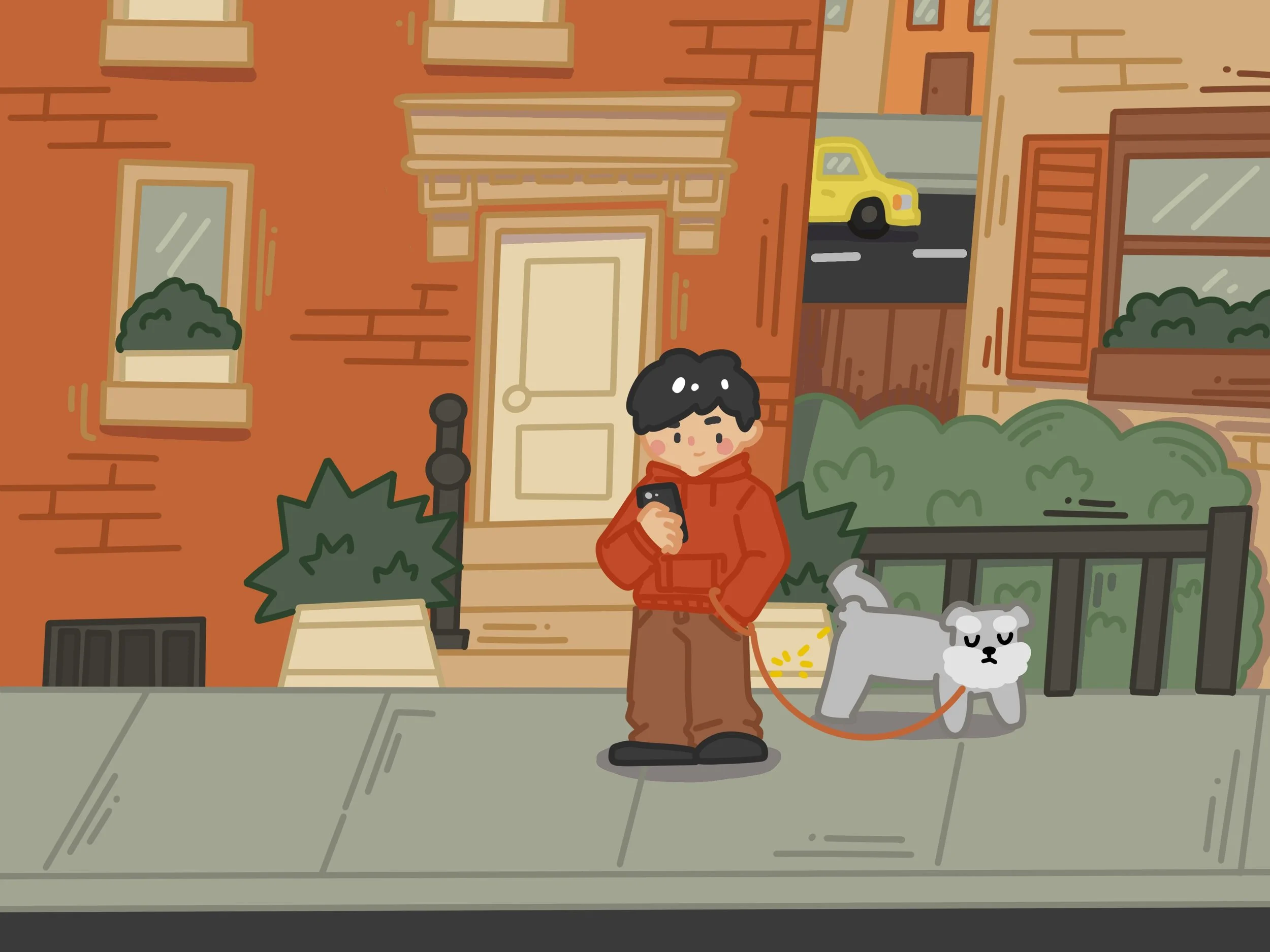
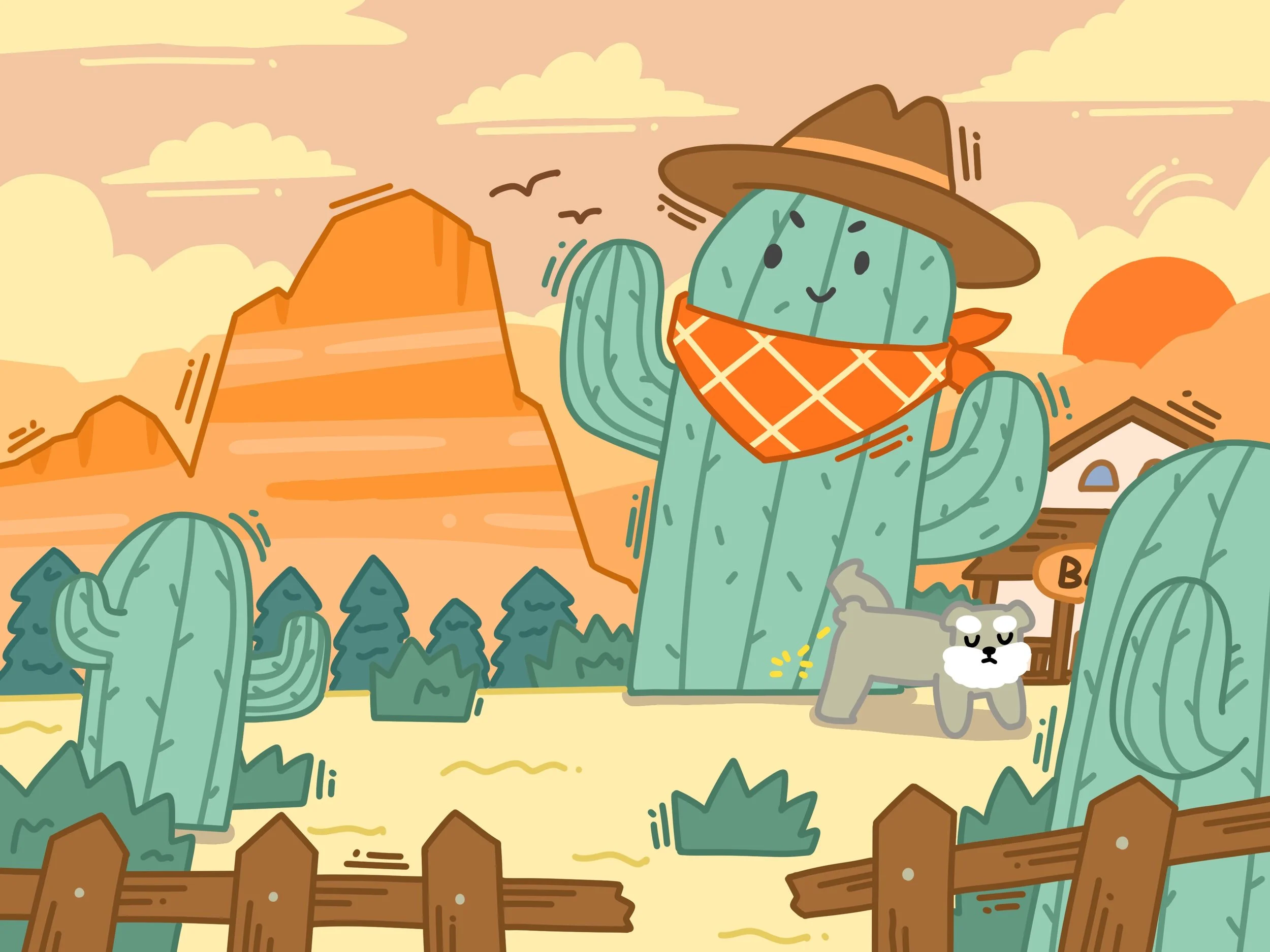
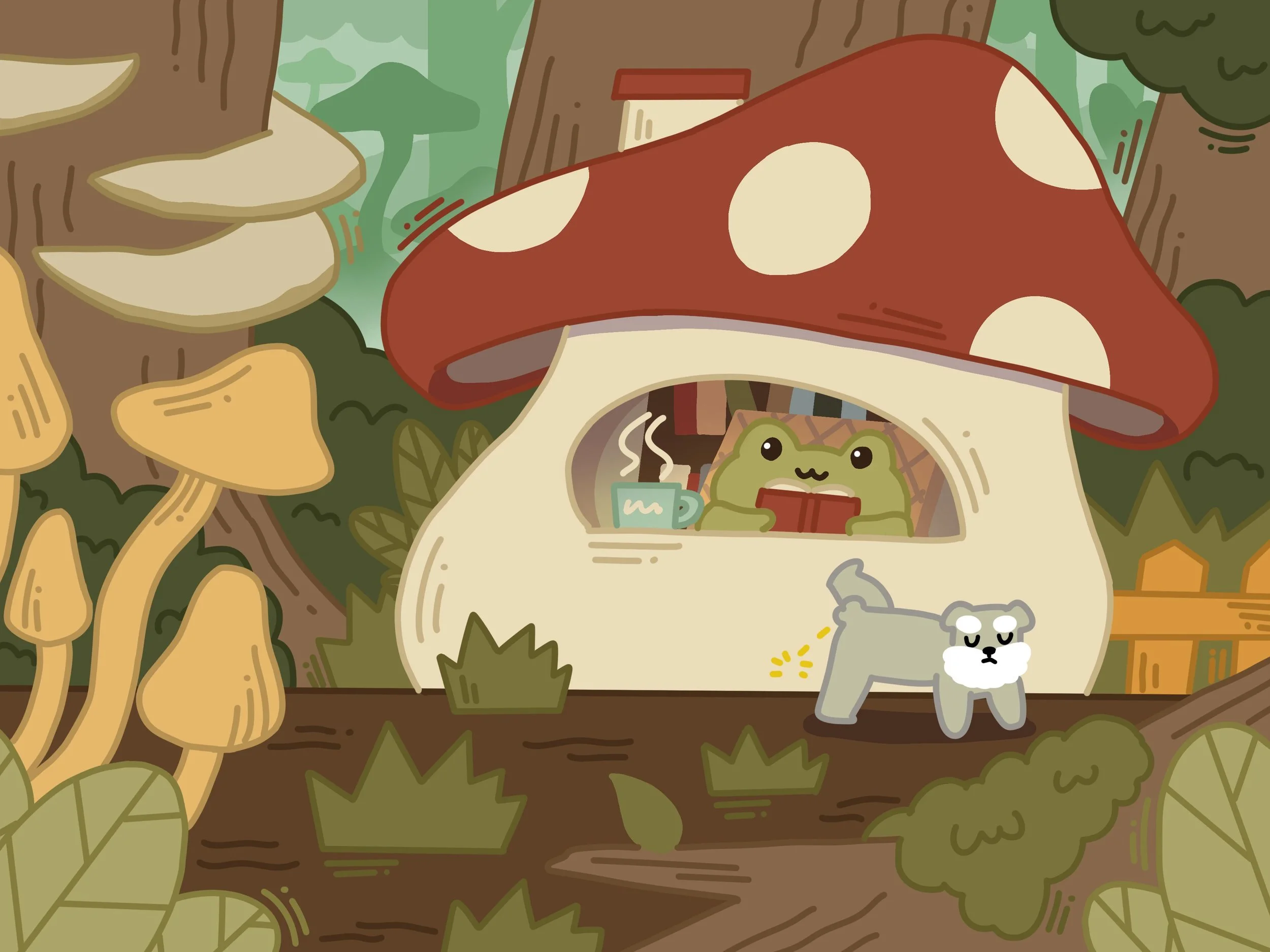
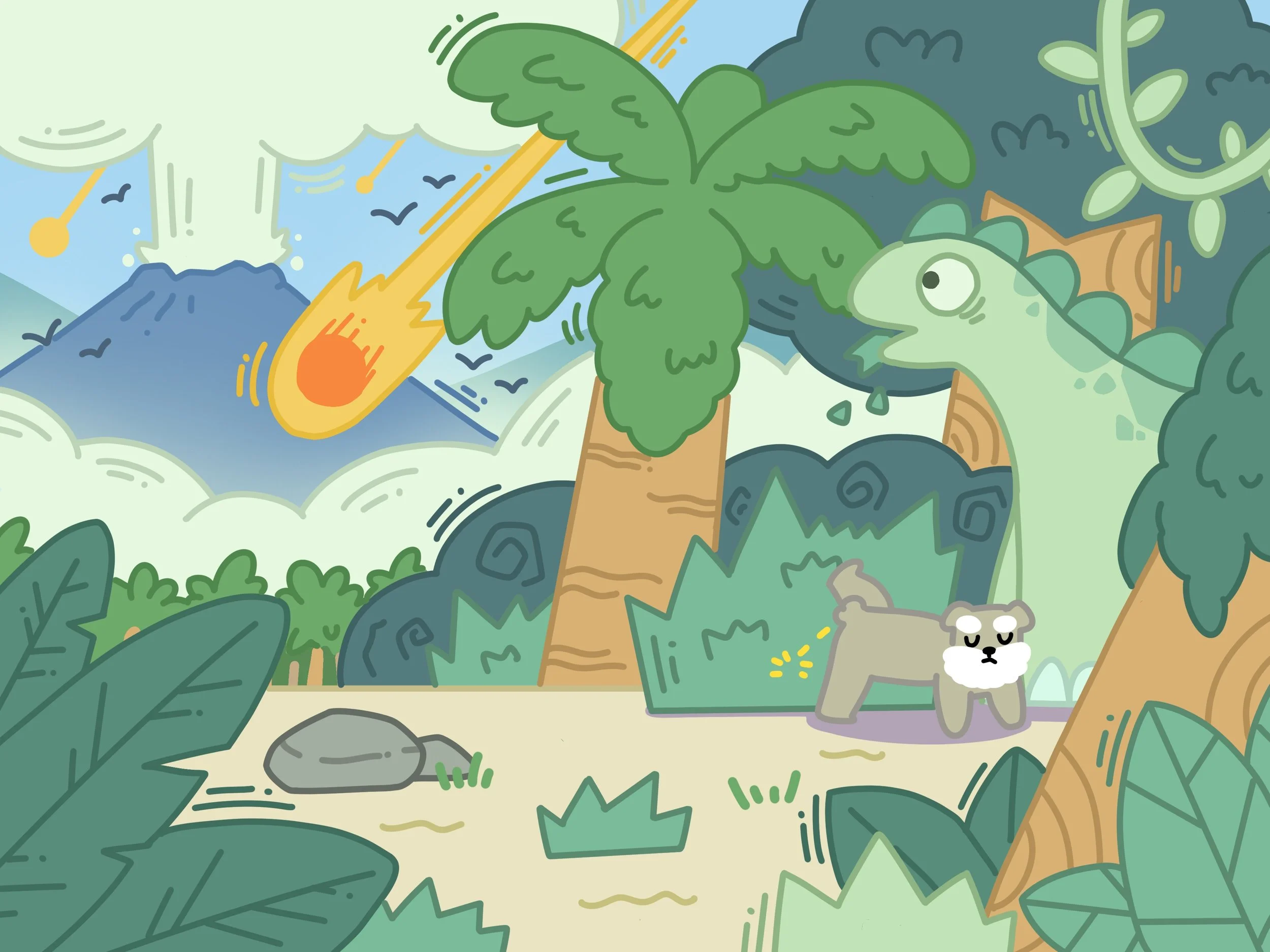
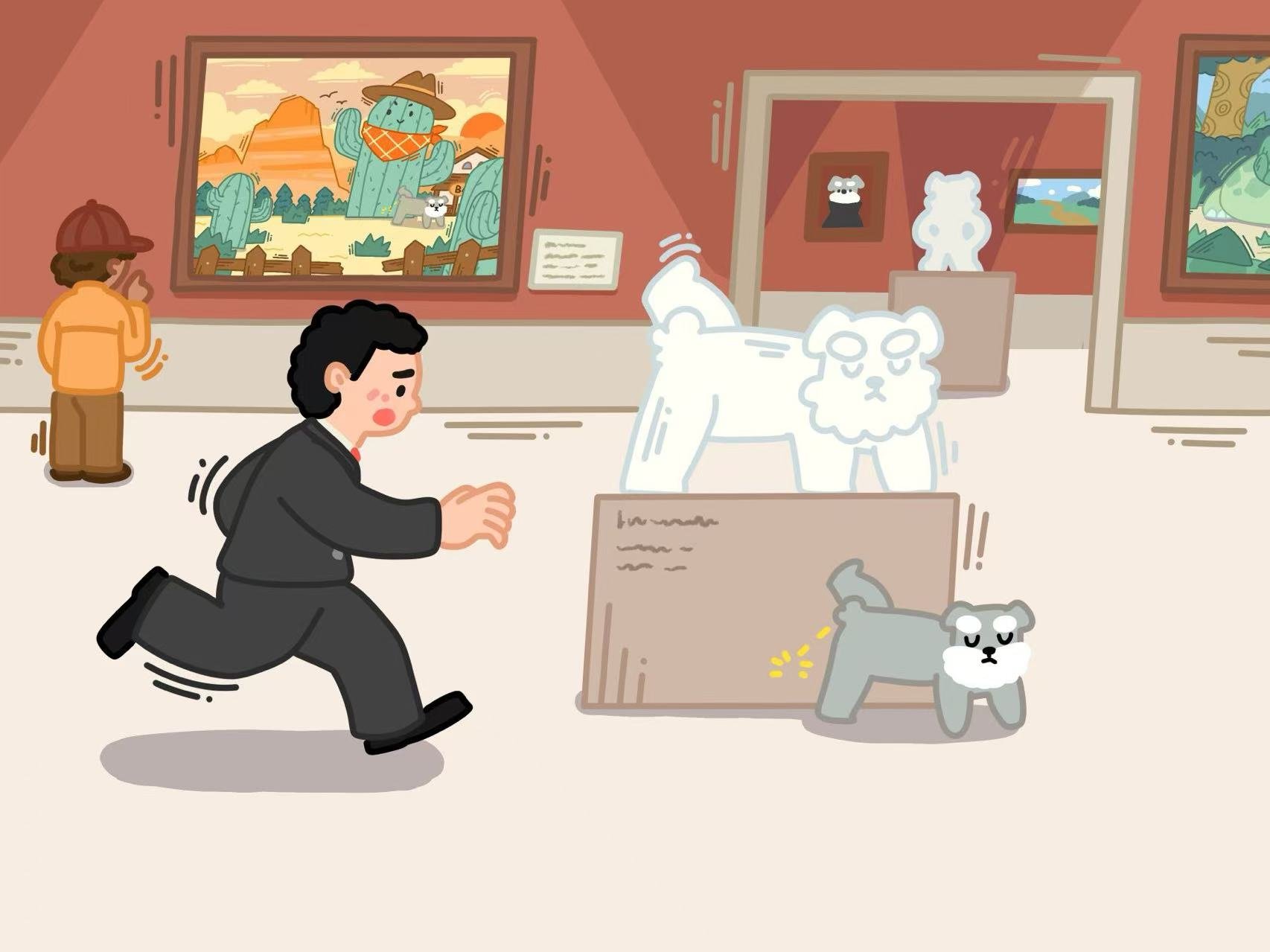
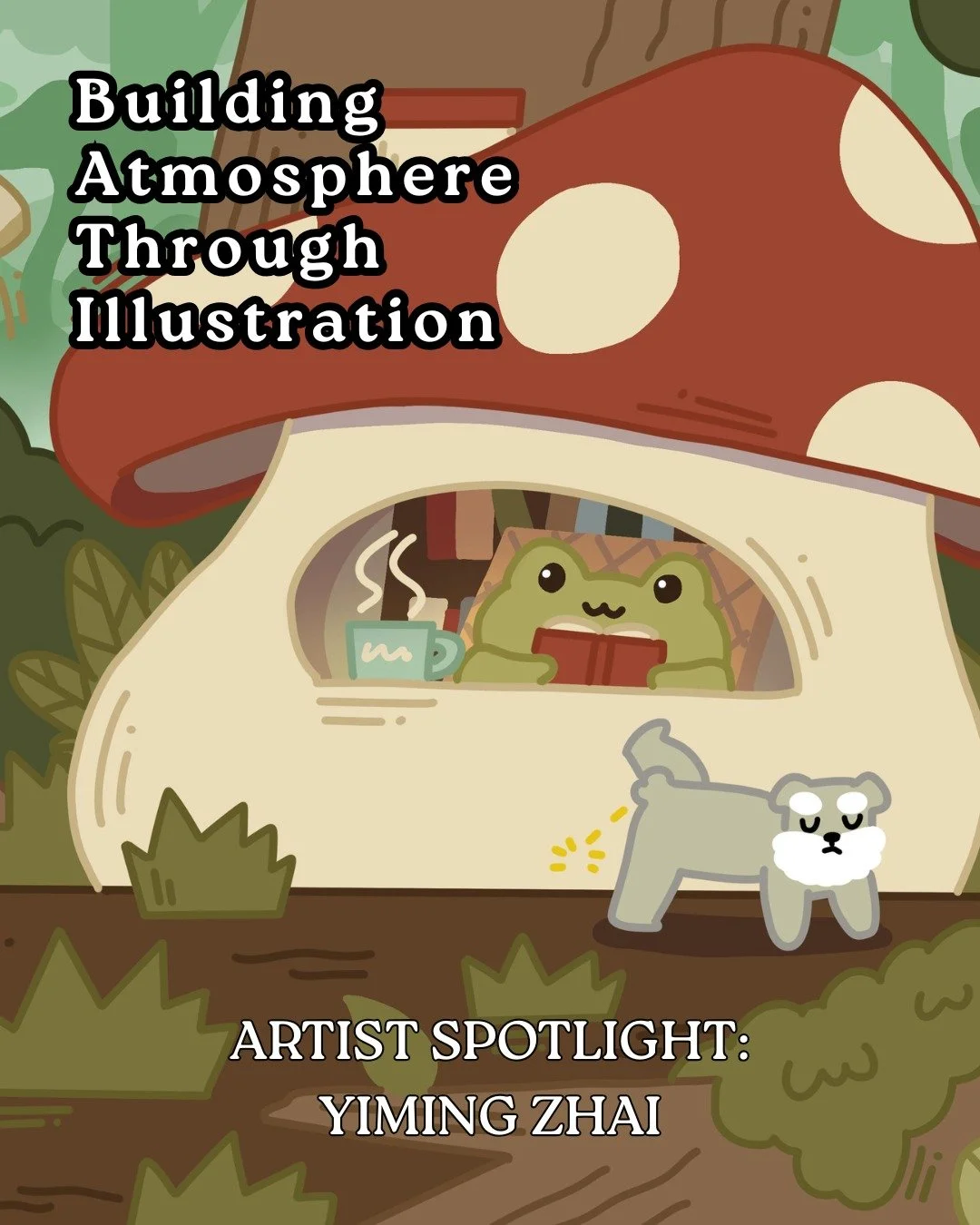
In my non-commercial work, a gray schnauzer often appears. The character is based on Cola, my beloved dog. I have created many versions of Cola, almost as if he exists across different parallel universes. One of my favorite series is Cola Marks Everywhere.
To me, this series is more than a group of informal illustrations I post on Instagram. It reflects my thinking about art, creative freedom, and the pressure artists can place on themselves. There was a period when I became overly focused on technical skill. I cared too much about whether everything I drew was structurally correct or accurate in perspective. That pressure created a lot of self-doubt and made it difficult for me to begin making work.
At a certain point, I realized that my need to express something was stronger than my anxiety about technique. I understood that perfect technical execution was not my ultimate goal. I began giving myself permission to avoid complicated perspective and focus first on what I wanted to feel and communicate. That was when I finally made an image that felt truly honest to me.
Soon after I felt I had found a path that was my own, conversations around AI began to raise new questions about image-making, authorship, and the value of human expression.
That mixture of confidence and anxiety became the starting point for Cola Marks Everywhere. The idea came from Cola himself. He does not care what is happening in the world, and he does not care what others think of him. He simply focuses on what he wants to do: leaving his own mark wherever he goes.
Maybe dogs are not allowed to pee in that place.
Cola does not care. He marks it.
Maybe it is dangerous to pee in outer space.
Cola does not care. He marks it.
Maybe the end of the world is coming.
Cola does not care. He marks it.
That stubborn little schnauzer reminded me that instead of being trapped in overthinking, I should keep making work.
AI may keep becoming stronger.
I still need to continue making the art I believe in.
I may not be able to ignore every kind of noise around me, but this series reminds me of the artistic position I want to hold: make the work honestly, leave your mark, and keep going.
Have there been any surprising or memorable responses to your work?
Some of the most memorable responses have come from clients who discovered me through my previous murals. They saw my signature on a wall, found my work, and reached out to invite me to create a mural for them.
When I ask about their expectations, some clients tell me that they simply want the most “Yiming” version of the work and prefer to give me complete creative freedom. Those moments are especially meaningful because they show a strong level of trust in my visual language, my process, and my artistic judgment.
What is a profound childhood memory?
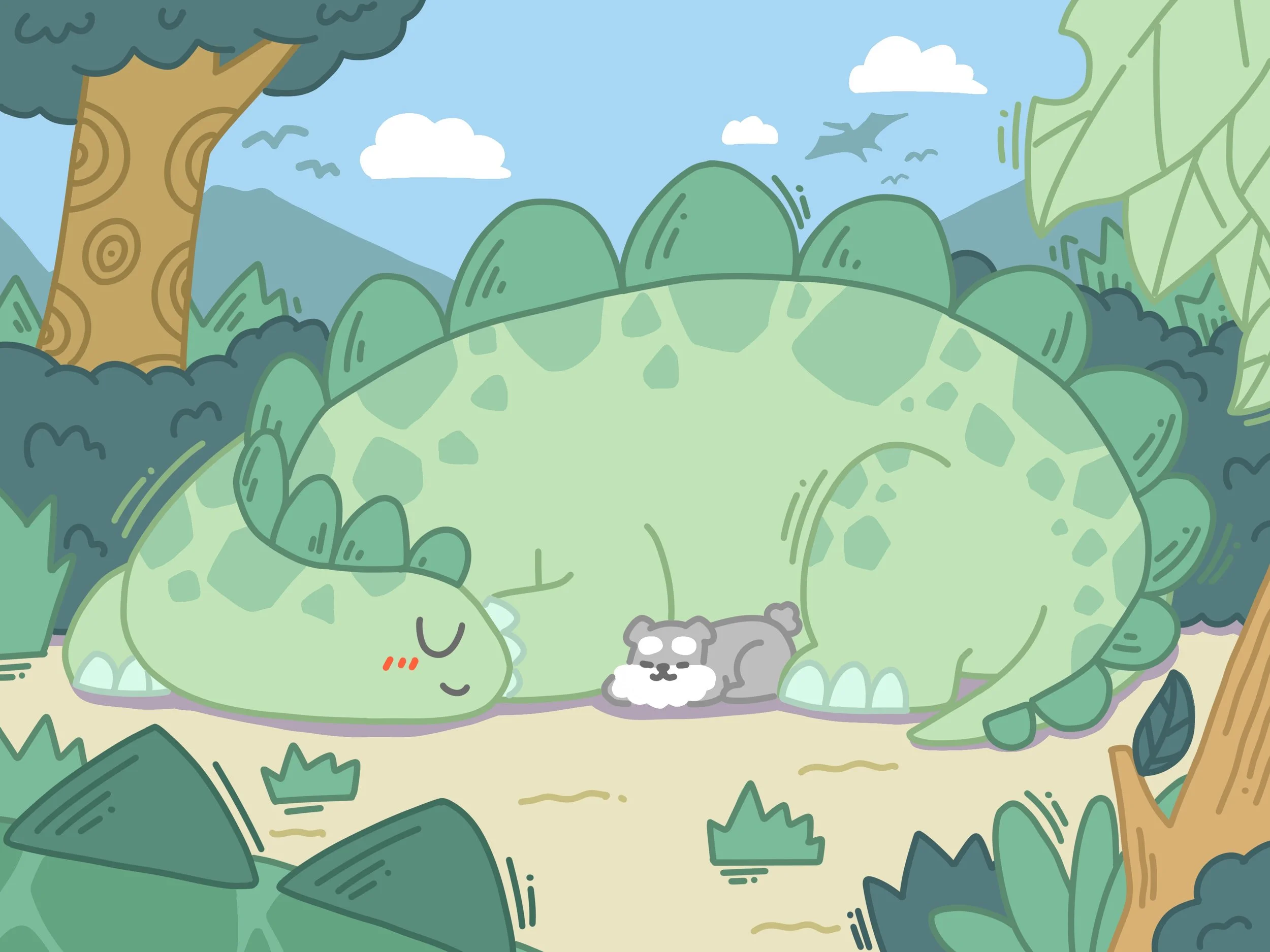
When I was a child, I loved dinosaurs. I always imagined that one day I might be able to have a little dinosaur as a pet. Then one day, I learned that dinosaurs had already become extinct, and I felt as if my world had collapsed.
Now I am using my children’s book, Look! This Is My Dinosaur!, to respond to that childhood regret. Through the book, I am able to return to that childhood imagination and give it a new form.
Looking ahead, what kinds of projects or spaces would you love to explore next?
I was once invited by a company to create a large mural covering the entire wall of a building. Unfortunately, I already had other mural projects scheduled at that time, so the collaboration could not move forward.
In the future, I would love to create artwork for an entire building. I am interested in working at that scale and exploring how my visual language can interact with architecture, public space, and the people who move through it.
Are you our next spotlight artist? Submit the form to apply to be featured!
We share works by digital artists as well as digital arts exhibitions, events, and open calls daily on Instagram — follow us for more and subscribe to our newsletter so you don’t miss new blog posts.
![Project Spotlight: pifmgr.dll’s [M]ETAL✨ @pifmgr.dll is a digital artist working at the intersection of audiovisual design, 3D experimentation, and atmospheric world-building. His project [M]ETAL explores metal both as a physical material and a](https://images.squarespace-cdn.com/content/v1/63b2fdbe4376de5bfdc6771f/1779108338452-QO04Q3MMJ3VMU8PJV1MD/image-asset.jpeg)