By Manan Kanani
Client onboarding for digital artists and creative teams rarely starts with contracts. It starts with a DM, a phone call, a missed inquiry, or a follow-up that arrives late. These early moments shape how a potential client feels before any real creative work begins. When the first interaction feels rushed, unclear, or delayed, trust slips quietly.
Many studios, freelancers, and creative teams want a warm and organized onboarding flow but struggle with limited time and capacity. Project work takes priority. Deadlines stack up. Active clients need attention. New inquiries often wait in between. This gap is where onboarding workflows break.
An AI-powered virtual receptionist helps fill that gap with consistency. It becomes the steady voice that guides new clients through the first steps while creative teams stay focused on delivery.
What Client Onboarding Workflows Really Include
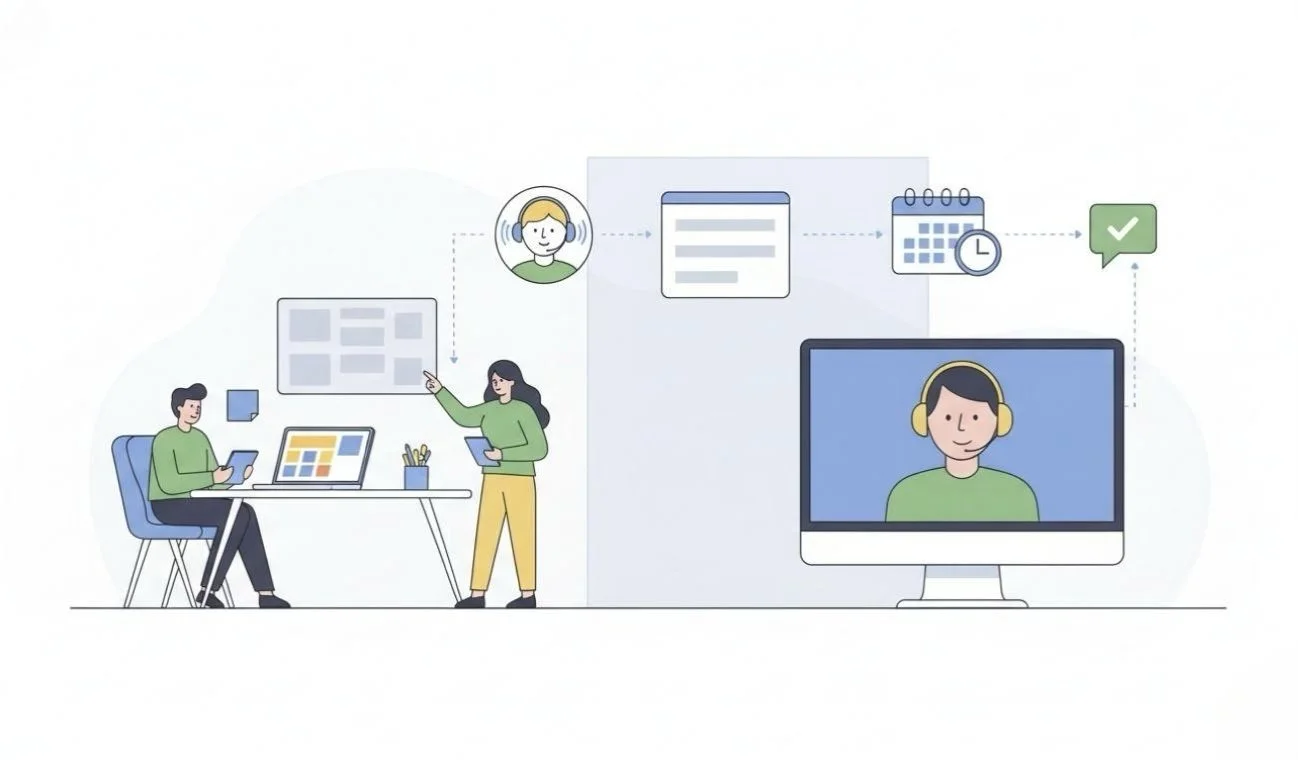
Onboarding is not a single action. It is a chain of small interactions that build clarity and confidence. These interactions happen before any kickoff meeting takes place.
A strong onboarding workflow usually covers the following stages.
First contact handling that answers calls promptly and captures intent clearly.
Information collection that gathers basic details without friction.
Scheduling coordination that sets the next step without delays.
Follow-up communication that reassures the client about progress.
When even one stage feels messy, the entire experience feels unplanned. That is why automation works best when it supports the full flow rather than one isolated task.
Where Manual Onboarding Starts to Slow Teams Down
Manual onboarding depends heavily on human availability. This works at low volume but struggles as interest grows. Missed calls increase. Notes become inconsistent. Follow-ups depend on memory rather than process.
Common friction points appear quickly.
Incoming calls reach voicemail during busy hours.
Basic questions repeat across multiple conversations.
Appointment booking stretches across emails and reminders.
Lead details live across tools without a single source of truth.
None of these issues come from lack of effort. They come from a limited time. An automated front-desk layer creates breathing room without removing the human element from later stages.
The Role of an AI virtual receptionist in Onboarding Workflows
An AI virtual receptionist acts as the first touchpoint in the onboarding journey. It listens, responds, and guides callers based on predefined workflows. It does this consistently across every interaction.
Within client onboarding workflows, the ai virtual receptionist becomes the entry gate that organizes demand before it reaches the team. Instead of replacing people, it prepares conversations so humans step in with context.
This approach helps teams maintain a personal tone while scaling intake volume.
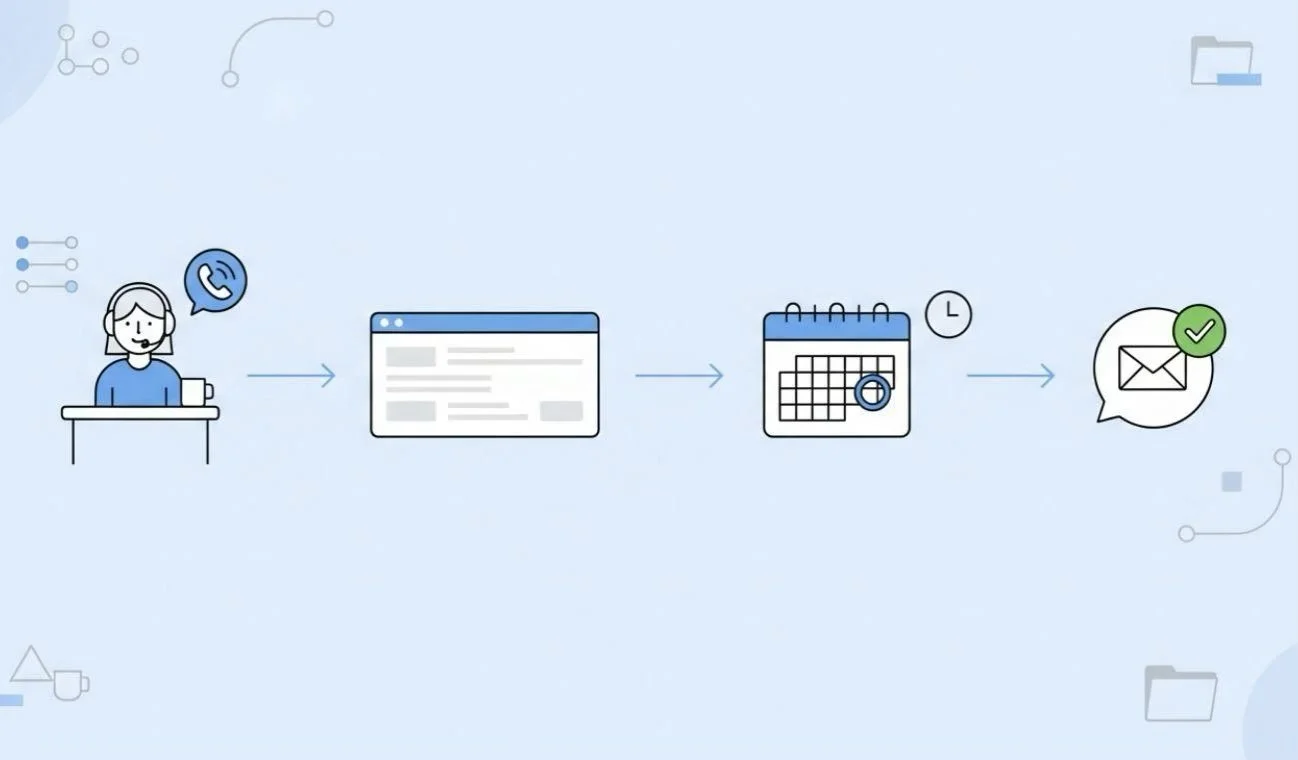
How Onboarding Workflows Change with Automation Support
When an AI receptionist has become an integral part of the onboarding process workflows become more fluid and predictable. Clients get immediate responses within minutes. Teams are provided with structured data.
The changes are evident in the daily activities.
The phone is answered promptly in peak times.
The client's details are recorded in the form of a structured format.
The time slots for meetings are set without any back-and-forth.
Following-up messages are sent automatically following every step.
Each improvement feels minor by itself. Together, they eliminate any friction that might be present in the journey.
Designing Onboarding Workflows that Feel Human
Automation is not synonymous with cold interactions. The tone and the structure of workflows determine how natural the experience is. If the system is designed correctly, clients frequently forget that they are working using an automation system.
Effective onboarding workflows are focused on transparency and reassurance.
Simple language that mirrors natural conversation.
Clear next steps stated at the end of every interaction.
Polite confirmations that reduce uncertainty.
Smooth handoff points when human involvement becomes necessary.
The goal is not speed alone. The goal is confidence. Clients should feel guided rather than processed.
Front-desk Consistency Builds Early Trust
Trust starts before contracts. When calls are answered clearly and information flows smoothly, clients sense organization behind the brand. This perception matters more than many teams realize.
A virtual receptionist ensures that early conversations stay consistent across days, time zones, and volume spikes. The same onboarding standards apply to every caller. This consistency creates a reliable brand impression from the first hello.
Over time, this reliability reduces drop-offs during onboarding and improves show-up rates for scheduled calls.
Supporting Growing Teams Without Adding Pressure
As businesses grow, onboarding volume increases faster than staffing plans. Hiring additional front-desk staff takes time and training. Workflow automation offers a faster adjustment.
An AI receptionist scales instantly with demand. It handles repetitive intake while teams focus on meaningful conversations. This balance keeps onboarding quality stable during growth phases.
Teams often notice reduced burnout once routine interactions move into automated workflows.
When Automation Supports Creative and Service Teams
Client onboarding does not belong only to sales-driven businesses. Creative studios, agencies, consultants, and service teams also rely on strong first interactions.
In these environments, onboarding often includes discovery calls, requirement intake, and expectation setting. Automating the early layer keeps creative energy focused on delivery rather than logistics.
Many teams use an AI virtual receptionist as part of broader client experience design that aligns process with brand voice.
Measuring Onboarding Success after Automation
Improved onboarding feels good, yet measurement confirms impact. Teams track several signals after adding automated support.
Reduced missed calls during business hours.
Faster time between first contact and scheduled meeting.
Higher completion rates for intake details.
More prepared first meetings due to better information capture.
These metrics show how small workflow improvements compound into stronger client relationships.
A Thoughtful Path to Implementation
Introducing automation into onboarding works best when done gradually. Teams map existing workflows, identify friction points, and introduce automation where repetition exists.
Successful adoption follows a simple rhythm.
Start with call handling and basic inquiry capture.
Add scheduling and follow-up flows next.
Refine tone and scripts based on real conversations.
Integrate collected data into existing tools.
This phased approach keeps onboarding familiar while improving structure behind the scenes.
Why Onboarding Workflows Shape Long-Term Retention
First experiences set expectations. When onboarding feels organized, clients assume the same quality throughout the relationship. This assumption influences retention, referrals, and long-term trust.
An AI receptionist supports this early promise by keeping communication clear and timely. It helps teams deliver consistency even when workloads shift.
In the long run, onboarding workflows supported by automation become part of a brand’s reputation rather than a hidden process.
Conclusion
Client onboarding workflows define how relationships begin. When those workflows rely only on manual effort, small gaps appear quickly. Missed calls, delayed responses, and scattered information weaken early trust.
An AI virtual receptionist strengthens onboarding by creating structure at the front desk. It answers consistently, gathers context, and prepares conversations for human teams. The result feels smoother for clients and lighter for staff.
When onboarding flows with clarity from the first interaction, everything that follows becomes easier to deliver.
FAQs
Q1. What will the AI virtual receptionist do when boarding clients?
It handles calls that come in and records client information and schedules the next steps and sends follow-up messages in accordance with the predefined workflows.
Q2. Do you think onboarding will feel more automated than human?
If workflows are based on natural communication and clear handoffs, onboarding is still human, but it also improves speed and consistency.
Q3. Are small teams able to benefit from workflows for onboarding that are automated?
Yes. Smaller teams usually have faster response times and lower workload pressures when routine intake is made automated.
Q4. How long will it take to incorporate the AI receptionist to onboarding?
The timelines for implementation vary, but the majority of teams begin with call handling, and then expand the workflow gradually over weeks.
Q5. Does an AI receptionist replace human involvement in onboarding?
No. It supports early stages so human teams can focus on deeper conversations and relationship building.




![Project Spotlight: pifmgr.dll’s [M]ETAL✨ @pifmgr.dll is a digital artist working at the intersection of audiovisual design, 3D experimentation, and atmospheric world-building. His project [M]ETAL explores metal both as a physical material and a](https://images.squarespace-cdn.com/content/v1/63b2fdbe4376de5bfdc6771f/1779108338452-QO04Q3MMJ3VMU8PJV1MD/image-asset.jpeg)